

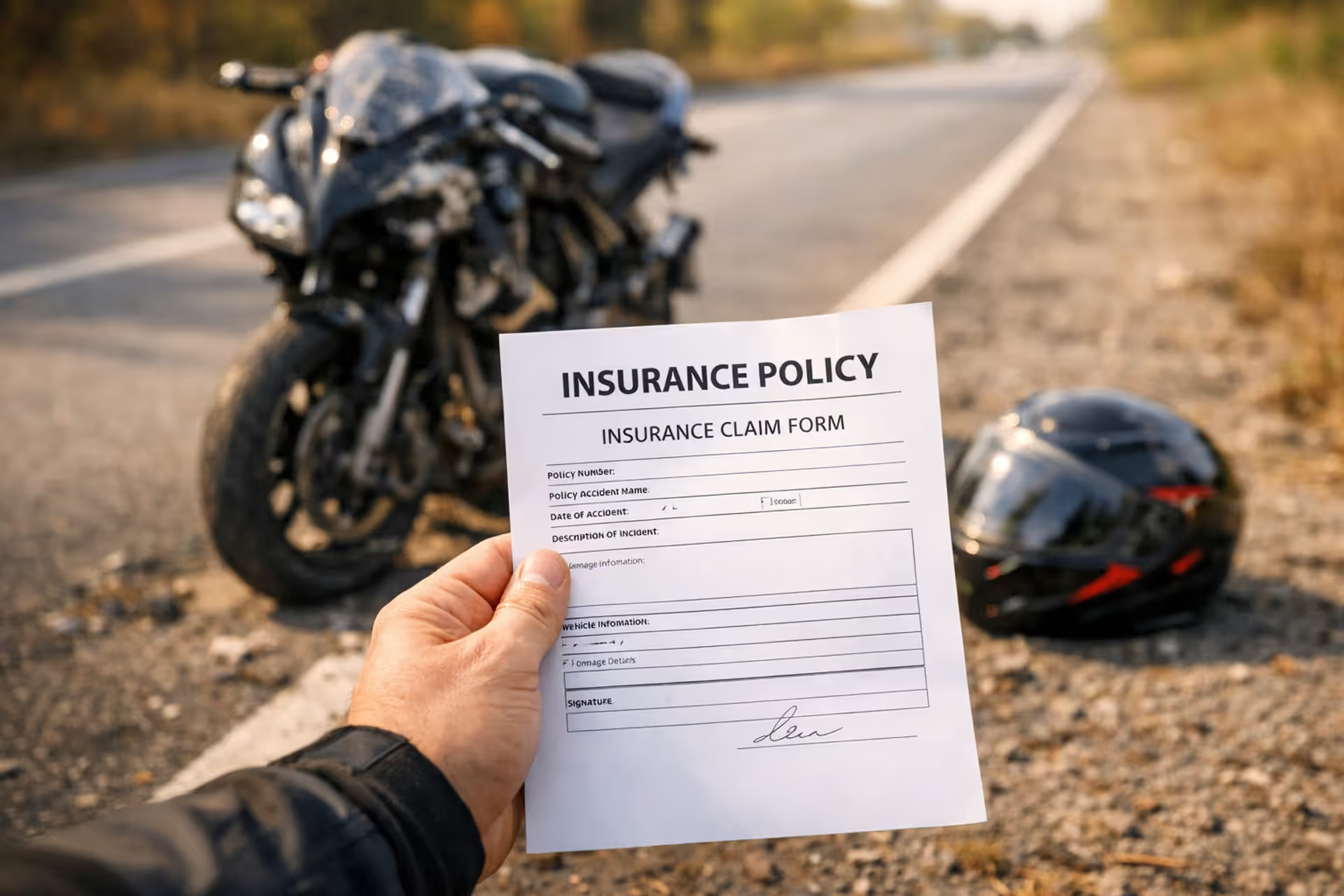
Motorcyclist in protective gear standing beside a damaged motorcycle on a road shoulder while holding insurance documents
When Can Insurance Drop You After a Motorcycle Accident Claim

Filing a motorcycle insurance claim after an accident doesn't automatically mean your insurer will drop you, but it can happen. Insurers evaluate each claim within the context of your overall risk profile, claims history, and state regulations. Understanding when and why companies cancel or decline to renew policies helps you make smarter decisions about when to file claims and how to protect your coverage.
The short answer: yes, your insurer can drop you after a motorcycle accident claim, but specific rules govern when and how they can do it. Most commonly, insurers wait until your policy term ends and simply choose not to renew rather than canceling mid-term. The distinction matters because your rights and options differ significantly between these two scenarios.
How Motorcycle Insurance Cancellation Differs from Non-Renewal
Many riders use "cancellation" and "non-renewal" interchangeably, but insurance companies and state regulators treat them as entirely separate actions with different legal requirements and consequences.
Mid-Term Cancellation: When Insurers Can Drop You Immediately
Mid-term cancellation means your insurer terminates your policy before the expiration date on your declarations page. This is the more serious action and faces strict legal limitations in most states. Insurers typically can only cancel mid-term for specific reasons:
- Premium non-payment after grace period expires
- License suspension or revocation
- Fraud or material misrepresentation on your application
- Discovery that you no longer meet underwriting eligibility (like storing your bike at an unacceptable location)
A single accident claim rarely triggers mid-term cancellation unless it reveals information you misrepresented when applying. For example, if you claimed you'd completed an advanced rider course but hadn't, and this comes to light during claim investigation, the insurer might cancel immediately.

Author: Hannah Pierce;
Source: spy-delhi.com
When mid-term cancellation occurs, you're entitled to a prorated refund of your unused premium. Most states require 10-30 days' written notice, though fraud cases may allow shorter timeframes or immediate termination.
Non-Renewal: Why Your Policy Ends at Term Expiration
Non-renewal is what most riders experience after filing claims. The insurer sends a notice—typically 30-60 days before your policy expires—stating they won't offer you another term. This is legal in most circumstances and gives insurers broad discretion to exit relationships with customers they deem too risky.
Unlike mid-term cancellation, non-renewal doesn't require the insurer to prove fraud or specific violations. They can decide you're outside their preferred risk profile based on claims frequency, accident type, or changes in their underwriting appetite. Some insurers have pulled back from motorcycle coverage entirely in certain states, non-renewing entire books of business regardless of individual claim history.
You won't receive a refund with non-renewal since your policy runs its full term. The advance notice period gives you time to shop for replacement coverage before your current policy lapses.
| Feature | Mid-Term Cancellation | Non-Renewal at Term End |
| Notice period required | 10-30 days (varies by state) | 30-60 days (varies by state) |
| Refund eligibility | Yes, prorated premium refund | No, policy runs full term |
| Legal restrictions | Highly restricted; specific causes only | Broader insurer discretion |
| Common triggers | Fraud, non-payment, license loss | Claims history, risk reassessment |
| Your options | Immediate replacement needed | Time to shop competitors |
Legal Reasons Insurers Drop Motorcycle Policies After Claims
State insurance departments regulate when and why companies can terminate coverage. While rules vary, most states recognize similar permissible grounds for cancellation or non-renewal.
Fraud and material misrepresentation top the list of reasons insurers can immediately cancel. If your claim reveals you lied about your riding experience, annual mileage, primary bike location, or other application questions, the company can void your policy retroactively in some cases. This means they might deny your claim entirely and refund your premiums as if coverage never existed.
Multiple claims within a policy period create exposure that many insurers won't tolerate. File three claims in 12 months and you'll likely receive a non-renewal notice. Some carriers set thresholds at two claims within three years, particularly for at-fault accidents. The specific number varies by company underwriting guidelines, but patterns of repeated claims signal higher future risk.
Premium non-payment remains the most common cause of mid-term cancellation. Most policies include a grace period of 10-15 days after the due date. Miss that deadline and the insurer can cancel, though they must provide written notice before termination takes effect. If you're in an accident during the grace period but haven't paid, coverage might still apply depending on your state and policy terms.
License suspension or revocation allows immediate cancellation in every state. If a DUI arrest or excessive points suspend your motorcycle endorsement, your insurer will cancel once they receive notification from the DMV. Some companies run periodic motor vehicle record checks; others only discover suspensions when you file a claim.
Risk factor changes discovered during claims investigation can trigger non-renewal. If the adjuster learns you've modified your bike with a turbocharger you didn't disclose, moved to a ZIP code with much higher theft rates, or started using the motorcycle for food delivery without commercial coverage, the company may decline to renew.
Insurers maintain the right to non-renew policies for underwriting reasons, but they cannot discriminate based on a single not-at-fault claim. Patterns of claims, even when the policyholder bears no fault, can legitimately factor into renewal decisions because they indicate exposure to risk circumstances
— Eleanor Kitzman
States prohibit cancellation or non-renewal based solely on protected characteristics like age, gender, or race. However, factors correlated with these characteristics—like years of riding experience or ZIP code—are generally permissible rating factors.
What Triggers Non-Renewal After Filing a Motorcycle Claim
Not all claims carry equal weight in renewal decisions. Insurers analyze several dimensions when deciding whether to continue coverage.
Claim frequency matters more than single-incident severity in most underwriting models. One $15,000 claim after you total your bike in a deer strike might not affect renewal if you have an otherwise clean record. But three $2,000 claims over two years—even if none were your fault—signals you're in harm's way more often than the average rider.
At-fault versus not-at-fault status influences the calculation but doesn't provide complete protection. While most states prohibit non-renewal based solely on a single not-at-fault claim, multiple not-at-fault incidents still suggest risk exposure. If you've been rear-ended three times in 18 months, an actuary might conclude you ride in high-traffic conditions with distracted drivers—a risk factor regardless of legal fault.
Claims history review periods typically span three to five years. The accident that happened 42 months ago will drop off your record soon, potentially qualifying you for better rates or reinstatement with a previous carrier. Some insurers weigh recent claims more heavily, so a two-year-old incident might have minimal impact on renewal if you've been claim-free since.
Comprehensive versus collision claims receive different treatment. A comprehensive claim for theft or weather damage usually affects renewal less than collision claims from accidents. However, multiple comprehensive claims—particularly for theft or vandalism—might lead to non-renewal if the insurer believes you're not securing your motorcycle adequately.
Claim-to-premium ratio factors into decisions. If you pay $800 annually and file a $12,000 claim, you've cost the insurer 15 years' worth of your premiums in a single incident. While one bad ratio won't necessarily trigger non-renewal, it makes you more vulnerable if any other risk factors appear.
Insurers also consider the circumstances surrounding accidents. A claim stemming from a single-vehicle crash on a clear day with no apparent cause raises more questions than one caused by a driver running a red light in front of you. Adjusters note these details in their files, and underwriters review them during renewal evaluation.

Author: Hannah Pierce;
Source: spy-delhi.com
How to Protect Your Motorcycle Policy After an Accident
Smart claim decisions start before the accident happens. Riders who understand the trade-offs between filing and paying out-of-pocket maintain better control over their insurance status.
The $2,000 rule of thumb works for many riders: if repairs cost less than $2,000 and you can afford to pay without financial hardship, consider handling it yourself. This preserves your claims-free status and avoids the deductible. Calculate whether the repair cost minus your deductible justifies the risk of premium increases or non-renewal. A $1,200 repair with a $500 deductible nets you $700 from the insurer but might cost you $400 annually in higher premiums for three years—a net loss of $500.
Document everything regardless of whether you file. Take photos of all vehicles, road conditions, traffic controls, and damage from multiple angles. Collect witness contact information. Get a police report even for minor accidents. If you initially pay out-of-pocket but later discover hidden damage or the other party files a claim against you, this documentation becomes critical.
Accident forgiveness programs exist with many major insurers but typically require you to purchase this coverage before an incident occurs. These programs prevent your first at-fault accident from increasing premiums or affecting renewal. Read the terms carefully—some only forgive accidents below a certain dollar threshold, and most reset if you switch insurers.
Maintain a clean riding record after any claim. Insurers look at trends. If you file a claim then immediately complete an advanced riding course, maintain zero violations for the next policy term, and demonstrate risk-reduction efforts, underwriters view you more favorably at renewal. Conversely, a claim followed by a speeding ticket and a lapsed registration creates a pattern that almost guarantees non-renewal.
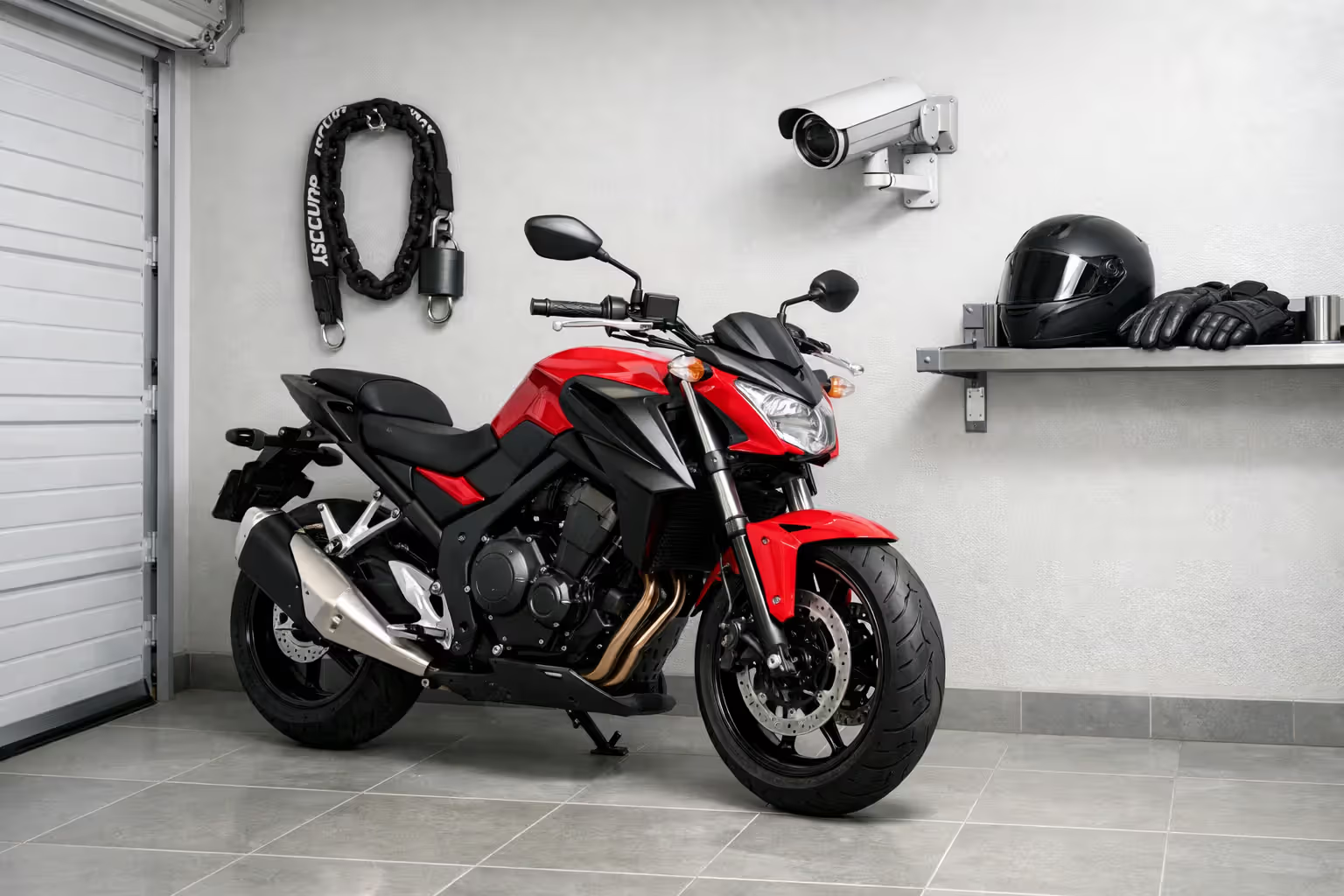
Communicate proactively with your insurer if circumstances change. Adding anti-theft devices, moving to a garage from street parking, or reducing your annual mileage can offset the negative impact of a claim. Some insurers offer mid-term policy adjustments that reduce premiums before renewal.
Consider higher deductibles if you're concerned about claim frequency. A $1,000 deductible instead of $250 makes you less likely to file smaller claims while reducing your premium. The savings might offset the higher out-of-pocket cost if you do have an accident.
Author: Hannah Pierce;
Source: spy-delhi.com
Your Options When Dropped: Finding High-Risk Motorcycle Insurance
Getting dropped doesn't mean you're uninsurable, but your options narrow and costs rise significantly.
Assigned risk pools exist in most states as insurers of last resort. These state-mandated programs require insurance companies to participate proportionally based on their market share. You'll pay substantially higher premiums—often 2-3 times standard rates—and receive basic liability coverage only. Comprehensive and collision coverage typically isn't available through assigned risk pools.
Specialty high-risk insurers focus on riders with checkered records. Companies like Dairyland, Progressive's high-risk division, and regional specialists write policies for riders mainstream insurers reject. Premiums run 50-150% higher than standard market rates, and you'll face more restrictive terms: higher deductibles, lower coverage limits, and strict payment requirements with no grace periods.
SR-22 requirements apply if your license was suspended or you were convicted of certain violations like DUI. An SR-22 isn't insurance itself but a certificate your insurer files with the state proving you carry minimum liability coverage. Not all insurers offer SR-22 filings, further limiting your options. You'll typically need to maintain the SR-22 for three years, during which time any lapse in coverage triggers automatic license suspension.
Premium cost comparison shows the financial impact of high-risk classification:
| State | Average Standard Premium | Average High-Risk Premium | % Increase |
| California | $1,200 | $2,640 | 120% |
| Florida | $1,450 | $3,335 | 130% |
| Texas | $950 | $2,090 | 120% |
| New York | $1,680 | $3,865 | 130% |
| Michigan | $1,890 | $4,535 | 140% |
| Pennsylvania | $875 | $1,925 | 120% |
These figures represent state averages; individual quotes vary based on your specific circumstances, bike type, and coverage selections.
Coverage limitations with high-risk policies often include mandatory high deductibles ($1,000-$2,500), exclusions for custom parts and accessories, and restrictions on bike value. If you own a $30,000 touring bike, you might only qualify for stated value coverage at $15,000, leaving you significantly underinsured.
Path back to standard insurance typically requires 2-3 years of clean riding without claims or violations. Some high-risk insurers offer step-down programs that gradually reduce premiums as you demonstrate improved risk profile. Shop annually once you're back in the standard market—loyalty doesn't pay when you're rebuilding your insurance reputation.
Common Mistakes That Guarantee Policy Cancellation
Certain behaviors almost ensure you'll lose coverage. Avoiding these errors keeps you in your insurer's good graces even after filing a claim.
Filing multiple small claims is the fastest route to non-renewal. Riders who submit $800, $650, and $1,100 claims over 18 months demonstrate they use insurance like a maintenance plan rather than protection against major losses. Each claim costs the insurer $150-$300 in administrative expenses before paying a dollar toward repairs. Three small claims often trigger non-renewal faster than one large claim.
Incomplete or inaccurate accident reporting creates problems even if you're not at fault. Telling the police one version of events, your insurer another, and the other driver's insurance a third version raises fraud red flags. Adjusters compare all statements; inconsistencies suggest dishonesty even if you simply forgot details or misspoke under stress. Stick to facts you're certain about and say "I don't know" when you're not sure.
Coverage gaps between policies signal risk to underwriters. If you let coverage lapse for 30 days after non-renewal, the next insurer assumes you rode uninsured and classifies you as higher risk. Even a one-day gap can increase premiums 15-25%. If you're being non-renewed, secure replacement coverage to start the day after your current policy expires.
Letting endorsements lapse while maintaining base coverage creates documentation issues. If you drop comprehensive coverage to save money, then file a comprehensive claim, the insurer will obviously deny it. But some riders forget they removed coverage and file anyway, creating a claim record that follows them even though it was denied. This shows poor policy management and can affect future applications.
Not disclosing modifications discovered during claim inspection gives insurers grounds for immediate cancellation. The aftermarket exhaust, performance air filter, and ECU tune you installed might void coverage if you didn't notify your insurer and pay the additional premium. Some modifications violate policy terms entirely, making the bike uninsurable under that contract.
Allowing unlisted riders to use your bike violates most policies. If your friend crashes your motorcycle and you file a claim, the insurer will investigate who was riding. Discovering an undisclosed regular operator—especially one with a poor driving record—can trigger cancellation for material misrepresentation.

Author: Hannah Pierce;
Source: spy-delhi.com
State-by-State Protections Against Unfair Cancellation
Consumer protections vary dramatically by state. Riders in some states enjoy strong safeguards; others face minimal restrictions on insurer actions.
Grace period requirements for premium payments range from 10 days in states like Arizona to 20 days in California. A few states mandate reinstatement rights if you pay within a certain window after cancellation, though late fees and coverage gaps during that period still apply.
Mandatory notice periods before cancellation or non-renewal protect consumers by providing time to find replacement coverage. Most states require 30 days' notice for non-renewal, but California mandates 45 days, and New York requires 60 days if you've been with the insurer for three or more years. Cancellation notice periods are typically shorter—10 to 20 days—but must still be in writing via mail or email depending on state rules.
Appeal processes exist in many states but often require acting quickly. If you believe your non-renewal violates state law—for example, if you suspect it's based on a single not-at-fault claim in a state that prohibits this—you can file a complaint with your state insurance department. They'll investigate and can order the insurer to reinstate coverage if they find violations. However, these processes take weeks or months, so you still need backup coverage.
States with strongest consumer protections include California, New York, and Massachusetts. California prohibits non-renewal based on a single claim unless it involved DUI or other serious violations. New York requires insurers to provide specific written reasons for non-renewal and allows policyholders to request reconsideration. Massachusetts operates a managed competition system where insurers must justify rate increases and cancellations to state regulators.
States with weakest protections tend to be those with less regulated insurance markets. Texas, Georgia, and Indiana give insurers broad discretion on non-renewal decisions with minimal recourse for consumers. These states prioritize insurer flexibility over consumer protection, theoretically to maintain competitive markets.
First-party bad faith claims are possible in some states if your insurer acts unreasonably. If they cancel your policy in violation of state law or their own policy terms, you might have grounds to sue for damages beyond simple contract breach. These cases are difficult to win and usually require evidence of intentional wrongdoing or reckless disregard for your rights.
Frequently Asked Questions
Conclusion
Understanding your rights and your insurer's rights after filing a motorcycle accident claim helps you navigate this stressful situation strategically. While companies can drop you after a claim, specific rules govern when and how they can do it. Mid-term cancellation faces strict limitations; non-renewal at term expiration gives insurers broader discretion but requires advance notice.
Protect yourself by choosing carefully when to file claims, documenting everything thoroughly, and maintaining a clean riding record after any incident. If you do face non-renewal, act immediately to secure replacement coverage and avoid gaps that compound your problems. High-risk insurance costs significantly more but keeps you legal and riding while you rebuild your insurance reputation over the next 2-3 years.
State protections vary widely, so familiarize yourself with your state's specific rules about notice periods, permissible cancellation reasons, and appeal processes. When in doubt, contact your state insurance department—they exist to protect consumers from unfair practices and can provide guidance specific to your situation.
Related Stories

Read more
Read more


The content on this website is provided for general informational and educational purposes only. It is intended to offer insights and guidance on motorcycle accident insurance claims, settlement processes, liability issues, coverage limits, medical compensation, and related insurance matters, and should not be considered legal or financial advice.
All information, articles, and materials presented on this website are for general informational purposes only. Insurance policies, liability standards, settlement practices, and state regulations may vary by jurisdiction and insurer. The outcome of a motorcycle accident claim depends on the specific facts of the accident, available evidence, policy language, and applicable law.
This website is not responsible for any errors or omissions in the content, or for actions taken based on the information provided. Users are strongly encouraged to consult with a qualified attorney or licensed insurance professional regarding their specific motorcycle accident claim before making decisions about settlements, negotiations, or coverage disputes.