

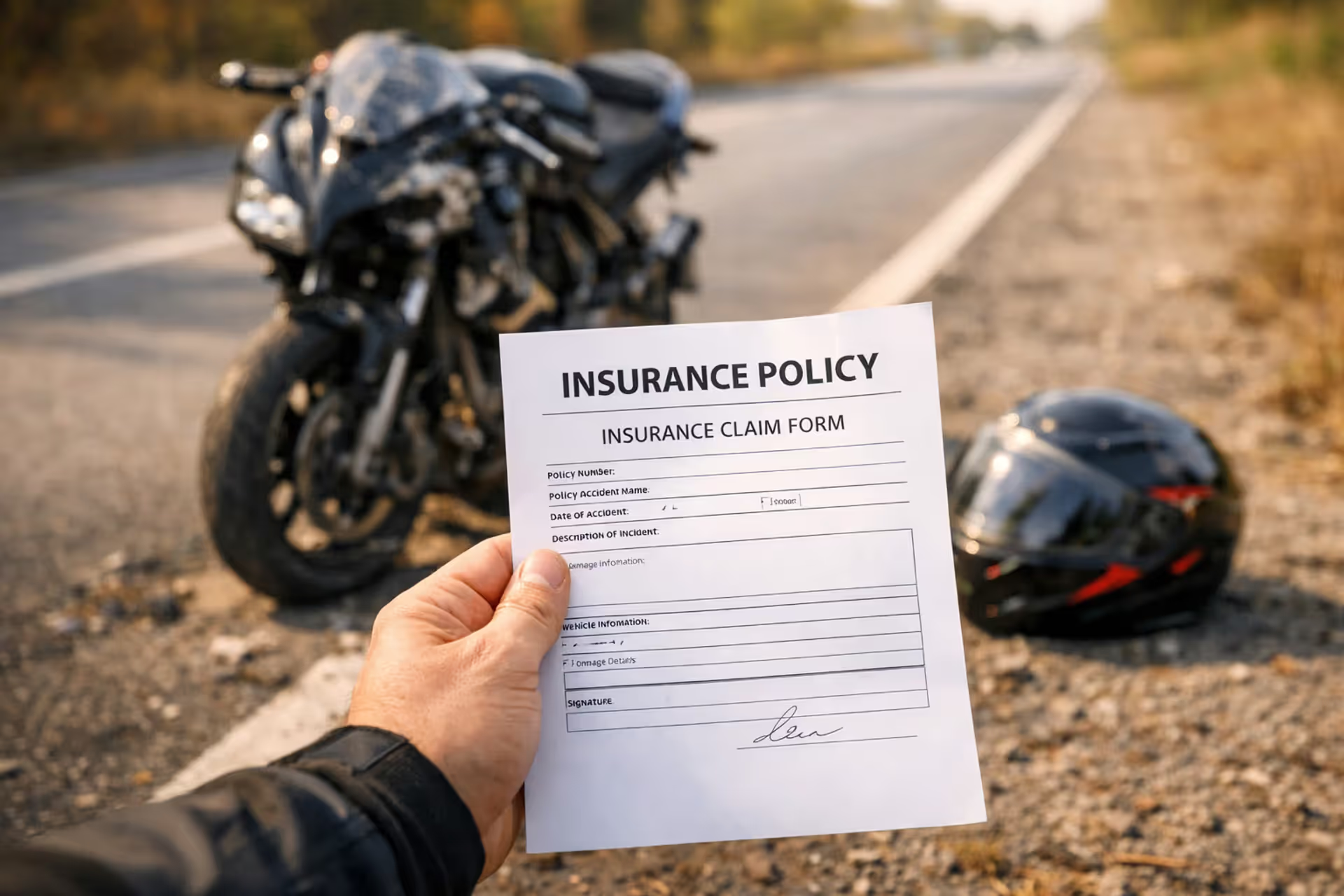
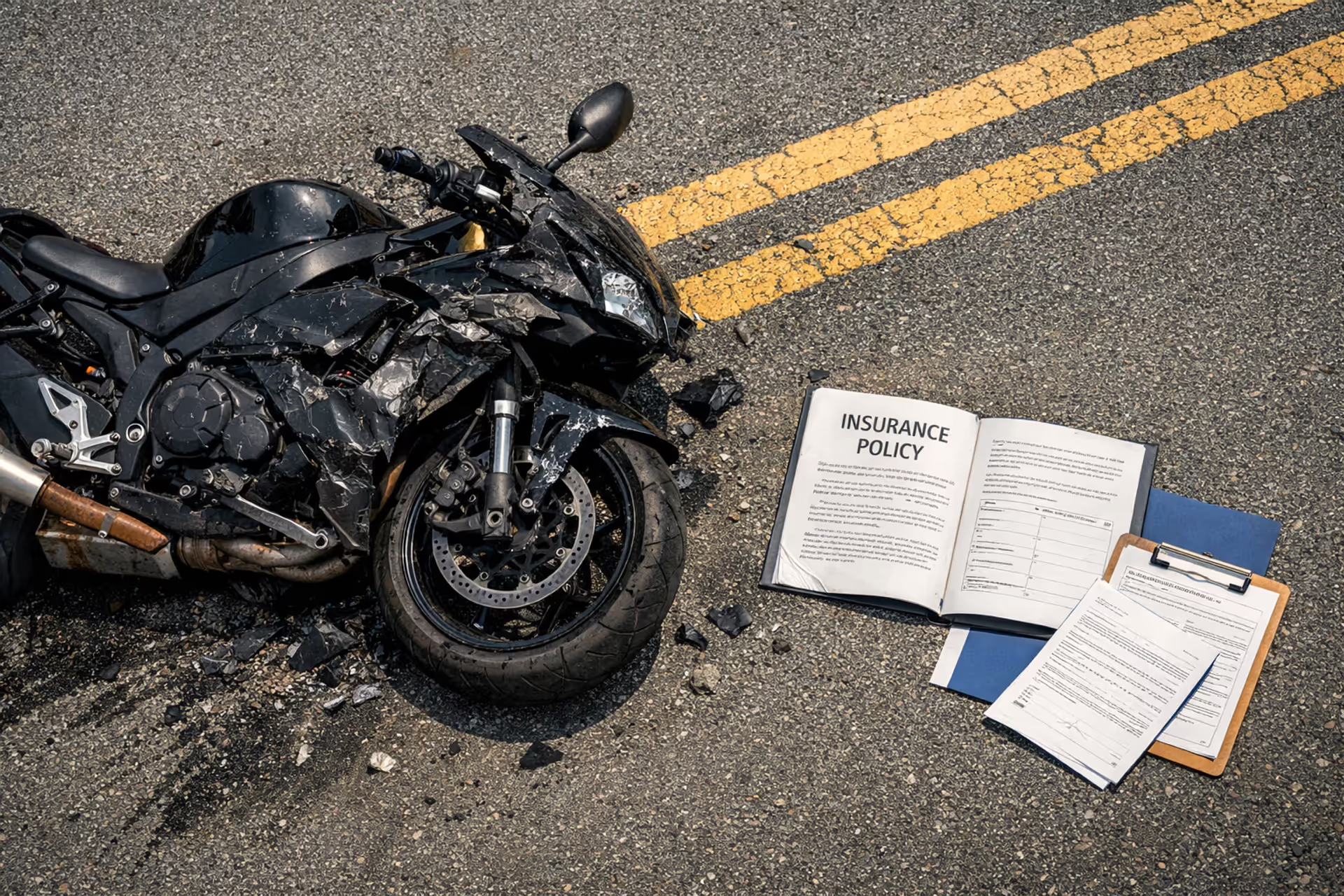
Motorcyclist standing next to a damaged motorcycle on a roadside with emergency lights in the background and insurance documents scattered on the ground
Motorcycle Accident Insurance Limits Guide for Every Rider

Here's something most riders don't realize until it's too late: a serious motorcycle crash can cost half a million dollars or more. I'm talking about actual cases—not worst-case scenarios insurance agents dream up to scare you. Emergency surgery, rehab that lasts months, lost paychecks while you're healing, plus replacing your bike? The bills pile up fast.
Yet talk to ten riders at any bike night, and eight of them probably carry just their state's minimum coverage. In places like California, that's a measly $15,000 per person. Crash into a minivan full of people, and you'll blow through that before the ambulance reaches the hospital.
Insurance limits set the absolute maximum your policy will pay out. They apply whether someone's claiming against your policy after you caused a wreck, or you're tapping your own coverage after getting hit. The difference between choosing the right limits and going cheap? For some riders, it's meant losing their house.
How Insurance Limits Work in Motorcycle Accident Claims
Your motorcycle policy breaks down into two main types of coverage. Liability pays when you hurt someone else or wreck their stuff. First-party coverage handles your own medical bills and bike damage, no matter who screwed up.
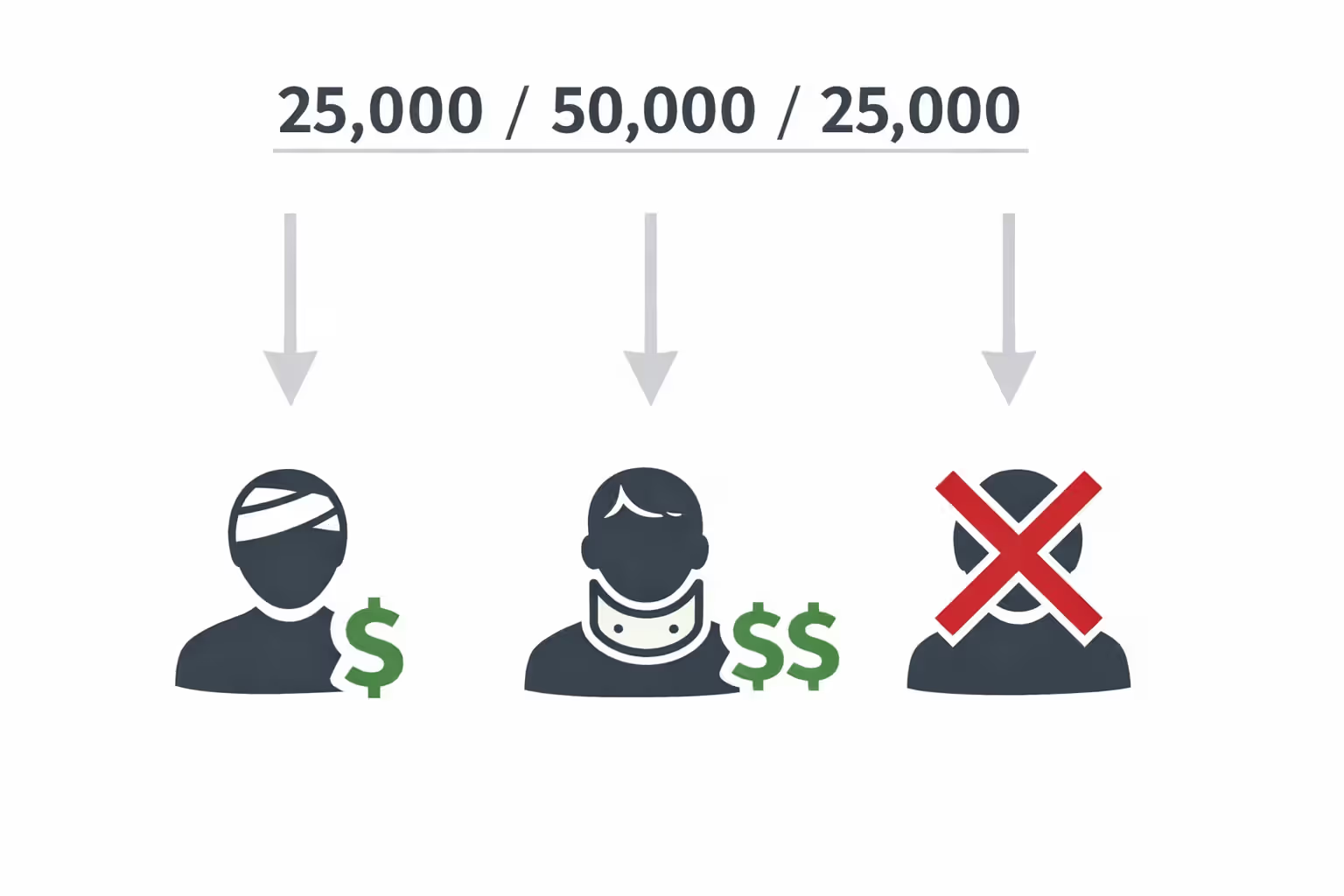
Most liability policies use what's called split limits—three numbers like 25/50/25. Here's what each one means: The first number ($25,000) is the max paid to any single person you injure. The second ($50,000) caps what your insurer pays for all injuries in one accident combined. That last number ($25,000) covers property damage per crash.
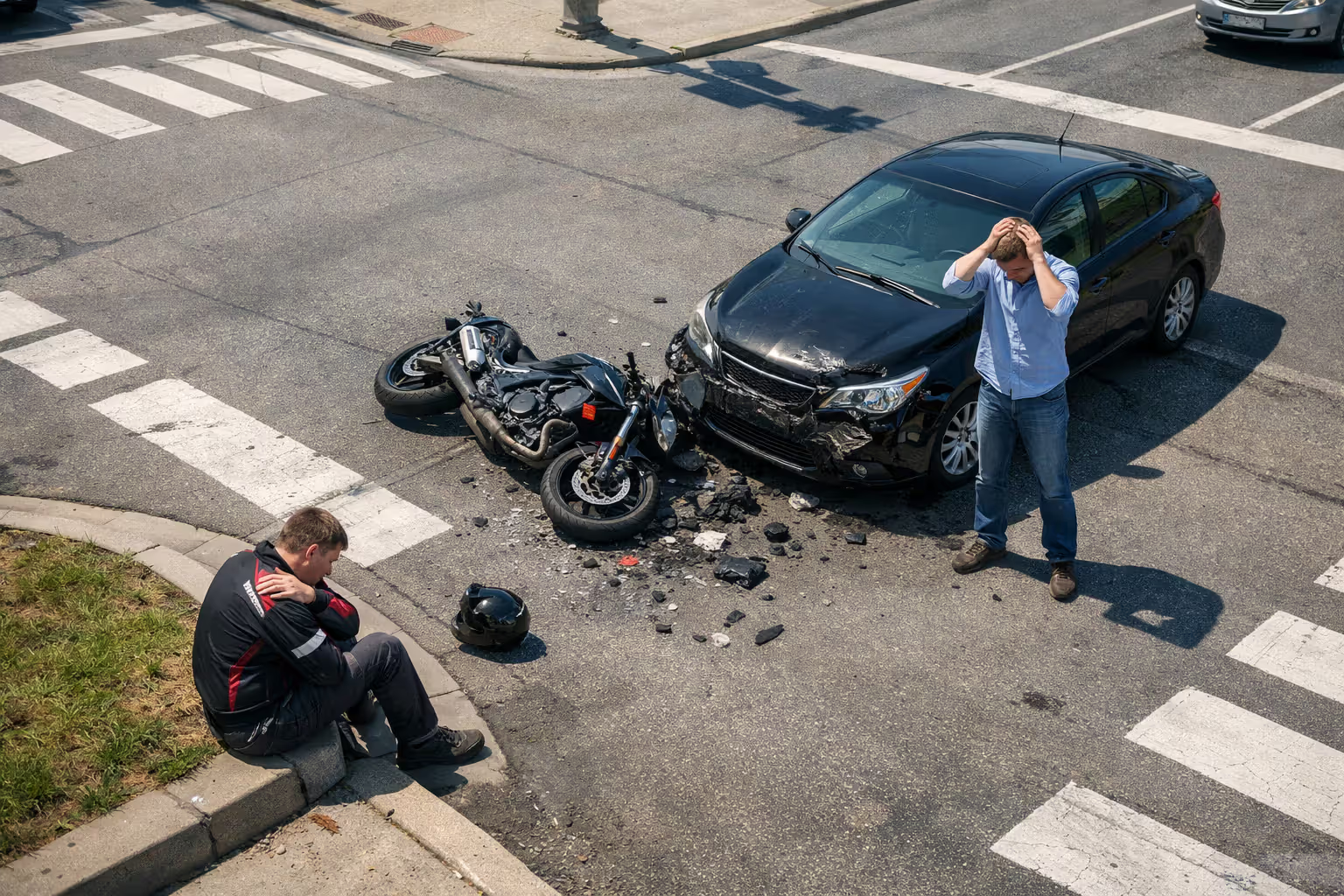
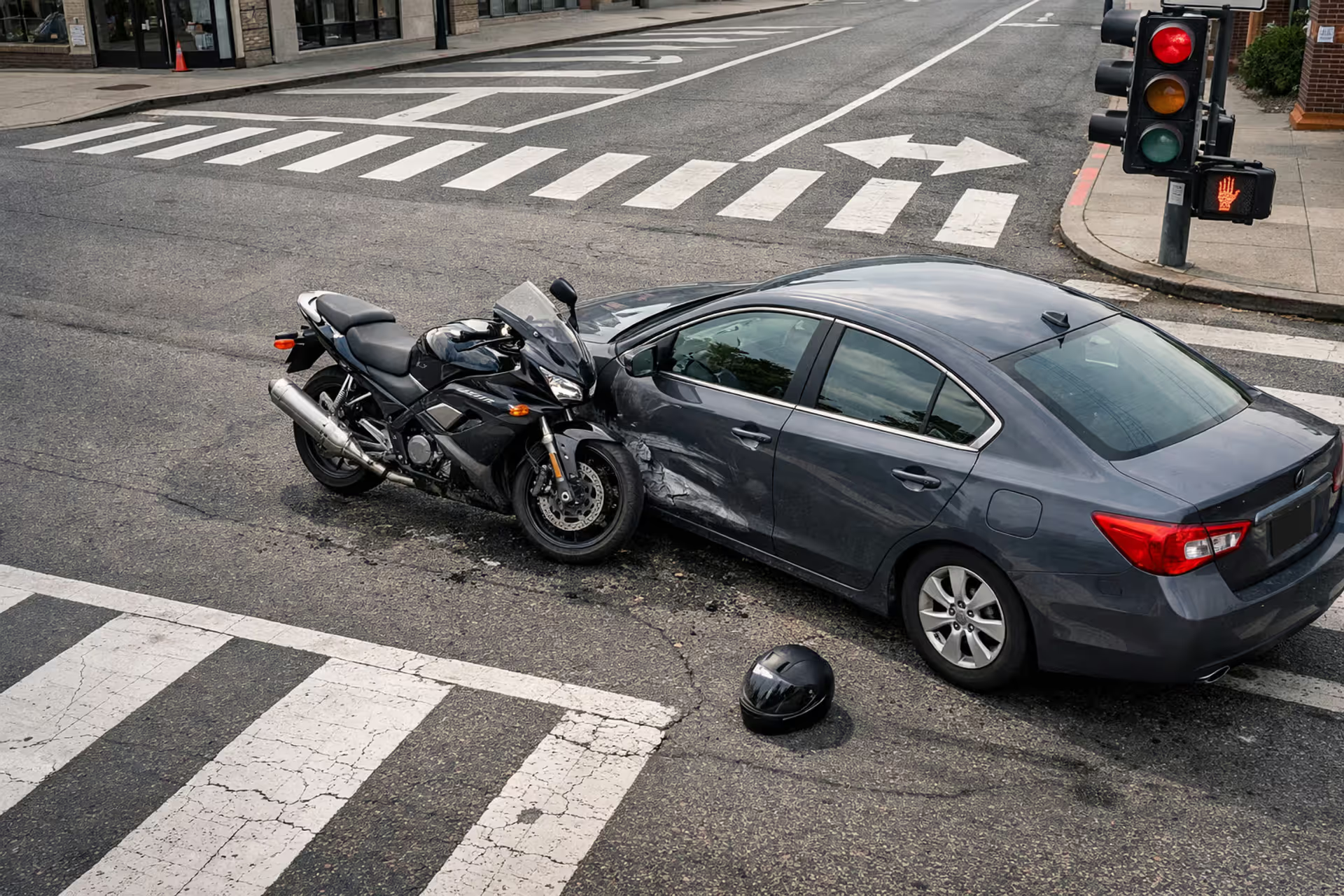
Let's say you run a red light and T-bone a car with three people inside. Each person racks up $40,000 in medical costs. With 25/50/25 coverage, here's what happens: First person gets $25,000. Second person gets $25,000. Third person? Nothing—you've hit that $50,000 per-accident cap. You're personally on the hook for $70,000.
Author: Caleb Thornton;
Source: spy-delhi.com
Some policies offer combined single limit (CSL) coverage instead. One pot of money—maybe $300,000—that pays for injuries and property damage in whatever mix is needed. CSL gives you more flexibility, though you'll want to run the numbers carefully to make sure it's enough.
First-party coverages like medical payments (MedPay) or personal injury protection (PIP) come with their own separate limits, typically $1,000 to $10,000. These reset with each accident and each policy period. Your $5,000 MedPay doesn't carry over from one crash to the next.
Types of Coverage Limits That Apply to Motorcycle Accidents
Bodily Injury Liability Limits
This coverage handles medical bills, lost wages, pain and suffering, and other damages when you injure someone. The per-person limit applies to each individual victim; the per-accident limit caps the total for everyone hurt in one crash.
Picture this: You're late for work, blow through a stop sign, and slam into a minivan carrying a family of four. The dad suffers a traumatic brain injury requiring $300,000 in treatment. The mom breaks her pelvis, needs two surgeries—$80,000 in bills. If you're carrying 50/100/50 limits, your policy cuts a check for $50,000 to dad, $50,000 to mom, then taps out at the $100,000 per-accident cap. You're personally liable for the remaining $330,000.
Injury costs almost always exceed initial estimates. That broken leg in the ER? Six months later, it's chronic pain syndrome, three follow-up surgeries, permanent disability, and decades of lost earning capacity. Juries regularly award six figures for serious motorcycle accident injuries—and they're not being generous.
Property Damage Liability Limits
This pays for vehicles, buildings, guardrails, utility poles, and anything else you destroy in a crash. New trucks cost $60,000. A loaded SUV easily runs $80,000 or more. Wreck one of those, and even your repairs-only estimate might exceed most people's property damage limits.
Property limits seem fine until you hit multiple vehicles or crash into commercial property. Lose control on a curve, slide into a parked BMW, then plow through a storefront's plate glass window? That's $100,000 in damage before anyone tallies up lost business revenue. If you're carrying a $25,000 property limit, you're exposed for $75,000 out of pocket.
Don't forget: property claims also include loss of use while vehicles are being repaired. Total someone's car and they're stuck renting for three months while fighting with insurance companies? Those rental fees count against your property damage limit.
Uninsured/Underinsured Motorist Limits
Uninsured motorist (UM) coverage pays your injuries when an at-fault driver has no insurance. Underinsured motorist (UIM) kicks in when the at-fault driver's limits can't cover your damages. These limits typically mirror your liability limits—if you carry 100/300/100 liability, you can get up to 100/300 UM/UIM.
Roughly 13% of U.S. drivers operate without insurance. In some states, that number exceeds 20%. An uninsured driver turns left in front of you, and you rack up $150,000 in injuries? Your UM coverage is probably your only realistic source of compensation—that uninsured driver likely has no assets worth pursuing.
UIM matters even when the at-fault driver has insurance. Say they carry only their state's 25/50 minimum and cause $100,000 in damages. Their policy pays $25,000, then your UIM can pay up to your UIM limit minus what you already received. With 100/300 UIM, you'd get an additional $75,000 from your own policy.
Author: Caleb Thornton;
Source: spy-delhi.com
Medical Payments and PIP Caps
MedPay and PIP cover your medical expenses regardless of fault. MedPay typically offers $1,000 to $10,000 in coverage; PIP (required in no-fault states) ranges from $10,000 to $50,000 or higher and may include wage replacement and other expenses.
These coverages pay quickly—often within weeks—while liability claims can take months or years to settle. A rider with $5,000 in MedPay can pay ER bills and initial treatment without waiting for the at-fault driver's insurer to admit liability.
The limits are modest compared to serious injury costs, but MedPay and PIP work as bridge financing. They keep medical providers from sending you to collections while you pursue bigger claims. Some policies require you to reimburse MedPay/PIP from any eventual settlement, reducing the net benefit.
What Happens When Accident Costs Exceed Your Policy Limits
Damages exceed your liability limits? You're personally responsible for the difference. Injured parties can sue you, win judgments, and go after your assets—bank accounts, home equity, investment accounts, and future wages through garnishment.
Settlement negotiations often revolve around policy limits. Cause $400,000 in damages but only carry $100,000 in coverage? The victim's attorney will typically demand your full policy limits. Insurers usually pay out the limits quickly to eliminate their exposure. The victim can then sue you personally for the remaining $300,000, though many people lack sufficient assets to satisfy large judgments.

Author: Caleb Thornton;
Source: spy-delhi.com
Some victims accept policy limits settlements to avoid the time and cost of chasing individual defendants who may be judgment-proof. Others file lawsuits and obtain judgments that follow you for years, accruing interest at statutory rates (often 5-10% annually) and surviving bankruptcy in many cases.
Multiple claimants split available coverage, creating complex negotiations. Three people suffer serious injuries in an accident and the at-fault rider carries 50/100 limits? Each claimant fights for a share of the $100,000 total. The insurer may file an interpleader action, depositing the policy limits with the court and letting the claimants battle over distribution.
Excess liability or "umbrella" policies sit on top of your primary coverage, providing an additional $1 million to $5 million in protection. These policies are surprisingly affordable—often $200 to $400 annually for $1 million in coverage—because they only pay after you exhaust your underlying limits. An umbrella transforms a dangerous 50/100 liability policy into 1,050/1,100 protection.
State Minimum Requirements vs. Recommended Coverage Amounts
Every state except New Hampshire requires motorcycle riders to carry liability insurance, but minimum limits vary wildly. These minimums were often set decades ago and haven't kept pace with medical costs or vehicle values.
| State | Minimum Bodily Injury | Minimum Property Damage | Recommended Bodily Injury | Recommended Property Damage |
| California | 15/30 | 5 | 100/300 | 100 |
| Florida | 10/20* | 10* | 100/300 | 100 |
| Texas | 30/60 | 25 | 100/300 | 100 |
| New York | 25/50 | 10 | 250/500 | 100 |
| Pennsylvania | 15/30 | 5 | 100/300 | 100 |
| Ohio | 25/50 | 25 | 100/300 | 100 |
| Georgia | 25/50 | 25 | 100/300 | 100 |
| North Carolina | 30/60 | 25 | 100/300 | 100 |
| Arizona | 25/50 | 15 | 100/300 | 100 |
| Michigan | 50/100 | 10 | 250/500 | 100 |
*Florida requires only PIP and property damage for motorcycles in some situations; bodily injury liability isn't universally mandatory but highly recommended.
State minimums are dangerously inadequate. One night in a trauma center can exceed $50,000. Orthopedic surgery, rehab, and ongoing care for a broken femur often costs $100,000 to $150,000. Traumatic brain injuries, spinal cord damage, and other catastrophic injuries can accumulate $1 million or more in lifetime costs.
Insurance experts commonly recommend 100/300/100 as a baseline for riders with modest assets and 250/500/100 or higher for those with significant home equity, retirement accounts, or high incomes. The annual premium difference between state minimums and adequate coverage is often just $200 to $400—a small price for protection against financial ruin.
Most motorcyclists carry state minimum coverage, but a serious accident can easily result in $500,000 or more in damages. The difference between minimum and adequate coverage is often the difference between financial recovery and bankruptcy
— Robert Hunter
How Insurance Companies Calculate Maximum Payouts After Motorcycle Crashes
Claims adjusters evaluate each claim against policy limits and coverage terms. When you file a claim, the adjuster checks the declarations page to confirm available limits, then investigates liability and damages.
For liability claims, adjusters assess the strength of the claimant's case. If you're clearly at fault and the claimant has solid documentation of $80,000 in medical expenses and lost wages, the adjuster will likely offer your full per-person limit if it's below $80,000. If your limit is $100,000, the adjuster negotiates, often settling for less than the full limit if coverage defenses or questionable damages exist.
Multiple claimants create a fight over the limits. Your 50/100 policy faces three claims of $60,000, $40,000, and $30,000? The insurer must distribute the $100,000 fairly. Insurers often use proportional allocation: each claimant gets a percentage equal to their claim's share of the total. Here, total claims equal $130,000, so the first claimant gets 46.2% of $100,000 ($46,200), the second gets 30.8% ($30,800), and the third gets 23% ($23,000).
Subrogation affects net payouts. Your health insurance paid $40,000 in medical bills after an accident, then you collect $100,000 from the at-fault driver's insurer? Your health insurer has a subrogation lien for the $40,000 it paid. Your net recovery is $60,000. This reduces the effective value of settlements when you've used other insurance to pay initial costs.
Settlement timing varies dramatically. Straightforward property damage claims may settle within weeks. Bodily injury claims take months or years, especially when injuries require ongoing treatment. Lawyers advise clients to wait until they reach maximum medical improvement—the point where doctors don't expect further recovery. Settling too early means accepting less than your claim's worth.
Common Mistakes Riders Make With Coverage Caps
Underinsuring is the most common and costly mistake. Riders buy state minimum coverage to save $30 a month, then cause an accident that generates $300,000 in claims. The premium savings vanish instantly, replaced by wage garnishment and asset seizure that can last for years.
Riders often misunderstand how limits apply to their own injuries. Your liability coverage doesn't pay your injuries—it only covers people you hurt. Suffer serious injuries in an at-fault crash? Your medical bills come out of pocket or through your health insurance. Many riders carry high liability limits but no UM/UIM coverage, leaving themselves exposed when hit by an uninsured driver.
Failing to increase limits after asset growth creates dangerous exposure. A rider who bought 25/50 coverage as a college student may now own a home with $200,000 in equity and have $300,000 in retirement accounts. Those assets are at risk in any serious at-fault accident. Coverage limits should scale with net worth—the more assets you have, the more coverage you need.

Author: Caleb Thornton;
Source: spy-delhi.com
Declining UM/UIM coverage is financially shortsighted. This coverage costs a fraction of liability coverage but protects you when others fail to carry adequate insurance. In states with high uninsured driver rates, UM/UIM is arguably more valuable than collision coverage.
Riders sometimes assume their auto insurance covers them on motorcycles. Most auto policies explicitly exclude motorcycles. You need a separate motorcycle policy with separate limits. Riding without proper coverage means you're completely uninsured, personally liable for any damages you cause, and unable to legally register your bike.
Neglecting to review coverage annually leaves outdated policies that no longer fit your situation. Marriage, home purchase, income increases, and other life changes should trigger coverage reviews. What was appropriate five years ago may be dangerously insufficient now.
FAQ: Motorcycle Accident Insurance Limits
Wrapping Up: Why Your Coverage Limits Matter More Than You Think
Motorcycle accident insurance limits draw the line between financial security and personal catastrophe. State minimum coverage might keep you legal, but it won't keep you solvent after a serious crash. Medical bills, property damage, and liability judgments routinely exceed $100,000 in moderate accidents and can reach seven figures when injuries are severe.
Adequate coverage means matching your limits to your risk exposure and assets. Riders with substantial home equity, retirement savings, or high incomes need higher limits—often 250/500/100 or above, plus an umbrella policy. Even riders with modest assets benefit from 100/300/100 coverage; the premium difference is small compared to the protection gained.
Don't skip UM/UIM coverage. With one in seven drivers uninsured and many others carrying only minimum limits, your own policy may be your best source of compensation after an accident you didn't cause. Review your coverage annually, increase limits as your assets grow, and consider umbrella coverage once your net worth exceeds your liability limits. The money you save on premiums won't matter if you're facing a six-figure judgment and wage garnishment for the next decade.
Related Stories

Read more
Read more


The content on this website is provided for general informational and educational purposes only. It is intended to offer insights and guidance on motorcycle accident insurance claims, settlement processes, liability issues, coverage limits, medical compensation, and related insurance matters, and should not be considered legal or financial advice.
All information, articles, and materials presented on this website are for general informational purposes only. Insurance policies, liability standards, settlement practices, and state regulations may vary by jurisdiction and insurer. The outcome of a motorcycle accident claim depends on the specific facts of the accident, available evidence, policy language, and applicable law.
This website is not responsible for any errors or omissions in the content, or for actions taken based on the information provided. Users are strongly encouraged to consult with a qualified attorney or licensed insurance professional regarding their specific motorcycle accident claim before making decisions about settlements, negotiations, or coverage disputes.