
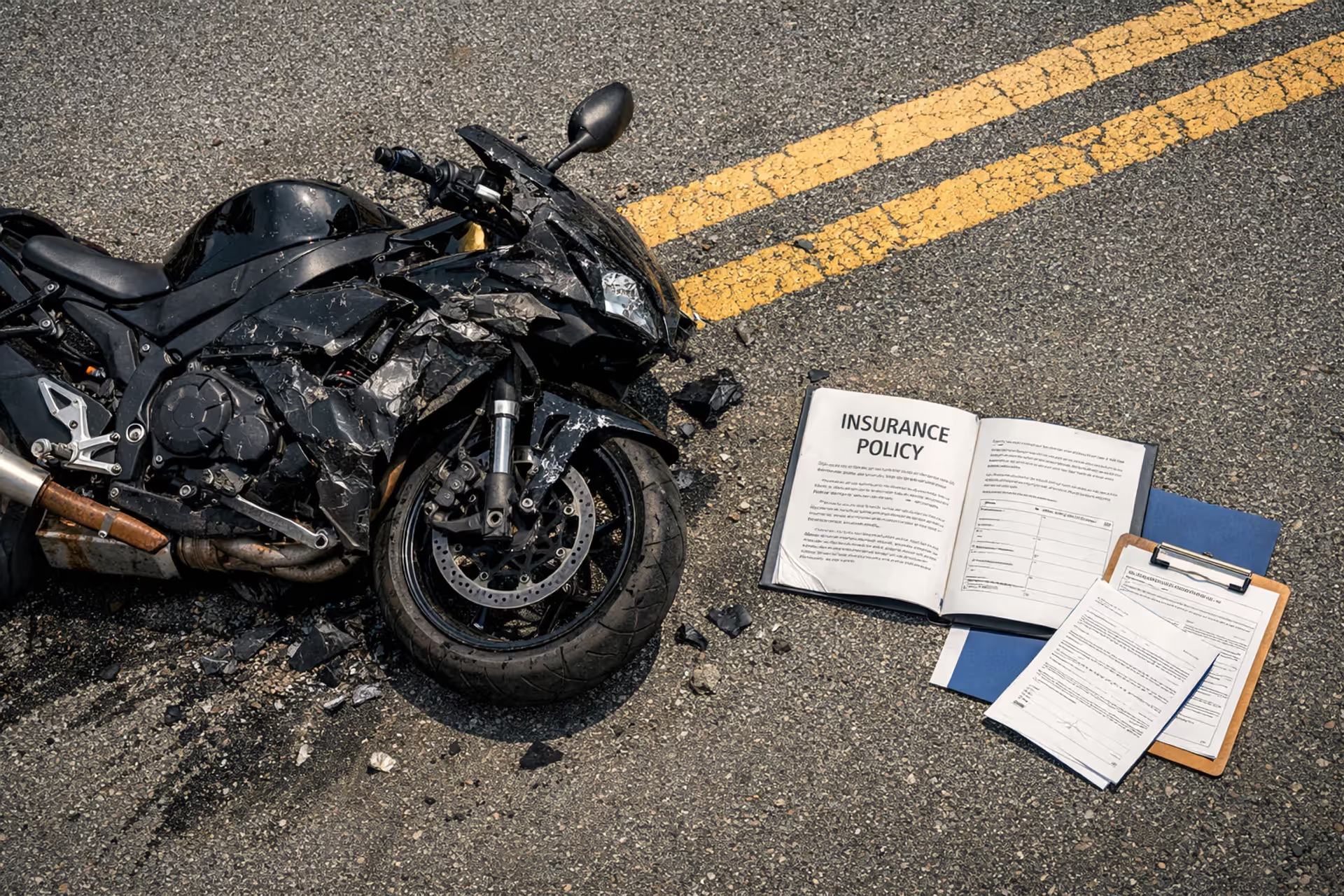
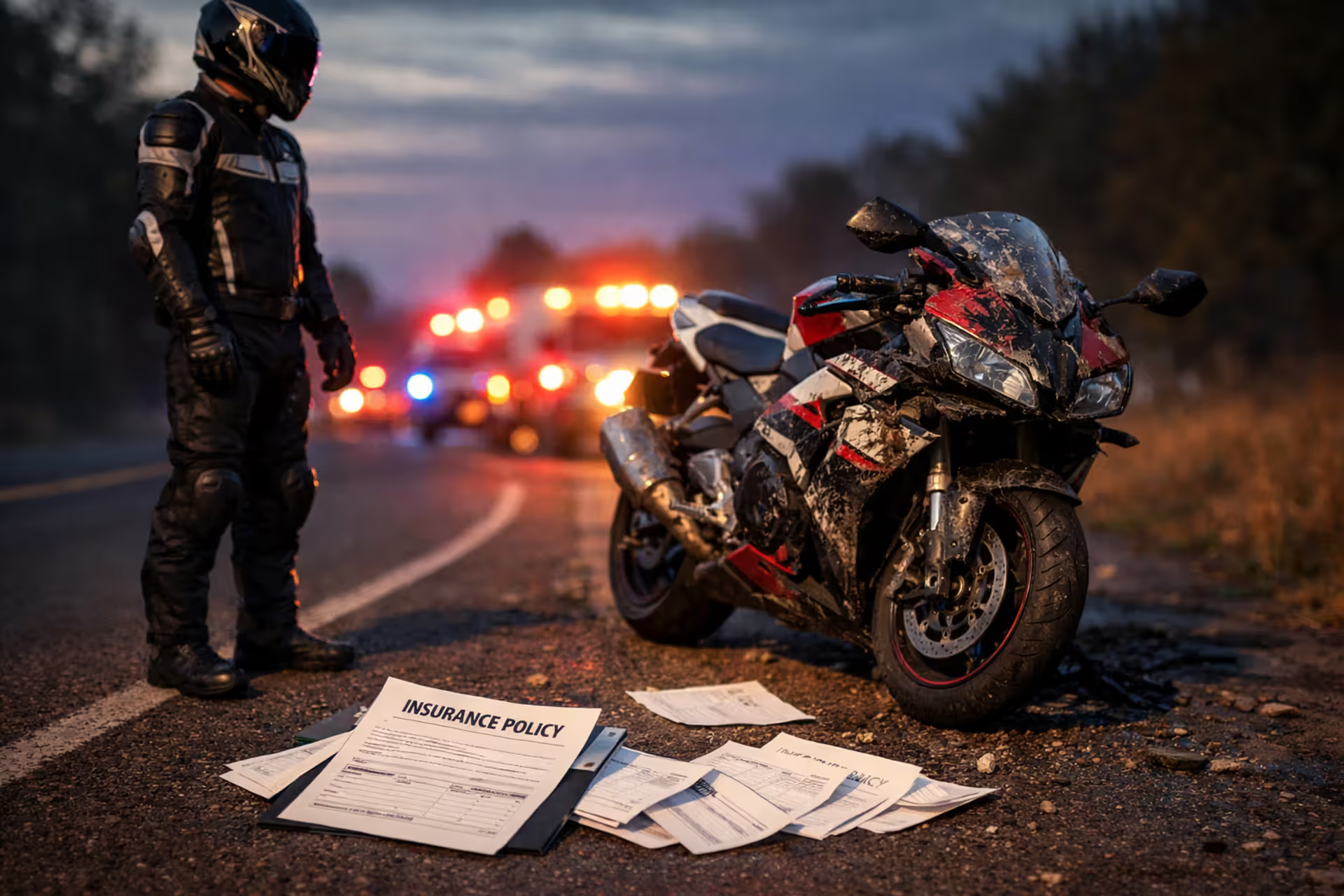
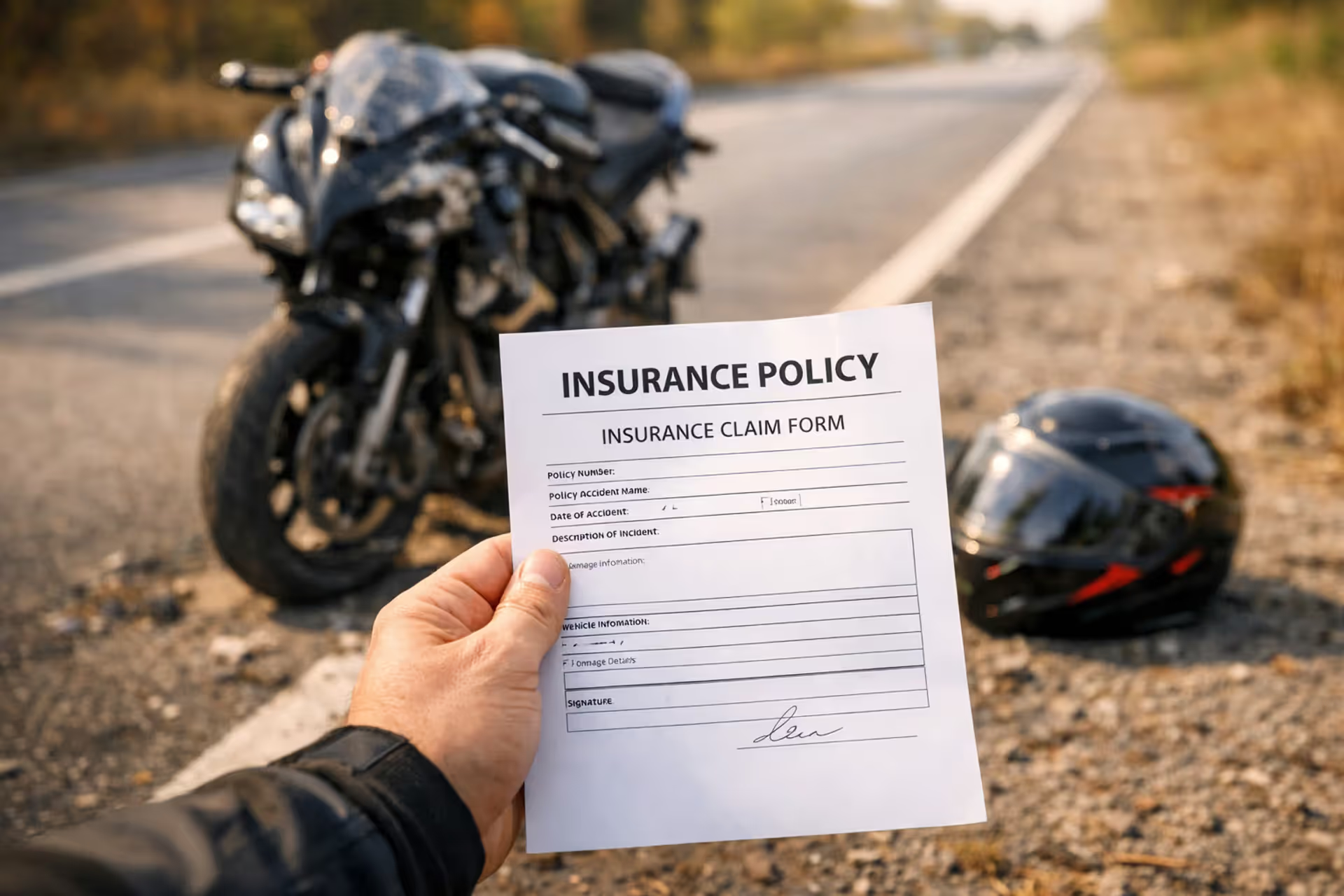
Crashed motorcycle lying on asphalt road next to scattered insurance policy documents on a sunny day
What Motorcycle Accident Insurance Coverage Actually Pays After a Crash

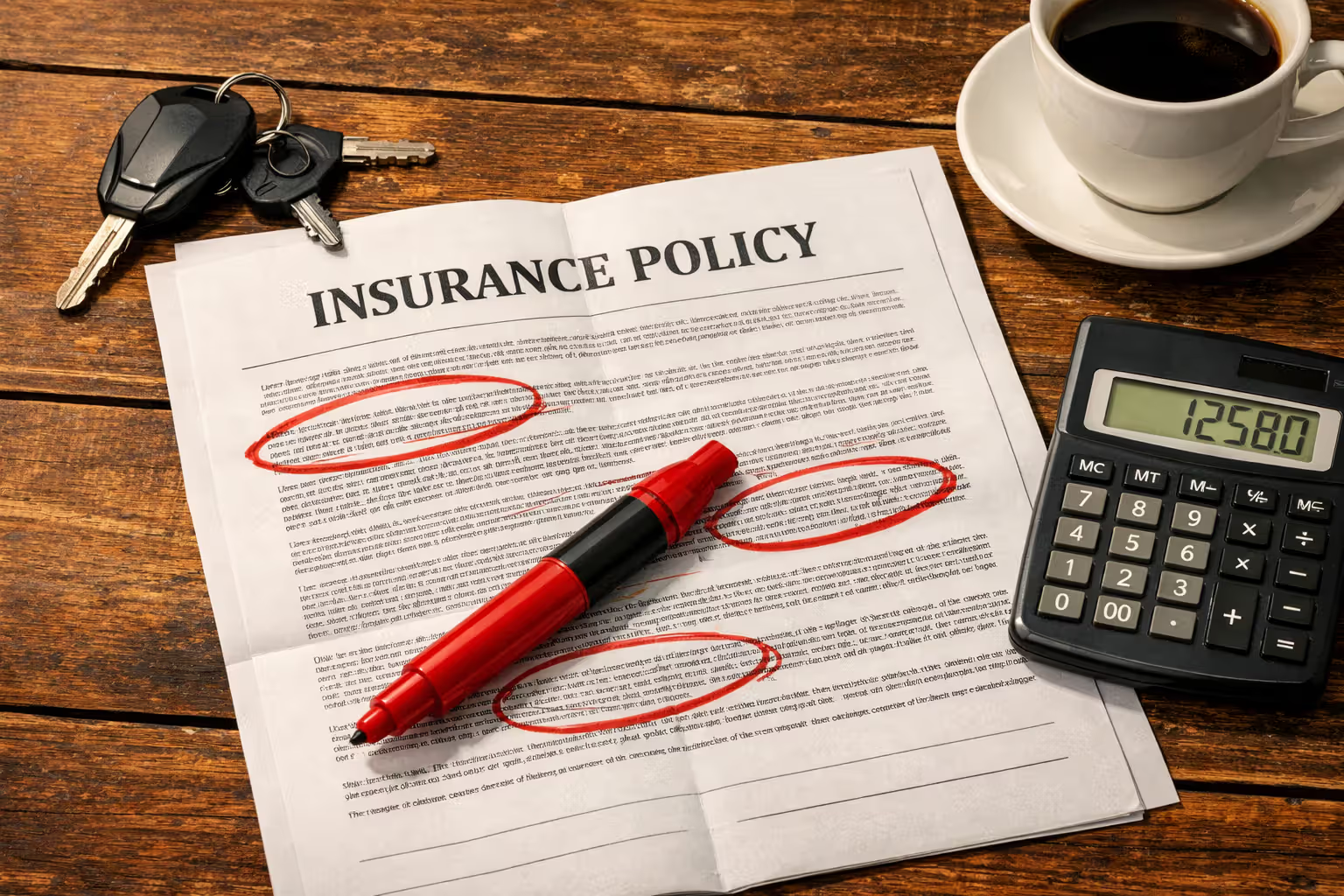
Here's what most riders learn too late: the insurance policy gathering dust in your glove box decides whether you're paying $800 or $80,000 after a crash. That coverage you picked when rates mattered more than details? It's now the only thing standing between you and financial disaster. Understanding these protection layers before asphalt meets leather makes all the difference.
Types of Coverage That Apply After a Motorcycle Accident
Your motorcycle policy isn't just one thing—it's actually several distinct protection types bundled together. Each one kicks in under different circumstances, and the combinations you selected determine what you'll pay when things go wrong.
Liability Coverage: When You're at Fault
When you cause damage or injuries to others, liability protection handles those costs. The bodily injury portion covers harm to people. The property damage section pays for vehicles and other property you damage. Slide into that Honda Civic at a red light? This coverage fixes their car and treats their whiplash. Your bike and your bruises? Not covered here.
Most states mandate laughably low minimums. Take California's $15,000 per person requirement. One emergency room visit after a moderate collision often hits $20,000. Add surgery, physical therapy, and missed work? You're looking at six figures fast.
Insurance companies express these limits using three numbers. That 100/300/50 policy means up to $100,000 for each injured person, a total of $300,000 per accident for all injuries combined, and $50,000 for property damage. Anything below 100/300/50 puts your house, savings, and future earnings at risk when you cause serious harm. The extra $200-400 per year to jump from minimum coverage to 250/500/100 costs less than one mortgage payment—but saves you from losing the entire house.
Here's the critical detail this motorcycle insurance coverage accident guide needs to hammer home: liability protection never covers your own injuries or bike repairs when you're the one who screwed up. That requires completely different coverage.
Collision Coverage: Repairing Your Bike
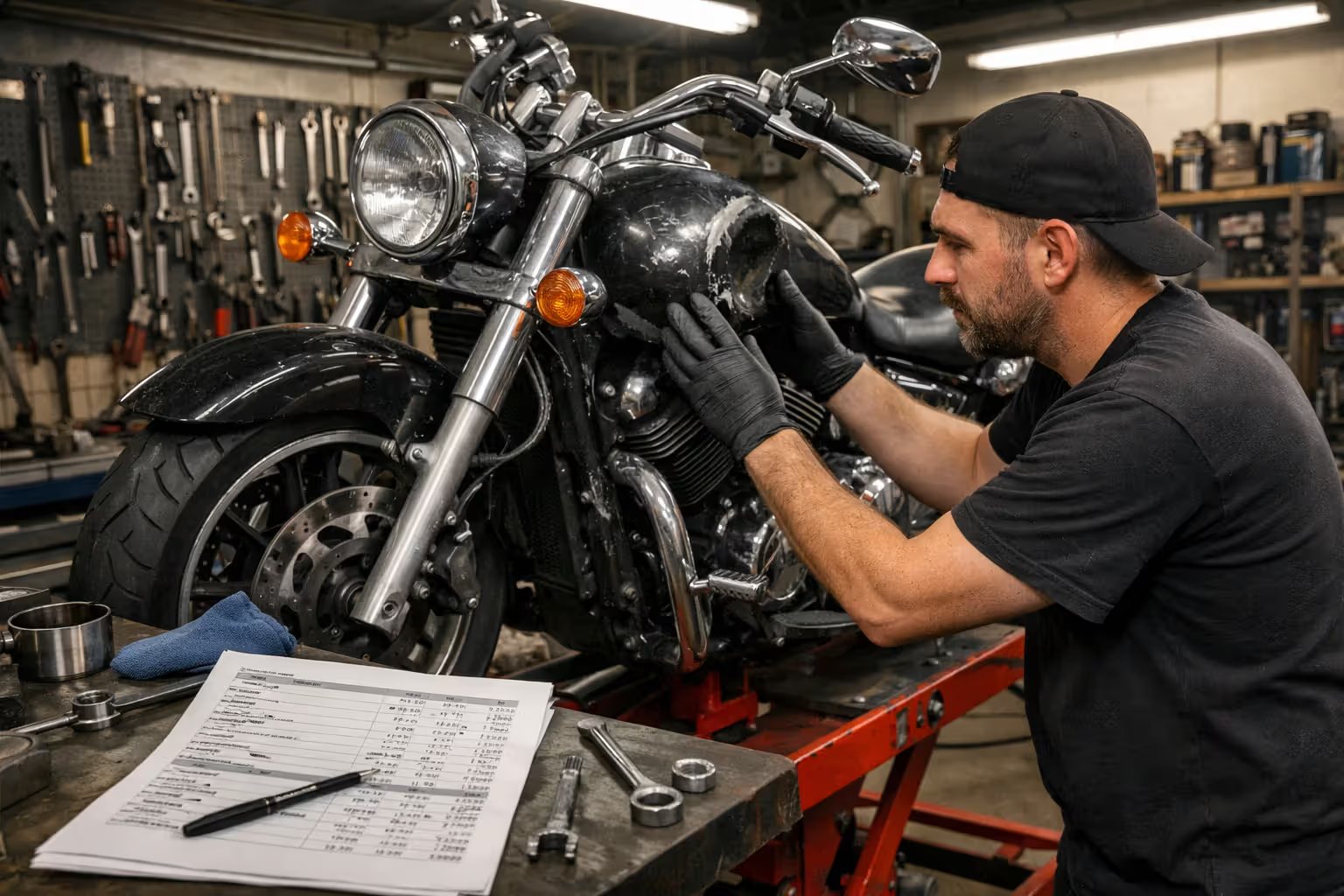
Collision protection pays for fixing or replacing your motorcycle regardless of whose fault the accident was. You pay your chosen deductible first—maybe $500 or $1,000—then the insurer handles the rest up to what your bike's actually worth.
That "actual cash value" calculation irritates riders constantly. Insurers determine what your bike would sell for today, not what you paid or what replacing it would cost. Your three-year-old bike that cost $18,000 new? Its current market value might be $11,000 after depreciation eats into it. If repairs run $9,000, you get that amount minus your deductible. When repairs would cost more than the bike's worth, the insurer calls it totaled and pays that $11,000 value minus your deductible.
Does collision protection make sense financially? Consider this: when your bike's value drops below $3,000-5,000, you're paying hundreds yearly to protect something worth thousands. For a $2,500 bike with $400 annual collision premiums and a $1,000 deductible, you'd spend $2,000 over five years protecting just $1,500 of at-risk value.
Deductible choices boil down to simple math. A $250 deductible might cost $800 yearly. A $1,000 deductible runs $500. File a claim every five years? The higher deductible saves $1,500 in premiums but costs you $750 more when claiming—netting $750 in savings over that period.
Author: Caleb Thornton;
Source: spy-delhi.com
Medical Payments and Personal Injury Protection
MedPay handles your medical bills after any accident, regardless of who caused it, up to whatever limit you selected. Those limits usually range from $1,000 to $50,000. Emergency transport, hospital stays, surgeries, X-rays, follow-up appointments—MedPay covers it all. The money comes quickly too, without waiting for fault determination, so you can pay immediate expenses while other claims drag on.
Personal injury protection expands way beyond just medical bills. PIP covers lost wages, rehabilitation costs, even funeral expenses in some policies. Twelve states make PIP mandatory. Others let you choose it. Limits generally run from $2,500 to $50,000, with certain states setting minimum thresholds.
The accident coverage motorcycle insurance guide distinction gets important here: MedPay and PIP protect you and whoever's riding with you. Liability covers the people you hurt. When you've got solid health insurance with low deductibles, a modest $5,000 MedPay policy fills gaps without paying for the same coverage twice. Riders without health insurance? Max out these limits.
Uninsured/Underinsured Motorist Coverage
About 13% of American drivers carry zero insurance. Mississippi and Michigan see rates above 20%. Uninsured motorist protection pays when someone without insurance hits you. Underinsured motorist coverage kicks in when the at-fault driver's policy limits won't cover your complete damages.
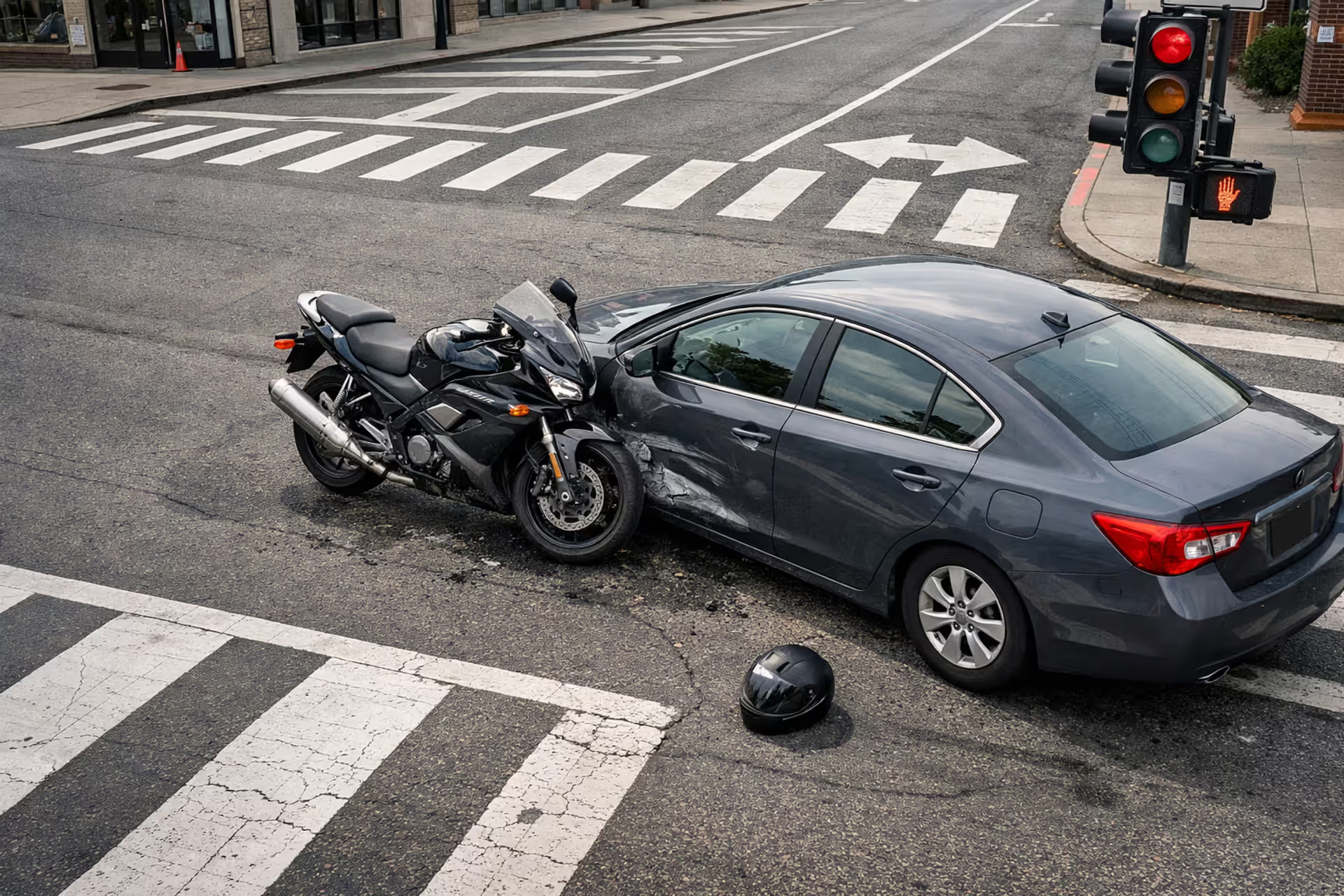
Here's a real-world scenario: someone blows through a red light and T-bones you, causing $80,000 in medical expenses and bike damage. They're carrying only their state's minimum $25,000 liability limit. Their insurer cuts a $25,000 check, but you're still facing $55,000 in bills. UIM coverage pays that difference up to your UIM limit.
Your UM/UIM coverage usually matches your liability limits. Carry 250/500/100 liability? You can select up to 250/500/100 UM/UIM. Certain states force insurers to offer this protection. Others leave it optional. The premium cost runs just 5-15% of what you're already paying for liability—minimal cost considering how many uninsured drivers you're sharing roads with.
Most policies include UM/UIM for bodily injury while excluding property damage. Tacking on UM property damage coverage costs almost nothing but gets your bike repaired when uninsured drivers trash it.
How Motorcycle Accident Claims Work: Step-by-Step Process
Filing a claim follows a specific sequence. Timing matters enormously for your payout and how coverage applies.
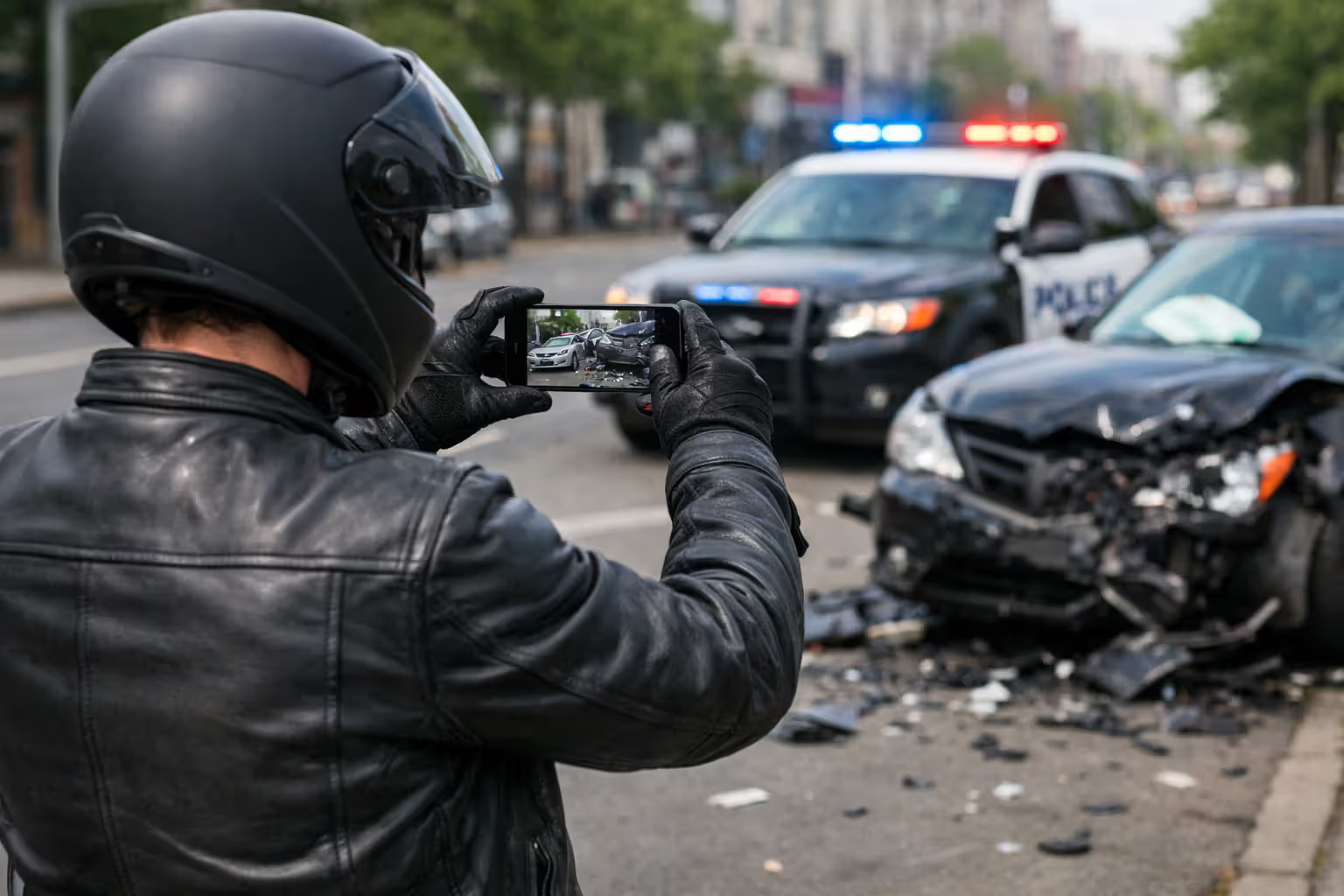
Scene documentation immediately: Photograph every vehicle, road conditions, traffic signs, visible injuries. Write down the other driver's insurance details, license plate, phone number. Get witness names and numbers. File a police report even when the accident seems minor—injuries often show up hours or days later.
Contact your insurer within 24-48 hours: Your policy demands prompt notification. Call your agent or the claims hotline right away. Share basic facts without admitting fault or guessing about injuries. They'll assign you a claim number and adjuster.
Get medical evaluation within 72 hours: See a doctor even when you feel fine. Adrenaline masks injuries. Delayed treatment lets insurers question whether the accident actually caused your problems. Document everything: pain levels, mobility issues, days missed from work. Your medical records become the foundation for injury claims.
Adjuster investigation takes 1-2 weeks: The adjuster examines police reports, photos, medical records, repair estimates. They determine fault percentages and which coverage applies. Clear liability cases? The at-fault driver's insurer might accept responsibility fast. Disputed fault drags out longer.
Repair estimates and bike inspection: Collision claims require estimates from approved shops or the insurer's own appraiser. Insurers frequently lowball initial estimates, ignoring hidden damage. Get multiple estimates. Insist on new inspections after disassembly reveals additional problems.
Settlement negotiation spans 2-8 weeks: The insurer proposes settling up for medical bills, bike repairs, lost income, pain and suffering. Their first offer typically lands 40-60% below fair value. Counter with documented expenses and comparable settlements. Still accumulating medical bills? Wait until you've reached maximum medical improvement before settling—reopening closed claims isn't an option.
Payment processing takes 1-2 weeks: After accepting their settlement, insurers issue payment within 10-30 days depending on state regulations. You'll sign a release waiving any future claims related to this accident.
This motorcycle accident insurance coverage process gets messy when multiple parties share fault or injuries worsen over time. Serious injury claims benefit from attorney involvement—they typically work on 33% contingency fees.
Author: Caleb Thornton;
Source: spy-delhi.com
Common Exclusions and Coverage Gaps in Motorcycle Policies
Policies spell out what they won't cover just as carefully as what they will. These exclusions ambush riders during claims.
Racing and competitive events: Track days, timed competitions, organized races all void your coverage. Even "informal" racing on public roads gives insurers reasons to deny your claim. A few insurers offer track day endorsements for $100-300 per event, covering bike damage while rarely touching liability or medical expenses.
Custom parts and accessories: Standard policies cap aftermarket parts coverage at $3,000-5,000. Got a bike with $15,000 in custom exhaust, upgraded suspension, fancy wheels, and premium electronics? You'll recover a fraction without purchasing a custom parts endorsement. These endorsements demand itemized lists with receipts, covering scheduled equipment up to specified limits.
Passenger injuries without adequate coverage: Your liability protection doesn't help passengers on your own bike—they're legally considered part of your vehicle. MedPay or PIP covers passenger injuries, but state minimums fall embarrassingly short. When your passenger faces $40,000 in medical bills and you've only got $5,000 MedPay, guess who they're suing for the difference?
DUI and impaired riding: Alcohol or drug impairment during an accident usually voids your collision and medical payments coverage. Liability coverage generally stays active—state laws prevent insurers from denying third-party claims—but you get nothing for your injuries or bike damage. Your policy gets cancelled too.
Off-road and unpermitted riding: Riding where motorcycles aren't allowed, on private property without permission, or on off-road trails voids coverage unless you've purchased specific off-road endorsements. Standard motorcycle policies only cover street-legal riding on public roads.
Most riders don't discover their $20,000 custom touring bike only has $3,000 in accessory coverage until after a total loss. They've just learned a $17,000 lesson that would've cost roughly $150 yearly to prevent with proper endorsements
— Michael Torres
Wear and tear versus accident damage: Insurers reject claims when existing damage makes accident assessment complicated. Your bike already had frame damage, then gets rear-ended? The insurer might refuse covering frame repairs, claiming they can't separate old damage from new.
Coverage lapses: Miss a premium payment by one day and you've created a coverage gap. An accident during that gap leaves you completely unprotected. Most states provide 10-30 day grace periods, but don't count on them.
Cost Factors That Determine Your Accident Coverage Limits
Premium costs and coverage limits connect directly to quantifiable risk factors and state regulations.
How Bike Value Affects Collision Coverage
Collision coverage premiums connect to your motorcycle's value, theft risk, and repair costs. A $40,000 touring bike costs 3-4 times more for collision coverage than a $10,000 standard bike, even with identical limits and deductibles.
Sport bikes carry premium surcharges of 20-50% compared to cruisers and touring bikes worth the same amount. Insurers track claim frequency and severity by motorcycle type—supersport riders statistically file more claims and suffer worse injuries than cruiser riders.
Age and condition matter too. Bikes over ten years old often don't justify collision coverage costs anymore. A 2012 bike worth $4,000 might carry $400 annual collision premiums. After your $1,000 deductible, you're protecting $3,000 of value while paying $400 yearly—that's 13% annually. Five years of premiums equals the entire bike's value.
Anti-theft devices, garage storage, low annual mileage reduce collision premiums by 5-15%. Insurers discount LoJack systems, disc locks, secured storage because they reduce theft claims.
Medical Coverage Limits by State
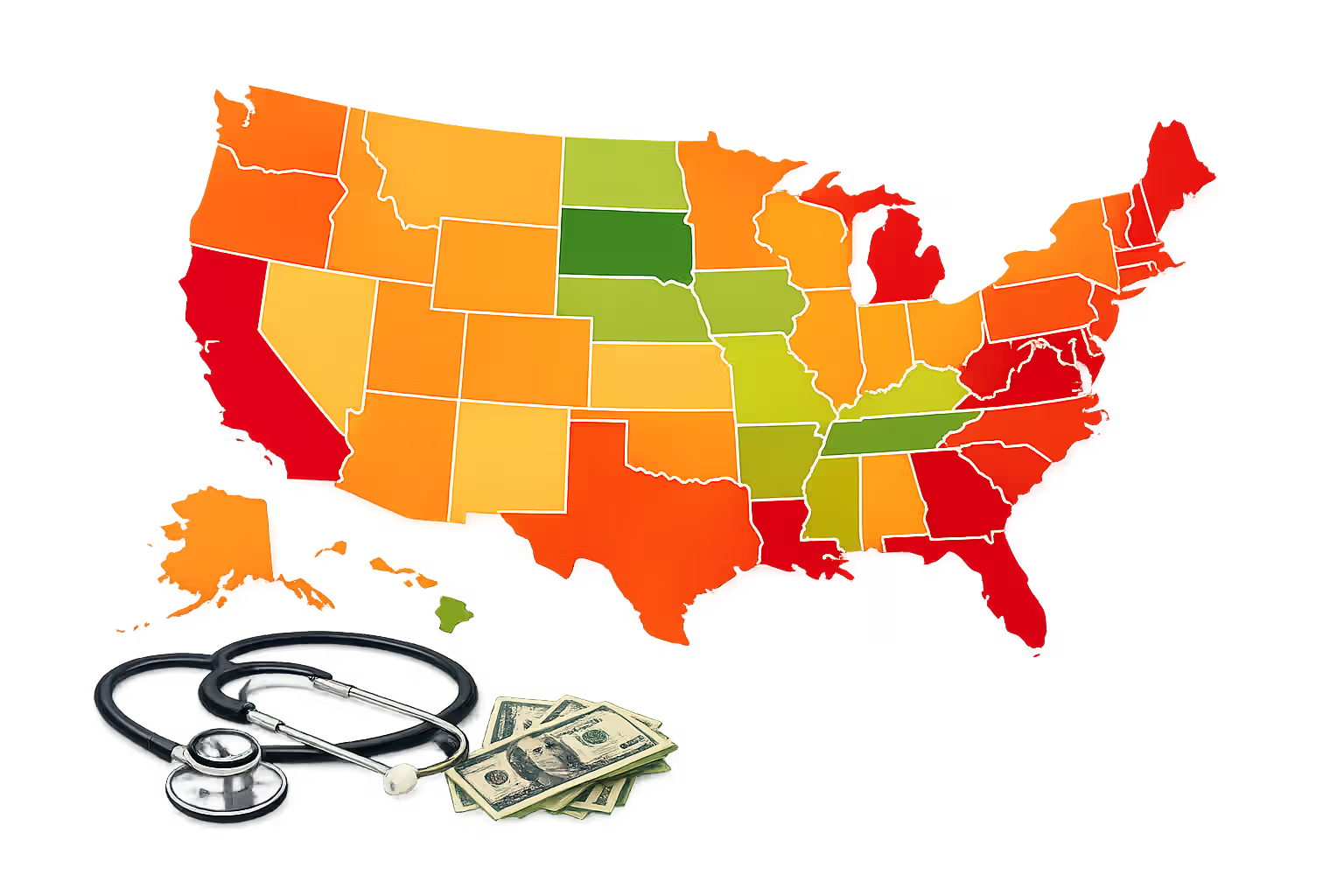
State regulations directly impact available medical coverage and minimum requirements. Michigan mandates unlimited PIP coverage, resulting in America's highest motorcycle insurance premiums—averaging $1,200-2,500 annually. Florida demands only $10,000 PIP, with average premiums around $400-800.
No-fault states—Florida, Michigan, New Jersey, New York, Pennsylvania, others—mandate PIP coverage and restrict lawsuit rights unless injuries cross specific thresholds. Traditional fault states let injured parties sue at-fault drivers directly, making liability limits more critical.
Medical payments limits top out at $50,000-100,000 with most insurers, though some offer $250,000 options. The motorcycle coverage accident insurance guide principle: match your MedPay limits to your health insurance deductible and out-of-pocket maximum. Health insurance with a $5,000 deductible and $8,000 out-of-pocket max? Carrying $10,000 MedPay covers those gaps.
Geographic location dramatically affects premiums. Urban riders pay 40-60% more than rural riders due to higher accident rates, theft, vandalism. Louisiana, Michigan, California consistently rank most expensive. Iowa, North Dakota, Wyoming offer the lowest premiums.
Author: Caleb Thornton;
Source: spy-delhi.com
Mistakes Riders Make When Choosing Accident Coverage
Poor coverage decisions during policy purchase create financial disasters after accidents.
Accepting state minimum liability limits: The biggest mistake possible. States set these minimums decades ago. They don't reflect modern medical costs or vehicle values. One day in intensive care exceeds most state minimums. Causing permanent disability or death triggers million-dollar lawsuits. Minimum liability saves $200-400 annually while exposing your home equity, retirement accounts, future wages to judgments.
Skipping uninsured motorist coverage: In states making UM/UIM optional, roughly 30% of riders decline it to save $100-200 annually. Then an uninsured driver causes $60,000 in injuries and bike damage, leaving the rider buried in bills with no recovery path. UM/UIM coverage costs pennies compared to what one uninsured motorist accident will run you.
Underinsuring medical payments: Riders carrying health insurance often skip MedPay entirely, assuming health insurance handles everything. But health insurance deductibles, copays, out-of-network charges add up fast. MedPay pays first, reducing what health insurance must cover. It also protects passengers who might not have health insurance.
Not documenting custom modifications: Add $8,000 in custom parts without notifying your insurer? Those parts aren't covered. Period. Insurers demand scheduled equipment endorsements listing each modification with receipts. After a total loss, you'll get paid for a stock bike only.
Choosing high deductibles without emergency funds: A $2,000 deductible saves premium money but becomes a nightmare when you can't afford the out-of-pocket cost after an accident. Match your deductible to available emergency savings—can't comfortably write a $1,000 check? Don't choose a $1,000 deductible.
Buying coverage from non-specialist insurers: General auto insurers often misunderstand motorcycle risk and coverage needs. They may not offer custom parts endorsements, track day coverage, appropriate medical limits. Motorcycle-specialist insurers like Dairyland, Progressive, Foremost understand what riders actually need and offer appropriate coverage options.
The accident protection motorcycle insurance guide lesson: spending an extra $400-600 annually on proper coverage prevents $50,000+ in uncovered expenses after one serious accident.
Author: Caleb Thornton;
Source: spy-delhi.com
Comparing Motorcycle Accident Coverage Across Major Insurers
Coverage options, limits, costs vary significantly among major motorcycle insurers. This comparison reflects typical coverage for a 35-year-old rider with a clean record on a $15,000 motorcycle.
| Insurer | Medical Payments Max | Collision Deductible Options | Custom Parts Coverage | Uninsured Motorist | Average Premium Increase After Claim |
| Progressive | $100,000 | $100-$2,000 | Up to $30,000 with endorsement | Available nationwide | 20-35% |
| GEICO | $25,000 | $250-$1,000 | Up to $3,000 standard | Available in most states | 25-40% |
| State Farm | $50,000 | $250-$1,000 | Up to $3,000 standard | Where state-required | 15-30% |
| Allstate | $50,000 | $250-$2,000 | Up to $10,000 with endorsement | Available nationwide | 20-35% |
| Dairyland | $50,000 | $250-$2,500 | Up to $20,000 with endorsement | Available nationwide | 25-40% |
| Nationwide | $50,000 | $250-$1,000 | Up to $3,000 standard | Available in most states | 20-30% |
Progressive leads for maximum medical payments and custom parts coverage, making it popular among touring and custom bike riders. GEICO offers competitive rates but lower medical limits and standard custom parts coverage. State Farm provides moderate coverage with the smallest average premium increases after claims, rewarding long-term customers through accident forgiveness programs.
Dairyland specializes in high-risk riders and modified bikes, offering higher custom parts limits while charging premium surcharges. Nationwide balances coverage and cost but lacks specialized endorsements serious riders need.
Premium increases following at-fault accidents stick around three to five years. One at-fault accident raising your premiums 30%? That costs an extra $300-600 annually on a $1,000 policy—$1,500-3,000 total over five years.
Frequently Asked Questions About Motorcycle Accident Insurance
Protecting Yourself After the Accident
Motorcycle accident insurance coverage only works when you've purchased appropriate limits before the crash. State minimums leave massive gaps. Custom parts need specific endorsements. Medical coverage should match your health insurance deductibles. Uninsured motorist protection is non-negotiable given how many uninsured drivers share roads with you.
Review your policy annually, especially after buying custom parts or accessories. Photograph your bike. Keep modification receipts. Understand your deductibles, limits, exclusions before needing to file a claim.
The difference between adequate coverage and minimum coverage costs $500-800 annually for most riders. One serious accident creates $50,000-200,000 in expenses. That premium difference becomes the best money you've ever spent when someone runs a red light and changes your life forever.
Related Stories

Read more
Read more

The content on this website is provided for general informational and educational purposes only. It is intended to offer insights and guidance on motorcycle accident insurance claims, settlement processes, liability issues, coverage limits, medical compensation, and related insurance matters, and should not be considered legal or financial advice.
All information, articles, and materials presented on this website are for general informational purposes only. Insurance policies, liability standards, settlement practices, and state regulations may vary by jurisdiction and insurer. The outcome of a motorcycle accident claim depends on the specific facts of the accident, available evidence, policy language, and applicable law.
This website is not responsible for any errors or omissions in the content, or for actions taken based on the information provided. Users are strongly encouraged to consult with a qualified attorney or licensed insurance professional regarding their specific motorcycle accident claim before making decisions about settlements, negotiations, or coverage disputes.