
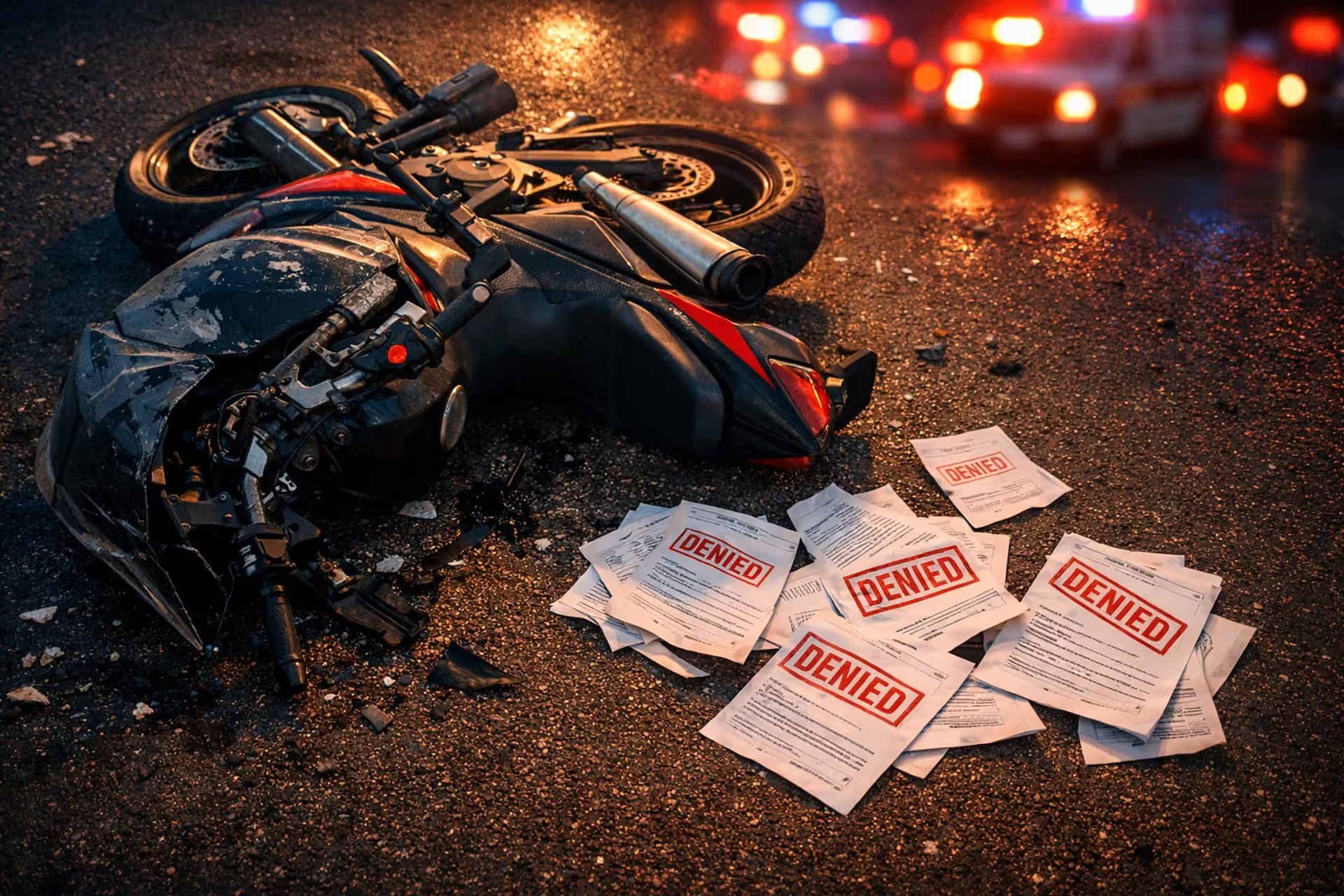
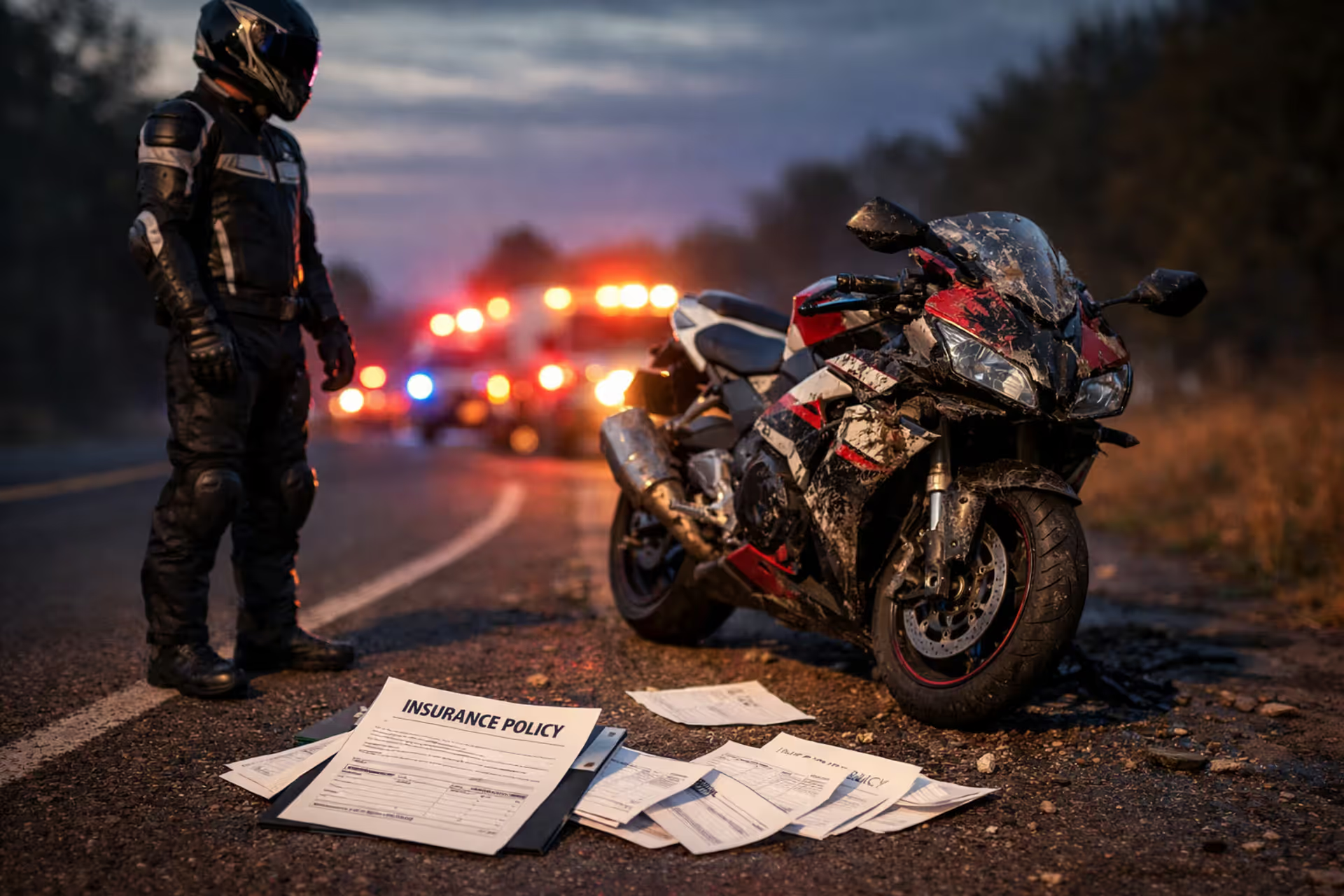
Crashed motorcycle lying on asphalt road with scattered insurance policy papers stamped denied and emergency lights in background
Motorcycle Accident Insurance Exclusions Your Policy Won't Pay For

Maybe you've just been in a crash and your insurer's giving you the runaround. Or maybe you're smart enough to check your coverage before disaster strikes. Either way, here's the deal: what your motorcycle insurance won't pay for matters just as much as what it will.
I've seen riders blindsided by exclusions they never knew existed. A friend thought he had comprehensive coverage until his claim got rejected because he'd installed a turbo kit without telling his insurance company. Another guy crashed coming home from a bar—barely over the limit—and his insurer walked away from a $40,000 claim.
Insurance companies build escape routes into every policy. Some things they won't touch at all. Other things they'll pay for, just not as much as you'd expect. That distinction—what's fully excluded versus what's just limited—can leave you holding a bill for tens of thousands.
Here's what sucks: most people find out their coverage has holes only after they try to use it. You can't add protection after you've already crashed. Better to know now what won't be covered, so you can decide whether to buy additional protection or just accept the risk.
Common Motorcycle Insurance Exclusions That Deny Accident Claims
Let me walk you through the big reasons claims get rejected. I'm not talking about borderline situations where there's room for interpretation. These are hard stops—scenarios where your insurer will absolutely deny your claim, and the motorcycle insurance exclusions accident guide I'm sharing covers what happens most often.
Racing and Competitive Events
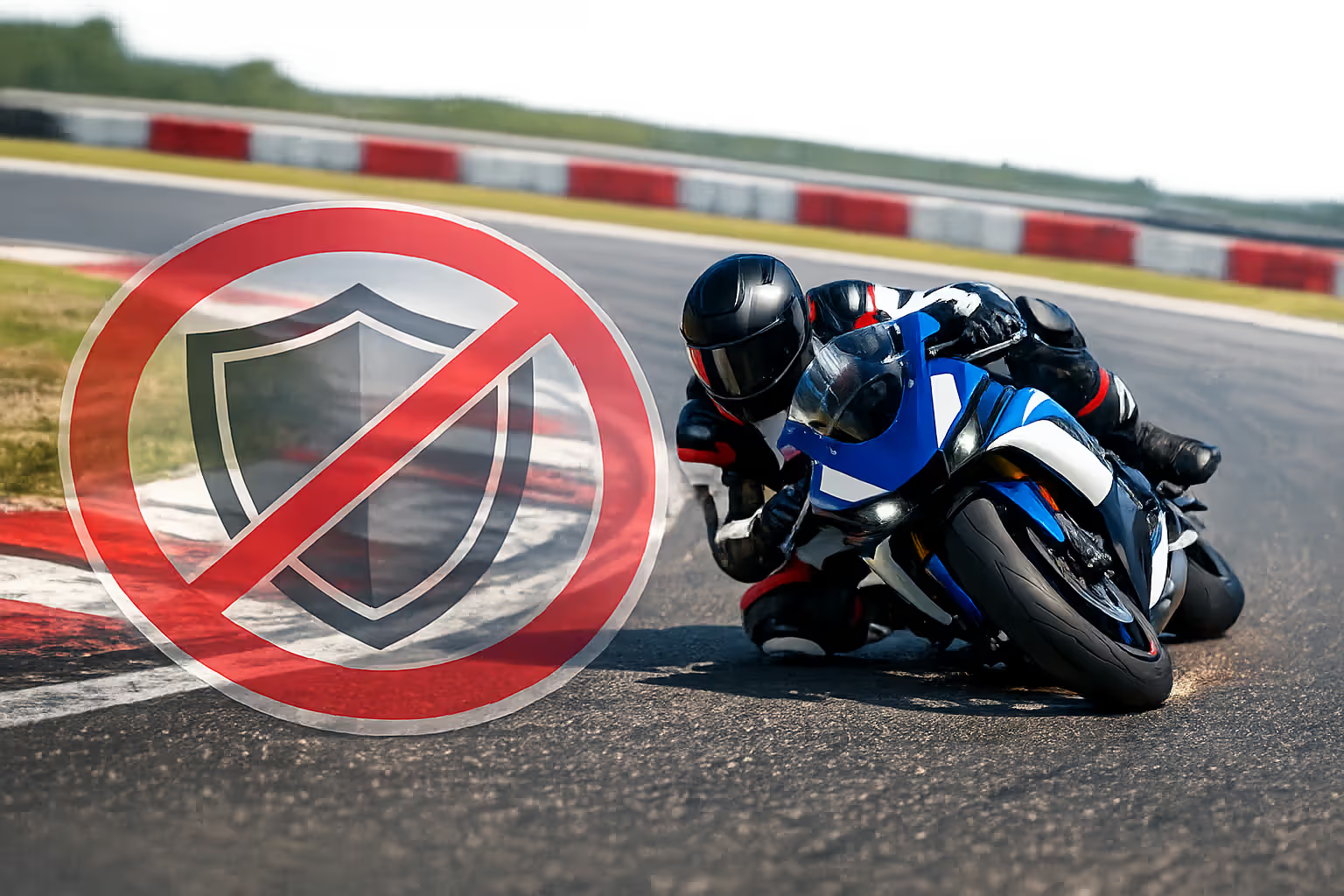
Take your bike to a track day? Your insurance just evaporated. Doesn't matter if it's an official race, a casual track session, or your first time at a riding school. The moment you're on a closed course doing anything competitive or timed, standard policies don't apply.
Insurance companies see track riding as fundamentally different from street riding. They're not wrong—you're pushing limits you'd never approach on public roads. The risk profile changes completely.
Here's where it gets tricky: some policies use vague language about "racing-type activities." I've heard of claims denied because riders were doing aggressive canyon runs that looked competitive, even though no formal event was happening. If you regularly attend track days, budget for specialized motorsports insurance. It's not cheap—expect $500 to $1,500 annually depending on your bike and experience level.
Author: Ryan Whitlock;
Source: spy-delhi.com
Riding Under the Influence
Crash with alcohol or drugs in your system? You're on your own. This isn't negotiable, and it doesn't matter who caused the accident. Your liability coverage vanishes. Your collision coverage disappears. Everything goes away.
The BAC threshold varies by policy, but 0.08% is the standard cutoff. Some policies go lower. A few use broad language about "any impairment whatsoever," which could theoretically apply even under the legal limit if you're demonstrably affected.
Got a DUI after your accident? That's game over for your claim. Insurers use arrest records as proof of impairment. I've seen them hire investigators to pull bar tabs and credit card receipts showing alcohol purchases before crashes. They'll fight your claim aggressively because impaired riding gives them an ironclad reason to deny.
Unlicensed or Improperly Licensed Riders
You need a valid motorcycle endorsement when you crash. Not a regular driver's license. Not an expired motorcycle license. Not a suspended license you're "working on reinstating." A current, valid motorcycle endorsement.
This exclusion bites people who let their license lapse by a few weeks. Renewal slips your mind, you crash during that gap, and suddenly you're uninsured. I know someone who lost a $25,000 claim because his license had been suspended for unpaid parking tickets he didn't know about.
Lending your bike to someone? Make absolutely sure they're properly licensed. If your buddy with only a car license crashes your bike, your insurance won't cover the damage or any liability. You'll be personally sued for whatever destruction they caused, and you'll be replacing your bike out of pocket.
Learner's permits sometimes work, but only if you've explicitly told your insurer and they've agreed to cover you during that period. Don't assume anything.
Modified Bikes Without Disclosure
Performance mods require disclosure. Period. If you've changed anything that affects how your bike performs, handles, or what it's worth, your insurer needs to know.
The excluded coverage motorcycle accident insurance guide logic here is straightforward: you bought insurance for a stock bike, but you're riding something different. Insurers base premiums on the bike you described when you applied. Change that bike materially, and they argue the contract no longer applies.
I'm talking about engine modifications, suspension changes, turbochargers, superchargers, exhaust systems that change performance, ECU flashes—anything that makes your bike faster or changes its handling characteristics. Even expensive cosmetic mods that increase value should be reported.
One rider I know installed $15,000 in custom parts—beautiful work, all bolt-on stuff. Totaled his bike and found out his insurer would only cover the stock bike's value because he'd never mentioned the modifications. He lost $15,000 because he didn't want to pay an extra $200 annually for scheduled coverage.
How Coverage Limitations Differ from Full Exclusions
Not every gap in your policy is a complete denial. Limitations are trickier—they reduce payouts without eliminating coverage entirely. Understanding motorcycle insurance limitations accident guide principles helps you set realistic expectations when you file a claim.
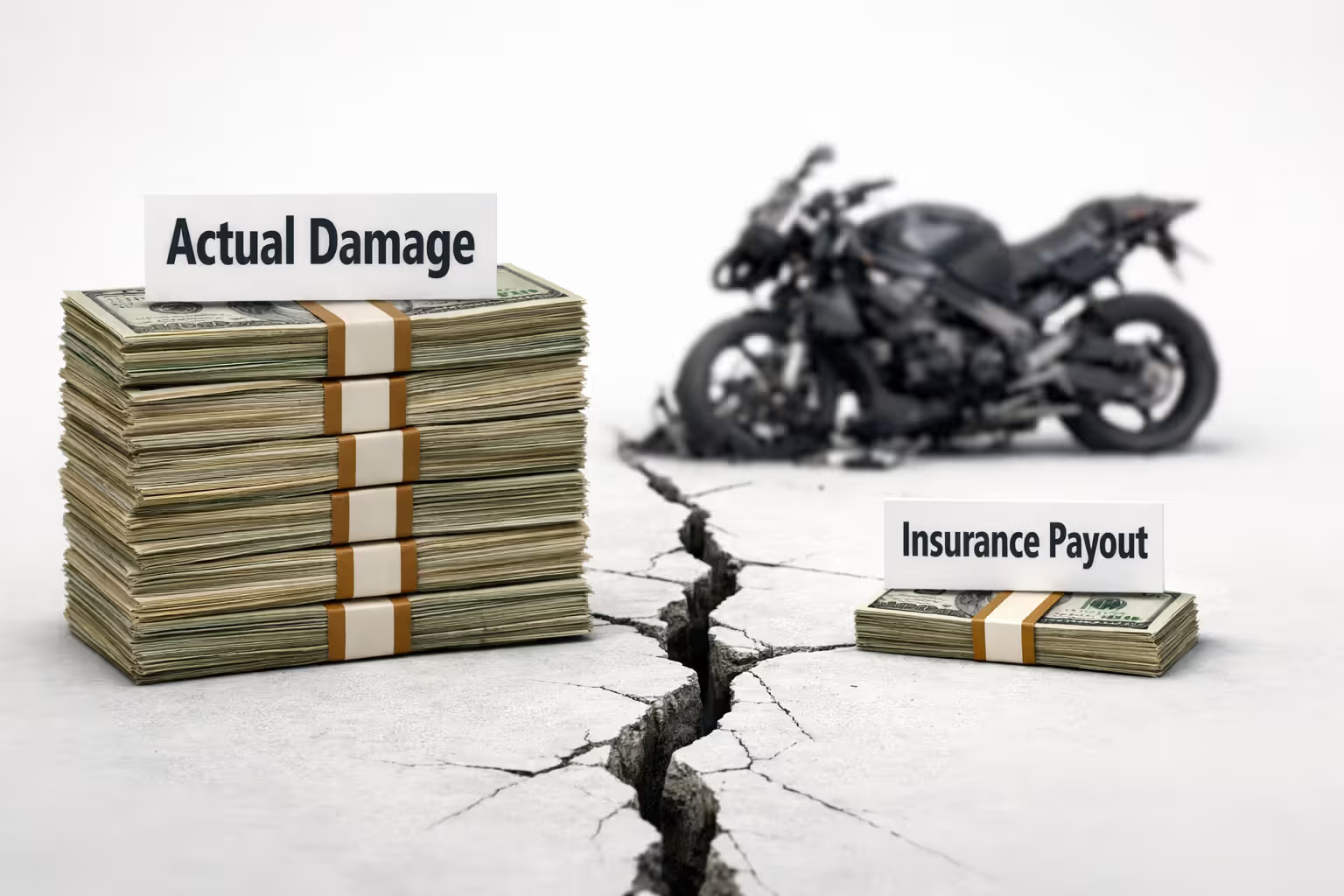
Depreciation hits hard on older bikes. Your insurer pays actual cash value, not what you paid years ago. That 2015 bike you bought for $12,000? It's worth maybe $6,500 now. Crash it, and that's your payout, minus your deductible. Unless you've bought agreed value coverage (also called stated value), you're getting current market value based on comparable bikes for sale in your area.
Aftermarket parts usually have low caps. Most standard policies limit custom parts to $3,000 or less. Some exclude them entirely. You've installed $10,000 in Öhlins suspension, custom wheels, and a Brembo brake upgrade? Too bad—you're recovering three grand at most. Want full coverage? You'll need a scheduled equipment endorsement where you list each modification with receipts and photos.
Medical payment coverage runs out fast. These policies typically cap at $5,000 to $10,000 per person. Sounds reasonable until you see actual motorcycle injury bills. A moderate accident with broken bones and a few days in the hospital easily hits $50,000. Your medical payments coverage pays its limit, then you're filing through your health insurance—and dealing with whatever deductibles and copays that involves.
Your liability limits are exactly that—limits. You carry 25/50/25 coverage because it's cheap? Great, until you cause an accident that injures someone seriously. Your policy maxes out at $25,000 per person for injuries. If the other rider needs surgery, months of physical therapy, and can't work for six months, you're looking at $200,000 in damages. Your insurance pays $25,000. You're personally liable for the remaining $175,000. They can garnish your wages, put liens on your property, and chase you for years.
Diminished value isn't covered, and it's real. Even after perfect repairs, your bike is worth less because it has accident history. Carfax and similar services track this. Try to sell your repaired bike, and you'll get offers thousands below clean-title comparable bikes. Most policies don't acknowledge this loss. You can sometimes recover diminished value from the at-fault party's insurer, but it's a fight.
Author: Ryan Whitlock;
Source: spy-delhi.com
7 Scenarios Where Motorcycle Accident Insurance Won't Pay
Let me give you real situations where the non covered motorcycle accident insurance guide principles apply. These aren't theoretical—I've seen each of these claim denials happen to actual riders.
1. Off-road riding on a street bike. You decide to explore a dirt trail on your sport bike. Lose control in loose gravel and go down. Your insurer denies the claim because street bikes aren't designed for off-road use, and your policy covers on-road use only. Some companies interpret "off-road" broadly—I've heard of claims denied for crashes in gravel parking lots and dirt driveways. Dual-sport bikes get more leeway, but check your specific policy language.
2. Using your bike for commercial purposes. Started doing DoorDash deliveries on your bike to make extra cash? Your personal policy just became worthless. Any accident during commercial use—food delivery, courier work, any for-profit activity—isn't covered. Personal policies explicitly exclude business use. You need commercial insurance, which costs two to three times more than personal coverage. Even occasional business use voids personal coverage.
3. Intentional damage claims. Some idiot files a fraudulent claim, deliberately damaging his bike to collect insurance money. Except insurers investigate aggressively. They look at your financial situation—are you behind on payments? They check your claim history. They examine the accident scene. Fraud investigators are good at their jobs. Intentional damage claims always get denied, and you might face criminal charges.
4. Mechanical failure from neglect. Your brake pads are worn to nothing. You've ignored them for months. Finally, they fail completely while you're riding, causing a crash. Insurer denies the claim because you failed to maintain your bike properly. Policies exclude damage resulting from poor maintenance, deferred service, and mechanical problems you ignored. Now, if something breaks suddenly without warning—a tire blowout on nearly new tires, a brake line that ruptures spontaneously—that's different. But deferred maintenance gives insurers an easy denial.
5. Passenger injuries exceeding your coverage. Your girlfriend rides on the back. You're at fault in an accident, and she breaks her femur, needs surgery, misses two months of work. Her bills hit $80,000. You carry minimum liability—$25,000 per person. Your insurance pays $25,000. She sues you personally for the remaining $55,000. This happens more than you'd think. People assume their insurance "covers passengers," which is technically true—up to the policy limit.
6. Theft during an excluded activity. You're using your bike for excluded commercial delivery work. Stop at a restaurant to pick up an order, and someone steals your bike. Comprehensive coverage normally pays for theft, but your insurer argues the theft occurred during excluded commercial activity. This one's a gray area that generates lawsuits, but you don't want to be the test case.
7. International accidents. You ride from California down into Mexico, past the border zone where US insurance still applies. Thirty miles into Mexico, you're in a crash. Your US policy doesn't cover accidents there. You needed separate Mexican insurance, available at the border for daily or annual rates. Canada is usually covered, but anywhere else requires special arrangements.
| Scenario | Completely Not Covered | Partial Coverage Only | Full Protection Available |
| Track days or racing | Yes—no exceptions | Never | Only with motorsports policy |
| DUI or drug impairment | Yes—automatic denial | Never | N/A—can't insure illegal acts |
| Invalid motorcycle license | Yes—must have endorsement | Sometimes with learner's permit if disclosed | Only with valid endorsement |
| Undisclosed modifications | Yes if not reported | Capped around $3,000-$5,000 | Requires scheduled endorsement |
| Passenger gets injured | No—but capped by limits | Medical payments help but limited | Need high liability limits |
| Off-road on street bike | Yes for sport bikes | Possibly for dual-sport models | On-road use always covered |
| Commercial delivery use | Yes—need commercial policy | Never with personal policy | Only personal riding covered |
| Neglected maintenance causes crash | Yes—owner responsibility | Never | Sudden failures may be covered |
| Normal aging and wear | Yes—not an insurable event | Never | N/A—maintenance is owner's job |
| Bike stolen during excluded use | Depends on policy language | Gray area causing disputes | Theft during normal use covered |
Reading Your Policy: Where Exclusions Hide in the Fine Print
Your policy document isn't written for normal humans. It's written by lawyers protecting the insurance company. Exclusions scatter throughout multiple sections, sometimes contradicting what seemed like broad coverage promises earlier in the document.
Start with the declarations page. That's the first page or two listing your bike, coverage types, limits, and what you're paying. Make sure your bike's description is accurate—year, make, model, VIN. Check that any modifications you've disclosed appear here or in attached endorsements.
The insuring agreement sounds promising. This section describes what the policy covers in general terms. It reads broadly and makes you think you've got comprehensive protection. You don't. This section is always subject to exclusions buried elsewhere in the document.
The exclusions section is where they get you. This is mandatory reading. Every single exclusion matters. Some are obvious—"we don't cover racing"—but others use technical insurance language that takes effort to parse. You'll see exclusions for expected or intended injury, contractual liability, punitive damages, and various activities. Read this section twice. Then read it again.
Conditions matter as much as coverage. This section lists what you must do for coverage to remain valid. Report accidents within a specific timeframe (often 24-72 hours). Cooperate with investigations. Allow the insurer to inspect your bike. Maintain a valid license. These aren't suggestions—they're requirements that void coverage if you don't comply.
Endorsements modify everything. These attach to your base policy and change terms. One endorsement might add coverage for custom parts. Another might create new exclusions. Each endorsement needs careful reading because it overrides the base policy language. If an endorsement contradicts the main policy, the endorsement wins.
The definitions section is sneaky important. Insurance policies define common words in uncommon ways. What you think "accident" means and what your policy says it means might differ significantly. Terms like "bodily injury," "property damage," "occurrence," "insured person," and "your covered auto" (or motorcycle) have specific meanings. The definitions section clarifies these, and those clarifications affect your coverage.
When something isn't clear, don't guess and don't let it slide. Send your agent or insurer a written request for clarification—email creates a paper trail you'll need if there's a later dispute. Ask specific questions about your actual situation. "I ride my bike to my office occasionally for work—am I covered?" Get answers in writing.
Riders call me after their claims get denied, and the first thing I ask is whether they read their policy before they crashed. Nobody does. The exclusions section is where insurance companies build their escape routes, and it's deliberately opaque. If you're confused about whether you're covered for something, get clarification in writing before you need to make a claim—afterward is too late
— Mark Romano
What to Do When Your Motorcycle Accident Claim Gets Denied
Getting your claim denied isn't necessarily the end. Insurers sometimes reject legitimate claims because of misunderstandings, incomplete information, or overly aggressive interpretation of policy language. You can fight back, but it requires persistence and documentation.
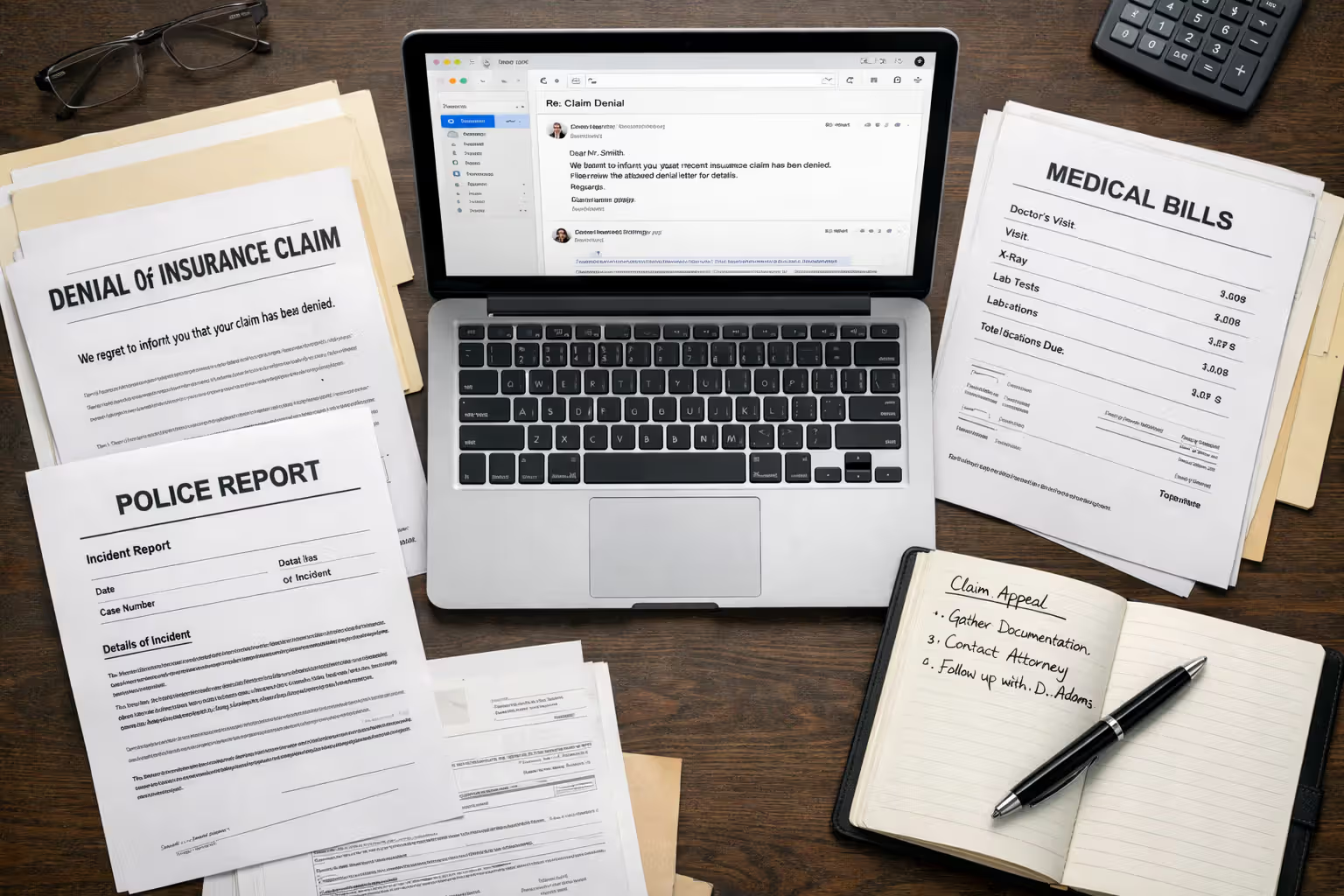
Dissect the denial letter. Your insurer must explain specifically why they're denying your claim. They'll cite policy language and explain how your situation fits an exclusion. Read this carefully. If their explanation seems weak or doesn't match your understanding of what happened, you've got an opening.
Compile your evidence. Pull together everything related to your claim—police reports, medical records, photos, repair estimates, witness statements, every email and letter exchanged with your insurer. If the denial hinges on an exclusion you believe doesn't apply, gather documents proving your position.
Submit a written appeal through the insurer's process. Insurance companies have internal review procedures. Write a detailed letter explaining why the denial is wrong. Quote specific policy language supporting your position. Attach your evidence. Keep emotion out of it—stick to facts and policy terms. Generic complaints about fairness won't work; specific disputes about policy interpretation sometimes do.
File a complaint with your state insurance regulator. Every state has a department or commissioner handling insurance consumer issues. Filing a formal complaint triggers a regulatory review. State officials can pressure companies to reconsider questionable denials, especially if the insurer has multiple similar complaints. This process is free and sometimes gets results when internal appeals fail.
Consult an attorney for significant claims. If you're fighting over $10,000 or more, talk to a lawyer specializing in insurance coverage disputes. Many offer free initial consultations. They can spot policy language supporting your position that you might miss. They also negotiate with insurers more effectively because insurers know lawyers file lawsuits. Attorney fees vary—some work on contingency (taking a percentage if you win), others charge hourly.
Maintain detailed records of everything. Write down every phone call with your insurer—date, time, person's name, what was discussed. Send follow-up emails after calls: "Thanks for speaking with me today. Just to confirm, you said..." This documentation becomes critical if you escalate.
Watch your deadlines carefully. Policies impose time limits for appeals. State laws impose deadlines for lawsuits. Miss these, and you lose your right to dispute the denial even if you're right. Mark these dates clearly and don't let them pass.
Author: Ryan Whitlock;
Source: spy-delhi.com
How to Minimize Coverage Gaps in Your Motorcycle Policy
Fighting denied claims sucks. Better to structure your coverage properly from the start, minimizing exclusions and limitations before accidents happen.
Buy liability limits that actually protect you. State minimums—often 25/50/25—are laughably inadequate. A serious accident easily generates six-figure liability. Consider 100/300/100 or higher. The premium difference between minimum and substantial coverage is typically $200-400 annually. That's cheap compared to personal bankruptcy from a lawsuit.
Add medical payments coverage for yourself and passengers. This pays medical bills regardless of fault. Even with health insurance, medical payments coverage fills gaps, covers deductibles, and protects passengers who might otherwise sue you. Buying $10,000 to $25,000 in coverage is reasonable—it's not expensive and provides real protection.
Uninsured/underinsured motorist coverage is essential. About 15-20% of drivers in most states have no insurance. Another chunk carry only minimum coverage. This endorsement ensures you can recover damages when hit by drivers who can't pay. Without it, your only option is suing someone who probably has no assets. You'll get a judgment you can't collect.
Schedule custom parts specifically. If you've modified your bike, buy an endorsement listing each modification with agreed values. Submit receipts and photos. This eliminates disputes about whether mods are covered and what they're worth. Yes, it costs extra—usually 1-2% of the scheduled value annually. Worth it if you've sunk serious money into your bike.
Personal umbrella policies are cheap liability protection. For $150-300 annually, you can add $1-2 million in liability coverage that sits above your motorcycle policy limits. If you cause an accident exceeding your base policy limits, the umbrella kicks in. It covers all your vehicles and property, not just your bike.
Review your policy every year. Your situation changes—your bike ages, you add modifications, your income and assets grow. Annual reviews ensure your coverage matches current reality. Update your insurer about changes promptly. Adjust limits as needed.
Understand what you're actually covered for now, not after you crash. Read your current policy completely. Identify gaps and exclusions while you can still address them. Ask your agent questions. Add endorsements if needed. Make conscious decisions about risk instead of discovering problems during claim time.
Disclose everything upfront. When applying for coverage or making changes, tell your insurer everything relevant. Modifications, occasional business use, track day plans—anything that might affect coverage. Insurers can't deny claims based on things you properly disclosed. Hiding information gives them ammunition for denial later.
FAQ: Motorcycle Insurance Exclusions and Non-Covered Accidents
Motorcycle accident insurance exclusions define where your financial protection ends and your personal liability begins. Know these boundaries before you ride. Ask questions about anything unclear in your policy. Add coverage for gaps that worry you. The worst time to learn what's not covered is when you're dealing with injuries, a destroyed bike, and mounting bills. Figure it out now, while you can still do something about it.
Related Stories

Read more
Read more

The content on this website is provided for general informational and educational purposes only. It is intended to offer insights and guidance on motorcycle accident insurance claims, settlement processes, liability issues, coverage limits, medical compensation, and related insurance matters, and should not be considered legal or financial advice.
All information, articles, and materials presented on this website are for general informational purposes only. Insurance policies, liability standards, settlement practices, and state regulations may vary by jurisdiction and insurer. The outcome of a motorcycle accident claim depends on the specific facts of the accident, available evidence, policy language, and applicable law.
This website is not responsible for any errors or omissions in the content, or for actions taken based on the information provided. Users are strongly encouraged to consult with a qualified attorney or licensed insurance professional regarding their specific motorcycle accident claim before making decisions about settlements, negotiations, or coverage disputes.