

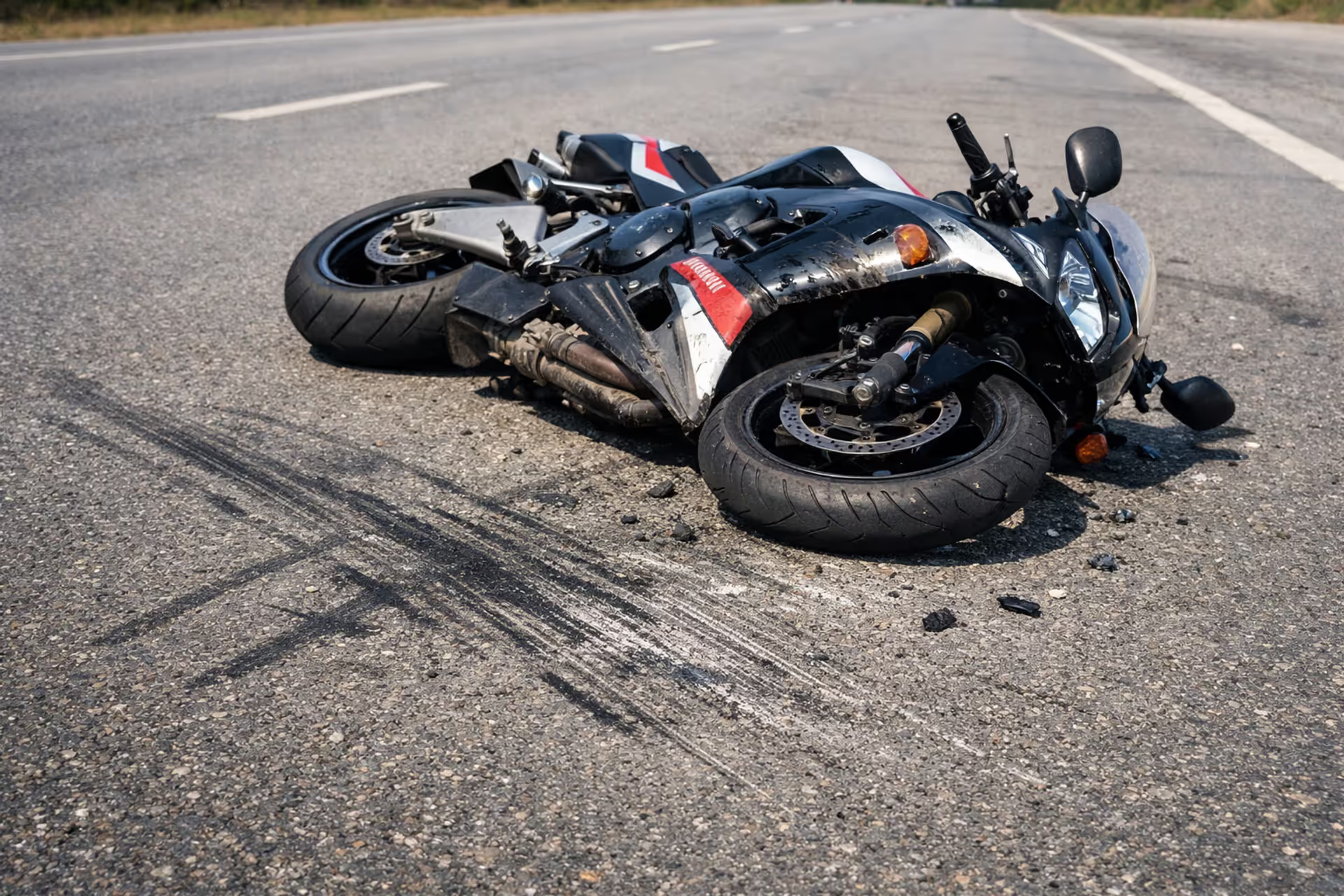
Motorcyclist on the ground after a crash clutching his injured shoulder with a fallen motorcycle in the background
Motorcycle Accident Shoulder Injury Guide for Recovery and Claims

When you go down on a bike, your shoulder often takes the worst hit. I've seen riders walk away from crashes that totaled their motorcycles, only to discover weeks later that their shoulder damage would take a year to heal. The problem? Your shoulder wasn't designed to absorb the impact of sliding across asphalt at 45 mph or catching yourself during a high-side.
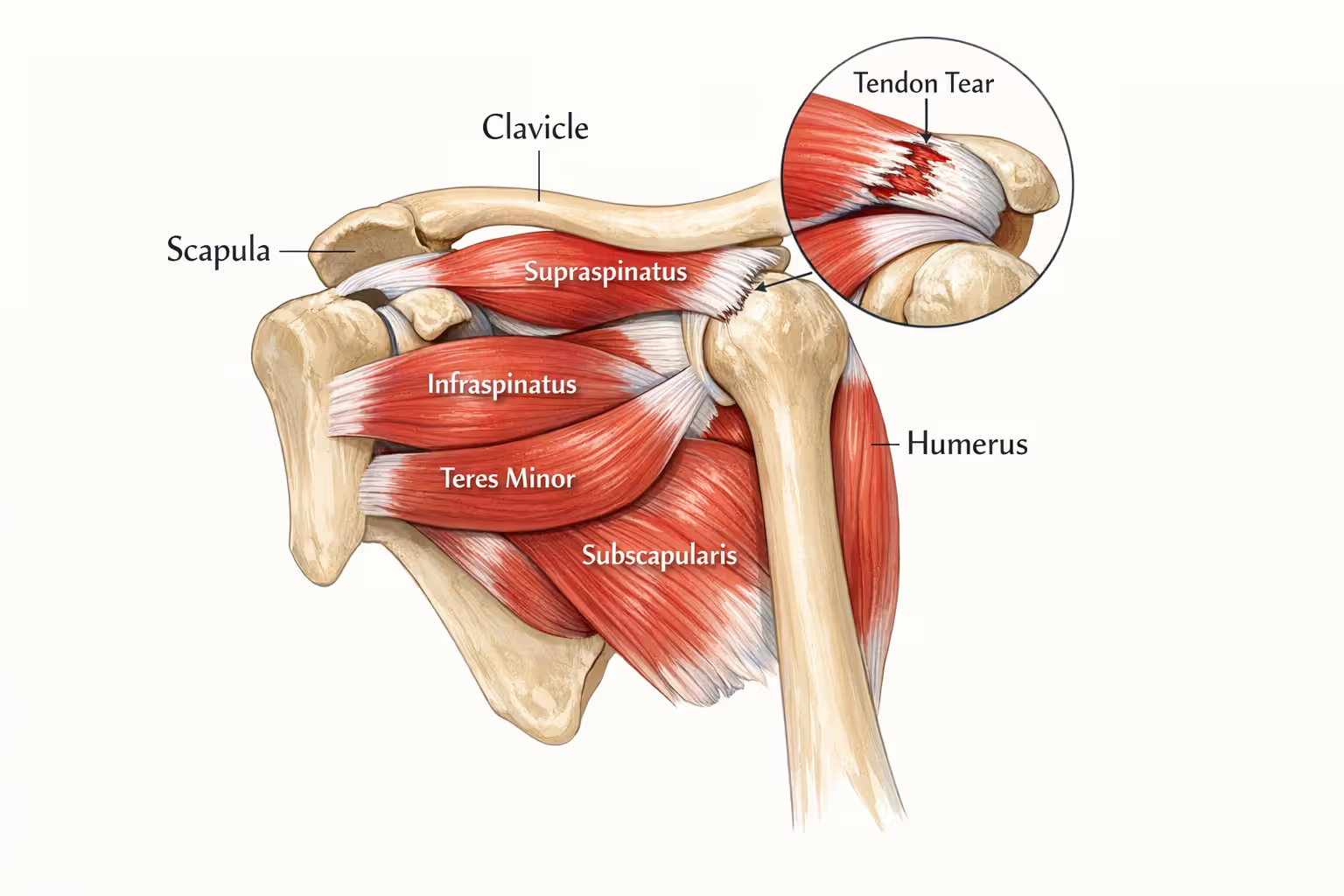
Here's what makes shoulders so vulnerable: you've got three major bones (clavicle, scapula, and humerus) meeting at angles that prioritize mobility over stability. Add in four rotator cuff muscles, multiple ligaments, and a shallow socket joint, and you've created an anatomical weak point. That outstretched arm reflex that kicks in during a crash? It funnels tremendous force straight into this already-fragile structure.
Minor shoulder damage heals within weeks. Serious trauma from motorcycle wrecks? That's a different story—one involving surgical repairs, six-month recovery windows, and permanent changes to how you ride. This comprehensive shoulder trauma motorcycle crash guide walks through everything: identifying your specific injury, understanding when surgeons need to intervene, navigating insurance nightmares, and rebuilding strength for your eventual return to riding.
Common Shoulder Injuries from Motorcycle Crashes
Crash dynamics tell us which injuries you're likely facing. High-sides (where the bike flips you over the handlebars) create different damage patterns than low-sides (sliding out laterally). Direct impacts against cars produce yet another injury signature. Let's break down what emergency room doctors typically find.
Rotator Cuff Tears and Strains
Four separate muscles wrap around your shoulder joint—supraspinatus, infraspinatus, teres minor, and subscapularis. Their tendons attach to bone, creating the rotator cuff structure that allows your arm to rotate and lift. Crash forces can partially rip these tendons (some fibers tear while others hold) or completely detach them from their bone anchors.
Immediate symptoms include profound weakness when attempting to raise your arm laterally or rotate it outward. Many crash victims describe hearing or feeling a distinct pop at impact. The pain typically shoots down your upper arm and becomes absolutely brutal at night—you'll struggle to find any sleeping position that doesn't aggravate it.
Here's a diagnostic gap many riders miss: standard X-rays only show bones. Tendon damage requires MRI scans. If your ER visit only included X-rays and you're sent home with "nothing broken," insist on orthopedic follow-up within 72 hours if pain persists. I've personally known three riders who waited months for MRIs, only to discover complete tears that became much harder to repair due to muscle atrophy and tendon retraction.
Author: Olivia Bennett;
Source: spy-delhi.com
Shoulder Dislocations and Separations
Riders mix up these terms constantly, but they're distinct injuries. When your humerus (upper arm bone) exits its socket entirely, that's a dislocation. You'll notice dramatic deformity—the shoulder looks wrong, feels wrong, and the arm locks at an unnatural angle. Even slight movements trigger excruciating pain.
Now, AC joint separation? That's where your clavicle tears away from the acromion (that bony point at the top of your shoulder blade). Ligaments rip, creating a visible bump that looks like a second shoulder peak. Doctors grade these Type I through Type VI based on displacement severity. Types I and II usually heal without surgery. Types IV, V, and VI typically require surgical reconstruction.
Emergency physicians can manipulate most dislocations back into place without cutting you open—they call it closed reduction. But first-time dislocations from high-energy motorcycle crashes rarely come alone. You'll frequently have torn labrum cartilage, bone chips floating in the joint, or nerve damage complicating your prognosis.
Clavicle and Scapula Fractures
Your clavicle breaks easily—it's essentially a thin strut connecting your shoulder to your chest. Direct impact or transmitted force from bracing during a fall snaps it like a twig. Swelling appears quickly, bruising spreads across your upper chest, and you'll often see or feel the broken ends creating an abnormal contour.
Most collarbone breaks mend without surgical intervention. You'll wear a figure-8 brace or basic sling for 6-8 weeks. Exceptions? Fractures in the bone's middle section with major displacement, significant shortening, or multiple fragments typically need plates and screws.
Scapula fractures signal serious trouble. This large, triangular bone sits protected beneath thick muscle layers, so breaking it requires massive impact energy. If your scapula is fractured, trauma teams immediately look for associated chest injuries—rib fractures, lung contusions, or internal bleeding that pose more immediate threats than the shoulder itself.
| Injury Type | What You'll Feel | How Bad It Is | Treatment Approach | Time Until Normal Function |
| Rotator Cuff Tear | Weakness lifting arm, severe night pain, catching sensation | Moderate to Severe | PT alone for partial tears; surgery for complete tears | 4-9 months |
| Shoulder Dislocation | Arm locked in awkward position, visible deformity, severe pain | Moderate to Severe | ER reduction, sling for 3-4 weeks, possible delayed surgery | 3-6 months |
| AC Separation | Bump at collarbone top, pain reaching overhead | Mild to Severe | Sling for Types I-II; surgical repair for Types IV-VI | 6 weeks to 4 months |
| Clavicle Fracture | Swelling, bruising, abnormal shoulder contour | Mild to Severe | Sling or surgical plating with screws | 6-12 weeks |
| Scapula Fracture | Deep aching pain, breathing difficulty | Severe | Rarely needs surgery; sling and rest | 6-12 weeks |
When Shoulder Surgery Becomes Necessary After a Motorcycle Accident
Surgeons don't rush to operate on every shoulder injury. They're weighing multiple variables: How old are you? Which shoulder got damaged—your dominant side or not? What's your occupation? Do you plan to keep riding? What does the MRI actually show?
Complete rotator cuff tears in riders under 60 who want to return to motorcycling? Surgery makes sense. Waiting allows the torn tendon edge to shrink back like a broken rubber band, and your muscles waste away from disuse. Repairing these chronic tears months later becomes significantly more complex. Partial tears affecting less than half the tendon thickness, though? Physical therapy resolves 70-80% of these without any incisions.
Arthroscopic approaches involve pencil-sized incisions and a tiny camera. Surgeons can reattach torn tendons, remove bone spurs, repair torn labrum cartilage, and clean up damaged surfaces—all through these minimally invasive portals. You'll leave the surgery center that afternoon with your arm immobilized in a sling.
Open procedures require larger incisions when arthroscopic techniques can't address the damage. Complex fractures needing plate fixation, severe dislocations with significant bone loss, or massive tears involving multiple tendons necessitate direct visualization. Hospital stays of 1-2 nights help manage post-operative pain.
The window for optimal outcomes in motorcycle crash shoulder injuries closes fast—typically within two weeks. Beyond that, scar tissue proliferates and muscles atrophy rapidly. Even if emergency physicians suggest conservative management initially, get specialist evaluation within days, not months. I've revised too many surgeries that could've been straightforward repairs if addressed promptly
— Dr. Michael Chen
Surgical complications include infection (1-3% incidence), nerve injury causing numbness or weakness, persistent stiffness, and re-tears of repaired structures. Smokers face double or triple the complication rates. Your decision calculus depends on baseline expectations—casual Sunday riders might accept some permanent limitation, while daily commuters often need aggressive intervention to restore full function.
Surgery timing typically falls 1-3 weeks post-injury once acute inflammation subsides. Fractures requiring hardware get fixed sooner, often within 5-7 days. Insurance pre-authorization can delay scheduling by a week or more, so start that process immediately.
Recovery Timeline: What to Expect After Motorcycle Shoulder Trauma
Forget linear progress. You'll hit frustrating plateaus where nothing seems to improve, experience occasional regression, and have days when you can't believe simple tasks remain impossible. Knowing the typical phases prevents panic when recovery feels stalled.
Weeks 1-4: Acute Phase
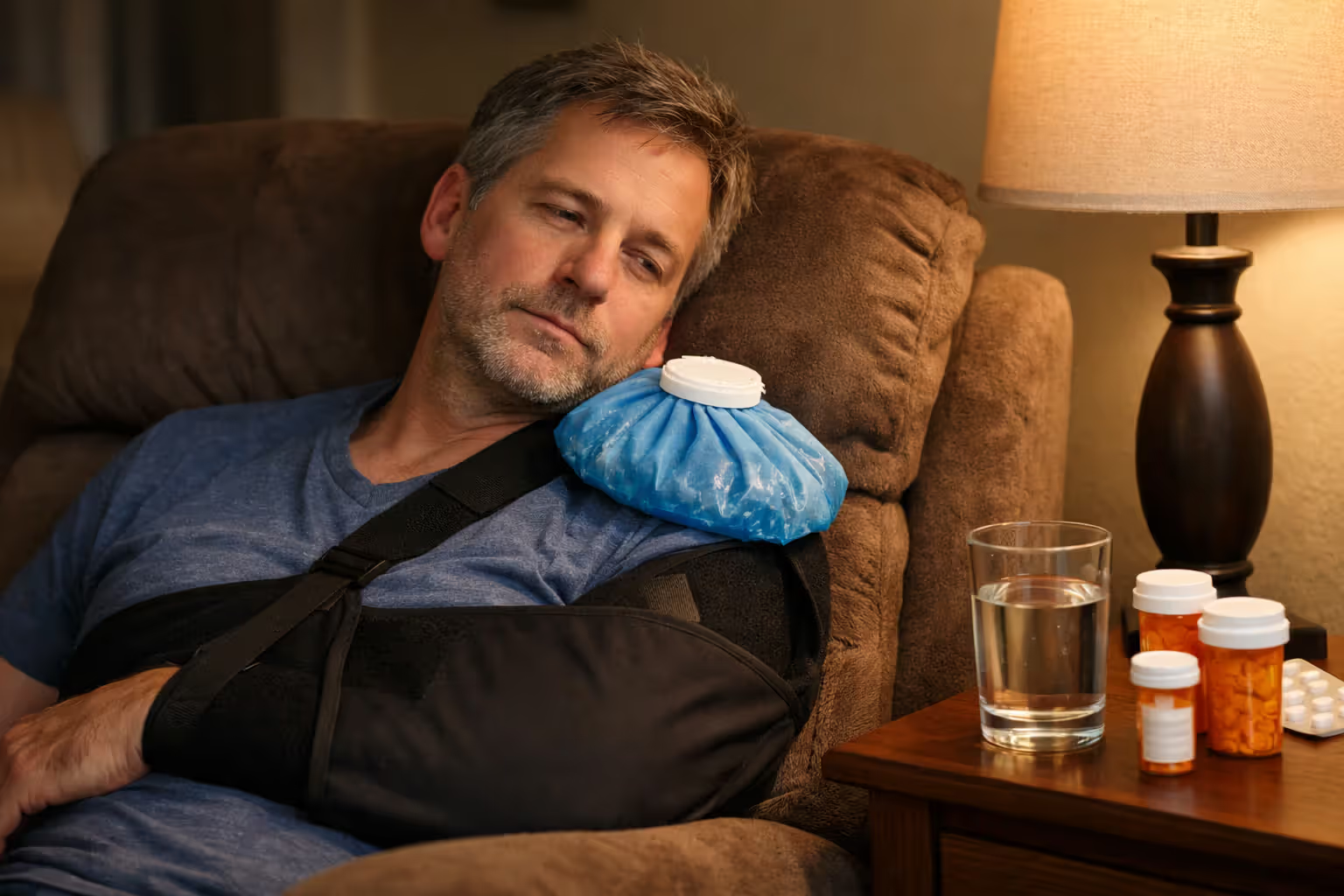
Pain runs your life right now. Your shoulder needs strict protection via sling immobilization. Post-surgical patients especially can't stress freshly repaired tissues while biological healing initiates. You'll begin gentle pendulum exercises—bend at your waist, let gravity pull your arm down, and create small passive circles.
Author: Olivia Bennett;
Source: spy-delhi.com
Sleep? Nearly impossible. Most riders find relief in recliners or propped up with multiple pillows maintaining a 45-degree angle. Ice packs applied 20 minutes every 2-3 hours control swelling. Prescription opioids are usually necessary initially, which absolutely means zero riding.
Common mistakes? Removing the sling prematurely to "test" whether the shoulder's improving. Even pain-free movements can disrupt healing. One rider I know tried catching his dropped phone with the recovering arm just two weeks after surgery—completely re-tore his repair, requiring a second operation and another six-month recovery.
Months 2-3: Active Recovery Phase
Physical therapy ramps up intensity. Your therapist guides active-assisted range of motion work where your uninjured arm or pulley systems help move the damaged shoulder. The primary goal centers on restoring mobility before introducing any strengthening exercises.
Plan on 2-3 weekly therapy appointments. Home exercise compliance matters enormously—patients who complete their prescribed home program recover 30-40% faster than those who skip. You'll still wear the sling in public to prevent accidental bumps from oblivious people.
Many riders regain sufficient function to operate a car during this window, but motorcycles stay parked. The vibration transmission, balance demands, and emergency maneuver requirements exceed your current capabilities.
Months 4-6: Strengthening Phase
Resistance training launches with light elastic bands and advances toward actual weights. Your shoulder must rebuild strength lost during months of immobilization. External rotation exercises and scapular stabilization movements form the rehabilitation foundation.
Pain should diminish significantly by month four. Persistent sharp pain indicates potential problems—excessive scar tissue, hardware irritation, or incomplete tissue healing. Some patients develop frozen shoulder (adhesive capsulitis) when they don't maintain consistent mobility work.
Return-to-riding conversations start here. You need adequate strength to handle emergency braking and sufficient range of motion to check blind spots comfortably. Begin with 20-minute rides on familiar roads before attempting highway speeds or technical mountain routes.
6+ Months: Long-Term Recovery
Full recovery from significant shoulder surgery motorcycle accident guide injuries requires 9-12 months minimum. Some permanent limitations persist: reduced overhead reach, noticeable weakness compared to your uninjured side, or weather-related aching that predicts incoming storms.
Ongoing shoulder maintenance exercises prevent re-injury. Your surgically repaired shoulder will never match an uninjured one's resilience. Riders frequently report needing to warm up with stretches and mobility work before long rides.
Medical Costs and Insurance Coverage for Motorcycle Shoulder Injuries
Shoulder injury expenses vary wildly based on injury complexity and whether you're in rural Montana or downtown Manhattan. Understanding these financial realities helps you plan and ensures you don't accept lowball insurance settlements.
| Medical Service | Lower Cost Range | Upper Cost Range | Insurance Payment Patterns |
| Emergency Room Visit | $800 | $3,500 | Usually 70-90% after meeting deductible |
| MRI/CT Scans | $1,200 | $4,000 | 80-100% if properly pre-authorized |
| Orthopedic Specialist Visit | $200 | $600 | Typically 80-100% coverage |
| Arthroscopic Repair | $15,000 | $35,000 | 70-90% post-deductible |
| Open Surgical Reconstruction | $25,000 | $60,000 | 70-90% post-deductible |
| Hospital Overnight Stay | $2,000 | $8,000 | 70-90% post-deductible |
| Physical Therapy Session | $75 | $250 | Often limited to 20-30 visits annually |
| Pain Medications | $200 | $1,500 | 50-80% depending on drug formulary |
| Follow-up Care (6-12 months) | $600 | $2,400 | Usually 80-100% |
Your primary health insurance becomes the first payment source for treatment costs. However, motorcycle insurance policies often include medical payments coverage (MedPay) that pays out regardless of who caused the crash. Coverage limits typically range $1,000-$10,000 and can cover deductibles or copays your health plan doesn't touch.
Some states mandate Personal Injury Protection (PIP) while others make it optional. PIP covers medical bills, wage losses, and sometimes household services you can't perform during recovery. Review your policy limits before any crash—makes treatment decisions less stressful.
Out-of-pocket costs accumulate quickly. Deductibles, copays, and coinsurance can hit $5,000-$10,000 even with solid insurance. If another driver caused your wreck, their liability policy should ultimately cover these expenses, but you'll often pay upfront and pursue reimbursement later.
Medical liens complicate settlements. Healthcare providers can place liens against your potential recovery, meaning they get paid from your settlement before you see a dime. Negotiate these liens before finalizing your claim—many providers accept 30-50% reductions when personal injury lawyers get involved.
Documenting Your Shoulder Injury for Insurance and Legal Claims
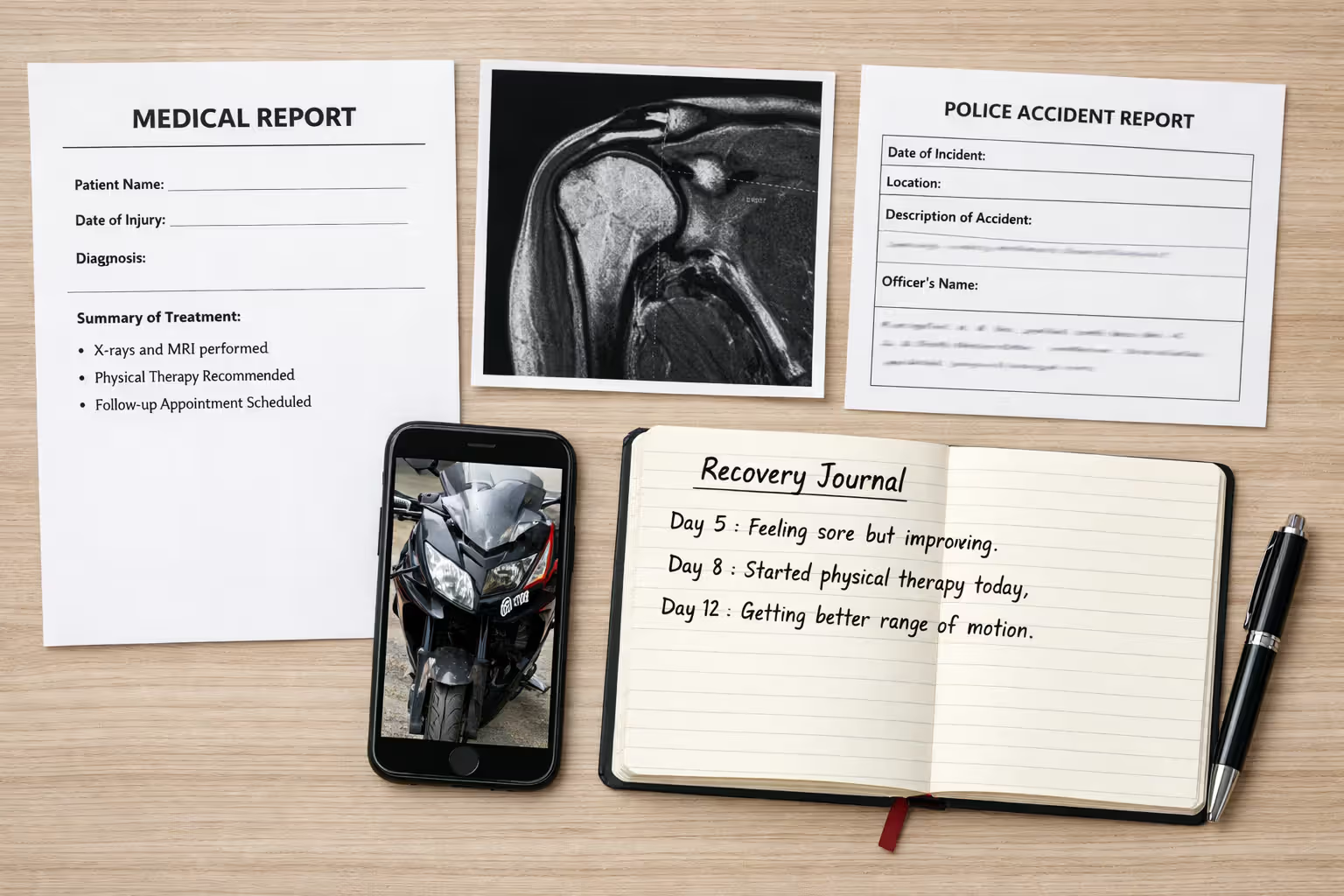
Insurance companies pay based on documented evidence, period. Missing documentation weakens your case and potentially costs tens of thousands in compensation. Start your documentation immediately post-crash.
Collect complete medical records from every provider. Request copies of ER visits, consultation reports, operative notes, physical therapy progress notes, and follow-up visits. These establish injury severity, treatment medical necessity, and ongoing functional impacts. Don't miss any provider—documentation gaps become red flags for insurance adjusters.
Photograph everything visible. Capture bruising, swelling, and surgical incisions every few days during the first month. Photograph your motorcycle's damage and crash scene if you're able. Date-stamp all images. One rider's claim jumped $15,000 after presenting photos revealing extensive bruising that emergency room staff never documented in his chart.
Police crash reports provide official incident documentation. Obtain copies within a week—some jurisdictions charge premium fees for delayed requests. If reports contain factual errors, immediately file supplemental corrections. Inaccurate reports can torpedo claims.
Witness statements boost credibility substantially. Collect contact information from anyone who witnessed the crash or can testify about your pre-injury shoulder capabilities. Written statements beat verbal promises to testify—people move, memories fade, and willingness to participate evaporates over time.
Maintain detailed recovery journals tracking pain levels, activities you cannot perform, missed work shifts, and daily life impacts. Specific details carry weight: "I couldn't pick up my two-year-old daughter for three months" resonates more powerfully than generic "shoulder pain."
Documentation mistakes that torpedo claims:
- Delaying initial medical care (adjusters claim injuries couldn't be serious if you waited days)
- Missing scheduled appointments (creates treatment gaps adjusters exploit)
- Ignoring prescribed treatment (gives insurers ammunition for denial)
- Posting riding photos on social media during recovery (directly contradicts disability claims)
- Accepting initial settlement offers without calculating full recovery expenses
Author: Olivia Bennett;
Source: spy-delhi.com
Rehabilitation Exercises and Long-Term Shoulder Care for Riders
Physical therapy provides professional direction, but your home exercise dedication determines actual outcomes. These movements progress from gentle mobility work through strength training that prepares you for motorcycle-specific demands.
Early Mobility Exercises (Weeks 2-6)
Pendulum swings: Bend forward at your waist, allowing your injured arm to hang freely, then gently swing it in small circles. Complete 10 clockwise and 10 counterclockwise circles, repeating three times daily. This passive movement prevents joint stiffness without stressing healing structures.
Table slides: Sit beside a table with a towel positioned under your injured hand. Slide your arm forward across the table surface, using your opposite arm for assistance if needed. Hold the stretched position 10 seconds, then slide back. Complete 10 repetitions.
Mid-Recovery Strengthening (Months 2-4)
External rotation using resistance bands: Anchor a light band at waist height. Grip the band with your injured side, keeping your elbow bent 90 degrees tight against your torso. Rotate your forearm outward against band resistance. Complete 3 sets of 15 repetitions daily. This directly targets rotator cuff muscles essential for motorcycle control.
Scapular squeezes: Stand with arms relaxed at your sides. Squeeze your shoulder blades together, hold 5 seconds, then release. This strengthens stabilizer muscles supporting your shoulder during rides. Target 3 sets of 20 repetitions.
Advanced Riding Preparation (Months 4-6)
Wall push-ups: Face a wall standing, placing hands at shoulder height. Perform push-ups against the wall, gradually increasing to 30 repetitions. Progress to counter-height push-ups, then knee push-ups as strength improves.
Overhead reaching with light weights: Hold a 1-2 pound weight (soup cans work perfectly) and slowly raise your arm overhead. Lower with controlled movement. This replicates reaching motions needed for high-mounted mirrors or garage door operations.
Protective Gear Recommendations
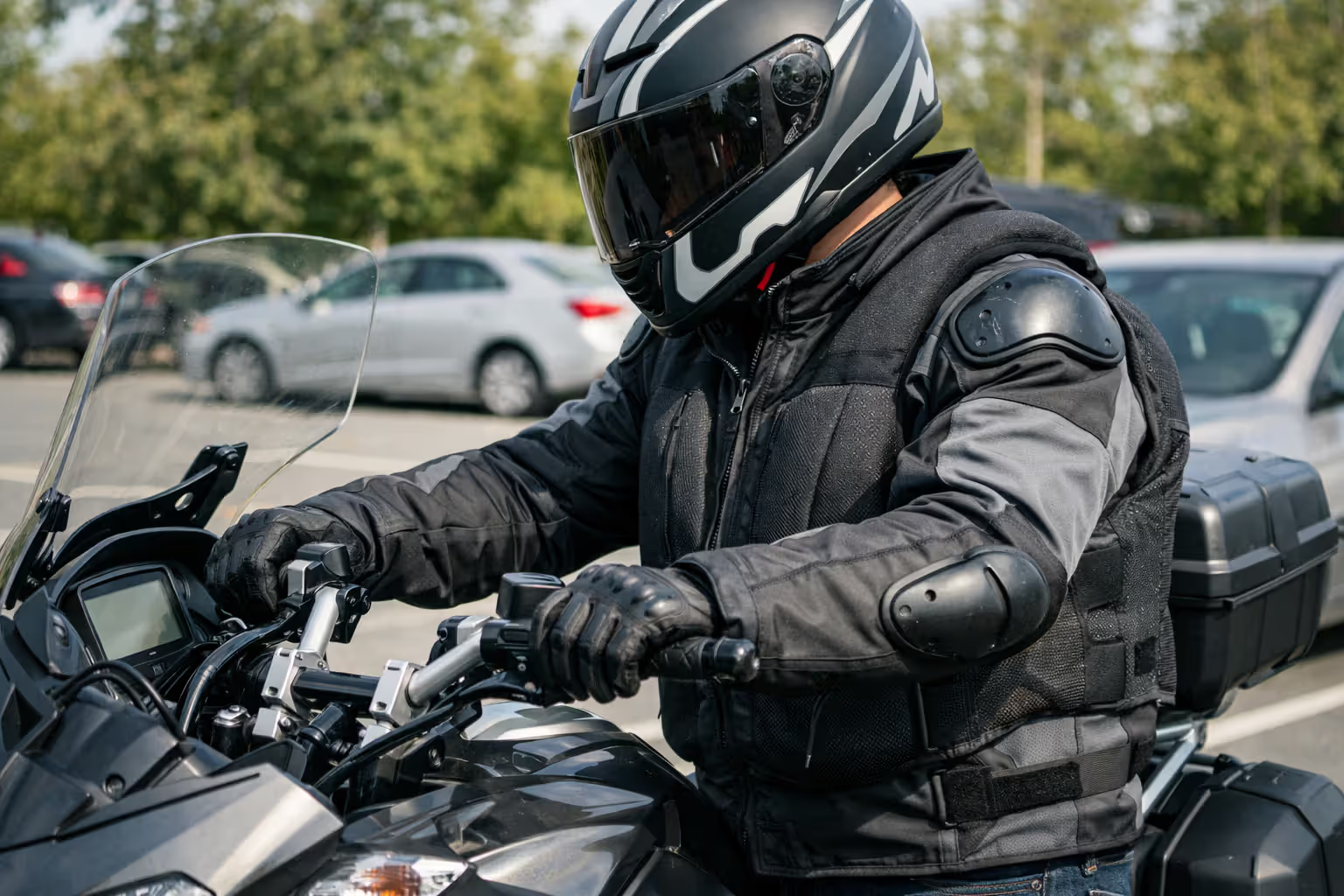
Armor-equipped jackets featuring CE-certified shoulder protection reduce injury severity in subsequent crashes substantially. Seek jackets with removable impact protectors and abrasion-resistant materials concentrated in shoulder zones. Some riders add supplemental shoulder armor originally designed for motocross applications.
Airbag vests and jackets deliver maximum protection levels. These systems deploy within milliseconds upon detecting crash forces, cushioning shoulders and other vulnerable areas. Prices run $400-$800, but they're reusable after deployment with replacement cartridges.
Preventing Re-injury
Your repaired shoulder remains permanently vulnerable. Warm up before every ride with arm circles and gentle stretching. Avoid riding when fatigued—tired muscles provide diminished joint protection. Strengthen your core and legs to reduce upper body strain during aggressive cornering.
Consider motorcycle modifications. Bar risers reduce shoulder strain by bringing controls closer to your body. Throttle locks or cruise control prevent right shoulder fatigue during extended highway stretches. Some riders switch to bikes with upright ergonomics after surgical repairs.
Author: Olivia Bennett;
Source: spy-delhi.com
Frequently Asked Questions About Motorcycle Shoulder Injuries
Recovering and Moving Forward
Shoulder injuries from motorcycle wrecks test every bit of your patience and determination. The journey from emergency room to full recovery demands consistent effort, realistic expectations, and willingness to fight for proper treatment. Your shoulder's anatomical complexity means healing can't be rushed—biological tissues need time to repair, and strength rebuilds gradually through dedicated rehabilitation work.
Document absolutely everything starting day one. Medical records, photographs, and detailed recovery notes protect your financial interests and ensure you receive appropriate compensation when another party caused your crash. Insurance companies rely on injured riders accepting quick settlements before understanding their injury's complete impact.
Build relationships with qualified specialists. Orthopedic surgeons with specific motorcycle injury experience understand the particular demands riders face and can customize treatment plans accordingly. Physical therapists who treat athletes often provide more aggressive rehabilitation protocols that restore function faster than generic approaches.
Most riders eventually return to motorcycling following shoulder trauma, though some make modifications to riding style, bike selection, or protective equipment choices. Listen carefully to your body during the return-to-riding process. Discomfort signals you're pushing too aggressively, while complete symptom absence doesn't guarantee your shoulder can handle emergency situations.
This shoulder recovery motorcycle accident guide outlined here provides a roadmap, but your personal journey remains unique. Some riders bounce back quickly while others face complications and setbacks. Stay actively engaged in your treatment, ask questions when recommendations seem unclear, and remember that proper healing now prevents chronic problems that could permanently end your riding career.
Related Stories

Read more
Read more




The content on this website is provided for general informational and educational purposes only. It is intended to offer insights and guidance on motorcycle accident insurance claims, settlement processes, liability issues, coverage limits, medical compensation, and related insurance matters, and should not be considered legal or financial advice.
All information, articles, and materials presented on this website are for general informational purposes only. Insurance policies, liability standards, settlement practices, and state regulations may vary by jurisdiction and insurer. The outcome of a motorcycle accident claim depends on the specific facts of the accident, available evidence, policy language, and applicable law.
This website is not responsible for any errors or omissions in the content, or for actions taken based on the information provided. Users are strongly encouraged to consult with a qualified attorney or licensed insurance professional regarding their specific motorcycle accident claim before making decisions about settlements, negotiations, or coverage disputes.