

Motorcyclist in full gear standing beside a damaged motorcycle on a road shoulder at sunset, holding a helmet, with a bandaged arm
Motorcycle Accident Recovery Time for Common Crash Injuries

If you've been in a motorcycle crash, you're probably wondering when life gets back to normal. Here's the truth nobody wants to hear: there's no universal answer. A buddy of mine walked away from a low-speed collision with road rash that cleared up in three weeks. Another friend? Still doing physical therapy eighteen months after getting T-boned at an intersection.
Your body doesn't heal on a schedule. Damaged tissue repairs itself at its own pace, muscles need time to regain lost strength, and frankly, your mind needs just as much recovery time as your bones. I've seen riders back on their bikes within six weeks, and I've watched others struggle for years with injuries that changed everything about how they live.
How Long Does Recovery Take After a Motorcycle Accident?
Here's what the data shows: you're looking at anywhere from six weeks to a year and a half for most injuries. That's a massive range, I know.
Got lucky with just road rash and some bruising? You'll probably need four to twelve weeks. Broke a bone or two? Plan on three to six months before you're really functional again. Multiple fractures, back injuries, or head trauma? We're talking a year minimum, sometimes much longer.
Why such different timelines? Think about all the variables. A twenty-something CrossFit enthusiast with a broken collarbone heals completely differently than someone in their fifties managing diabetes who suffered the same break. The crash speed matters. Whether you wore proper gear matters. How fast paramedics reached you matters. Even the hospital you landed in can make a 30-40% difference in outcomes.
Here's something doctors don't emphasize enough: your head heals slower than your body. I've talked to riders whose fractures mended perfectly but couldn't shake the anxiety. They'd see a car approaching an intersection and their heart would race. Physical recovery is only part of the equation.
Motorcycle Accident Injury Recovery Timeline Comparison
| Injury Type | Typical Recovery Duration | Rehabilitation Requirements | Return-to-Work Timeframe |
| Road Rash (Minor-Moderate) | 2-6 weeks | Daily wound cleaning, potential skin grafting | 2-4 weeks (office work), 4-8 weeks (manual labor) |
| Simple Fractures | 6-12 weeks | PT sessions twice weekly for 4-8 weeks | 6-10 weeks (sedentary jobs), 12-16 weeks (physical jobs) |
| Compound Fractures | 3-6 months | Aggressive PT 3-5 days weekly for 3-6 months, likely surgery | 3-5 months (office), 6-12 months (labor-intensive) |
| Traumatic Brain Injury (Mild) | 3-6 months | Cognitive rehabilitation, strict rest periods, gradual reintroduction | 1-4 months with doctor approval |
| Traumatic Brain Injury (Severe) | 6-24+ months | Daily cognitive and physical rehabilitation, occupational training | 6-18+ months, often needs modified duties |
| Spinal Cord Injuries | 6-18+ months | Daily PT and occupational therapy, learning assistive devices | 6+ months minimum, frequently requires permanent adjustments |
| Internal Organ Damage | 2-12 months | Post-surgical recovery, gradual strength restoration | 2-6 months based on specific organ affected |
Common Motorcycle Accident Injuries and Their Healing Timelines
Let's break down what you're actually dealing with based on your specific recovery timeline motorcycle accident injury guide situation.
Soft Tissue Injuries and Road Rash
Seven out of ten riders deal with road rash. It's almost a given if you go down.
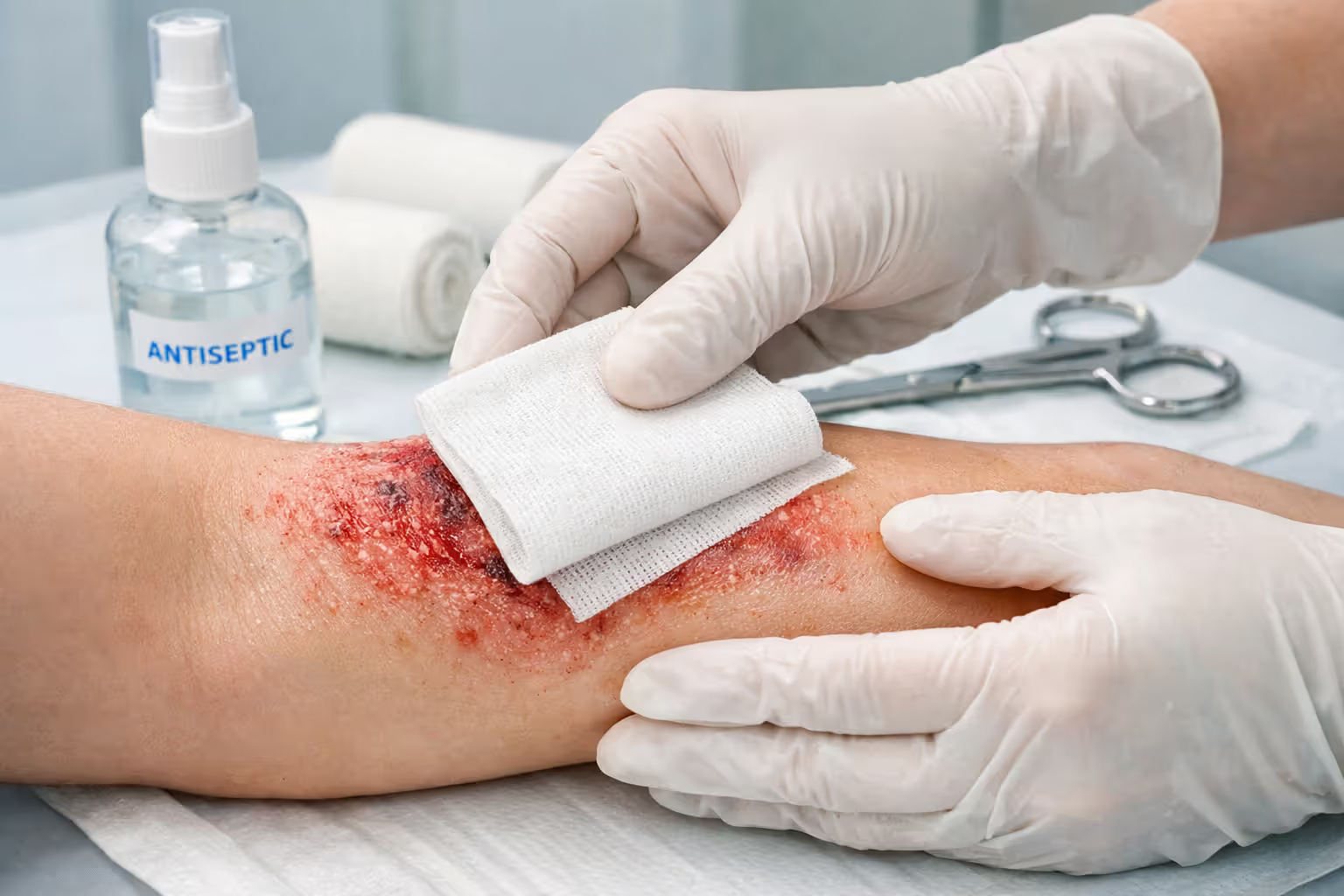
First-degree road rash—basically bad scrapes—clears up in ten to fourteen days if you keep it clean. Second-degree cases dig deeper into your skin and take three to six weeks, usually leaving scars you'll have forever. Third-degree road rash exposes fat or muscle and often needs skin grafts. You're looking at two to four months recovery, multiple surgeries, and permanent scarring.
Sprains, strains, and deep bruising typically need four to eight weeks. But here's where riders mess up: if you tore a ligament or severely damaged muscle tissue, you might need surgery and four to six months of therapy.
The biggest mistake? Feeling better at two weeks and jumping back into activities. That sprained ankle might not hurt anymore, but the ligaments are still vulnerable for at least six weeks. Rush it, and you'll re-injure yourself.
Author: Hannah Pierce;
Source: spy-delhi.com
Broken Bones and Fractures
Simple arm or leg fractures generally take eight to twelve weeks to heal. Clavicle breaks—super common in bike crashes—usually fuse in six to eight weeks, though they'll ache for three or four months.
Wrist and hand fractures heal within six to ten weeks, but then you need another eight to twelve weeks of occupational therapy to actually use your hand properly again. Nobody tells you that part up front.
Compound fractures? Completely different ballgame. When bone punches through skin, infection becomes a major risk. You'll need surgery, hardware installation, and four to six months of healing time motorcycle accident injuries guide before you're anywhere near normal. Sometimes they remove that hardware twelve to eighteen months later in another surgery.
Pelvic fractures are absolutely brutal. Stable ones need eight to twelve weeks of limited weight-bearing. Unstable pelvic fractures require surgical fixation and three to six months of careful rehabilitation. Most people still feel discomfort a year later.
Spinal Cord and Back Injuries
Spinal injuries run the full spectrum. Minor compression fractures might heal in eight to twelve weeks. Complete spinal cord injuries require lifelong adjustment.
Incomplete spinal cord injuries are unpredictable. Some patients regain most function within six to twelve months. Others plateau after eighteen to twenty-four months despite intensive therapy.
Herniated discs usually respond to conservative treatment within six to twelve weeks. Some need surgery though. Discectomy or fusion surgery means six to twelve weeks of initial recovery, then another three to six months of physical therapy.
Lower back sprains typically improve within four to eight weeks. But chronic pain hits about 30% of victims beyond six months. Core strengthening becomes a permanent part of your life.
Author: Hannah Pierce;
Source: spy-delhi.com
Traumatic Brain Injuries and Concussions
Mild concussions generally resolve within three months. However, 15-20% of people develop post-concussive syndrome lasting six to twelve months. Headaches, dizziness, memory gaps, concentration problems—they improve gradually but not in a straight line.
Moderate to severe TBIs require twelve to twenty-four months of intensive injury recovery motorcycle accident guide work, sometimes longer. Cognitive function can keep improving for two to five years, though you'll see the biggest gains in the first eighteen months. Many people need occupational therapy to relearn basic daily tasks and vocational rehab to work again.
Brain injuries are frustrating because they're invisible. A broken arm shows clear progress as it heals. Cognitive recovery involves tiny improvements you barely notice day to day.
Internal Organ Damage
Liver lacerations heal in six to twelve weeks with conservative management. Surgery extends that to eight to sixteen weeks.
Splenic injuries often mean removing the spleen entirely. Recovery takes six to eight weeks, but you'll be more vulnerable to infections for life.
Collapsed lungs usually resolve in four to eight weeks. Broken ribs—which often happen alongside lung injuries—hurt like hell for six to ten weeks and take three to four months to completely heal.
Kidney damage varies wildly. Minor bruising heals within four to six weeks. Severe injuries requiring surgical repair need three to six months of recovery and monitoring for years afterward.
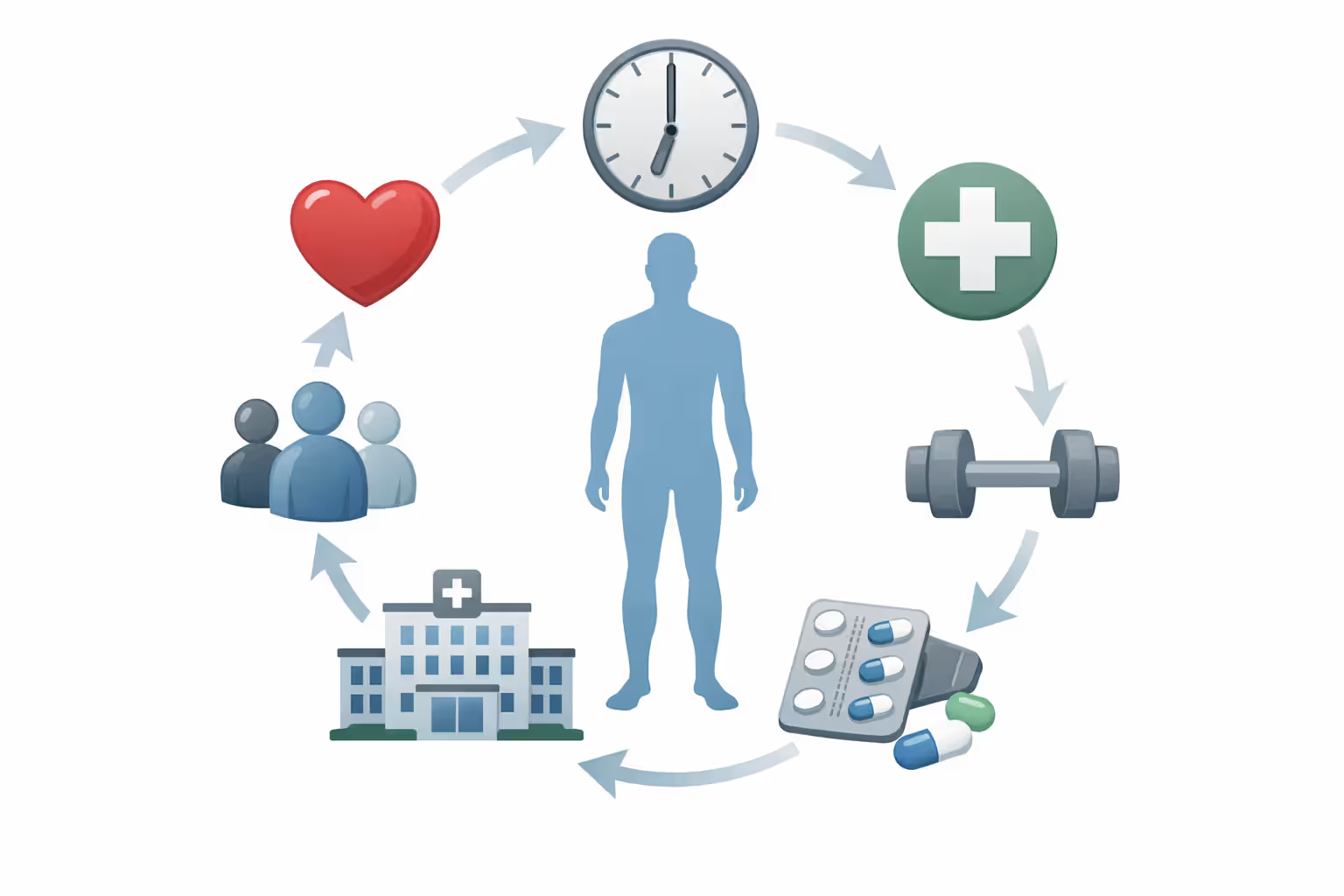
7 Factors That Determine Your Recovery Duration
Beyond the injury itself, these variables control your injury recovery duration motorcycle accident guide outcomes.
Age and overall health condition make a huge difference. Healthy thirty-year-olds heal 30-40% faster than sixty-year-olds with identical injuries. Cardiovascular fitness, muscle mass, bone density—everything contributes. Poor baseline health extends every phase.
Injury severity and location both matter, but location sometimes matters more. A minor wrist fracture can disable you worse than a more severe ankle fracture if your job requires precise hand movements. Multiple injuries compound recovery time exponentially—three moderate injuries take longer to heal than one severe injury.
Quality of immediate medical care sets everything in motion. Delayed treatment, missed injuries, or inadequate stabilization can double your recovery time. Getting to a trauma center within the first hour typically produces 25-35% better outcomes than delayed care.
Adherence to rehabilitation protocols is the most controllable factor. Patients who make 90% or more of their prescribed PT sessions recover roughly 40% faster than those who skip appointments. Following home exercises, respecting activity limits, and taking medications as directed directly impacts how well you heal.
Pre-existing conditions complicate things predictably. Diabetes slows wound healing by 30-50%. Osteoporosis adds weeks to fracture recovery. Obesity increases surgical complications and limits therapy effectiveness. Smoking? Delays bone healing by 30-60% and significantly raises infection risk.
Access to physical therapy creates dramatic outcome differences. Starting PT within two weeks of medical clearance typically helps you regain 15-20% more function than waiting six weeks. Insurance limits, transportation problems, or living in a rural area can all restrict access to proper care.
Mental health and support systems influence physical healing more than you'd think. Depression after serious accidents can slow healing by 20-30%. Strong family support, financial stability, and positive outlook all correlate with faster, more complete recovery. Dealing with legal battles or financial stress consistently extends recovery.
Author: Hannah Pierce;
Source: spy-delhi.com
The Rehabilitation Process: Phases of Motorcycle Accident Recovery
Understanding the rehabilitation timeline motorcycle accident guide helps you know what's coming.
Acute care and stabilization phase starts immediately after the crash. Depending on severity, this lasts several hours to several weeks. The focus is keeping you alive, performing necessary surgeries, managing pain, and preventing complications. Minor injuries mean one to three days hospitalized. Moderate injuries run three to seven days. Severe trauma can keep you there one to four weeks or longer.
Medical teams address immediate threats: bleeding, infection, organ failure. Even ICU patients often work with physical therapists early to prevent muscle loss and blood clots.
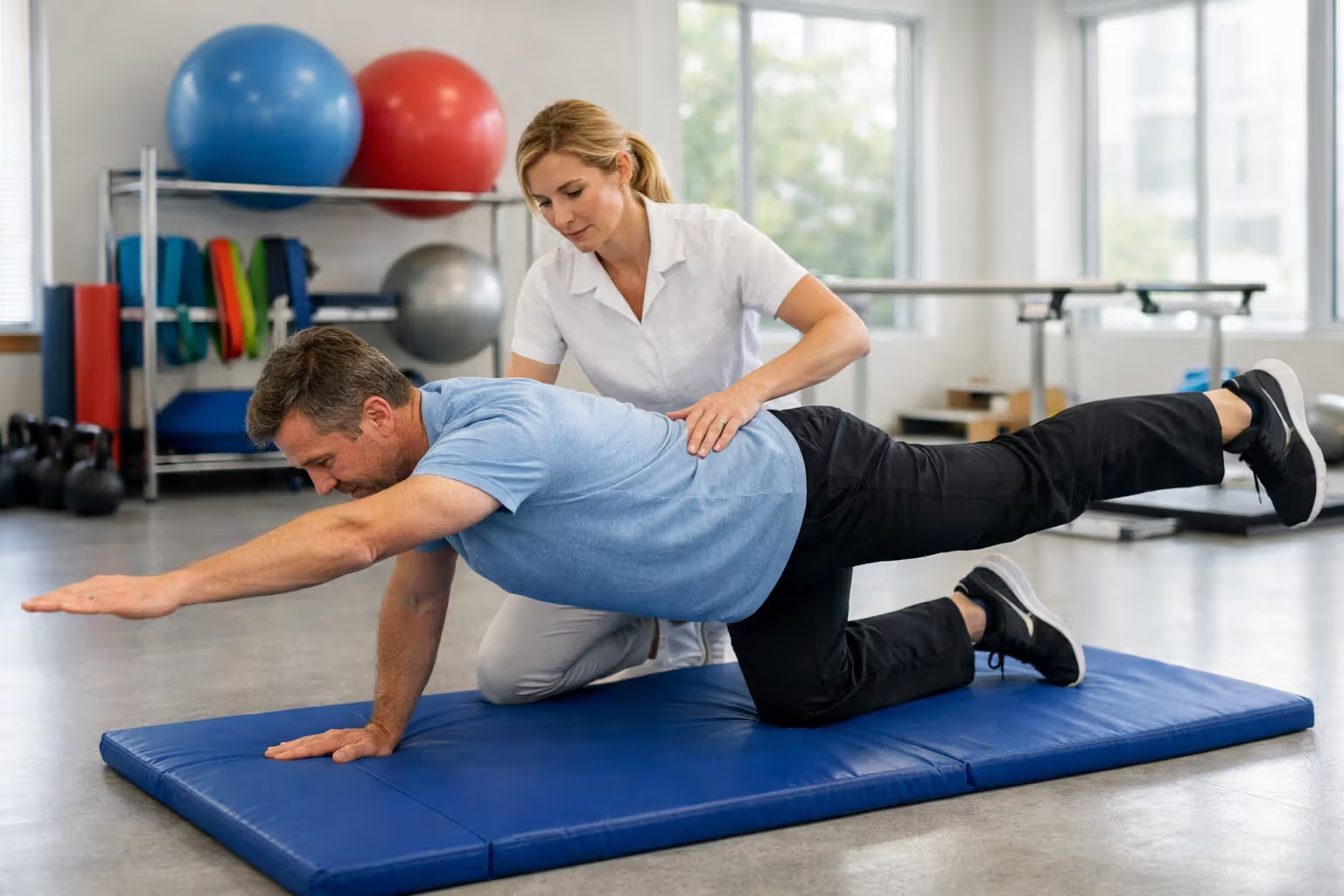
Active rehabilitation and physical therapy typically begins within days to weeks of injury. This is the most intensive period, lasting six weeks to six months for most injuries. You'll attend therapy two to five times weekly, gradually increasing intensity and functional activities.
Physical therapists work on restoring range of motion, rebuilding strength, improving balance, and retraining movement patterns. Occupational therapists help with daily living skills—dressing, cooking, self-care. Pain management remains critical because uncontrolled pain limits therapy participation.
Most motorcycle accident victims underestimate how mentally exhausting rehabilitation becomes. Physical healing represents maybe half the challenge—you're essentially retraining your nervous system and rebuilding trust in your body's capabilities. Patients who approach rehab with patience and consistency, understanding that progress bounces around rather than steadily climbing, consistently achieve better outcomes than those expecting improvement every single week
— Dr. Michael Chen
Long-term recovery and adaptation extends several months to years post-accident. Formal therapy sessions taper off, but home exercise programs continue indefinitely. You're learning to manage residual symptoms, adapt to any permanent limitations, and gradually increase activity.
Plateaus are common during this phase—periods where improvement seems to stall. They're normal and often happen right before breakthrough periods of rapid progress. Patience becomes essential.
Return to daily activities milestones provide concrete markers. Most people achieve basic self-care independence within four to twelve weeks. Returning to work varies enormously—desk jobs might work within four to eight weeks while physically demanding careers may need four to six months or longer. Driving typically resumes within six to twelve weeks once pain and medications allow safe operation. Recreational activities and sports usually require medical clearance between three and nine months post-injury.
Getting back on a motorcycle is a huge psychological and physical milestone. Medical clearance typically requires six to twelve months minimum, though many riders wait longer to rebuild confidence. Some never ride again. Others find it essential to their emotional recovery.
Warning Signs Your Recovery Isn't Progressing Normally
Catching complications early prevents minor setbacks from becoming major problems.
Symptoms requiring immediate medical attention include sudden severe pain that's different from your normal discomfort, infection signs like fever, increasing redness, warmth, or drainage, new numbness or weakness in your limbs, lost bowel or bladder control, severe headaches with vision changes, chest pain or breathing difficulty, and excessive swelling in an injured limb.
Blood clots are serious, particularly in the first three months. Calf pain, swelling, warmth, and redness in one leg needs immediate evaluation. Sudden shortness of breath or chest pain could indicate pulmonary embolism—a life-threatening emergency.
When to seek a second opinion becomes appropriate if you're not hitting expected milestones, your pain is getting worse instead of gradually better after the first few weeks, your physician dismisses your concerns without proper explanation, you're offered surgery without trying conservative treatment first, or your treatment plan doesn't seem tailored to your specific needs.
Listen to your gut. You understand your body better than anyone else in that exam room. Something feels off? Push for answers. Many complications get caught early because attentive patients insisted on further evaluation.
Common setbacks and complications include frozen shoulder from prolonged immobilization, complex regional pain syndrome causing disproportionate pain and swelling, hardware complications requiring removal surgery, delayed unions or nonunions where bones won't heal properly, and chronic pain syndromes needing long-term management.
Scar tissue can limit range of motion and require additional physical therapy or even surgical release. Nerve damage may take twelve to eighteen months to fully declare itself—some nerves regenerate slowly while others never recover. Post-traumatic arthritis can develop years after joint injuries.
Psychological complications like PTSD, anxiety, and depression affect 20-30% of motorcycle accident victims. These conditions significantly impact physical recovery and deserve professional treatment. Many victims benefit from counseling or support groups specifically for trauma survivors.

Author: Hannah Pierce;
Source: spy-delhi.com
Frequently Asked Questions About Motorcycle Accident Recovery
Moving Forward After Your Motorcycle Accident
Recovering from a motorcycle accident tests physical and mental resilience in ways few other experiences match. The timeline stretches longer than most victims anticipate, filled with frustrations, setbacks, and small victories that gradually accumulate into meaningful progress.
Your recovery belongs to you. Own it actively rather than passively waiting to heal. Ask questions, advocate for appropriate care, and participate fully in your rehabilitation. The effort you invest during these challenging months directly determines your long-term outcome.
Set realistic expectations while maintaining optimism. Most victims eventually return to satisfying, productive lives even after serious injuries. Some discover unexpected strength and perspective through their recovery journey. Others find new directions when previous paths become impossible.
Connect with other motorcycle accident survivors through support groups or online communities. Shared experiences provide practical advice and emotional support that medical professionals cannot offer. Knowing others have navigated similar challenges and emerged successfully provides hope during difficult periods.
Recovery timelines represent averages and estimates, not guarantees. Your unique combination of injuries, circumstances, and personal factors creates an individual healing journey. Celebrate progress rather than fixating on arbitrary timelines. Focus on what you can control—your effort, attitude, and daily choices that either support or hinder healing.
Whether you return to riding or not, the goal remains the same: rebuilding the fullest, most satisfying life possible given your circumstances. With patience, persistence, and proper support, most motorcycle accident victims achieve outcomes that once seemed impossible during those first difficult days after their crash.
Related Stories
Read more

Read more



The content on this website is provided for general informational and educational purposes only. It is intended to offer insights and guidance on motorcycle accident insurance claims, settlement processes, liability issues, coverage limits, medical compensation, and related insurance matters, and should not be considered legal or financial advice.
All information, articles, and materials presented on this website are for general informational purposes only. Insurance policies, liability standards, settlement practices, and state regulations may vary by jurisdiction and insurer. The outcome of a motorcycle accident claim depends on the specific facts of the accident, available evidence, policy language, and applicable law.
This website is not responsible for any errors or omissions in the content, or for actions taken based on the information provided. Users are strongly encouraged to consult with a qualified attorney or licensed insurance professional regarding their specific motorcycle accident claim before making decisions about settlements, negotiations, or coverage disputes.