

Insurance adjuster in business suit inspecting a damaged motorcycle on a roadside after an accident
What Does a Motorcycle Accident Claim Adjuster Do? A Guide for Riders

Your phone rings two days after your crash. It's the insurance adjuster—sounds friendly enough. They're "just calling to help process your claim quickly." But here's what most riders miss: that friendly voice represents the insurance company's wallet, not yours.
Adjusters wield enormous control over how much money you'll actually see. They decide whether your custom exhaust counts toward your payout. They determine if your bike gets repaired or totaled. They calculate what your injuries are "worth." Yet most motorcyclists walk into this relationship blind, trusting that the adjuster will naturally do right by them.
That assumption costs riders thousands of dollars every single day.
This guide breaks down exactly how adjusters operate, what they're really looking for during inspections, and how you can level the playing field when your claim is on the line.
The Role of Insurance Adjusters in Motorcycle Accident Claims
Here's the uncomfortable truth: claim adjusters get paid by insurance companies to pay you as little as legally possible. That's not cynicism—it's their actual job description.
When you file a motorcycle claim, an adjuster investigates what happened, examines your damaged bike, reviews any medical bills if you got hurt, and ultimately decides how much the insurance company should pay. They dig through police reports, interview witnesses, scrutinize your policy's fine print, and look for any reason to reduce what you're owed.
Insurance companies evaluate adjusters based on their "settlement ratio"—how much they pay out compared to how much was claimed. An adjuster who consistently settles claims for 60 cents on the dollar gets promoted. One who pays full value gets questioned.
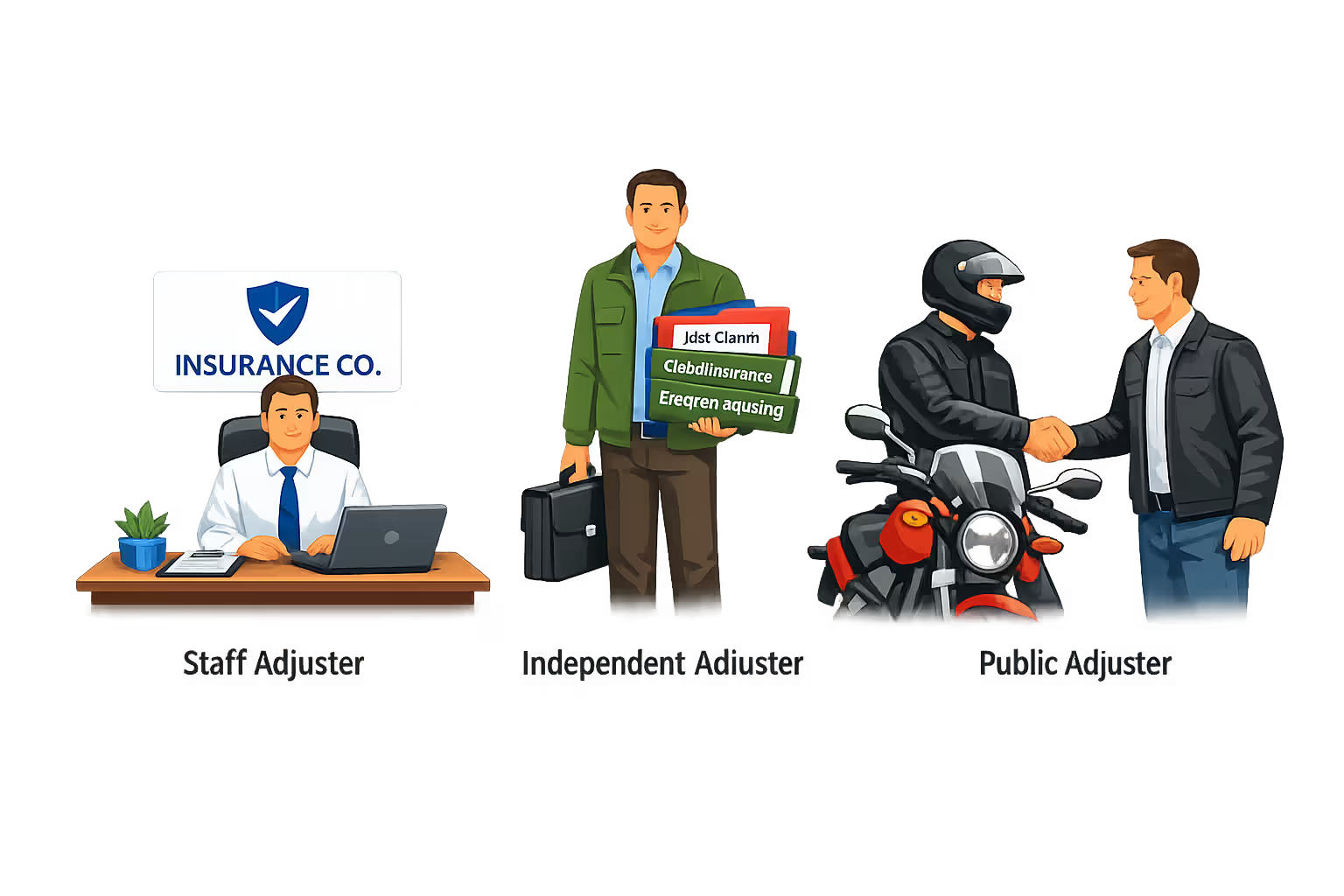
You'll encounter three distinct types:
Staff adjusters work directly for one insurance company—they're on the payroll, full benefits, the whole nine yards. They handle the majority of routine claims and typically have authority to settle cases up to certain dollar amounts without supervisor approval. Since they're company employees, they're deeply invested in the insurer's interests.
Independent adjusters operate as contractors, hired when insurance companies get slammed with claims after major storms or during busy seasons. They might handle claims for multiple insurers. They're paid per claim or by contract, which sometimes makes them more motivated to close your file quickly. They represent the insurer's interests but don't have the same long-term loyalty.
Public adjusters flip the script entirely—you hire them, you pay them (typically 10-15% of whatever you recover), and they fight for your interests against the insurance company. Think of them as your own personal adjuster who actually wants to maximize your payout instead of minimize it.
Motorcycle claims get treated differently than fender-benders in significant ways. Cars have decades of standardized crash data and repair costs. Your Harley or Ducati? Not so much. This makes damage assessment far more subjective and gives adjusters wiggle room to lowball valuations.
Many adjusters also carry biases—they assume motorcyclists take unnecessary risks or are partially at fault by default. Custom parts throw another wrench in the works since standard pricing databases don't list that Akrapovic exhaust you installed. And because motorcycle crashes tend to cause more severe injuries than car accidents, adjusters scrutinize bike claims more intensely, knowing they might be on the hook for substantial medical payments.
Author: Ryan Whitlock;
Source: spy-delhi.com
How to Prepare Before the Adjuster's Visit
Most riders lose their claim before the adjuster even shows up. They skip documentation, toss damaged parts in the trash, or give rambling phone statements that contradict the police report.
Your prep work matters more than anything you'll do during the actual inspection.
Documenting Your Motorcycle Damage
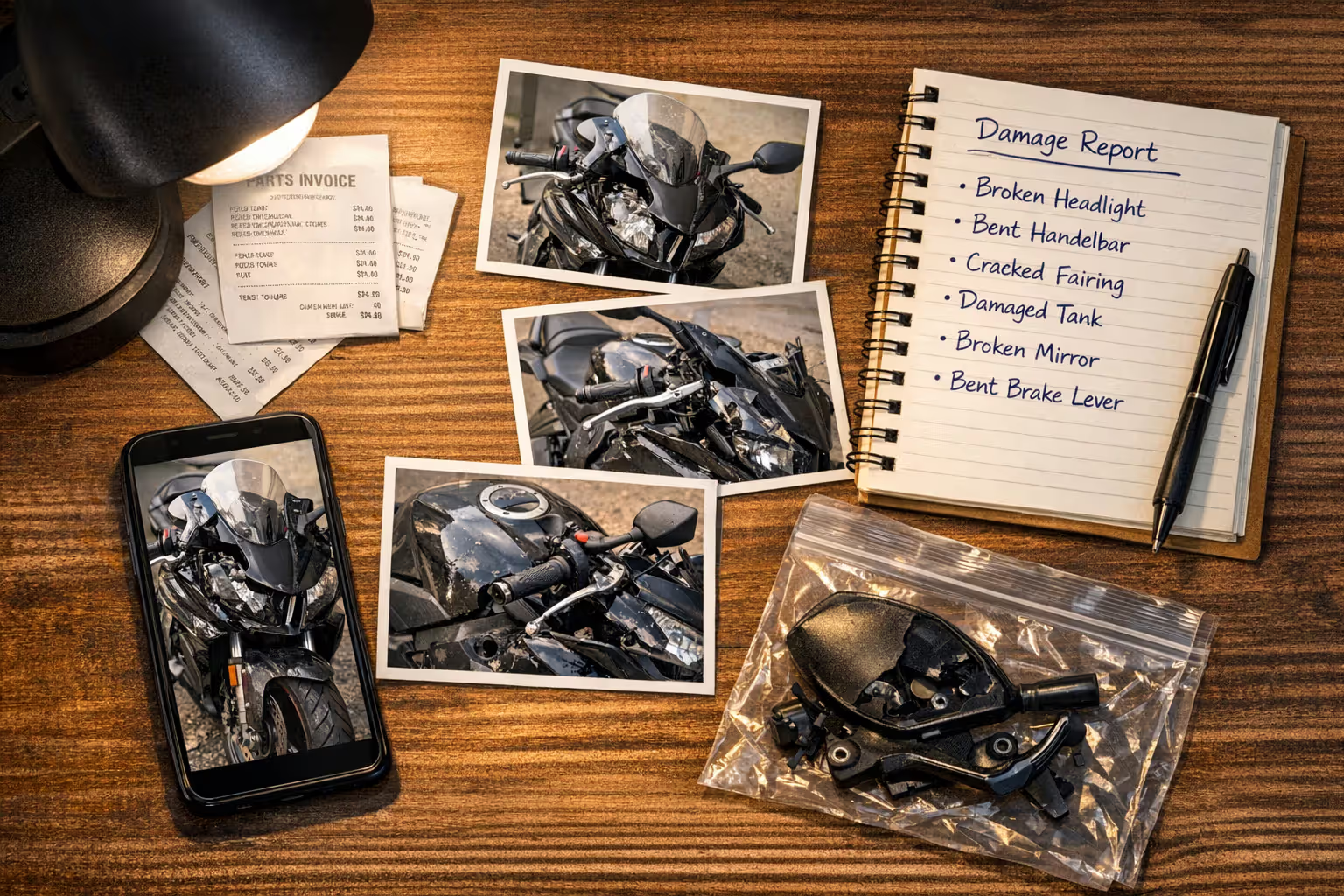
Pull out your phone and start shooting photos the moment it's safe to do so. You need wide shots showing the entire bike and its position, medium shots capturing each damaged section from multiple angles, and extreme close-ups of every scratch, crack, dent, and broken component.
Don't just photograph what's obviously destroyed. Capture potential frame damage by shooting straight down the bike's centerline—any misalignment could total the bike even if the plastics look fixable. Check for fluid leaks under the bike and photograph any puddles. Look for stress marks, paint cracks, or bent components that might not seem significant but indicate structural issues.
Keep every broken piece. That shattered headlight housing, the cracked turn signal, the bent clutch lever—bag them up and save them. Adjusters sometimes claim damage isn't as severe as you describe, and having the actual broken parts shuts that argument down immediately.
Write down everything damaged while it's fresh in your memory: front fairing cracked, left mirror broken, clutch lever bent, shifter ground down, left engine case cracked, radiator punctured, forks possibly bent, headlight assembly destroyed. Be thorough. You can't add items to your claim later if you forgot to mention them initially.
Recording video while walking around the bike captures details that still photos miss. Narrate what you're seeing: "This is the left side where the car hit me. You can see the entire fairing is destroyed, the engine case is cracked and leaking oil, and the frame looks bent here." Try starting the bike if it's safe—weird noises, smoke, or failure to start are all documented evidence.
Author: Ryan Whitlock;
Source: spy-delhi.com
If you've got aftermarket parts—and most riders do—start digging through your email and files for receipts right now. That $1,200 exhaust system becomes a $150 "universal pipe" in the adjuster's estimate if you can't prove what you actually paid.
Gathering Evidence and Accident Records
Request the police report within a few days. Most departments make them available online within 72 hours. Read it carefully—officers make mistakes. If the report says you were traveling north when you were actually going south, file a correction immediately. Errors in official reports give adjusters ammunition to question your credibility.
If anyone witnessed your crash, you need their information now, not two weeks from now when you're negotiating. Get their names, phone numbers, and brief written statements while the accident is fresh in their minds. Independent witnesses who saw the other driver run the red light or pull out in front of you are worth their weight in gold when the adjuster starts questioning fault.
Dig up your maintenance records—oil change receipts, tire replacement invoices, recent service records. These prove your bike was well-maintained before the crash, which supports higher valuation. A bike with documented regular maintenance is worth more than one with no service history.
Custom parts require extra documentation. Pull together receipts showing what you paid, installation invoices if you had a shop do the work, and any photos you took after installing the parts but before the accident. Adjusters can't lowball custom components when you've got a paper trail proving exactly what you spent.
If you were injured—even "just bruised up"—photograph your injuries daily for the first week. Bruising often looks worse days after the accident than immediately after. Get medical attention even if you feel okay. Adrenaline masks pain, and some injuries like concussions or internal bleeding don't show symptoms right away.
What Not to Say or Do Before the Inspection
That adjuster who calls within hours of your accident asking you to explain what happened? They're not trying to help you. They're trying to get you to say something they can use against you while you're still shaken up, in pain, or on medication.
Your own insurance company can require you to provide a statement as part of your policy agreement—but you can request 24-48 hours to collect your thoughts first. The other driver's insurance adjuster? You owe them nothing. They can't require you to talk to them, and doing so rarely helps your case.
If you do give a statement, stick to basic facts: "I was traveling west on Oak Street approaching the intersection with Main. The light was green. A car turned left in front of me from the opposite direction. I couldn't stop in time and hit the passenger side of their vehicle." Period. Don't speculate: "I think maybe they didn't see me" gives them an opening to argue comparative fault.
Never say "I'm sorry" or "I should have..." Apologizing sounds like admitting fault even when the accident clearly wasn't your fault. Statements like "Maybe I was following too close" or "I guess I could have swerved" become evidence that you contributed to the accident, which reduces your payout.
Reject any medical release that grants access to your entire medical history. Adjusters often request blanket authorizations that let them dig through years of records looking for pre-existing conditions. They only need records directly related to this accident—be specific about what you'll authorize.
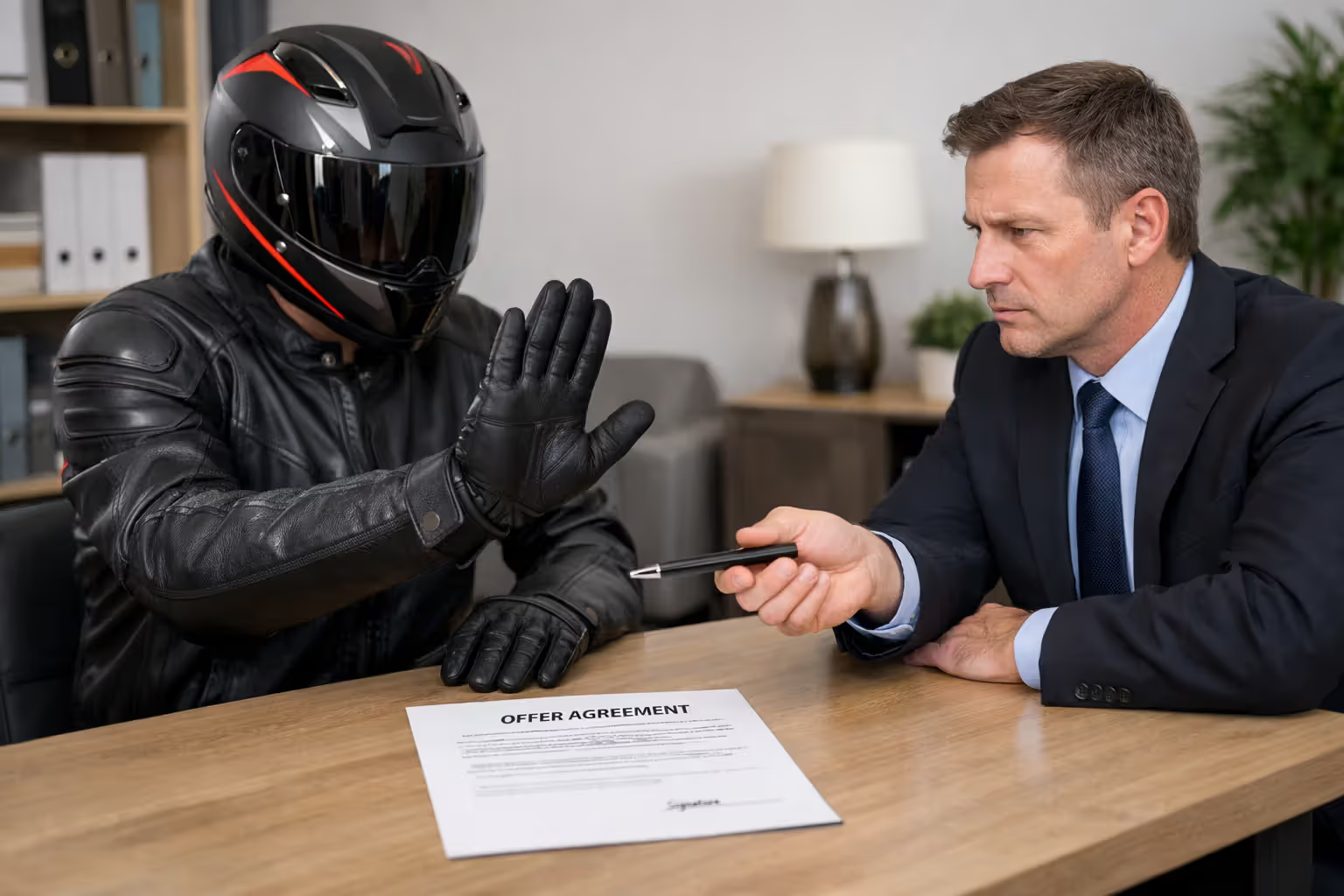
Don't even think about accepting a settlement before the inspection or before you've finished medical treatment. Some injuries don't manifest for days or weeks. Once you sign a release, you're done—you can't reopen the claim when your "minor back pain" turns into a herniated disc requiring surgery.
Stop posting on social media immediately. That includes Facebook, Instagram, Twitter, TikTok—everything. Adjusters routinely check social media for evidence contradicting your claim. A photo of you standing next to your wrecked bike becomes "proof" your injuries aren't serious. A comment like "could've been worse" gets interpreted as admitting minimal damage.
Author: Ryan Whitlock;
Source: spy-delhi.com
What Happens During the Motorcycle Damage Inspection
Expect the adjuster's call within a day or two of filing your claim. They'll want to schedule an inspection quickly—they work on deadlines and close files faster when they get started immediately.
The inspection location matters. They might visit your home if the bike is there, meet you at the tow yard where it was impounded, or ask you to bring the bike to their office or an inspection facility. Each option has advantages—meeting at your home gives you some psychological advantage (it's your territory), while their facility gives them more control. The tow yard is neutral ground but often rushed since storage fees accumulate daily.
Set aside an hour for the inspection, longer if damage is extensive. The adjuster arrives with a camera, clipboard, and tablet loaded with valuation software. They walk around the bike multiple times, shooting photos from every conceivable angle. They're matching their documentation against yours—looking for any discrepancies or damage you failed to mention.
They'll check the VIN stamped on your frame against your title and registration, verifying they're inspecting the right bike. Sounds basic, but VIN fraud happens often enough that they always verify.
The physical examination gets detailed. They'll squat down to look under fairings, checking for frame damage underneath cosmetic damage. They might push on the forks to test for bending, spin wheels to check for trueness, and look for fluid leaks that indicate internal damage. Pre-existing damage gets noted separately—that rust spot, those scratches from your parking lot tipover last year, the faded paint on your tank.
Expect questions about the accident itself: "Walk me through exactly what happened." "What were you doing right before impact?" "Was the road wet or dry?" "Were you wearing your helmet and gear?" Answer factually but concisely. You're not trying to tell a story—you're providing facts.
They'll review your policy on their tablet, confirming your coverage limits, deductible amount, and whether you have custom parts coverage or other optional protections. This is when you'll learn if that $8,000 worth of aftermarket parts is covered under your standard policy (spoiler: probably not, or only up to $3,000).
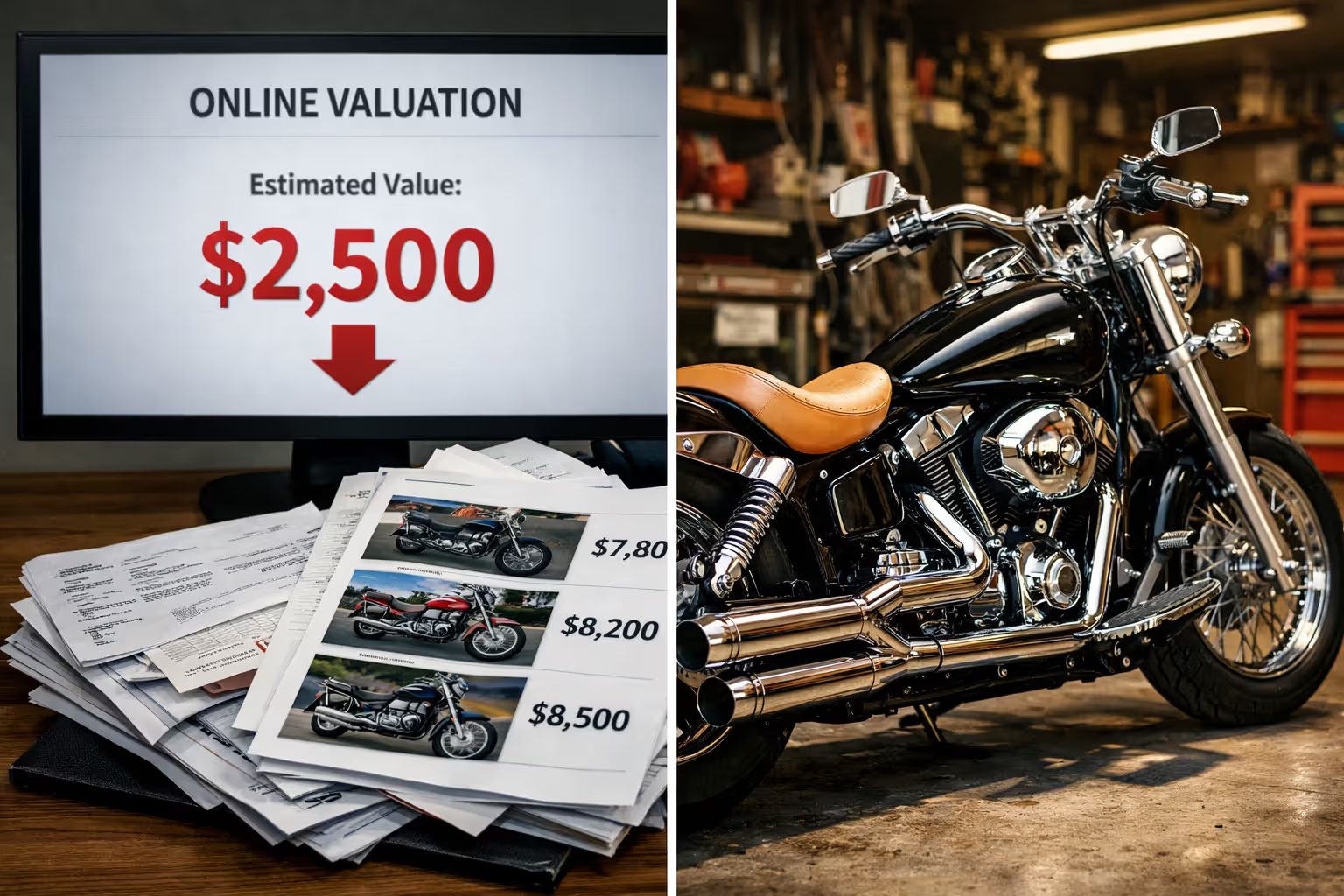
After the physical inspection, they return to their office and start crunching numbers. They'll consult valuation guides—NADA, Kelley Blue Book, CCC ONE—plugging in your bike's year, make, model, and mileage. They'll search online marketplaces for comparable bikes currently for sale in your region. For custom or unusual bikes, they might request additional appraisals or documentation.
Adjusters watch for specific red flags that might indicate fraud or exaggerated claims. Inconsistencies between your description of the accident and the actual damage pattern raise immediate suspicion—if you say the car hit your left side but all the damage is on the right, they're investigating further. Damage that seems excessive for the type of accident described triggers questions. Pre-existing damage you conveniently "forgot" to mention destroys your credibility. Multiple claims filed within a short timeframe or accidents shortly after purchasing a new policy get flagged for special investigation.
When fraud is suspected, your claim gets kicked to the insurance company's Special Investigations Unit—essentially their internal detectives. Settlement grinds to a halt while they investigate. These investigations can take months and often result in claim denials.
Understanding the Settlement Offer and Valuation Process
How much money you actually receive depends on which valuation method your policy uses—and most riders don't find out until after they've already filed a claim.
Actual Cash Value (ACV) appears on the vast majority of motorcycle policies because it's cheapest for insurers. They determine your bike's current market value immediately before the accident, then subtract depreciation and your deductible.
Finding market value means researching what comparable bikes are actually selling for right now in your geographic area—not what they're listed for, but what buyers are paying. Your 2021 Yamaha R1 with 8,000 miles gets compared against other 2021 R1s with similar mileage currently available within, say, 100 miles of your location. Same color, similar condition, comparable modifications if any.
Depreciation stings. That bike you bought new three years ago for $17,000? It's worth $11,500 now according to the adjuster's valuation guide. Bikes depreciate fastest in the first three years—often 20-30% in year one alone. Higher-end bikes from premium manufacturers sometimes hold value better, but depreciation applies to everything.
Replacement Cost coverage costs significantly more but pays what you'd need to spend today to replace your destroyed bike with a comparable one—no depreciation deduction. Very few riders carry replacement cost coverage on motorcycles because the premium increase is substantial. It's more common on cars but rare for bikes.
Agreed Value policies work completely differently. When you bought your policy, you and the insurer negotiated and agreed on your bike's value—let's say $22,000 for your restored vintage Honda. If it's totaled, you receive that agreed-upon $22,000 regardless of market conditions or depreciation. No research, no negotiation, no arguing over comparables. You get the agreed amount, period.
Agreed value makes sense for collectible, vintage, or custom bikes where market value is difficult to establish. It costs more upfront but provides certainty. You'll need an appraisal or documented proof of value when buying the policy.
Stated Value sounds similar but provides far less protection. You "state" your bike's value when buying the policy—maybe you declare it's worth $15,000. But when you file a claim, you receive the lesser of that stated value or the bike's actual cash value at the time of loss. If the stated value is $15,000 but ACV comes in at $11,000, you get $11,000. Stated value merely caps the maximum possible payout—it doesn't guarantee you'll receive that amount.
| How They Calculate What You're Owed | What Gets Covered | Benefits | Drawbacks |
| Actual Cash Value | Current market value with depreciation subtracted | Included in standard policies at no extra cost | Depreciation significantly reduces what you receive; often insufficient to replace your bike |
| Replacement Cost | Whatever it costs today to buy an equivalent bike | Depreciation doesn't reduce your payout; closer to what replacement actually costs | Substantially higher premiums; rarely offered for motorcycles |
| Agreed Value | Specific dollar amount negotiated when you purchase coverage | Payout is guaranteed regardless of market fluctuations; perfect for rare or collectible bikes | Requires upfront appraisal and documentation; higher premium cost |
| Stated Value | Whichever is less: your stated amount or actual cash value | Creates a maximum ceiling for potential payouts | Doesn't guarantee the stated amount; depreciation still applies to reduce payment |
Custom parts create valuation headaches because standard databases don't include aftermarket components. Your $2,000 carbon fiber wheels? Not in the valuation guide. Your custom paint job that cost $3,500? The adjuster prices it as "standard paint" worth maybe $400.
Most standard motorcycle policies cap custom parts coverage at $3,000—read your declarations page to confirm. You installed $12,000 in upgrades but only have standard coverage? You're recovering $3,000 maximum for those modifications unless you purchased additional accessory coverage.
Proving custom parts value requires receipts showing purchase price and installation costs. The adjuster may question whether aftermarket parts actually add value—your opinion that the exhaust sounds better doesn't mean it increases market value. They might argue that custom parts are a matter of personal preference and don't increase what a typical buyer would pay.
Professional installation helps your case. DIY installations get challenged because the adjuster can claim improper installation that doesn't add value or potentially created safety issues.
For repairable bikes, the adjuster creates an estimate using parts pricing from insurance company networks (often discounted below retail) and labor rates from standardized guides like Mitchell or CCC. Their estimate often comes in 25-40% lower than what independent shops quote for the same repairs.
Author: Ryan Whitlock;
Source: spy-delhi.com
Negotiating With the Adjuster: Strategies That Work
The first number they mention is never their best number. Adjusters build negotiating cushion into initial offers, expecting you to push back. Accepting immediately signals you don't know what you're doing, and you'll never recover that lost money.
Before countering, research what your bike actually sells for in current market conditions. Check Cycle Trader, eBay Motors, Craigslist, Facebook Marketplace, and local dealer listings for comparable bikes. Screenshot everything—you need evidence of actual asking prices (even better if you can find completed sales showing what buyers actually paid).
Get repair estimates from two or three reputable shops—bonus points if they're certified for your bike's manufacturer. When your trusted mechanic estimates $7,200 in repairs but the adjuster offered $4,800, you've got concrete evidence for negotiation.
Build a written counter-offer with documentation attached. Vague complaints go nowhere—"your offer is too low" accomplishes nothing. Instead: "Your valuation fails to account for the following items: (1) aftermarket exhaust system—receipt attached showing $1,850 purchase price; (2) custom seat—receipt attached showing $425; (3) comparable bikes currently for sale—attached screenshots show three similar bikes listed between $13,500 and $14,200, while your offer values mine at $11,800."
Organize everything. Create a folder—physical or digital—with labeled sections: receipts for custom parts, photos showing those parts installed on your bike before the accident, estimates from repair shops, screenshots of comparable bikes for sale, and any maintenance records proving your bike's condition.
Insurance adjusters work with settlement ranges, not fixed amounts. When riders present organized documentation and credible evidence of their bike's true value, I've seen initial offers increase by $3,000 to $5,000 with just one well-prepared counter. The adjuster's first offer assumes you won't do your homework—proving them wrong immediately changes the negotiation dynamic
— Michael Torres
Watch for common lowball tactics. Adjusters sometimes use outdated pricing data—challenge them to use current market prices from the past 30 days. They'll compare your well-maintained bike to beat-up examples with double your mileage—point this out and provide comparable bikes in similar condition. They'll claim pre-existing damage that didn't exist—your pre-accident photos prove otherwise. They'll ignore custom parts entirely—that's why you've got receipts organized.
If the adjuster stonewalls—refuses to negotiate despite solid evidence—escalate to their supervisor. Ask directly: "I'd like to speak with your supervisor about this claim." Insurance companies have formal complaint procedures, and supervisors often have broader settlement authority than line adjusters.
Hiring a public adjuster makes financial sense for complex or high-value claims. They charge 10-15% of your final settlement but frequently negotiate increases that more than cover their fee. Consider hiring one when you've got extensive custom work the insurance company undervalues, when your claim involves a rare or collectible bike with difficult valuation, when the insurer denies your claim or makes offers you know are unreasonably low, or when injuries or stress make handling negotiations yourself overwhelming.
Bring in an attorney when injuries are part of your claim (they often work on contingency, taking 33-40% of what they recover), when the insurance company denies your claim entirely, when you suspect bad faith (unreasonable delays, lowball offers without justification, failure to communicate), or when your total claim exceeds $10,000-$15,000. Many personal injury attorneys provide free initial consultations and can quickly assess whether your situation justifies legal involvement.
Common Mistakes That Reduce Your Motorcycle Claim Payout
Taking the first offer without at least attempting negotiation leaves money on the table in roughly 70% of cases. Adjusters build room into initial offers specifically because they expect negotiation. Even if confrontation makes you uncomfortable, a polite counter-offer with basic supporting documentation regularly yields quick $1,000-$2,500 increases.
Skipping medical evaluation because "I feel fine" costs riders thousands down the line. Soft tissue injuries, concussions, and internal trauma don't always produce immediate symptoms. Adrenaline masks pain for hours or even days after crashes. If you settle your claim quickly then discover three weeks later you've got a concussion or internal bleeding, you're stuck—settled claims can't be reopened.
Get checked out by a doctor within 24-48 hours of any accident, regardless of how you feel. Follow every treatment recommendation they make. Skip appointments or ignore medical advice, and the adjuster will argue your injuries weren't serious.
Failing to read and understand your policy means you might not claim benefits you're actually entitled to. Many riders don't realize they carry medical payments coverage (pays your medical bills regardless of fault), rental reimbursement (covers a rental bike while yours is being repaired), or accessory coverage (provides higher limits for custom parts). These benefits just sit there unused because riders don't know to claim them.
Pull out your declarations page right now. Read what coverage you actually have, your limits, your deductibles, and any special provisions. Understanding your policy before the adjuster calls puts you in control.
Missing deadlines forfeits your rights entirely. Most policies require prompt notification of accidents—typically within 24-72 hours. File late, and the insurance company can deny your claim for failure to notify. Statutes of limitations for filing lawsuits vary by state but typically run from one year (in Kentucky and Louisiana) to six years (in Maine and North Dakota). Don't assume you have unlimited time.
Admitting fault or giving unprepared statements destroys claims regularly. Statements like "I probably should've been watching more carefully" or "Maybe I was going a bit fast" become permanent evidence of your negligence. Fault determination involves complex legal analysis—it's not your job to decide who was at fault during a phone call two hours after your crash.
Stick to observable facts only. "The light was green when I entered the intersection" is factual. "I think maybe the other driver didn't see me" is speculation that opens doors you want kept closed.
Settling property damage while you're still receiving medical treatment is perhaps the biggest mistake riders make. Most settlement agreements include releases preventing you from claiming additional money later. Sign a release accepting $6,000 for your bike repairs while still treating your injuries, then discover you need $25,000 in surgery? You're out of luck—the release bars additional claims.
Never settle any portion of a claim until you understand the full extent of your damages—both property and bodily injury.
Repairing or discarding damaged parts before the inspection eliminates crucial evidence. The adjuster needs to see actual damage to verify your claims. Already fixed it? They might dispute the damage was as severe as you claim or argue some damage was pre-existing. Threw away that broken taillight assembly? Now it's your word against theirs about whether it was actually destroyed.
Relying solely on the adjuster's repair estimate hands them complete control. Their estimate reflects what they want to pay, built using discounted parts pricing and standardized labor rates that don't reflect your area's actual costs. Getting independent estimates from shops you trust provides negotiating leverage and reality-checks the adjuster's numbers.
Frequently Asked Questions About Motorcycle Claim Adjusters
Conclusion
Working with a motorcycle accident claim adjuster doesn't have to feel like a battle, but going in naive about their actual role sets you up for disappointment and financial loss. Adjusters are professionals doing their job, and that job fundamentally involves protecting their employer's money. Your responsibility is protecting your own interests through thorough documentation, policy knowledge, and readiness to push back when initial offers fall short.
Begin preparing the moment your accident happens—or even before. Document everything: damage from every angle, injuries as they develop, accident scene conditions, and your bike's pre-crash condition. Collect evidence before the adjuster's call, because you'll never have more leverage than when you walk into negotiations with organized, comprehensive documentation they can't easily dispute.
Recognize that initial offers represent starting positions, not final answers. Research your bike's actual market value, secure independent repair estimates, and don't hesitate to counter-offer backed by solid evidence. Most adjusters negotiate in good faith when confronted with credible documentation—it's easier for them to increase an offer than to defend a lowball number against strong evidence.
Recognize when you're dealing with complexity beyond your expertise. Claims involving serious injuries, total losses on custom bikes, or disputed liability frequently benefit from professional representation. A public adjuster's or attorney's fee is money well spent if they substantially increase your settlement—and they usually do for complex claims.
Finally, resist pressure to rush. Injuries sometimes take weeks to fully manifest, and settling prematurely forfeits your right to additional recovery. The adjuster's timeline serves the insurance company's bottom line, not your best interests. Take whatever time you need to understand the full scope of your damages—both to your bike and your body—before signing any release. Once you sign, it's over. Make sure the number on that check reflects what you're actually owed, not just what they hope you'll accept.
Related Stories

Read more
Read more


The content on this website is provided for general informational and educational purposes only. It is intended to offer insights and guidance on motorcycle accident insurance claims, settlement processes, liability issues, coverage limits, medical compensation, and related insurance matters, and should not be considered legal or financial advice.
All information, articles, and materials presented on this website are for general informational purposes only. Insurance policies, liability standards, settlement practices, and state regulations may vary by jurisdiction and insurer. The outcome of a motorcycle accident claim depends on the specific facts of the accident, available evidence, policy language, and applicable law.
This website is not responsible for any errors or omissions in the content, or for actions taken based on the information provided. Users are strongly encouraged to consult with a qualified attorney or licensed insurance professional regarding their specific motorcycle accident claim before making decisions about settlements, negotiations, or coverage disputes.