
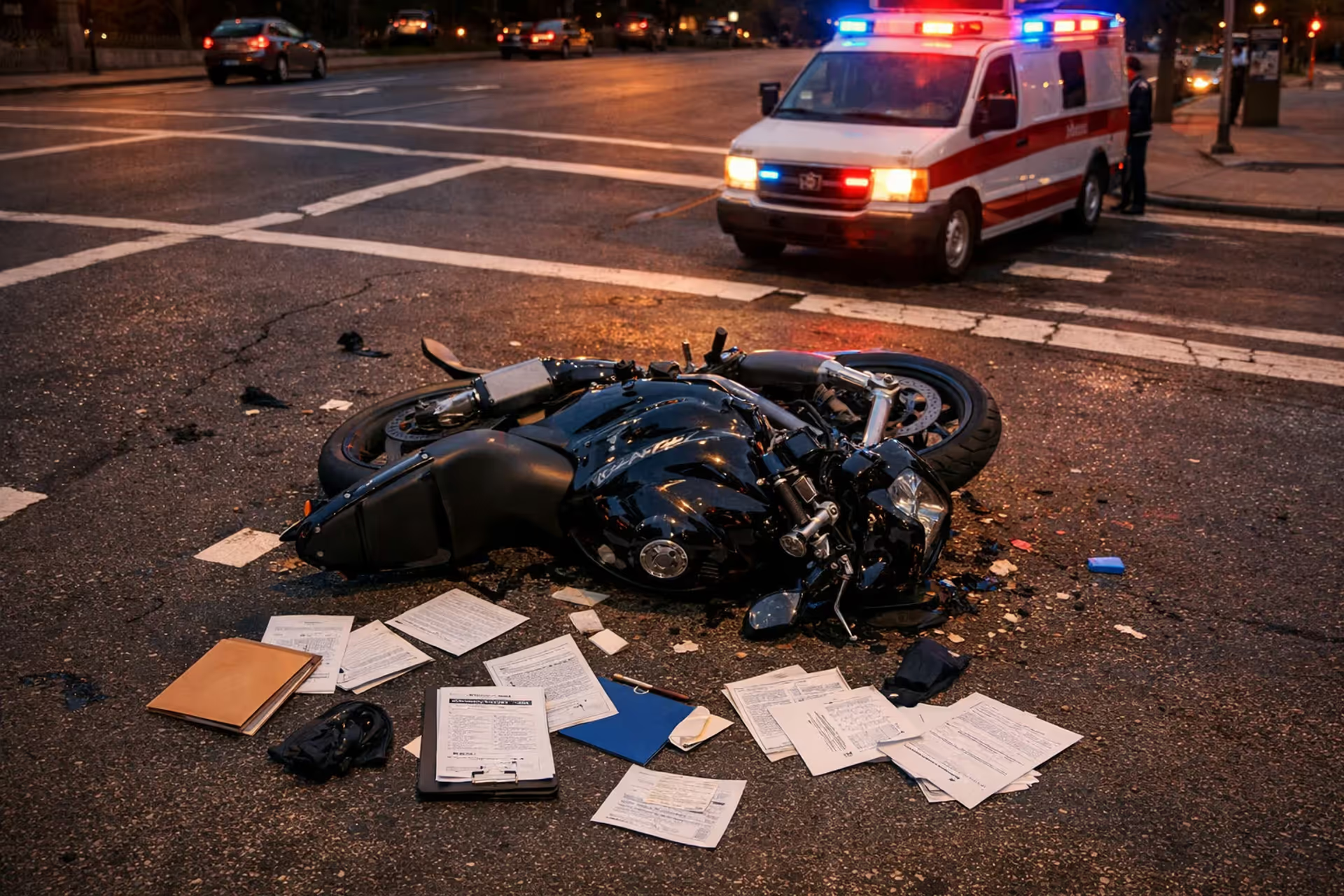
Damaged motorcycle lying on city road intersection with scattered insurance documents and ambulance lights in background
How to File a Motorcycle Accident Medical Claim Step by Step

Motorcycle crashes send riders to the ER with broken bones, road rash, and head trauma. You're looking at hospital bills that start at $15,000 for a "minor" accident and quickly climb past six figures if you need surgery. Between the pain medication fog and trying to figure out when you can work again, you've got insurance companies asking for paperwork you didn't know existed.
Here's the reality: you've probably got multiple insurance policies that could pay these bills. The trick is knowing which one to tap first, what documentation actually matters, and how to avoid the mistakes that get claims denied or delayed for months.
Let me walk you through what actually works when you're buried under medical bills from a motorcycle accident.
Understanding Your Coverage: Medical Payment Options After a Motorcycle Crash
Three or four different insurance sources might cover your injuries. Most riders I talk to assume their motorcycle insurance is their only option—they're leaving money on the table.
Personal Injury Protection (PIP) vs. MedPay
These two coverages get confused constantly because they both pay your medical bills without waiting to figure out who caused the crash.
About twelve states require PIP on your policy. Florida, Michigan, New York—they make you buy it. PIP covers 80% of your medical costs, pays for wages you miss from work, and in some states even covers someone to watch your kids while you're laid up. Your policy limit usually sits between $10,000 and $50,000. The annoying part? Many PIP policies have this buried exclusion for motorcycles unless you specifically asked for coverage and paid extra. And most states give you just fourteen days from the crash to start treatment or PIP denies the claim entirely.
MedPay works differently. You choose to add it when buying motorcycle insurance. It covers anywhere from $1,000 to $10,000 in medical bills—that's it. No wage coverage, no other benefits. But it reimburses 100% of what you spend on treatment, you don't pay a deductible, and there's no tight treatment deadline. For bikers specifically, MedPay tends to create fewer hassles.
Pull out your insurance declarations page right now and look for these coverages. Not there? You're using health insurance or going after the other driver's policy.

Author: Olivia Bennett;
Source: spy-delhi.com
Health Insurance vs. Motorcycle Insurance for Medical Bills
Your Blue Cross or Aetna policy covers broken bones from a bike crash the same as any injury. But there's this clause buried in the fine print called subrogation that becomes a problem later.
Here's what happened to a rider in Ohio last year: totaled his bike when a pickup turned left across his lane. His health insurance paid $52,000 for his shoulder surgery and hospital stay. Eighteen months later, he settled with the truck driver's insurance company for $140,000. His health insurer immediately filed paperwork demanding their $52,000 back. His actual settlement after paying the health insurance lien and lawyer fees? About $38,000.
You can reduce this problem if you've got MedPay. Pay bills with MedPay first, then use health insurance for what's left. Health insurers typically don't file liens against MedPay payments—only against settlements from the at-fault driver. This tactic requires calling your medical providers' billing departments and explaining which insurance to bill first, but it preserves more settlement money.
At-Fault Party's Liability Coverage
The driver who hit you carries bodily injury liability coverage—theoretically. Their policy should ultimately cover your entire medical bill. The problem: you won't see a dime until you settle your complete claim, and that happens months or years after your last doctor appointment.
State minimum liability limits create another issue. Texas only requires $30,000 per person. Someone T-bones you at an intersection, puts you in the hospital for a week, and you're already past their coverage limit before you leave the ICU. You'll need your own underinsured motorist coverage or you're stuck with unpaid bills. Suing the driver personally rarely works—someone carrying minimum insurance probably doesn't have assets to collect against.
Never delay treatment waiting for the other driver's insurance to pay up. Tap your own coverage immediately, get healthy, and sort out who owes what once you're recovered.
Step-by-Step Process for Filing Your Medical Claim
The motorcycle accident medical bills claim process starts before the ambulance arrives and continues until you cash the final settlement check. Skip a step and watch your claim get denied three months later.
Immediate Actions at the Accident Scene
Call 911 even if you walked away from the crash. I've seen riders refuse ambulances because they felt okay, then discover fractured vertebrae two days later when the adrenaline wore off. That gap between the accident and seeking treatment becomes ammunition for insurance adjusters who'll argue your injuries came from somewhere else.
The police report and ambulance records create an official timeline linking your injuries directly to the crash. Worth its weight in gold during claim disputes.
Don't sign anything handed to you by the other driver's insurance company. Some adjusters show up at accident scenes with clipboards and forms they call "incident reports." Sign the wrong one and you've just released them from liability for $500.
Take photos with your phone—lots of them. Your scraped-up arms and legs, your damaged bike from four angles, skid marks on the pavement, the other vehicle's damage, street signs showing the intersection. Insurance companies use these photos to reconstruct the crash and verify your injuries match the impact severity.
Grab phone numbers from anyone who saw what happened. Witnesses disappear fast, and their statements prove liability when the other driver suddenly claims you ran a red light.

Author: Olivia Bennett;
Source: spy-delhi.com
Documenting Your Injuries and Treatment
Buy a three-ring binder tomorrow. Every ER discharge paper, every doctor's note from follow-up appointments, every prescription receipt, every physical therapy invoice—it all goes in that binder with the date written on top. Create a simple spreadsheet too: date, which doctor or hospital, what treatment they did, and how much it cost.
Follow every instruction your doctor gives you. Skip two weeks of physical therapy because your shoulder feels better? The insurance adjuster points to that gap and argues you obviously healed completely. Then they deny coverage for the additional treatment you need when the pain comes back.
Start a daily pain journal on your phone. Three sentences describing pain levels, what activities hurt, whether you slept through the night. "Couldn't raise right arm above shoulder. Dropped coffee cup. Pain 7/10 despite medication." This documentation supports your non-economic damage claims and proves ongoing problems.
The biggest mistake? Riders who delay treatment because bills are piling up.Insurance companies exploit any delay. They'll argue the injuries weren't from the accident or weren't serious enough to require immediate care. Fighting that argument six months later is brutal
— Michael Chen
Submitting Your Claim to the Right Insurance Provider
Begin with your own insurance company, not the other driver's. Call your MedPay or PIP carrier within two days of the crash. Provide them the police report number and ask what paperwork they need.
For MedPay claims, you're submitting: - Their claim form (download it from their website or ask them to mail it) - Copy of the police report - All medical bills and records so far - A brief letter explaining these expenses resulted from the motorcycle accident
Most MedPay carriers process complete claims within thirty days. PIP takes six to eight weeks because they're calculating wage loss and other benefits beyond medical bills.
Contact the at-fault driver's insurance company next—but here's how that conversation should go: "I'm calling to report an accident on
at involving your insured driver . I sustained injuries and need to open a claim." They'll ask for a recorded statement. Your response: "I'll need to review the details with an attorney before providing a recorded statement. Please send me a claim number and adjuster contact information." That's it. You've reported the claim without giving them ammunition to deny it later.Tell your health insurance company these injuries came from a motor vehicle accident. They'll flag the claim and might wait to pay pending liability investigation. Give them the at-fault driver's insurance information so they can pursue their subrogation claim directly instead of bothering you about it.
Following Up and Tracking Your Claim Status
Insurance companies operate on the "squeaky wheel" principle. Nobody's calling you with status updates.
Mark your calendar every two weeks to call them. Ask these specific questions: - Has the adjuster reviewed my claim yet? - What additional documentation do you need from me? - When should I expect the next payment? - What's the adjuster's direct phone number and email?
Write down every conversation: date, time, who you talked to, what they said, what they promised. This record becomes critical evidence if your claim stalls or gets denied without good reason.
If thirty days pass with no activity and no explanation, file a complaint with your state insurance department. California's Department of Insurance, Texas Department of Insurance, whatever state you're in—file online. Complaints from state regulators get claims moving fast.
Common Mistakes That Delay or Reduce Medical Reimbursement
The injury medical claim motorcycle accident process has landmines everywhere. Here's what tanks claims.
Accepting quick settlement offers: Three days after your accident, the adjuster calls offering $5,000 "to cover everything and close this out quickly." You haven't even gotten X-ray results back. This lowball offer gambles on you not understanding how badly you're hurt. That sore back might be three herniated discs requiring $65,000 in treatment. Once you sign a release for $5,000, you can't come back asking for more when the real diagnosis arrives. Never settle until your doctor says you've reached maximum medical improvement—meaning you've healed as much as you're going to.
Missing documentation deadlines: Your policy has strict deadlines buried in the "Duties After an Accident" section. Some MedPay policies require filing within twelve months. Some PIP policies demand notification within thirty days. Blow past these deadlines and your claim gets automatically denied—no exceptions, no appeals. Read those policy sections today and put every single deadline in your phone calendar with an alert.
Not preserving physical evidence: You replaced your cracked helmet with a new one and threw the damaged one away. Tossed your shredded jacket in the trash. Fixed your bent handlebars. Insurance companies hire accident reconstruction engineers who examine damaged equipment to prove impact force and rider position during the crash. Without that physical evidence, they'll argue the crash wasn't severe enough to cause your injuries. Store everything damaged in your garage until the claim closes.
Failing to report all injuries: Your femur fracture hurt so badly in the ER that you forgot to mention your neck was sore too. Three weeks later, an MRI shows cervical spine damage. Now the adjuster claims the neck injury happened between the accident and the MRI—maybe you slept wrong or lifted something heavy. Always report every ache, pain, and discomfort during that first ER visit, even symptoms that seem minor compared to your main injury.
Signing medical releases too early: The at-fault driver's insurer sends you an "Authorization to Release Medical Records" asking permission to access your complete medical history "to evaluate your claim." This blanket authorization lets them review every medical record you've ever generated, hunting for pre-existing conditions they can blame for your current problems. Only provide records directly related to this accident, or have an attorney review any release before you sign it.

Author: Olivia Bennett;
Source: spy-delhi.com
What Medical Expenses Are Covered in Motorcycle Accident Claims?
Not every medical bill gets reimbursed. This breakdown shows what insurance typically pays versus what comes out of your pocket.
| Type of Medical Expense | Generally Reimbursed | Generally Denied | Important Details |
| Emergency room treatment | Yes | Cosmetic work unrelated to fixing injuries | Treatment must happen within reasonable time after crash |
| Ambulance service | Yes | Air ambulance coverage often capped at lower amounts | Ground ambulance rarely disputed |
| Surgical procedures | Yes, when medically required | Elective surgery, experimental procedures | Doctor must document why surgery was necessary |
| Hospitalization | Yes | Private room upgrade fees unless medically needed | Standard semi-private room rates covered |
| Physical therapy sessions | Yes, within limits | Treatment beyond what doctor prescribed | Usually 12-24 sessions approved; more needs strong justification |
| Prescription drugs | Yes | Non-prescription supplements, over-the-counter meds | Save every pharmacy receipt |
| MRIs, X-rays, CT scans | Yes | Additional imaging without medical justification | Must be ordered by treating physician |
| Chiropractic treatment | Partial coverage | Treatment beyond 6-12 visits often disputed | Needs objective medical findings, not just pain complaints |
| Psychological counseling | Yes, for accident-caused PTSD or anxiety | Mental health conditions that existed before crash | Diagnosis must connect condition to the accident |
| Wheelchairs, crutches, braces | Yes | Premium upgrades beyond basic medical necessity | Standard equipment rates covered |
| Ongoing future treatment | Yes, if medically established as necessary | Speculative or unproven future treatments | Requires doctor testimony about expected future needs |
Review your specific policy's medical reimbursement motorcycle accident insurance guide to find exact exclusions. Every policy differs slightly on what they'll pay.
Dealing with Hospital Bills While Your Claim Is Pending
Medical bills arrive six weeks before insurance pays anything. A typical motorcycle crash generates $75,000 in medical costs during the first month. You need a plan for managing this debt while waiting on insurance companies.
Negotiating Payment Plans with Medical Providers
Most hospitals offer interest-free payment arrangements if you call before they send your account to collections. Contact their billing department within ten days of receiving any bill and explain your situation: - You were injured in a vehicle accident - Multiple insurance claims are pending - You need a temporary payment arrangement until claims resolve
Offer something small monthly—even $25 shows good faith. Most billing departments accept this to keep your account current and avoid collection costs. Get everything in writing and never miss a payment, or the entire balance comes due immediately.
Some medical facilities offer significant "prompt pay" discounts—20% to 30% off if you pay within thirty days of receiving the bill. If you've got emergency savings or family who can loan you money, these discounts substantially reduce your total medical debt. Just confirm you'll definitely get reimbursed before draining your emergency fund.
Credit cards should be your absolute last resort for medical bills. The 18% to 24% interest compounds while your claim sits pending—sometimes for years. That $30,000 medical bill becomes $45,000 by the time your claim settles.
Medical Liens and How They Affect Your Settlement
When you can't afford treatment, some providers file a medical lien against your injury claim. This legal document guarantees they get paid from any settlement before you receive money.
Real example: Your orthopedic surgeon charges $42,000 for your knee reconstruction. You can't pay, so they file a lien. Two years later, you settle your claim for $120,000. That surgeon's lien gets satisfied first, dropping your settlement to $78,000 (before attorney fees and other costs).
Medical liens aren't always bad—they let you access necessary treatment without money upfront. But they definitely reduce what you pocket at the end. A rider with $95,000 in medical liens and a $125,000 settlement might net only $8,000 after satisfying all liens and paying a 33% attorney fee.
Smart attorneys negotiate lien reductions after settlement. Medical providers frequently accept 50 cents to 70 cents per dollar rather than wait years for full payment or risk getting nothing if the case goes bad. This negotiation potentially saves you thousands.

Author: Olivia Bennett;
Source: spy-delhi.com
When to Hire a Personal Injury Attorney for Your Medical Claim
Plenty of straightforward medical claims don't need an attorney. Minor injuries, obvious liability, adequate insurance—handle it yourself and save the legal fees. But certain situations absolutely require professional help.
Serious injuries with ongoing treatment needs: Anything involving surgery, permanent disability, or future medical care justifies hiring representation. These claims require calculating projected lifetime medical costs and lost earning capacity. Get these calculations wrong and you're short $50,000 or more.
Disputed liability: The other driver claims you caused the crash or shares fault. You need legal representation immediately. Comparative negligence rules in most states reduce your compensation by your fault percentage. An attorney investigates, collects evidence, and builds a case proving the other driver's full responsibility.
Insurance company bad faith: Your own insurer denies a legitimate claim, stalls payment without explanation, or demands excessive documentation for a straightforward claim—that's bad faith. Attorneys file regulatory complaints and can sue insurers for damages exceeding your policy limits when they violate their duties.
Inadequate insurance coverage: The at-fault driver carries minimum insurance and your injuries exceed those limits. An attorney explores other recovery options: your underinsured motorist coverage, additional liable parties like bars that overserved drunk drivers, or product liability claims against motorcycle manufacturers for defects that worsened injuries.
Complex medical issues: Pre-existing injuries, symptoms that appeared days after the crash, or disputes about what caused your condition require medical experts and legal strategy. Attorneys work with doctors who'll testify your herniated disc resulted from the collision, not your previous back problems.
Most personal injury attorneys work on contingency—they take 33% to 40% of your settlement but charge nothing upfront. For serious injuries, this arrangement makes financial sense. Studies consistently show represented claimants receive settlements 3.5 times higher than unrepresented claimants, even after deducting attorney fees.
Frequently Asked Questions About Motorcycle Accident Medical Claims
Making Your Medical Claim Work for You
Filing a motorcycle accident medical claim becomes manageable when you break it into concrete steps. Start by identifying which insurance policies apply—your MedPay or PIP, health insurance, and the at-fault driver's liability coverage each serve different purposes. Tap your own coverage first for immediate bill payment, then pursue the at-fault party's insurance for complete compensation.
Documentation makes or breaks your claim. Keep copies of every medical record, bill, and receipt. Photograph injuries as they heal. Track every insurance company conversation in writing. This paper trail transforms disputed claims into well-supported cases that adjusters struggle to deny.
Sidestep the common pitfalls: refuse quick settlements before knowing your full injury extent, meet all policy deadlines, preserve damaged gear, report every injury during initial treatment, and scrutinize any document requiring your signature.
When medical bills pile up while waiting on insurance payments, negotiate payment plans with providers instead of destroying your credit or emptying savings accounts. Understand that medical liens will reduce your eventual settlement, but they provide access to necessary treatment immediately.
Straightforward claims with minor injuries and clear liability? Handle it yourself. Serious injuries, liability disputes, or insurance companies acting in bad faith? Hire an experienced personal injury attorney who can maximize your recovery.
The hospital bills motorcycle accident claim guide I've outlined gives you the foundation to protect your rights and secure fair compensation. Your primary job right now is healing—but healing gets substantially easier when you're not drowning in medical debt or fighting insurance companies alone.
Related Stories

Read more
Read more




The content on this website is provided for general informational and educational purposes only. It is intended to offer insights and guidance on motorcycle accident insurance claims, settlement processes, liability issues, coverage limits, medical compensation, and related insurance matters, and should not be considered legal or financial advice.
All information, articles, and materials presented on this website are for general informational purposes only. Insurance policies, liability standards, settlement practices, and state regulations may vary by jurisdiction and insurer. The outcome of a motorcycle accident claim depends on the specific facts of the accident, available evidence, policy language, and applicable law.
This website is not responsible for any errors or omissions in the content, or for actions taken based on the information provided. Users are strongly encouraged to consult with a qualified attorney or licensed insurance professional regarding their specific motorcycle accident claim before making decisions about settlements, negotiations, or coverage disputes.