

Damaged motorcycle lying on wet urban road at night with car taillights disappearing in the background after a hit and run accident
How to File a Hit and Run Motorcycle Accident Insurance Claim

A car clips your rear tire, you go down hard on the pavement, and by the time you look up, taillights are disappearing around the corner. Now you're bleeding, your bike's trashed, and you've got nobody's insurance information to go after. This exact scenario plays out thousands of times each year across the United States, leaving riders scrambling to figure out how they'll cover medical bills and motorcycle repairs.
The path forward depends on two things: what coverage you bought when you set up your motorcycle policy, and how thoroughly you document everything that just happened. Miss a critical step in the first 24 hours, and you might watch your insurance company deny a claim that should've paid out.
We're breaking down exactly how the hit and run motorcycle insurance claim guide works when you can't identify who hit you—which policies actually pay, what evidence makes or breaks your case, and where riders typically blow their chances at fair compensation.
What Qualifies as a Hit and Run Motorcycle Accident?
State law treats an accident as a hit and run when the other driver causes your crash and takes off without stopping to exchange information or check if you're hurt. That definition covers more situations than most riders realize.
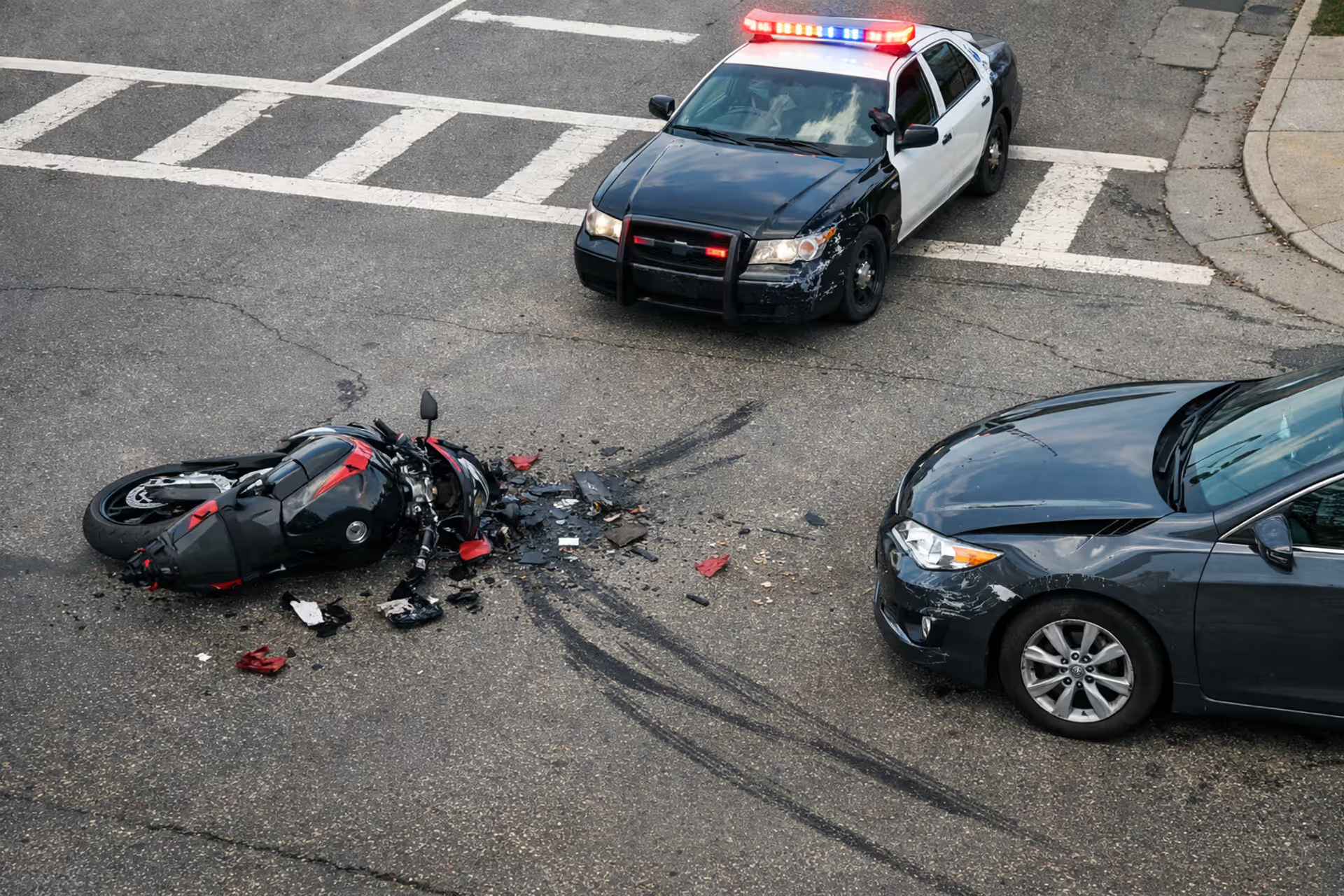
Direct impact scenarios are the clearest cases. Another vehicle strikes your motorcycle—maybe a pickup truck merges into your lane and side-swipes you, or an SUV pulls out from a parking spot and T-bones you—then drives away. Physical damage to both vehicles makes these cases relatively straightforward to prove.
Phantom vehicle accidents get trickier. Let's say a semi-truck drifts into your lane on the highway, you swerve to avoid getting crushed, and you lose control on the shoulder gravel. The truck never touched you but definitely caused the crash. Most states recognize these as legitimate hit and runs, though you'll face higher scrutiny from your insurer. They'll want proof that another vehicle actually existed and forced your evasive action.
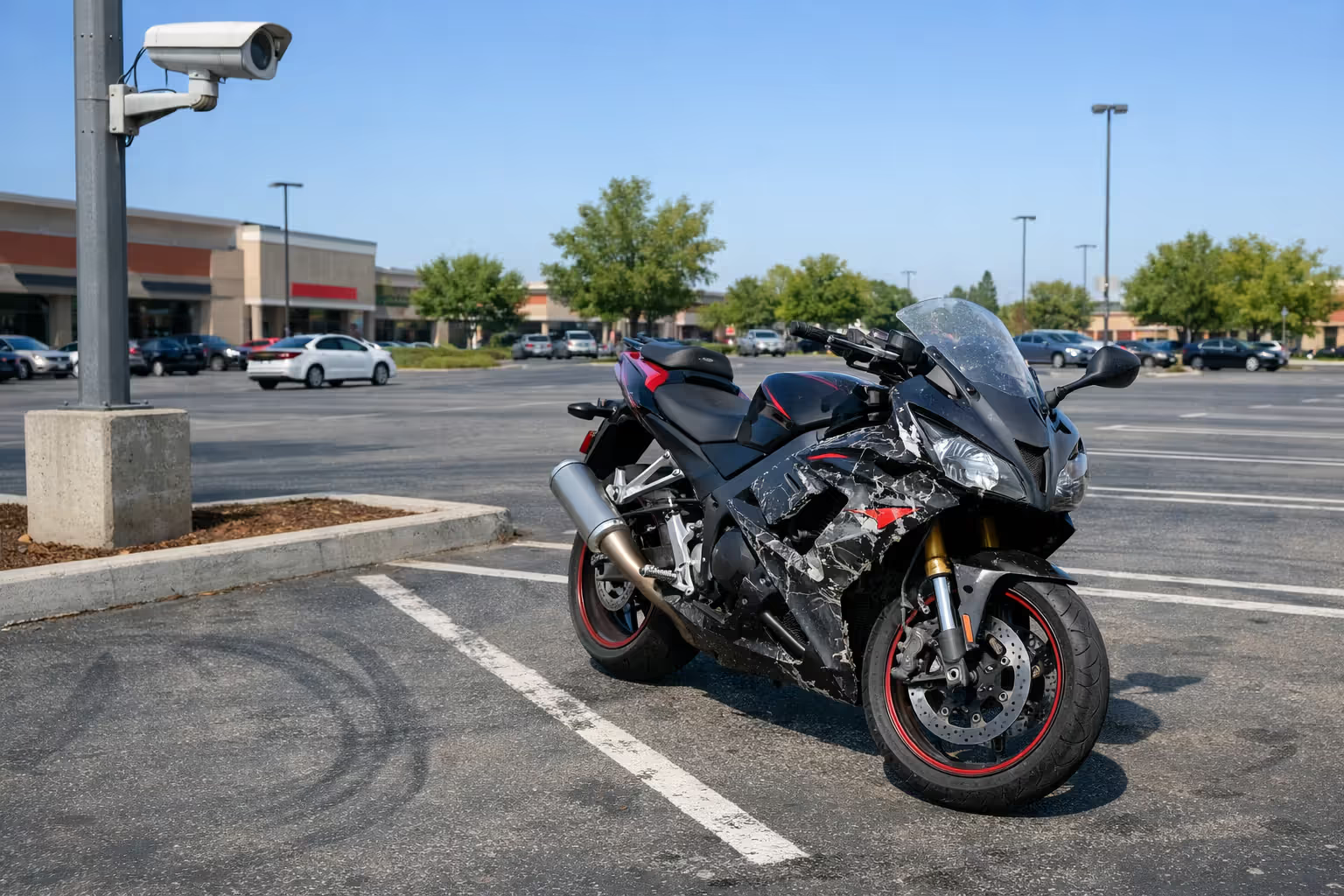
Parking area collisions happen when you've parked at a shopping center or apartment complex. Someone backs into your stationary bike, cracks the fairing and bends the handlebars, then leaves without putting a note under your seat. Without video evidence showing the impact, these claims often get denied because your insurer can't verify when the damage occurred or what caused it.
Author: Olivia Bennett;
Source: spy-delhi.com
The timing issue matters more than you'd think. Most state traffic codes say drivers must stop "immediately" or "at the nearest safe location" after any crash. A driver who leaves before cops show up has almost certainly violated hit and run laws, even if they claim they didn't realize they caused an accident. Some jurisdictions give drivers one or two hours to report to a police station if stopping creates genuine danger, but those exceptions rarely apply.
Here's why the criminal classification affects your insurance claim: your carrier will demand an official police report labeling the incident as a hit and run before they'll process payment. Without that government documentation, insurers frequently reclassify what happened as a single-vehicle accident where you simply lost control—which triggers different coverage and potentially higher deductibles.
Insurance Coverage That Applies to Hit and Run Motorcycle Claims
Pull out your insurance declarations page right now and look for specific coverage types. Whether you get a check for $50,000 or get stuck with $50,000 in bills depends entirely on what you purchased when you signed up for coverage.
Uninsured Motorist (UM) Coverage
This coverage does the heavy lifting in hit and run cases. It treats the driver who fled like they're driving around with zero insurance, then pays your claim as if you're filing against their non-existent policy. UM coverage handles your hospital stays, surgery costs, physical therapy, prescription medications, lost paychecks while you're recovering, and compensation for pain and suffering.
Your UM protection splits into two categories. Bodily injury coverage (UMBI) pays for everything related to your physical injuries—typically with limits matching whatever liability coverage you carry. If you bought a policy with $50,000 per person limits, that's what you'll have for a hit and run injury claim. Property damage coverage (UMPD) fixes your wrecked motorcycle, though roughly half the states don't require insurance companies to even offer this option.
About 20 states force insurance companies to include UM coverage automatically unless you sign a specific rejection form. The other 30 states make it completely optional. Riders who skipped this coverage to save $10 per month on premiums discover too late that they've got zero protection when someone runs them off the road.
One detail that catches people off guard: phantom vehicle claims where no contact occurred require extra proof in many states. Your own testimony that "a car cut me off" won't cut it. You'll need an independent witness who saw the other vehicle cause your crash—a passenger on your bike, someone in another car, a pedestrian who watched it happen. Without that corroboration, some insurers automatically deny phantom vehicle claims.
Collision Coverage vs. UM Property Damage
Collision coverage repairs or replaces your bike no matter who caused the crash or whether you ever identify them. Sounds perfect, except you're paying a deductible first—commonly anywhere from $500 up to $1,500—before insurance covers the remaining damage.
UMPD offers an alternative in states that require it. The deductible typically runs lower (sometimes just $100 to $250), and a handful of states mandate zero deductible for UMPD claims. The catch? Many states cap UMPD at $3,500 total, making it useless if you're riding a $15,000 motorcycle that's now totaled.
Which coverage you should use depends on your state's rules and your specific deductible amounts. California limits UMPD to $3,500 with a $250 deductible, so collision coverage works better for expensive bikes. Virginia allows full actual cash value through UMPD with no deductible whatsoever, making it the smarter choice than collision coverage when filing a hit and run claim. Check your policy documents to see which option costs you less out of pocket.
Medical Payments (MedPay) Coverage
MedPay puts cash in your hands fast—sometimes within 5-7 days of submitting your hospital bills—regardless of who caused the accident or whether you can prove another driver existed. Standard limits range from $1,000 on the low end up to $10,000 for riders who purchased higher protection.
This coverage bridges the gap while you're waiting for your UM claim to process, which typically takes 6-12 weeks minimum. It also covers expenses your health insurance might refuse, like ambulance transportation bills or certain emergency room procedures that get classified as "out-of-network."
Don't think of MedPay as a replacement for UM coverage—it's a supplement. If you carry both, MedPay pays your immediate medical costs, then UM coverage handles everything else including lost income and pain and suffering. Read your policy's subrogation language carefully, though. Some insurers make you reimburse the MedPay advances from your final UM settlement, which effectively means you're just getting an interest-free loan rather than double payment.
Step-by-Step Process for Filing Your Hit and Run Motorcycle Claim
The hit run motorcycle claim process guide below lays out every action to take from the moment of impact through final settlement. Skip even one item and you hand your insurance company an excuse to slash your payout or deny everything.
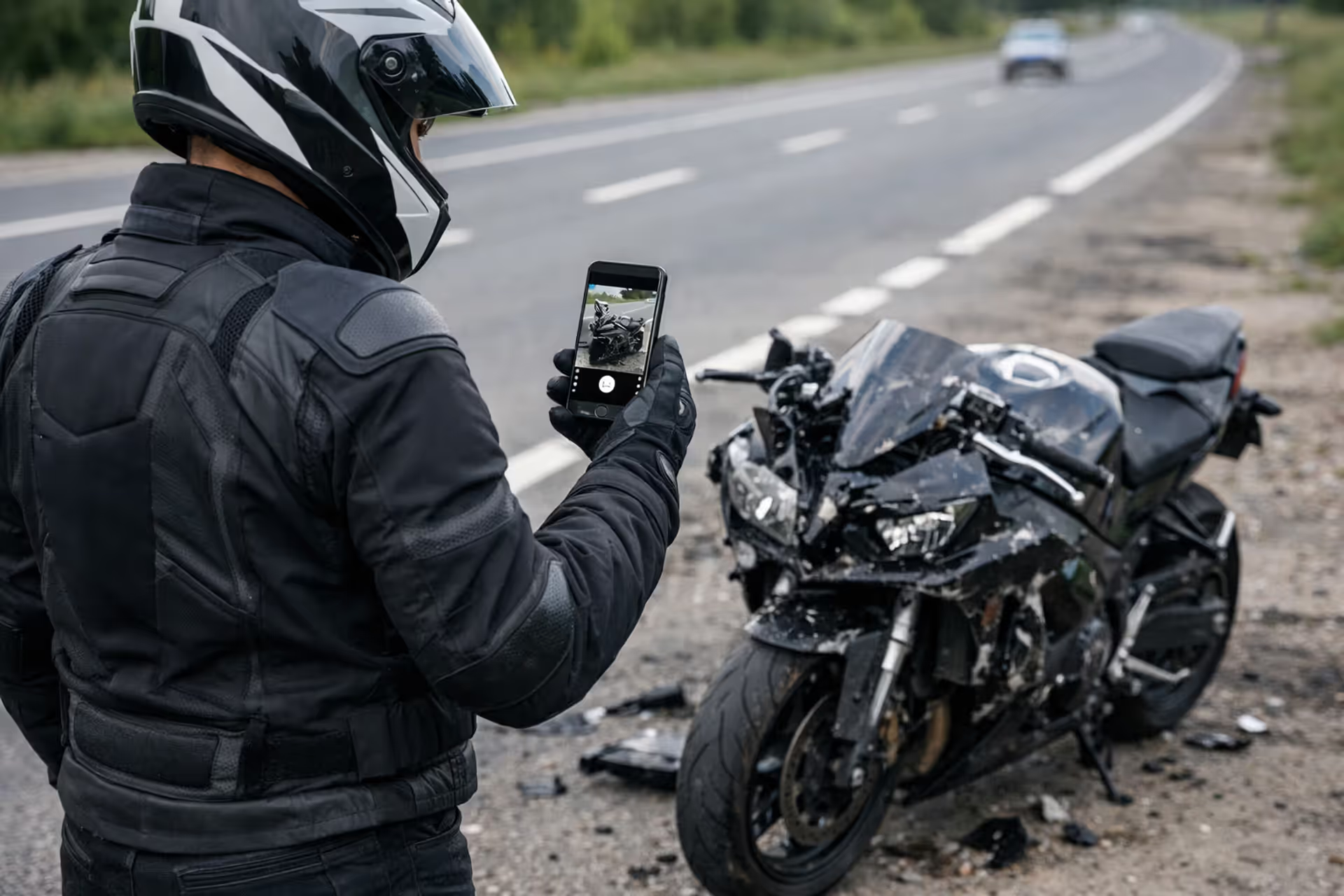
Immediately after impact, get yourself to safety if you're able to move without risking further injury. Don't chase after the vehicle that hit you—creating a high-speed pursuit through traffic makes you liable for anything that happens next, plus it puts you in more danger. If you can safely reach your phone, start photographing everything visible: tire marks on the pavement, debris scattered across the road, where your motorcycle ended up, damage to your bike from every angle, damage to your helmet and riding gear. Your phone automatically timestamps these photos, which proves what the scene looked like immediately after the crash rather than hours later.
Contact 911 right away, even if your injuries seem minor and the property damage looks minimal. Plenty of states require police reports for any accident involving injury or property damage above $500-$1,000 thresholds. More importantly, insurance companies universally demand police documentation before they'll consider a hit and run claim legitimate. When officers arrive, explicitly state you want this documented as a hit and run, not just a general accident report. Get the responding officer's name and badge number plus the report number before anyone leaves.
Collect witness contact information while you're waiting for police to show up. Anyone who saw what happened becomes a crucial piece of your claim—especially for phantom vehicle cases where you need independent corroboration. Write down their complete names, cell phone numbers, email addresses, and home addresses. Ask if they're willing to wait for police, or at minimum, request they text you a quick description of what they witnessed while the details stay fresh in memory. Something like "I saw a white pickup truck swerve into the motorcycle lane and the bike went down trying to avoid it, then the truck kept going" makes all the difference three months later when your insurer questions whether another vehicle actually existed.
Get yourself medically evaluated within 24 hours maximum, even when you feel okay at the scene. Adrenaline masks serious injuries for hours after impact—internal bleeding, concussions, spine damage might not produce obvious symptoms immediately. Beyond the health concerns, waiting several days to see a doctor hands insurance adjusters a ready-made argument that your injuries must not be serious or weren't actually caused by the accident. Emergency room visits create the strongest medical documentation, though urgent care clinics or your primary care physician work if you're not severely hurt.
Call your insurance company within whatever deadline your policy specifies—you'll typically find this in the fine print requiring notification within one to three days. Reporting late provides insurers with contractual grounds to deny your entire claim. Make that first notification by phone to start the clock, then send written notice via email or certified mail as backup documentation. Write down each person's name you speak with, what time you called, and what information you provided during every single conversation.
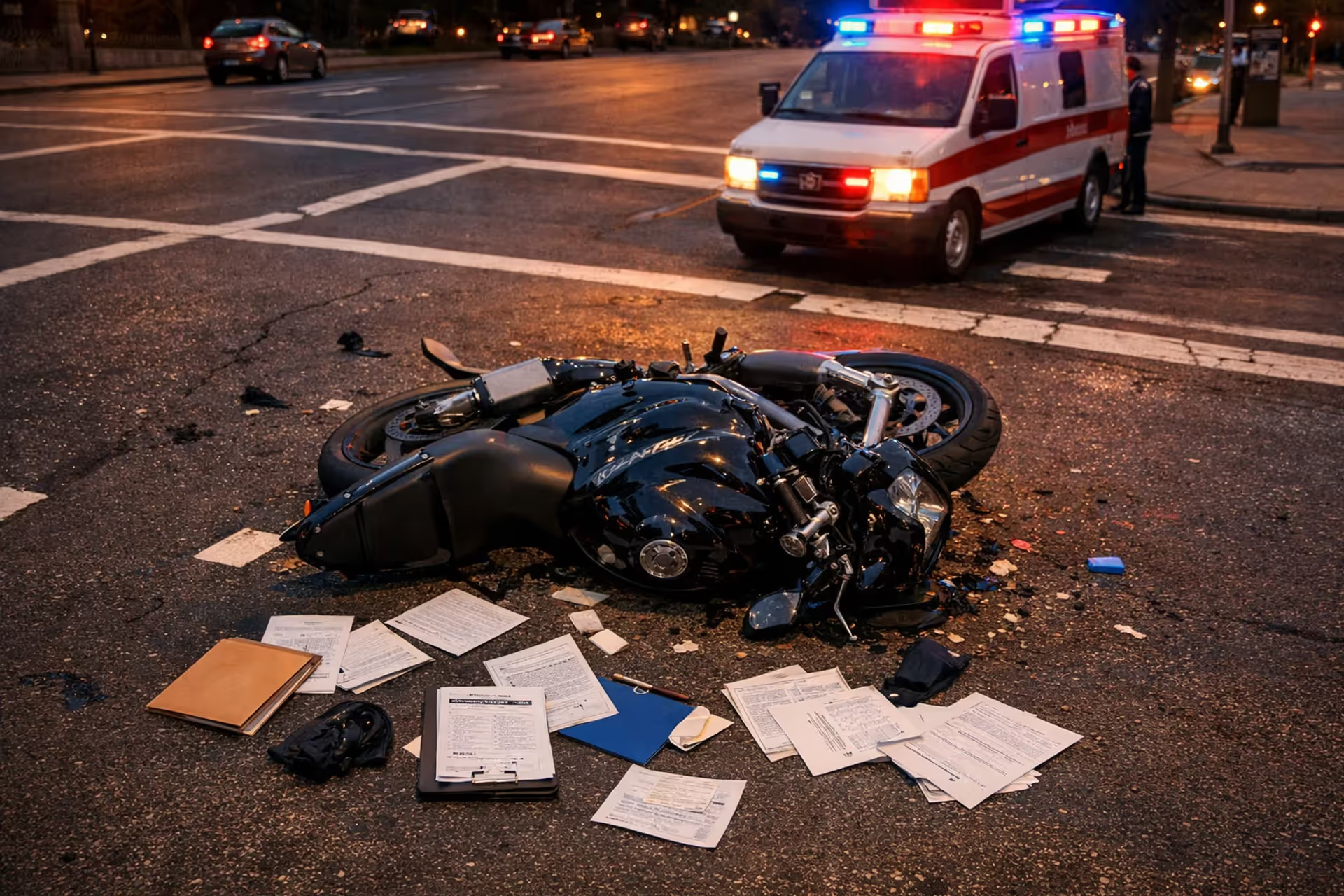
Prepare your complete claim package with police reports, all medical records and bills, repair estimates from licensed motorcycle shops, scene photographs, witness statements, and a detailed written description of exactly how the accident occurred. Don't sit around waiting for the adjuster to request each item separately—submit everything together upfront to avoid weeks of processing delays.

Author: Olivia Bennett;
Source: spy-delhi.com
Participate in the investigation your insurer conducts, but guard your words carefully. Answer their questions truthfully and completely, but don't speculate about what you might have done differently or volunteer statements like "maybe I should've been watching more closely." Hit and run investigations sometimes drag on for weeks while police review traffic camera footage and your insurance company hires private investigators to verify your account matches the physical evidence.
Evidence You Need to Strengthen an Unidentified Driver Claim
Insurance companies approach unidentified driver motorcycle claim guide cases assuming fraud until you prove otherwise. Without another party to interview or blame, adjusters suspect riders sometimes fabricate hit and runs to cover single-vehicle crashes caused by excessive speed or inexperience. Building an overwhelming evidence file separates legitimate claims from suspicious ones.
Photographic documentation needs to capture every visible detail at the accident scene. Take wide-angle shots showing the overall location and traffic flow patterns. Shoot medium-range photos of vehicle positions and debris patterns. Get close-up images of specific damage points on your motorcycle, torn riding gear, helmet impact marks, and visible injuries before they start healing. If your bike got knocked 30 feet from the impact point, photograph the slide path. Those damage patterns often prove impact forces that contradict insurance arguments claiming your injuries seem "exaggerated" for the reported collision.
Police reports serve as your claim's foundation, but they're not automatically accurate. Request your copy within 48 hours and read every word carefully. If the responding officer misunderstood what happened, left out crucial details, or wrote something factually wrong, submit a supplemental written statement correcting the record immediately. Insurance adjusters treat police reports like gospel truth, so errors that go uncorrected become "facts" that undermine your entire claim.
Written witness statements carry exponentially more weight than "my friend says he saw what happened" verbal accounts. Get witnesses to write out or type what they observed, including: what they noticed before impact occurred, specific details about the fleeing vehicle (make, model, color, even partial license plate numbers), which direction it traveled, approximate speed, and whether the driver appeared to look back or deliberately accelerate away. Even people who only saw a vehicle speeding away from the area help establish that another vehicle existed, which matters enormously in phantom vehicle cases.
Surveillance video from traffic cameras, nearby businesses, or residential security systems might've captured your accident or the fleeing vehicle. You're racing the clock here—most commercial systems overwrite footage after 7-14 days maximum. Visit every business with a camera view of the accident location immediately, explain what happened, and ask managers to preserve the footage. For government traffic cameras, submit public records requests within 72 hours. Gas stations, convenience stores, banks, and apartment complexes all maintain cameras that might've caught something useful.
Medical records must directly link your injuries to the accident timeline. Emergency room intake notes, diagnostic test results (X-rays, CT scans, MRIs), treatment plans, prescription records, physical therapy notes, and follow-up appointment summaries all document injury severity and ongoing impact. Start keeping a daily pain journal describing your symptoms, physical limitations, missed work activities, canceled plans, and how injuries affect your normal life. This personal documentation supports non-economic damage claims for pain and suffering that far exceed your actual medical bills.
Professional repair estimates from licensed motorcycle mechanics establish legitimate property damage amounts. Get at least two independent estimates, and absolutely don't start any repairs until your insurer either inspects the damage in person or gives written authorization to proceed. For bikes that are totaled, research comparable motorcycle sales in your area over the past 30-60 days to challenge lowball actual cash value offers that don't reflect real market prices.
In hit and run cases, the burden of proof shifts entirely to the rider.Without a defendant to depose or an opposing insurance company to negotiate with, your own documentation becomes the entire case. Riders who treat evidence collection as optional usually receive minimal settlements or outright denials
— Michael Torres
Common Mistakes That Weaken Hit and Run Motorcycle Claims
Riders who carry all the right coverage still tank their claims through avoidable mistakes. Understanding where others go wrong helps you sidestep the same traps.
Waiting too long to report destroys more claims than any other single error. When you don't call police for two days or notify your insurer until a week later, adjusters immediately question why you delayed if the accident genuinely happened as described. They suspect you're fabricating the story or hiding something. Worse yet, many policies contain explicit language denying coverage for claims reported outside the 24-72 hour window specified in your contract.
Taking minimal photos at the scene leaves you arguing about what happened with zero proof. Riders who snap two quick pictures of their damaged bike then leave provide nothing to contradict an adjuster's theory that you simply lost control on your own. Capture 50+ images from every conceivable angle—you can delete duplicates later, but you can't recreate the scene days afterward.
Making apologetic statements during recorded phone calls with your insurer creates ammunition they'll use against you. Phrases like "maybe I should've seen them earlier" or "I probably could've braked harder" suggest you share fault for the accident. Stick to objective descriptions of what happened without critiquing your own actions or apologizing for anything.
Riding your damaged motorcycle home or continuing to use it before an insurance inspection raises doubts about when damage occurred. Adjusters argue that scrapes, dents, or mechanical problems might've happened during the ride home rather than from the hit and run impact. Have the bike towed or transported on a flatbed to eliminate these disputes entirely.
Delaying medical treatment creates gaps insurance companies exploit mercilessly. Show up to the doctor three days after the crash and expect the adjuster to argue your injuries can't be serious or were caused by some other incident during that three-day gap. The "I was in shock and didn't realize I was hurt" excuse works for the first few hours, not 72 hours later.
Jumping at the initial settlement offer without any negotiation guarantees you're leaving money on the table. First offers typically cover only your hard costs—medical bills already incurred and motorcycle repairs—while offering minimal or zero compensation for pain and suffering, future medical needs, or lost wages. Never accept any settlement until you've finished all medical treatment and know your total costs.
Posting on social media about the accident, your recovery, or your daily activities hands insurance companies free surveillance. Photos of you doing yard work, playing with your kids, or going to the gym contradict claims that you're suffering debilitating injuries. Set every social media account to maximum privacy settings and post absolutely nothing accident-related until your claim fully resolves and the check clears.

Author: Olivia Bennett;
Source: spy-delhi.com
State-Specific Requirements for Hit and Run Motorcycle Claims
Where you live dramatically changes how the motorcycle accident unknown driver claim guide process works. Reporting deadlines, mandatory coverage, and claim procedures vary state by state.
Police reporting timeframes range from "immediately" for any injury accident to 10 days for property damage crashes below certain dollar amounts. California requires immediate reporting if anyone got hurt, but gives you 24 hours for property damage only. Florida demands immediate reporting for injuries but allows 10 days for minor property damage. Miss your state's deadline and you might face criminal charges on top of insurance complications.
Uninsured motorist requirements differ drastically. Roughly 20 states mandate that insurance companies include UM coverage in every motorcycle policy unless you specifically reject it in writing. The remaining 30 states treat UM as purely optional, so riders who didn't buy it get zero protection. Illinois, for example, requires UM coverage on all policies. Texas makes it completely optional, leaving thousands of riders unprotected each year.
No-fault insurance states like Florida, Michigan, New York, and Pennsylvania require personal injury protection (PIP) coverage that pays medical bills regardless of fault. In these states, you'll burn through your PIP limits first before tapping into UM coverage, and you can only pursue pain and suffering damages if your injuries meet specific "serious injury" thresholds defined by state law.
Traditional tort states let you pursue full compensation through UM coverage immediately without exhausting other coverage first, though individual policy language sometimes requires you to use MedPay or health insurance before UM kicks in.
| State | Police Report Deadline | UM Coverage Mandatory | Minimum UM Limits | Special Requirements |
| California | Immediately if injured; 24 hours for property damage only | Yes, unless rejected in writing | $15K per person / $30K per accident | UMPD capped at $3,500 max; phantom vehicles require independent witness confirmation |
| Florida | Immediately if injured; 10-day written report for property damage | Not required | N/A | PIP state requiring $10K personal injury protection first; UM optional on all policies |
| Texas | Immediately; written report within 10 days if damage exceeds $1,000 | Not required | N/A | UMPD unavailable in Texas; must use collision coverage for motorcycle damage |
| Pennsylvania | Immediately if injured; 5 days for reportable property damage | Yes, unless rejected in writing | $15K per person / $30K per accident | Limited tort election restricts pain/suffering unless serious injury threshold met |
| Ohio | Immediately; written report within 6 hours for injury crashes | Not required | N/A | UMPD available with typical $250 deductible; phantom vehicles need corroborating evidence |
| New York | Immediately; written report within 10 days | Yes (called SUM coverage) | $25K per person / $50K per accident | No-fault state requiring PIP exhaustion first; SUM means Supplementary Uninsured Motorist |
| North Carolina | Immediately; written report required if damage exceeds $1,000 | Yes, unless rejected in writing | $30K per person / $60K per accident | UMPD mandatory; contributory negligence rule bars any recovery if rider even 1% at fault |
| Michigan | Immediately for all accidents | Not required | N/A | No-fault state with unlimited lifetime PIP; UM rarely necessary for medical coverage |
| Arizona | Immediately; written report within 24 hours | Not required | N/A | UMPD available but optional; phantom vehicle claims require physical contact proof |
| South Carolina | Immediately; written report within 15 days | Yes, unless rejected in writing | $25K per person / $50K per accident | UMPD available; must prove other vehicle existed through concrete evidence |
These legal requirements change periodically through new legislation, so verify current rules with your state's department of insurance or consult a local attorney before making claim decisions based on this table.
When to Hire an Attorney for Your Hit and Run Motorcycle Case
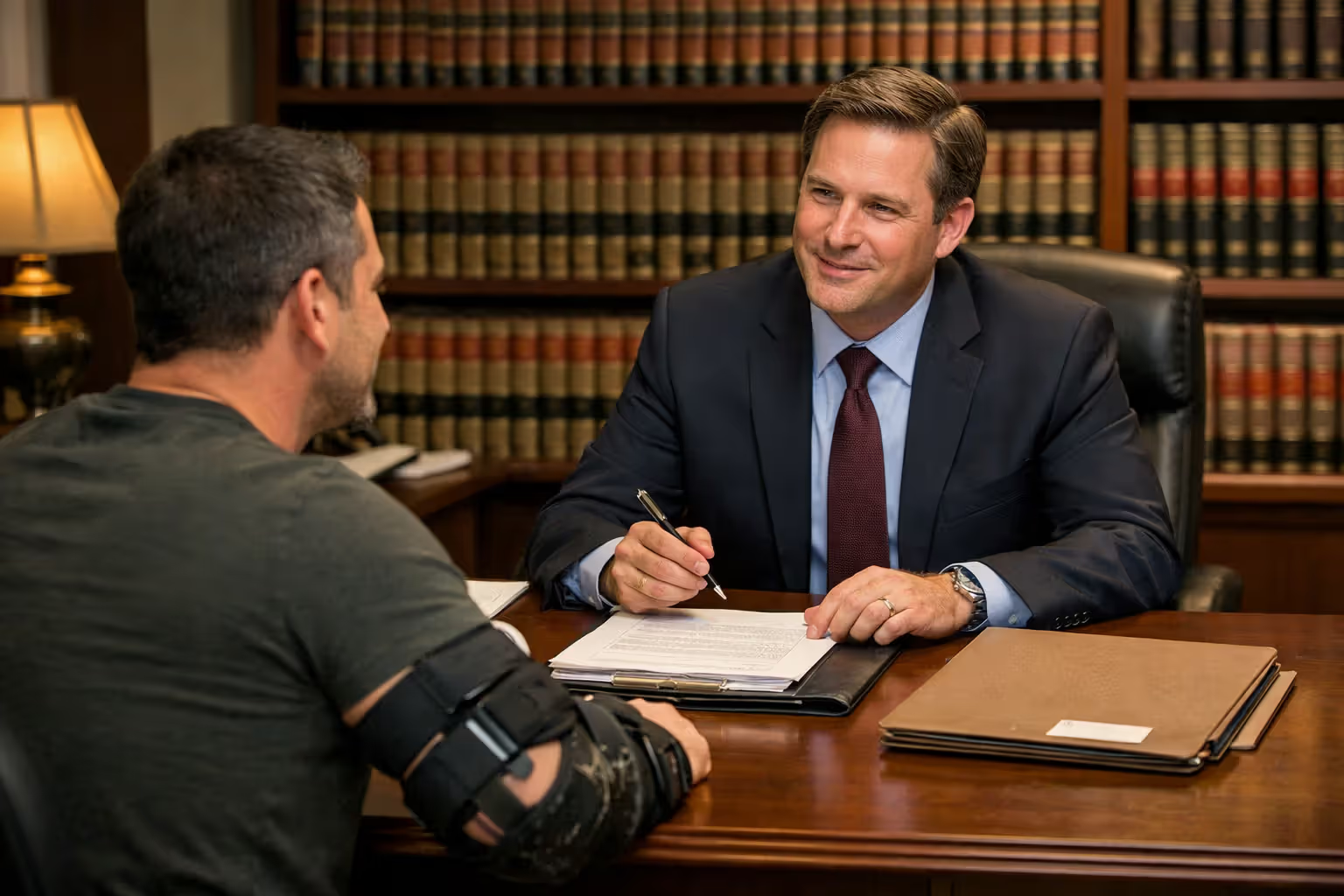
Most straightforward hit and run claims with clear evidence, cooperative insurers, and modest damages settle without legal help. Certain red flags signal you need professional representation despite the 33-40% contingency fee attorneys typically charge.
Catastrophic or permanent injuries producing six-figure medical bills, permanent disability, or disfigurement require expert legal help. Calculating future medical expenses, lifetime lost earning capacity, and appropriate pain and suffering multipliers exceeds what most people can accurately estimate on their own. Attorneys bring in medical specialists, vocational experts, life care planners, and forensic economists who quantify these damages with precision that maximizes your settlement.
Liability disputes where your insurance company questions whether another vehicle actually caused your crash need immediate legal pressure. Insurers sometimes argue you lost control due to speed, inexperience, or road conditions rather than evasive action from a fleeing vehicle. Attorneys hire accident reconstruction specialists who analyze skid marks, debris patterns, vehicle damage, and physics to prove scientifically that another vehicle caused your crash.
Unreasonably low settlement offers that don't even cover your documented medical bills signal potential bad faith. When your hospital invoices alone total $40,000 but the adjuster offers $15,000 for "full and final settlement," you're dealing with someone hoping you'll accept pennies on the dollar. An attorney's formal demand letter escalates the situation, and insurers take cases far more seriously once lawyers get involved because litigation costs them exponentially more.
Policy limit fights arise when you purchased high UM limits ($100,000 or more) but your insurer claims ambiguous policy language caps hit and run claims at lower amounts. These contract interpretation battles require legal analysis to resolve in your favor rather than the insurance company's preferred reading.
Approaching statute of limitations deadlines make timing critical. Most states give you two to four years from the accident date to file a lawsuit against your own insurance company for UM benefits, though some states measure from the denial date instead. Missing this deadline by even one day destroys your case permanently with zero exceptions. Consult an attorney at least six months before your statute expires if the claim remains unresolved.
Multiple overlapping coverage sources create complex coordination issues. Maybe you have UM coverage on both your motorcycle policy and your auto policy, plus you're also covered under your spouse's insurance. Determining which policy pays first, whether you can "stack" coverage to collect from multiple policies, and how to maximize total recovery across all available coverage requires expertise most riders lack.
Attorneys work on contingency for injury claims, meaning they take 25-40% of whatever settlement or verdict they obtain. For smaller claims under $10,000, legal fees might consume too much of your recovery to justify hiring help. For serious injuries with potential settlements exceeding $50,000, an experienced attorney typically negotiates a final recovery significantly higher than self-representation—even after deducting their fee from your total.
Author: Olivia Bennett;
Source: spy-delhi.com
Frequently Asked Questions About Hit and Run Motorcycle Claims
Moving Forward After a Hit and Run
Filing a motorcycle accident hit and run claim tests both your advance preparation and your persistence after the crash. Standard accident claims involve two insurance companies negotiating fault percentages. Hit and run cases dump the entire burden on you to prove what happened and justify every dollar you're claiming.
Your success actually starts before any accident occurs—by purchasing adequate UM coverage when you initially set up your motorcycle policy. Once a crash happens, immediate documentation and prompt reporting separate full compensation from claim denial. Every photo you capture, witness you interview, and medical record you preserve strengthens your case against an insurance adjuster's natural skepticism toward unverified claims.
This hit run motorcycle claim process guide provides the framework, but your particular situation might involve complications requiring professional guidance. When you're uncertain about any step, consult an experienced motorcycle accident attorney before accepting any settlement offer or missing critical filing deadlines. Your recovery—both physical and financial—depends on handling this process correctly the first time, because you won't get a second chance to gather evidence or meet reporting requirements once those opportunities pass.
Related Stories

Read more
Read more

The content on this website is provided for general informational and educational purposes only. It is intended to offer insights and guidance on motorcycle accident insurance claims, settlement processes, liability issues, coverage limits, medical compensation, and related insurance matters, and should not be considered legal or financial advice.
All information, articles, and materials presented on this website are for general informational purposes only. Insurance policies, liability standards, settlement practices, and state regulations may vary by jurisdiction and insurer. The outcome of a motorcycle accident claim depends on the specific facts of the accident, available evidence, policy language, and applicable law.
This website is not responsible for any errors or omissions in the content, or for actions taken based on the information provided. Users are strongly encouraged to consult with a qualified attorney or licensed insurance professional regarding their specific motorcycle accident claim before making decisions about settlements, negotiations, or coverage disputes.