
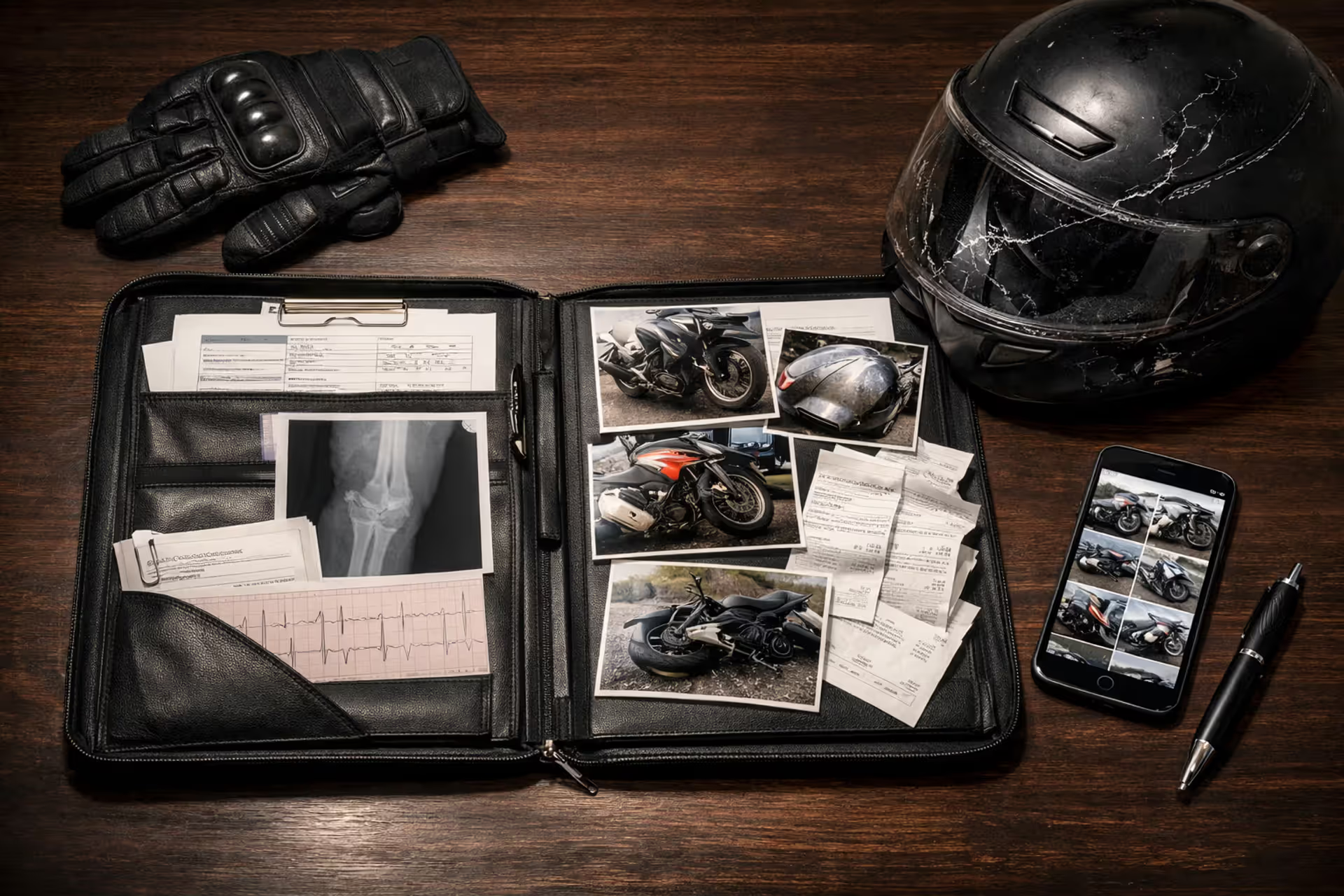
Leather folder with organized accident claim documents, damage photos and receipts on dark wooden desk next to scratched motorcycle helmet, gloves, pen, and smartphone showing crash scene gallery
Motorcycle Accident Claim Documentation Checklist for Your Case

You've just been in a motorcycle crash. Your bike's damaged, you're hurt, and medical bills are starting to pile up. Here's something most riders don't realize until it's too late: the difference between a $15,000 settlement and a $75,000 settlement often has nothing to do with injury severity—it's about the paper trail you build starting right now.
Every receipt you save matters. Every photo you take counts. Every medical appointment you document adds weight to your claim. Miss a critical piece of evidence, and insurance companies will use that gap to slash your payout or deny your claim entirely.
The good news? Building an ironclad claim file isn't complicated once you know what matters and when to collect it. Whether you're dealing with a minor collision or a catastrophic injury, this guide walks you through exactly what paperwork strengthens your case and what mistakes will cost you money.
Why Proper Documentation Makes or Breaks Your Motorcycle Claim
Here's what insurance companies won't tell you: identical accidents can produce wildly different settlements. I've seen two riders with the same broken collarbone—one received $22,000 while the other got $68,000. What made the difference? One rider had meticulous records proving every dollar of lost wages, every medical visit, and every mile driven to physical therapy. The other showed up with a stack of random papers and vague memories.
Adjusters and attorneys don't hand over money based on your word. They need proof. Show them organized medical files documenting 47 physical therapy sessions, and they calculate serious injury. Tell them you went to therapy "a bunch of times" without records, and they assume you're exaggerating.
Author: Olivia Bennett;
Source: spy-delhi.com
Claims get rejected for paperwork problems more often than legitimate coverage disputes. Maybe you turned in treatment records four days after the policy's submission window closed. Perhaps you couldn't produce a police report showing the other driver ran a red light. These aren't minor technicalities—they're claim-killers that proper motorcycle accident claim documentation prevents.
Time pressure makes this worse. Your state probably gives you two or three years to file a lawsuit (statutes of limitations vary from one to six years depending on location). Wait until month 35 to start gathering evidence, and good luck finding witnesses who remember details or businesses that still have security footage from three years ago.
Strong records also protect you when insurers play games. Keep detailed logs of every phone conversation, every email exchange, every promise made—and suddenly adjusters think twice about stalling tactics. If your case reaches court, this correspondence trail proves you acted in good faith while they dragged their feet.
Essential Documents to Collect Immediately After a Motorcycle Accident
Physical evidence vanishes fast. Tire marks fade within days. Broken glass gets swept away. Vehicles disappear into repair shops or junkyards. What you capture in the first few hours after your crash can't be recreated later.
At-Scene Evidence You Must Gather
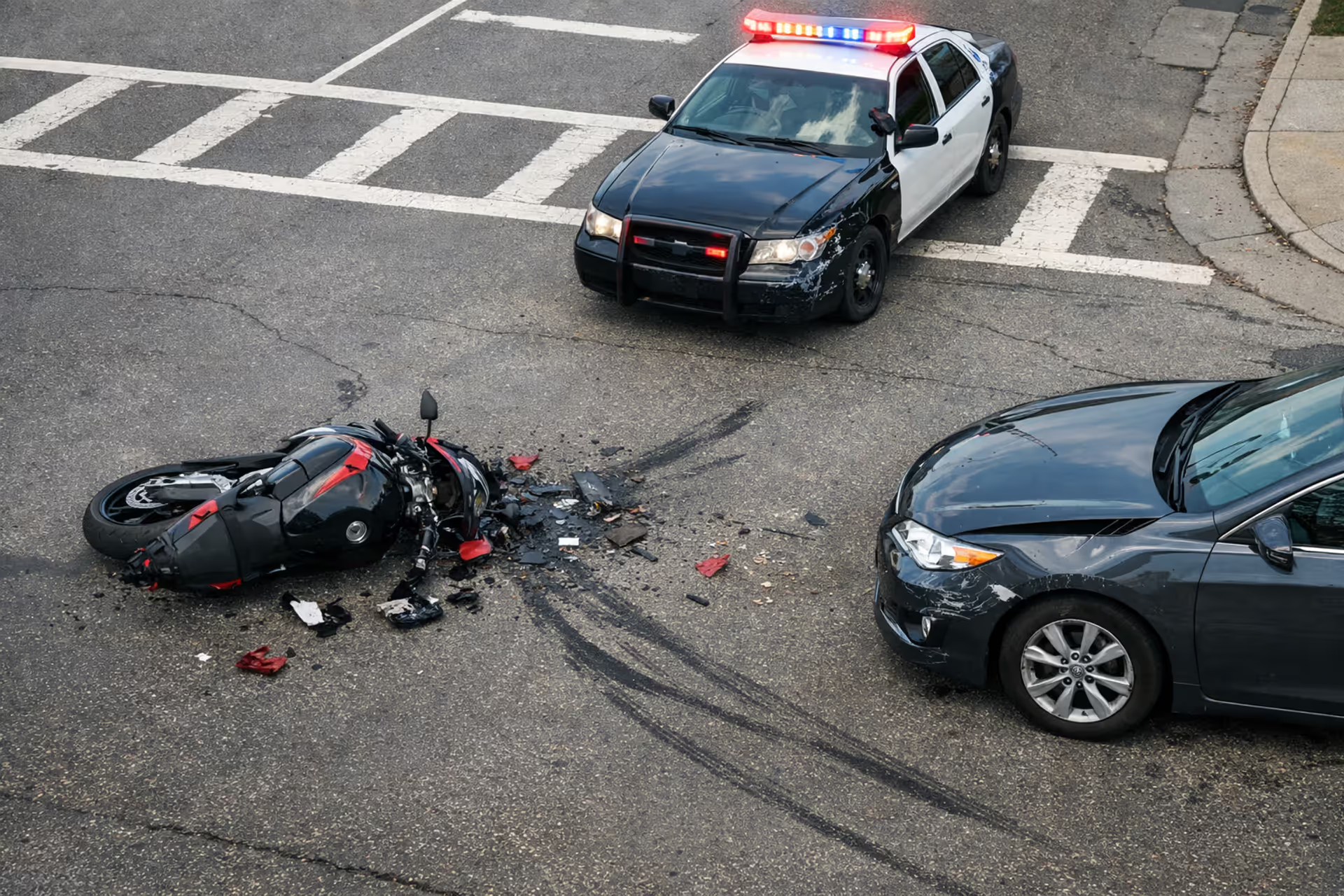
Pull out your phone and start photographing before anything moves. You need shots from every direction—not just your damaged bike, but the entire intersection or road segment where it happened. Get pictures of traffic lights, stop signs, lane markings, potholes, oil spots, or anything else that contributed to the crash.
Don't just snap one or two quick photos. Take 30, 40, 50 images if needed. Shoot wide-angle views that show how the whole scene looked, then zoom in on specific damage to your motorcycle, the other vehicle, and any debris on the pavement. Photograph license plates clearly enough to read every character. Capture vehicle identification numbers through windshields.
Exchange details with every driver: full legal names, cell numbers, home addresses, driver's license numbers (write down the actual DL number, not just the state), insurance carrier names, policy numbers, and vehicle registration information. Don't assume the police report will catch everything—cops sometimes write down incorrect policy numbers or misspell names.
Witnesses are gold. Grab contact information from anyone who saw the collision—pedestrians, other drivers, passengers, store employees, construction workers nearby. Ask if they'd be willing to write down what they observed. Record quick voice memos on your phone with their verbal accounts while memories are sharp. Three months from now when the other driver claims you ran the red light, these witness statements become your defense.

Author: Olivia Bennett;
Source: spy-delhi.com
Document environmental conditions too. That pothole that threw off your line? Photograph it with something in the frame for scale reference. Missing construction zone warning signs? Capture the approach from multiple angles showing what riders actually see. Poor street lighting? Come back that night and photograph how dark it really is.
Write your own detailed account within 24 hours. Sit down with your phone or computer and describe everything: what time it happened, what the weather was like, how fast you estimate you were traveling, what you were doing in the seconds before impact, the sequence of events during the collision, and what happened immediately after. This personal narrative helps your attorney understand the crash and prevents details from fuzzing out six months later.
Medical Records That Strengthen Your Case
Get checked out by a doctor the same day, even if you feel okay. Adrenaline masks pain initially. Internal injuries, concussions, and soft tissue damage often don't show symptoms until hours or days later. When you wait a week before seeing a doctor, insurance adjusters argue your injuries must not be serious—or maybe they didn't even come from the accident.
Collect every single medical document: emergency department records, ambulance run reports, X-ray and MRI results, CT scan findings, notes from every doctor appointment, prescriptions (both the written scripts and pharmacy receipts), physical therapy session logs, referrals to specialists, and surgical reports if you had procedures. Request itemized statements that break down exactly what services were performed on what dates with specific billing codes.
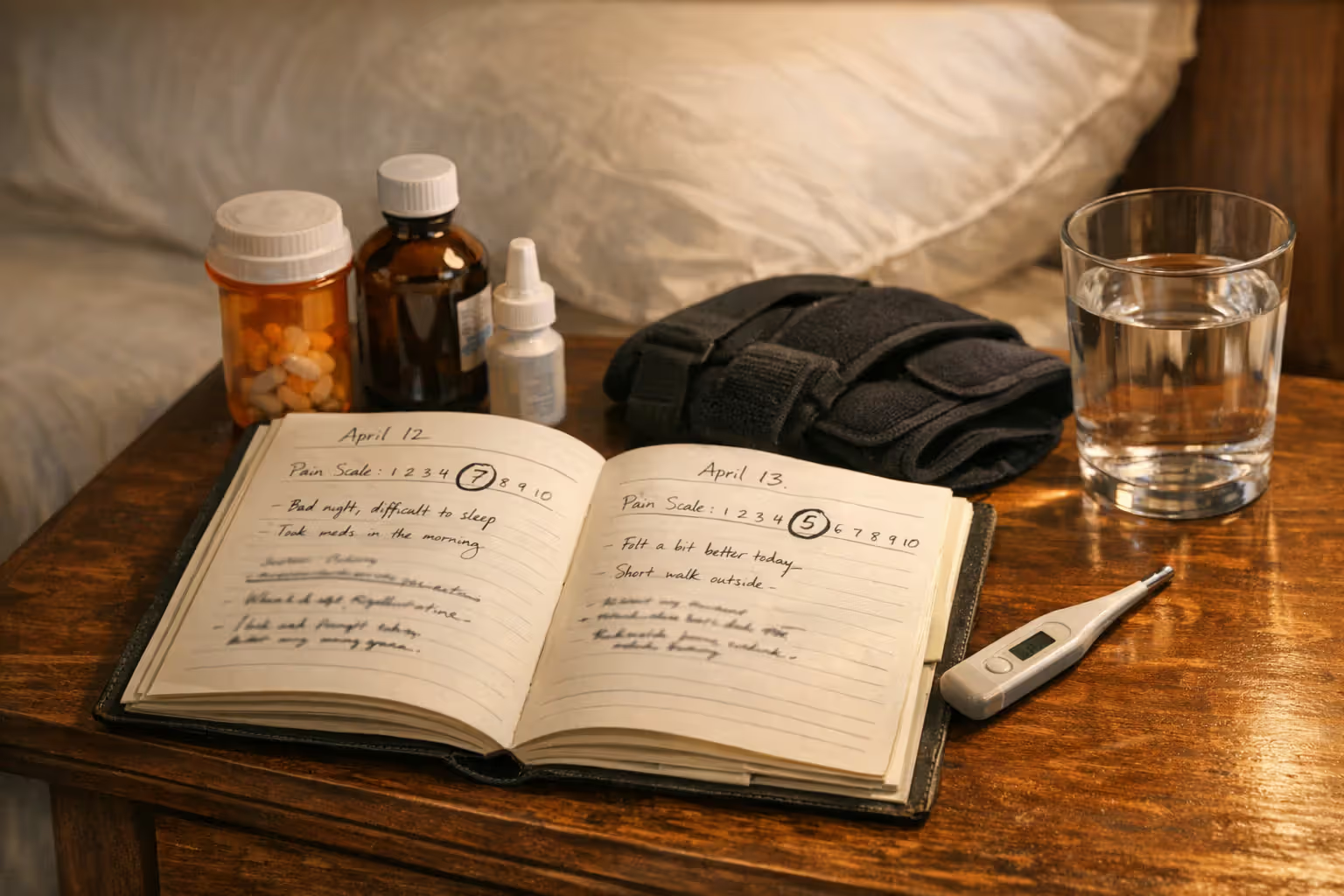
Start keeping a daily pain journal. Write short entries describing your symptoms, pain levels on a 1-10 scale, activities you couldn't do, and how injuries interfered with normal life. "Couldn't sleep more than 2 hours due to shoulder pain. Had to skip my daughter's soccer game because sitting that long is unbearable. Needed help putting on socks." These personal observations add human context that sterile medical charts miss.
Author: Olivia Bennett;
Source: spy-delhi.com
Save receipts for every health-related expense: co-payments, prescription costs, over-the-counter medications, medical equipment like knee braces or back supports, heating pads, ice packs, bandages, mileage driving to appointments (the IRS standard rate applies), and parking fees at medical facilities. A $12 parking charge might seem insignificant, but 30 medical appointments mean $360 you're entitled to recover.
Police and Official Reports
Call the police department three to five days after your accident and request a copy of the crash report. Reports typically include the responding officer's assessment of who caused the collision, any traffic citations issued, witness contact information collected at the scene, and a diagram showing vehicle positions and movements.
Read through the report carefully looking for errors. Officers sometimes misidentify which driver was at fault, place vehicles in wrong lanes, record incorrect speeds, or leave out important details. Found mistakes? Submit a written correction to the police department. They might not alter the original report, but your correction gets added to the permanent file.
What if police never came to your accident? (This happens frequently in parking lot collisions or minor crashes where nobody called 911.) File your own report with your state's DMV or highway safety department. Most states mandate accident reports when damage exceeds $500-$2,500 or when any injuries occurred, even minor ones.
Track down video evidence immediately—and I mean within 48 hours. Traffic camera footage, business security recordings, and dashcam videos get automatically deleted on 30-60-90 day cycles. Send formal written requests to traffic departments and business owners asking to preserve footage. Follow up with phone calls. Persistence pays off when you secure video that definitively proves the other driver caused the crash.
Financial and Insurance Paperwork Required for Your Claim
Medical records and accident photos tell part of your story. Financial documentation proves the dollar impact on your life.
Dig out your motorcycle insurance policy—the complete policy, not just that one-page declarations summary. You need to understand your coverage limits, your deductibles, and any exclusions buried in the fine print. Review what benefits your policy provides: medical payments coverage (often called MedPay), collision coverage for bike repairs, comprehensive coverage, uninsured/underinsured motorist protection, and any add-on coverages.
Get the at-fault driver's insurance details. Their carrier should assign you a claim number and adjuster within a few days of the accident. Write down every interaction with both insurance companies—yours and theirs. Create a simple log: "10/15/2024, 2:30pm, spoke with adjuster Jennifer Martinez, claim #AX-445821, discussed medical treatment timeline, she requested updated records by 10/30."
Collect motorcycle repair estimates from licensed shops—get at least two separate quotes to demonstrate fair market pricing. If your bike is totaled (repair costs exceed its value), you'll need proof of what it was worth before the crash. Gather comparable sales listings for similar year/make/model motorcycles with similar mileage, your original purchase documents, service records showing upgrades and maintenance, and professional appraisals if you'd added custom parts.
Photograph your wrecked motorcycle from every conceivable angle before repairs start. Once it's fixed or hauled to a salvage yard, that evidence is gone forever.
Proving lost income requires employer documentation. Ask your HR department or manager for a letter on company letterhead stating your hourly wage or annual salary, specific dates you missed work recovering from injuries, and the total income you lost during that absence. Self-employed? Compile tax returns, bank statements showing typical deposits, client invoices, and contracts that demonstrate your usual earnings during the period you couldn't work.
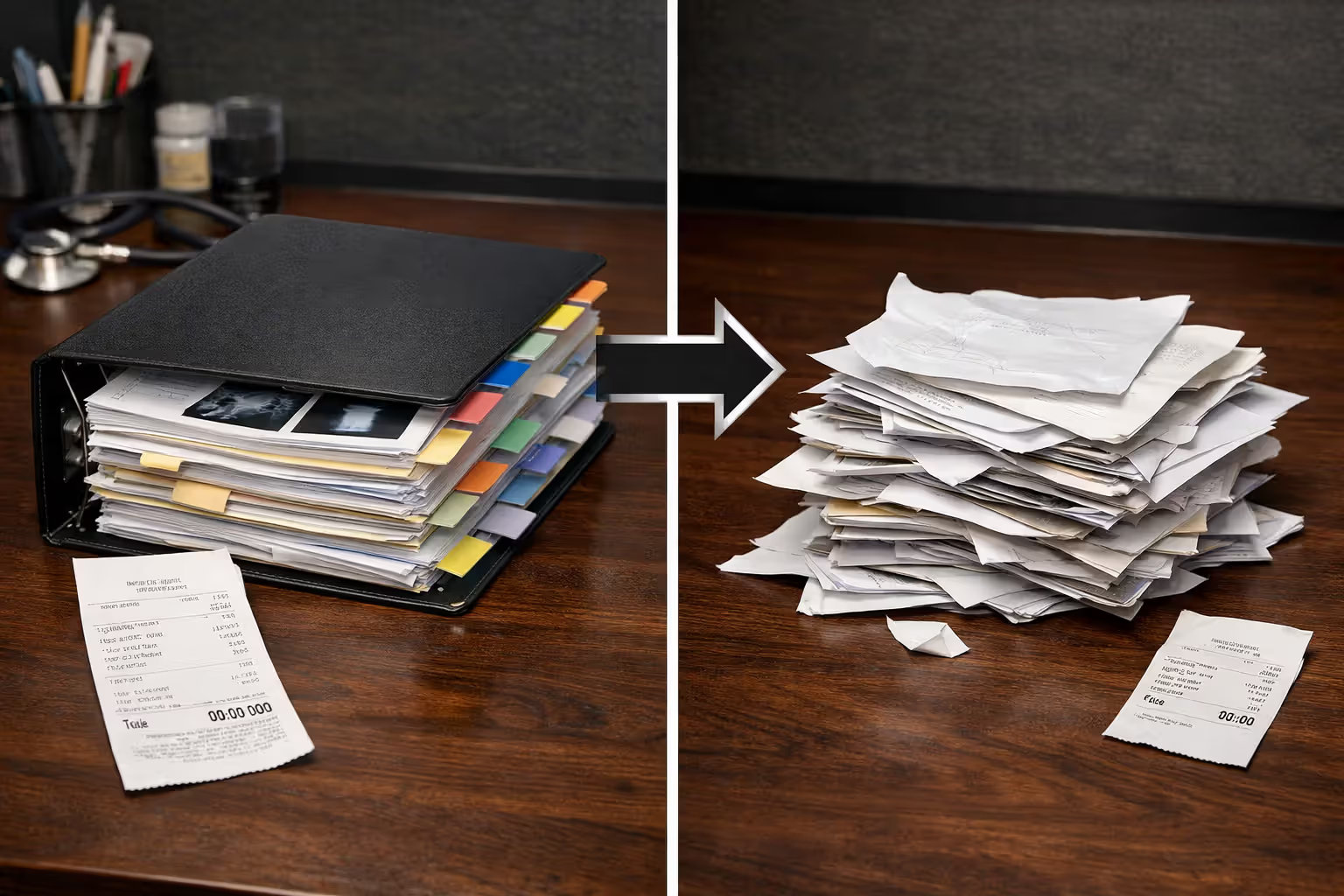
Hold onto every accident-related receipt: rental car charges, Uber and Lyft rides when you couldn't ride, replacement gear (your helmet cracked in the crash? That $400 new helmet is compensable), towing and storage fees, and miscellaneous out-of-pocket costs. Organize receipts chronologically with sticky notes explaining what each expense was for.
Did injuries prevent you from mowing your lawn, watching your kids, or cleaning your house? Save invoices from lawn services, childcare providers, and housekeepers you had to hire as claim paperwork for your motorcycle accident. These "replacement services" are legitimate damages.
How to Organize and Store Your Motorcycle Accident Claim File
A well-organized file speeds up settlements and prevents lost documents. Chaos leads to missed deadlines and forgotten expenses that never get compensated.
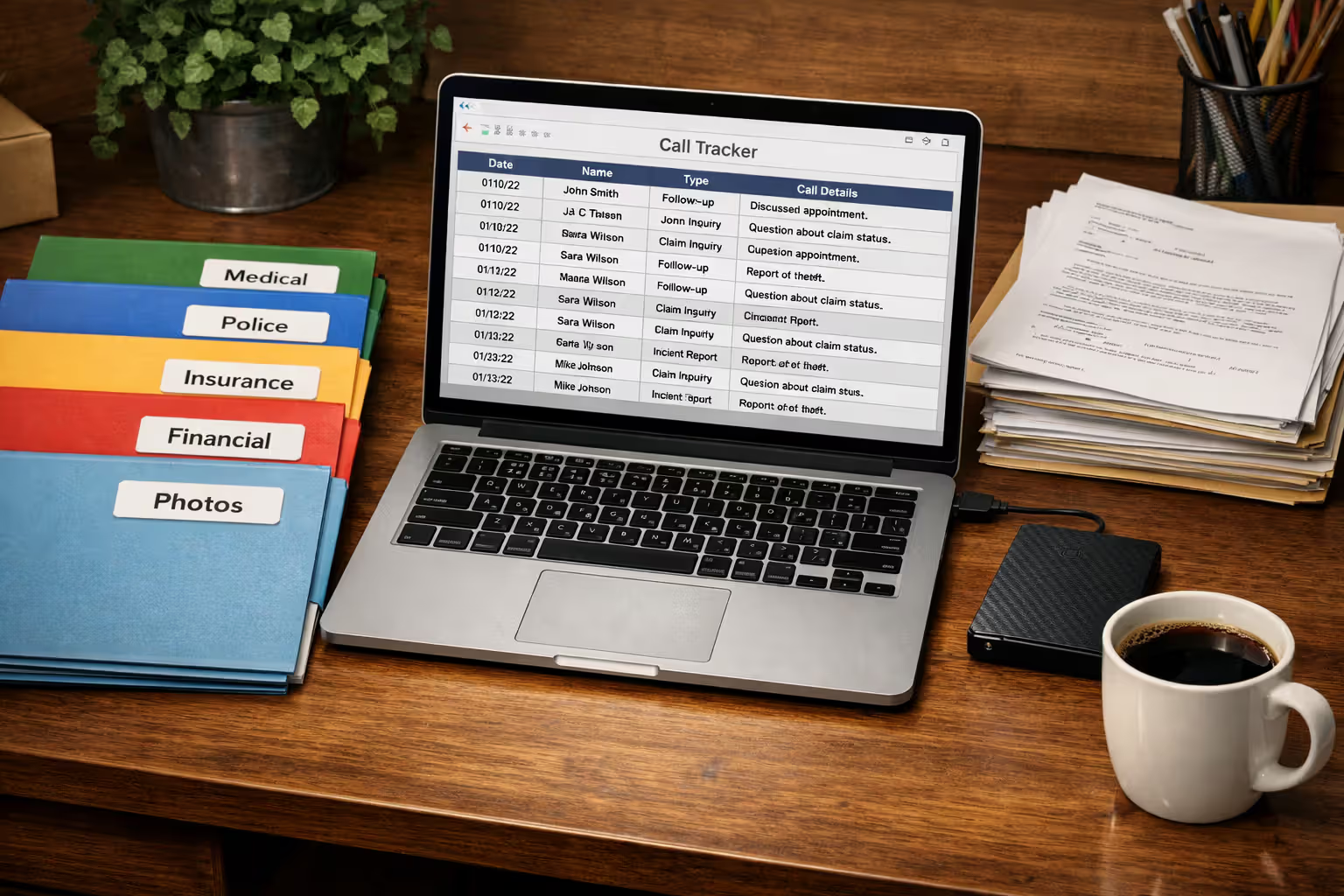
Maintain both digital and paper versions of everything. Scan or photograph every document and organize digital files into clearly labeled folders: Medical-Records, Police-Reports, Insurance-Letters, Financial-Docs, Photos-Videos, Witness-Info. Use subfolder structures that make sense to you.
Set up cloud storage with automatic backup—Google Drive, Dropbox, OneDrive, whatever you prefer. Enable two-factor authentication so sensitive personal information stays protected. The cloud ensures you won't lose everything if your laptop dies or phone gets stolen.
Build a master tracking spreadsheet listing every piece of evidence: what it is, the date you got it, where it's saved, and whether you've shared it with your lawyer or insurance company. This prevents accidentally sending duplicate documents or forgetting to include important records.
Arrange documents chronologically within each category. This timeline structure clearly shows injury progression, expense accumulation, and your efforts to limit damages.
Store original hard copies somewhere secure—home safe, locked file drawer, bank safety deposit box. Send copies to insurance companies and attorneys, never originals, unless specifically told otherwise. Original documents are irreplaceable if they get lost in transit or misplaced by whoever you sent them to.
Log every communication meticulously. Track phone calls, emails, text messages, and letters exchanged with insurers, doctors, and lawyers: date, time, who you talked to, what was discussed. Send follow-up emails after phone conversations summarizing what was said: "Hi Jennifer, confirming our 10/15 call where you agreed to extend the document deadline to 10/30."
Author: Olivia Bennett;
Source: spy-delhi.com
Share documents strategically, not indiscriminately. Don't dump your entire file on an insurance adjuster without legal advice first. Some documents—personal journals, private notes about the accident—contain statements that can be twisted out of context. Experienced attorneys know what to release, what to protect, and when disclosure gives you negotiating advantage.
Common Documentation Mistakes That Delay or Reduce Settlements
Even careful accident victims make errors that damage their claims. Understanding these traps helps you sidestep them.
Blowing past your statute of limitations deadline destroys your case instantly. Once that cutoff date passes, your claim becomes worthless no matter how compelling your evidence is. Look up your state's specific time limit immediately—then work backward from that deadline ensuring all evidence gets collected with months to spare.
Incomplete medical records sabotage injury claims. Skip follow-up visits, quit physical therapy early, or forget to mention symptoms to doctors, and insurance companies will argue you weren't really hurt. Treatment gaps suggest recovery even when you're still suffering.
Delayed treatment raises red flags with adjusters. Wait five days to see a doctor after your crash, and insurers claim your injuries came from something else. Even if you initially felt fine, document that you monitored your condition and sought care when symptoms appeared.
Losing receipts means losing money. That $18 prescription, $25 copay, or $140 rental car charge seems small individually, but dozens of unreimbursed expenses add up to thousands of dollars. No receipt means no proof you paid, which means no reimbursement.
Social media posts torpedo claims. Post photos of yourself at concerts, hiking, or on vacation while claiming debilitating injuries, and defense lawyers will plaster those images across courtroom screens. Assume every post, photo, check-in, and comment will be seen by opposing counsel—because it will. Adjust privacy settings to maximum or avoid social media completely until settlement checks clear.
Recording statements with the other driver's insurer without counsel is dangerous territory. Adjusters ask carefully crafted questions designed to minimize payouts. They'll lead you toward downplaying injuries, accepting partial blame, or contradicting earlier accounts. Respectfully refuse recorded statements—"I'd prefer to provide information in writing after consulting my attorney."
Jumping at the first settlement offer typically leaves substantial money on the table. Initial offers come in low because carriers hope you don't know what your claim is actually worth. Accept and sign a release, and you can't reopen negotiations even if you discover additional injuries or damages later.
Forgetting to document property damage beyond your motorcycle costs real money. Destroyed riding gear—that $600 helmet, $400 jacket, $200 boots, $150 gloves—adds up to $1,350 in recoverable damages. Same goes for damaged personal property: crushed phone, broken sunglasses, ruined backpack.
Timeline: When to Submit Each Type of Document
Understanding collection and submission timing keeps claims moving forward without unnecessary delays.
| Document Type | When to Collect | Submission Deadline | Why It Matters |
| Police Report | Request 3-5 days post-crash | Include with initial claim | Establishes fault; provides official accident documentation that insurers require |
| Scene Photos/Videos | Immediately at crash scene | Include with initial claim | Preserves evidence before road conditions change; demonstrates damage severity before repairs |
| Witness Statements | Within 24-48 hours of collision | Submit first week of claim | Memory degrades rapidly; fresh statements carry more credibility with adjusters and juries |
| Insurance Details | Exchange at scene; verify within 24 hours | Include with initial claim | Required to open third-party claim; delays prevent claim processing from starting |
| Medical Records | Continuously throughout treatment | Every 30-60 days as treatment continues | Shows injury severity and treatment necessity; regular updates prevent settlement delays |
| Repair Estimates | Within 1-2 weeks after accident | Submit within 30 days | Proves property damage costs; late submission triggers claim denials for untimely reporting |
| Lost Wage Proof | After work return or monthly if still absent | Every 30 days or when status changes | Establishes economic losses; current submissions prevent calculation disputes later |
| Expense Receipts | Save immediately when incurred | Bundle and submit every 30-60 days | Small costs get forgotten without immediate documentation; regular submission ensures full recovery |
| Final Demand Letter | After maximum medical improvement | Well before statute of limitations | Comprehensive package with complete documentation maximizes settlement leverage |
Most insurance policies demand "prompt" or "timely" accident reporting—usually interpreted as somewhere between a few days to two weeks maximum. Miss this window and your claim can be denied outright, even when you weren't at fault. Report crashes to your own carrier immediately regardless of whether you plan to file through the other driver's insurance.
Submit documentation in waves rather than hoarding everything for one massive dump. Send initial evidence (police report, photos, insurance exchange) immediately to open your claim. Follow with medical record updates every 30-60 days as treatment progresses. This steady flow keeps adjusters engaged and demonstrates ongoing damages.
Don't submit a final settlement demand until you reach maximum medical improvement—the point where your condition has stabilized and doctors expect no further significant recovery. Settle prematurely and you risk leaving future medical costs uncompensated.
Expert Insight on Documentation Best Practices
The number one thing I tell every rider after a crash: photograph absolutely everything before you leave that intersection—and I'm talking about everything, not just obvious damage.I've handled hundreds of cases where riders figured they'd remember critical details or could return later for pictures, but crucial evidence vanished within hours. Tire marks disappear under traffic. Debris gets swept into gutters. Damaged vehicles get towed to storage yards where you can't access them. Those first smartphone photos you capture—even if you're injured and shaking—often prove more valuable than anything we can reconstruct weeks later. Even if it feels excessive, spend two minutes capturing wide establishing shots of the entire scene and tight close-ups of all damage. I've recovered millions of additional dollars for clients because their initial photos told the complete story before evidence could be questioned or altered
— Michael Torres
Frequently Asked Questions About Motorcycle Accident Claim Paperwork
Moving Forward with Your Claim
Thorough documentation transforms motorcycle accident claims from weak disputes into persuasive cases backed by hard evidence. The effort you invest photographing damage, organizing receipts, and tracking appointments directly correlates with higher settlement amounts and faster resolutions.
Begin evidence collection immediately while details remain fresh and physical evidence still exists. Develop an organizational system that works for your style—maybe it's a detailed spreadsheet, maybe it's a labeled storage box, maybe it's a structured cloud folder system. Submit documentation regularly to maintain claim momentum and demonstrate continuing damages.
Avoid the traps that undermine cases: never delay medical treatment, skip scheduled appointments, post injury-contradicting content on social media, give recorded statements without legal counsel, or accept quick settlement offers before understanding full claim value. When uncertain about what to document or submission timing, consult a personal injury attorney specializing in motorcycle accidents.
Your documentation file is your most powerful negotiating tool. Insurance companies and defense lawyers respect thoroughly documented claims supported by comprehensive evidence. Time invested now in proper documentation pays substantial dividends during settlement negotiations or courtroom proceedings.
Remember—you're not just documenting bent metal and broken plastic. You're telling the story of how this collision disrupted your life, caused physical and emotional pain, and created financial strain. Complete, organized documentation gives that story credibility and persuasive force that translates directly into the compensation you deserve.
Related Stories

Read more
Read more


The content on this website is provided for general informational and educational purposes only. It is intended to offer insights and guidance on motorcycle accident insurance claims, settlement processes, liability issues, coverage limits, medical compensation, and related insurance matters, and should not be considered legal or financial advice.
All information, articles, and materials presented on this website are for general informational purposes only. Insurance policies, liability standards, settlement practices, and state regulations may vary by jurisdiction and insurer. The outcome of a motorcycle accident claim depends on the specific facts of the accident, available evidence, policy language, and applicable law.
This website is not responsible for any errors or omissions in the content, or for actions taken based on the information provided. Users are strongly encouraged to consult with a qualified attorney or licensed insurance professional regarding their specific motorcycle accident claim before making decisions about settlements, negotiations, or coverage disputes.