
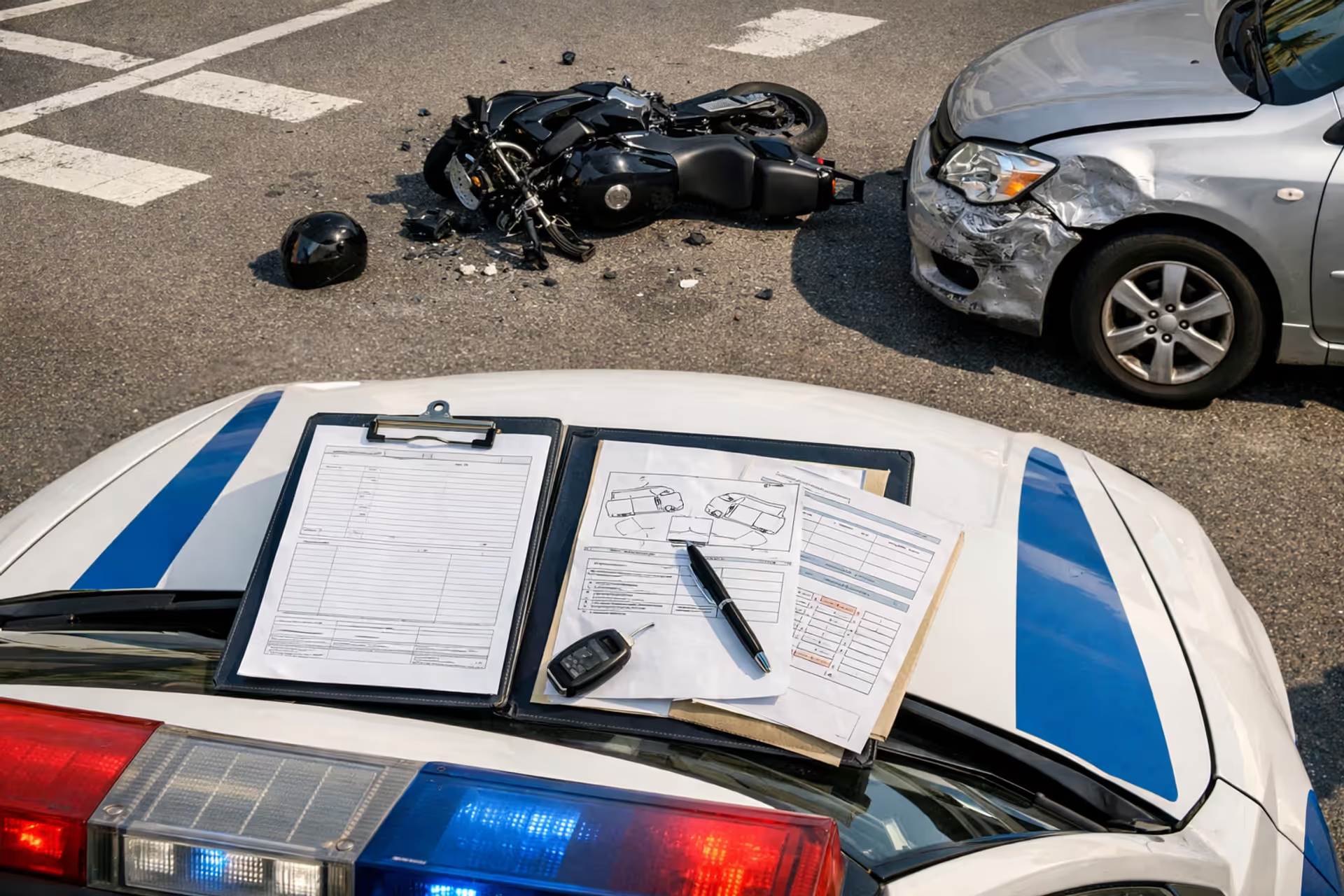
Damaged motorcycle lying on city intersection road next to car with dented fender and insurance claim folder on police car hood
Motorcycle Accident Claim Approval Process Explained Step by Step

Content
Content
When you file a motorcycle claim, expect your insurer to dig deeper than they would for a fender bender in a sedan. Why? Bike crashes send people to trauma centers, and trauma centers send six-figure bills to insurance companies. That's why adjusters treat your motorcycle claim like a detective case—they're looking for reasons to pay you, sure, but they're also hunting for reasons to pay less or deny outright.
Here's something most riders don't realize: proper preparation increases your approval odds by 40-60% compared to throwing together a claim with missing photos and vague statements. I've seen identical accidents where one rider gets approved in three weeks while another fights denials for six months. What made the difference wasn't luck—it was knowing what adjusters actually check when they review your file.
Let me walk you through what really happens when your claim hits an adjuster's desk, which factors make or break approval decisions, and how you can stack the deck in your favor before you ever need to file.
What Determines If Your Motorcycle Accident Claim Gets Approved
Your insurer weighs several major factors when deciding whether to approve your motorcycle accident claim approval request. Some carry more weight than others, and understanding this hierarchy helps you focus your energy where it matters most.
Liability evidence determines everything else. Without clear fault determination, adjusters can't move forward. They're looking for concrete proof: who violated traffic laws, who had the right of way, who failed to yield. Police reports matter here, absolutely, though they're just one piece of the puzzle. Dashcam footage from other vehicles, intersection cameras, witness accounts from uninvolved parties—all these strengthen your liability position. Rear-end someone at a stoplight? You'll face an uphill battle regardless of your other documentation. Get sideswiped by someone changing lanes without looking? Strong liability evidence speeds everything up.
Policy coverage verification starts within hours of your first call. An adjuster pulls up your policy details and checks what you actually purchased. Many riders assume they're fully covered when they're really carrying liability-only—a costly discovery you'll make during the first phone call. Did you list that bike on your policy? Was your premium paid up when the crash happened? Were you using the motorcycle in ways your policy forbids (food delivery with a personal policy, for instance)? These aren't gotcha questions. They're basic coverage checks that determine whether your claim goes forward or stops dead.
Documentation quality separates quick approvals from drawn-out nightmares. Complete documentation submitted upfront means fewer delays, less back-and-forth, and faster decisions. Submit a claim with blurry photos, no police report number, and injury descriptions like "my back hurts"? You've just told the adjuster you're either hiding details or making things up as you go.
Timely reporting creates more problems than riders expect. Most policies require notification within 24-72 hours after an accident. Wait five days without a hospital stay or other valid excuse, and you've handed your insurer a ready-made denial reason. Even when your policy technically allows longer reporting windows, delays make adjusters suspicious. They start wondering what you were really doing during those missing days. Planning your story? Adding extra damage?
Claim legitimacy indicators encompass dozens of tiny details adjusters cross-reference. Do your injuries match the physics of the crash? Claiming severe neck trauma from a parking lot tip-over raises eyebrows. Does the damage pattern on your bike tell the same story as your statement? When your narrative says the car hit your left side but all the damage appears on the right, expect intensive questioning. Inconsistencies between what you told police, what you told the ER doctor, and what you're telling your adjuster trigger investigations that can stretch for months.
Pre-existing damage trips up many riders. That scraped exhaust from last month's parking mishap? Your adjuster can't tell if that's old or new without proof. Smart riders photograph their bikes every few weeks—especially before road trips—creating a visual timeline that definitively shows which damage came from the accident.

Author: Caleb Thornton;
Source: spy-delhi.com
The 6-Stage Motorcycle Insurance Claim Approval Process
The approved motorcycle accident claim process guide follows a predictable sequence. Knowing what comes next helps you respond appropriately at each checkpoint.
Stage 1: Initial Report and Claim Assignment kicks off when you contact your insurance company. The phone representative documents essentials: when it happened, where it happened, who was involved, what injuries you noticed, and rough damage estimates. Within a day or two, someone assigns a claim number and routes your case to an adjuster. Higher-value claims—usually anything over $25,000—often land on the desks of senior adjusters who have authority to approve larger payouts without supervisor sign-off.
Stage 2: Adjuster Assignment and First Contact follows quickly. Your assigned adjuster reviews the intake notes and calls you within 2-3 business days. This first conversation matters more than you might think. The adjuster explains which documents you'll need to submit, sets expectations for communication (email, phone, text), and asks follow-up questions about the crash. Stick to observable facts during this call. Speculation about what the other driver "must have been texting about" doesn't strengthen your position.
Stage 3: Investigation Phase is where adjusters earn their paychecks. They request police reports, contact any witnesses you've identified, examine photos you submitted, and schedule physical inspections of your damaged motorcycle. Serious accidents trigger accident reconstruction experts who analyze skid marks, impact angles, and vehicle dynamics. This stage typically runs 1-3 weeks depending on how complex your case is and how quickly witnesses return calls.
Adjusters also investigate you, specifically. They review your claims history looking for patterns (five accidents in three years raises flags). They check whether your policy was actually active and paid up. Some even review social media—posting videos of yourself doing wheelies while simultaneously claiming you can't ride due to injuries pretty much kills your credibility.
Stage 4: Damage Assessment happens simultaneously with the investigation. For your motorcycle, the adjuster either inspects it personally or directs you to one of their approved repair shops for damage estimates. Don't rely exclusively on the insurer's assessment—get your own estimates from shops you trust. Medical damage assessment involves reviewing treatment records, bills, and doctor's notes. For major injuries, insurers sometimes require independent medical examinations, particularly when claimed injuries seem disproportionate to the accident severity.
Stage 5: Liability Determination represents the critical turning point in the approval process motorcycle accident claim guide. The adjuster reviews all collected evidence and assigns fault percentages. This determination varies dramatically by state. In pure contributory negligence jurisdictions (Alabama, Maryland, North Carolina, Virginia, and Washington DC), even 1% fault on your part can sink your entire claim. Comparative negligence states reduce your payout proportionally to your fault level. The adjuster documents their liability conclusion in a formal determination letter that becomes the foundation for approval or denial.
Stage 6: Approval or Denial Decision wraps up the process. Approved claims come with settlement offers breaking down compensation: motorcycle repairs, medical expenses, lost income, and possibly pain and suffering. Denials arrive with letters citing specific policy language or evidence gaps that justified rejection. Partial approvals happen frequently—your property damage might get approved while injury compensation gets denied if medical records don't convincingly support your injury claims.

Author: Caleb Thornton;
Source: spy-delhi.com
Timeline: How Long Each Stage Takes
Most straightforward motorcycle claims reach final decisions within 30-45 days from first report to approval. Complex cases—disputed liability, catastrophic injuries, multiple involved parties—can drag on for 3-6 months or longer.
Breaking down typical stage durations: - Claim intake to adjuster assignment: 1-2 days - Adjuster's first contact: 2-3 days post-assignment
- Investigation completion: 1-3 weeks - Damage evaluation: 1-2 weeks (overlapping with investigation) - Liability decision: 3-5 days after investigation wraps - Final approval or denial: 5-7 days after liability determination
These timelines assume you're responsive. Every delayed document, every unreturned phone call, every "I'll get that to you next week" adds days or weeks to your claim. Adjusters juggle 50-100 active claims simultaneously. Your case only moves forward when you provide what they've requested.
Documents That Strengthen Your Claim Approval Chances
Documentation makes or breaks claims. The claim approval steps motorcycle guide emphasizes immediate evidence collection—before witnesses forget details and physical evidence disappears.
Police reports establish official accident records. Call police even for seemingly minor crashes and obtain a report number before leaving the scene. These reports lock in key facts: exact date and time, precise location, all involved parties, and the responding officer's preliminary fault assessment. Without an official police report, your claim becomes a credibility contest where approval becomes significantly harder.
Medical records prove your injuries and treatment timeline. Get examined by a doctor within 24 hours, even when you feel fine initially. Adrenaline masks pain effectively, and serious injuries often don't hurt until the next day. Gaps between your accident and first medical visit give insurers ammunition to claim your injuries came from somewhere else. Retain copies of ER reports, physician notes, treatment plans, prescriptions, physical therapy records, and specialist referrals.
Witness statements add third-party verification that supports your version of events. Collect names, phone numbers, and email addresses from everyone who observed the crash. Ask witnesses to write down what they saw while memories remain fresh—24 hours later, details blur. Video statements recorded on your phone work even better than written accounts because they capture immediate reactions. Independent witnesses (not your riding buddies) carry substantially more weight with adjusters.
Photo evidence documents damage and scene conditions comprehensively. Photograph your motorcycle from every angle, capturing all visible damage. Photograph the other vehicle(s) involved, road surface conditions, traffic control devices, skid marks, debris fields, and anything else relevant. Take wide establishing shots showing spatial relationships and close-ups highlighting specific damage points. Phone photos automatically embed timestamps, proving when you took pictures.
Repair estimates from licensed motorcycle shops establish damage scope and costs. Obtain at least two estimates from reputable facilities with good reviews. Detailed estimates itemizing parts and labor help adjusters understand repair complexity. Avoid shops notorious for inflating estimates—adjusters know these operations by name and heavily discount their assessments.
Correspondence logs track every interaction with insurers, medical providers, repair facilities, and anyone else involved in your claim. Note the date, time, person's name, and conversation summary for every phone call, email, or in-person meeting. These logs prove you met reporting deadlines and responded promptly to requests. They also catch insurers who later claim they never received documents you actually submitted.
| Required Documents | Optional Documents That Boost Approval Rates |
| Official police accident report | Helmet camera or dashcam footage showing the crash |
| Current insurance policy declarations | Pre-accident photographs documenting motorcycle condition |
| Valid driver's license and motorcycle registration | Independent medical expert opinion on injury prognosis |
| Scene and damage photographs | Professional accident reconstruction analysis |
| Complete medical records with itemized bills | Employment verification and wage loss documentation |
| Initial written statement describing the accident | Service records proving motorcycle was properly maintained |
| Multiple repair estimates from licensed facilities | Official weather data from accident location and time |
The optional column includes evidence that technically isn't required but dramatically improves approval likelihood. Helmet cam footage, for example, provides indisputable visual proof of exactly how the crash unfolded. Pre-accident photos eliminate any debate about pre-existing damage claims.
Common Reasons Motorcycle Claims Get Denied Instead of Approved
Understanding denial patterns helps you avoid common mistakes. The insurance claim approval motorcycle accident decision guide reveals why claims fail.
Policy exclusions cause roughly 30% of all denials. Common exclusions cover racing or stunt riding, operating without proper licensing, DUI-related accidents, using your bike for commercial purposes without business coverage, and riding outside your policy's geographic boundaries. Read your exclusions section thoroughly—you can't claim coverage for activities your policy specifically prohibits.
Late reporting triggers automatic denials under many policies. Miss your policy's 48-hour reporting deadline by even a few hours without a legitimate excuse, and your insurer can deny based solely on late notification regardless of your claim's merits. Valid excuses exist—extended hospitalization preventing you from making calls, for instance—but "I was busy" or "I forgot" won't save you.
Inconsistent statements trigger fraud investigations. Tell the police officer the accident happened at 3 PM but inform your adjuster it occurred at 5 PM? Expect scrutiny on everything else you've said. Say in writing you traveled at 45 mph but told the responding officer 55 mph? The adjuster will question every detail in your claim. Keep your account consistent because adjusters meticulously compare statements across all sources.
Pre-existing damage leads to denials when adjusters can't distinguish old damage from accident-related damage. That cracked fairing you've been putting off replacing? Your insurer won't pay to fix it if they suspect it predated the crash. Regular photographic documentation of your motorcycle's condition prevents these disputes entirely.
Coverage gaps surface when riders discover they lack the protection they assumed they had. Liability-only policies don't cover damage to your motorcycle—only damage you cause to others. Financed bikes usually require comprehensive and collision coverage as a loan condition, but if you own yours outright and dropped those coverages to save premium dollars, you're self-insuring for your own losses.
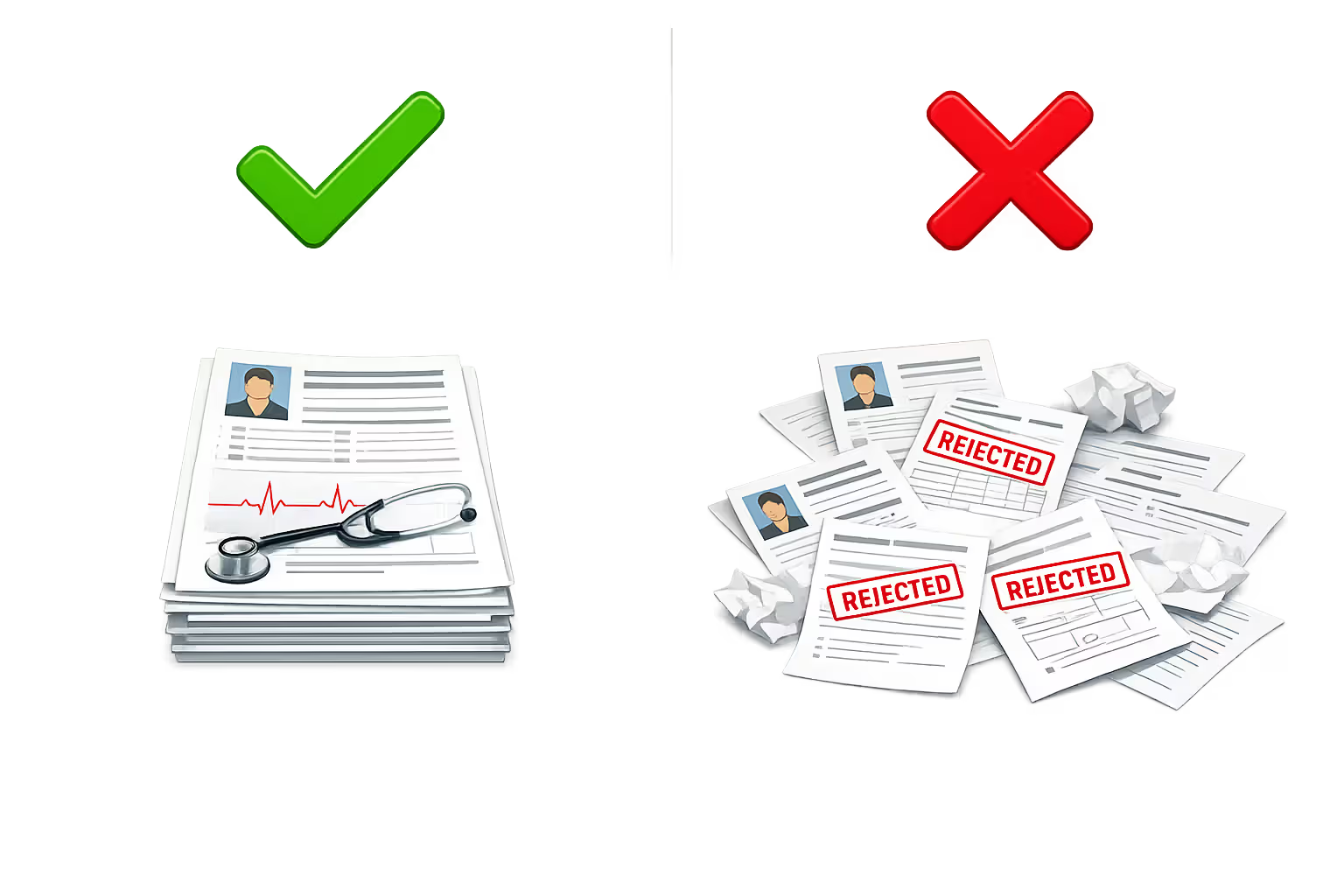
Fraud suspicion destroys claims instantly. Adjusters process thousands of claims annually and recognize fraud patterns immediately: wildly exaggerated injuries, staged accidents, inflated damage estimates, phantom passengers who suddenly appear in claims, and accidents occurring shortly after purchasing new coverage. Even genuinely legitimate claims can face denial if they exhibit too many fraud indicators.
Author: Caleb Thornton;
Source: spy-delhi.com
Single-vehicle motorcycle accidents with no witnesses receive extra scrutiny, particularly when the bike was recently insured or the rider just increased coverage amounts. These scenarios don't automatically indicate fraud, but they definitely trigger enhanced investigation protocols.
What to Do After Your Claim Is Approved
Approval doesn't end the process. The approved motorcycle accident claim process guide extends through settlement and formal claim closure.
Settlement negotiation begins when you receive the initial offer. First offers typically land 40-60% below fair settlement value. Insurers expect negotiation—it's built into their process. Never accept the first offer unless it completely covers all your documented losses. Counter with specifics: "Your offer allocates $3,000 for medical expenses. My attached itemized bills total $7,200. Please explain the $4,200 discrepancy." Concrete numbers supported by documentation move negotiations more effectively than emotional appeals ever will.
Payment processing begins after you accept a settlement figure. You'll sign a release form stating you won't pursue additional claims related to this accident. Read this document carefully before signing—once executed, you absolutely cannot reopen the claim later if complications develop. Payment typically arrives 10-14 days after you sign the release, delivered either by check or direct deposit depending on your preference.
Repair authorization allows you to proceed with motorcycle restoration work. Some insurers require using their preferred repair network. You can generally choose your own shop, but the insurer only pays their assessed repair amount. When your chosen shop charges more, you cover the difference out-of-pocket. Always get repair authorization in writing before authorizing work to avoid payment disputes later.
Medical bill coordination ensures your health insurance and motorcycle insurance don't both pay identical bills (or worse, that neither pays them). Your motorcycle policy typically covers accident-related medical costs up to your medical payments coverage limit. Health insurance might pay initially, then seek reimbursement from your motorcycle insurer through subrogation rights. Maintain detailed records of who paid what to prevent double-billing situations or unpaid balance surprises.
Closing documentation includes final releases, detailed settlement statements, and repair completion verification. Keep copies of absolutely everything. You'll need these records for tax purposes (certain settlement components are taxable income), future insurance applications (which ask about prior claims history), and potential future disputes if issues emerge after claim closure.
When to Challenge a Claim Denial and How Appeals Work

Author: Caleb Thornton;
Source: spy-delhi.com
Denials aren't necessarily final decisions. Understanding when to challenge a denial and how appeals actually work can reverse unfavorable determinations.
Grounds for appeal include factual errors in the adjuster's determination, misapplication of policy language, evidence the adjuster overlooked, and procedural violations during investigation. When your denial letter claims you were at fault based on a police report that actually assigns fault to the other driver, you've got clear appeal grounds. When the insurer denied your claim for late reporting but you can prove you reported within the policy's timeframe, appeal with documentation showing timely notification.
Weak appeal grounds include simply disagreeing with settlement amounts (that's negotiation territory, not appeals), thinking the denial seems unfair without identifying specific policy or factual errors, or wanting coverage for activities your policy explicitly excludes. Successful appeals require identifying concrete, demonstrable mistakes in the insurer's decision-making process.
State insurance department complaints apply external regulatory pressure. Every state operates an insurance commissioner's office or dedicated department that investigates consumer complaints. File complaints when you believe the insurer violated state insurance regulations, acted in bad faith toward you, or ignored unambiguous policy language in your favor. The department investigates your complaint and can compel insurers to reconsider denials. This process costs nothing and doesn't require attorney representation.
Bad faith claims emerge when insurers deny clearly legitimate claims without reasonable justification, fail to conduct proper investigations, or prioritize their financial interests over contractual obligations to policyholders. Bad faith exposure opens insurers to liability exceeding your original claim amount—sometimes dramatically. When your insurer denies an obviously covered claim, delays investigation for months without valid justification, or simply stops communicating about your claim, consult an attorney about potential bad faith claims.
Attorney involvement triggers include denials on high-value claims (generally exceeding $10,000), complex liability disputes involving multiple parties, severe injuries with long-term impacts, and situations where the insurer's denial reasoning appears legally questionable. Personal injury attorneys typically work on contingency for motorcycle accident claims, taking a percentage of your ultimate recovery rather than charging hourly fees. This arrangement makes legal representation accessible even when you lack upfront legal funds.
Claims that get approved fastest and for the highest settlement amounts share common characteristics: comprehensive documentation submitted right away, consistent statements across every source, immediate reporting after the accident, and unambiguous liability evidence. Riders who approach the claims process professionally—submitting organized documentation, responding to requests immediately, maintaining meticulous records—achieve approval rates exceeding 85%. Those submitting incomplete claims, providing contradictory information, or delaying responses face approval rates below 50%. The difference isn't random chance or luck—it's deliberate preparation and systematic follow-through
— Sarah Chen
Frequently Asked Questions About Motorcycle Claim Approval
Moving Forward After Understanding the Approval Process
Navigating motorcycle accident claim approval successfully requires more advance preparation than most riders anticipate. Insurance companies evaluating your claim fate use systematic review processes that heavily prioritize thorough documentation, statement consistency, and unambiguous liability evidence. Riders who understand these priorities and prepare accordingly transform the approval process from an intimidating mystery into a manageable procedure with reasonably predictable outcomes.
Begin documenting well before you need to file any claim. Photograph your motorcycle regularly, thoroughly understand your policy's coverage and exclusions, and keep insurance information readily accessible. When accidents occur, concentrate on three immediate priorities: safety and medical attention, comprehensive evidence preservation, and prompt notification. Your actions during the first few hours after an accident largely determine your approval chances weeks later when your claim reaches decision stage.
Remember that approval represents the beginning of final settlement, not the conclusion of the entire process. Negotiate professionally using well-documented evidence, carefully review everything before signing settlement documents, and maintain detailed records through complete claim closure. Whether your claim receives quick approval or requires appeals and attorney involvement, thorough preparation combined with persistent follow-through maximizes your ultimate recovery while minimizing stress during an already challenging situation.
Related Stories

Read more
Read more



The content on this website is provided for general informational and educational purposes only. It is intended to offer insights and guidance on motorcycle accident insurance claims, settlement processes, liability issues, coverage limits, medical compensation, and related insurance matters, and should not be considered legal or financial advice.
All information, articles, and materials presented on this website are for general informational purposes only. Insurance policies, liability standards, settlement practices, and state regulations may vary by jurisdiction and insurer. The outcome of a motorcycle accident claim depends on the specific facts of the accident, available evidence, policy language, and applicable law.
This website is not responsible for any errors or omissions in the content, or for actions taken based on the information provided. Users are strongly encouraged to consult with a qualified attorney or licensed insurance professional regarding their specific motorcycle accident claim before making decisions about settlements, negotiations, or coverage disputes.