
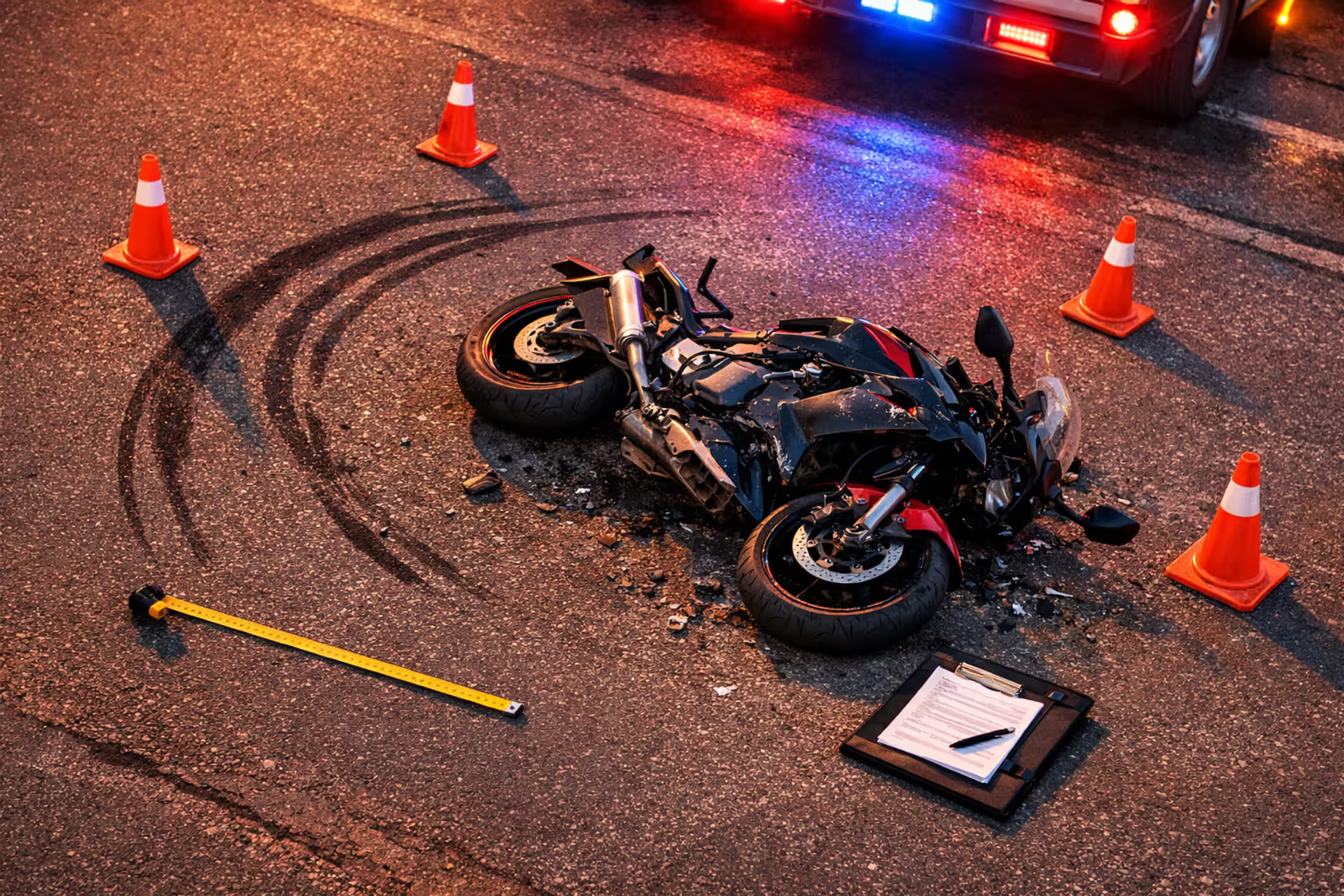
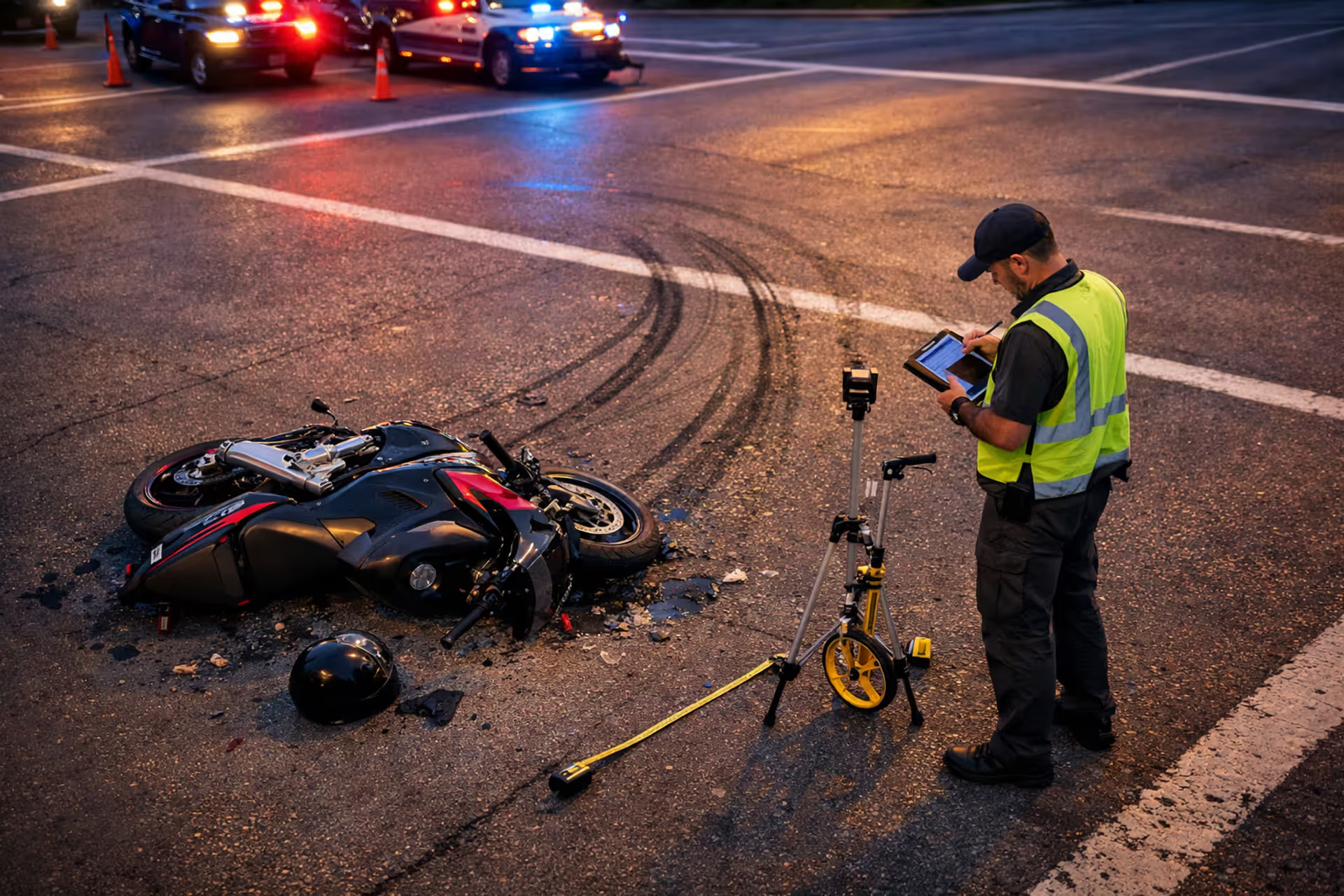
Aerial view of motorcycle accident scene with damaged motorcycle on road, skid marks, orange traffic cones, and measuring tape for forensic investigation
Motorcycle Accident Reconstruction — How Experts Analyze Crashes
Motorcycle accident reconstruction applies forensic engineering principles—physics, mathematics, and investigative techniques—to piece together how a crash unfolded. General accident investigation stops at documenting the aftermath. Reconstruction digs deeper, answering why events transpired by calculating velocities, analyzing rider actions, and establishing causation through quantifiable data.
The numbers paint a stark picture. Motorcyclists comprise roughly 3% of registered vehicles on American roads, yet they account for 14% of traffic fatalities. When crashes happen, the resulting insurance claims and lawsuits frequently turn on technical minutiae that eyewitnesses simply can't provide with accuracy. Was the rider doing 55 or 75? Did the sedan driver actually check their blind spot? Could impact have been avoided with different reactions?
Reconstruction professionals answer these questions using tangible evidence instead of guesswork. Insurance adjusters depend on reconstruction findings when evaluating liability and calculating settlements. Attorneys leverage expert testimony to demonstrate negligence or refute baseless accusations. For injured motorcyclists or grieving families, thorough reconstruction often separates fair compensation from being falsely blamed for someone else's mistake.
Motorcycle reconstruction differs fundamentally from car crash analysis because two-wheeled vehicles obey different physical laws. Motorcycles are inherently unstable platforms requiring continuous rider input to maintain balance, and they generate distinctly different evidence patterns. A reconstructionist specializing in automobile collisions might overlook critical details unique to motorcycle physics—like pre-impact braking behavior revealed through front suspension compression marks, or how a rider's body position during emergency maneuvers affects crash outcomes.
Core Methodologies Used in Motorcycle Crash Reconstruction
Physical Evidence Collection and Documentation
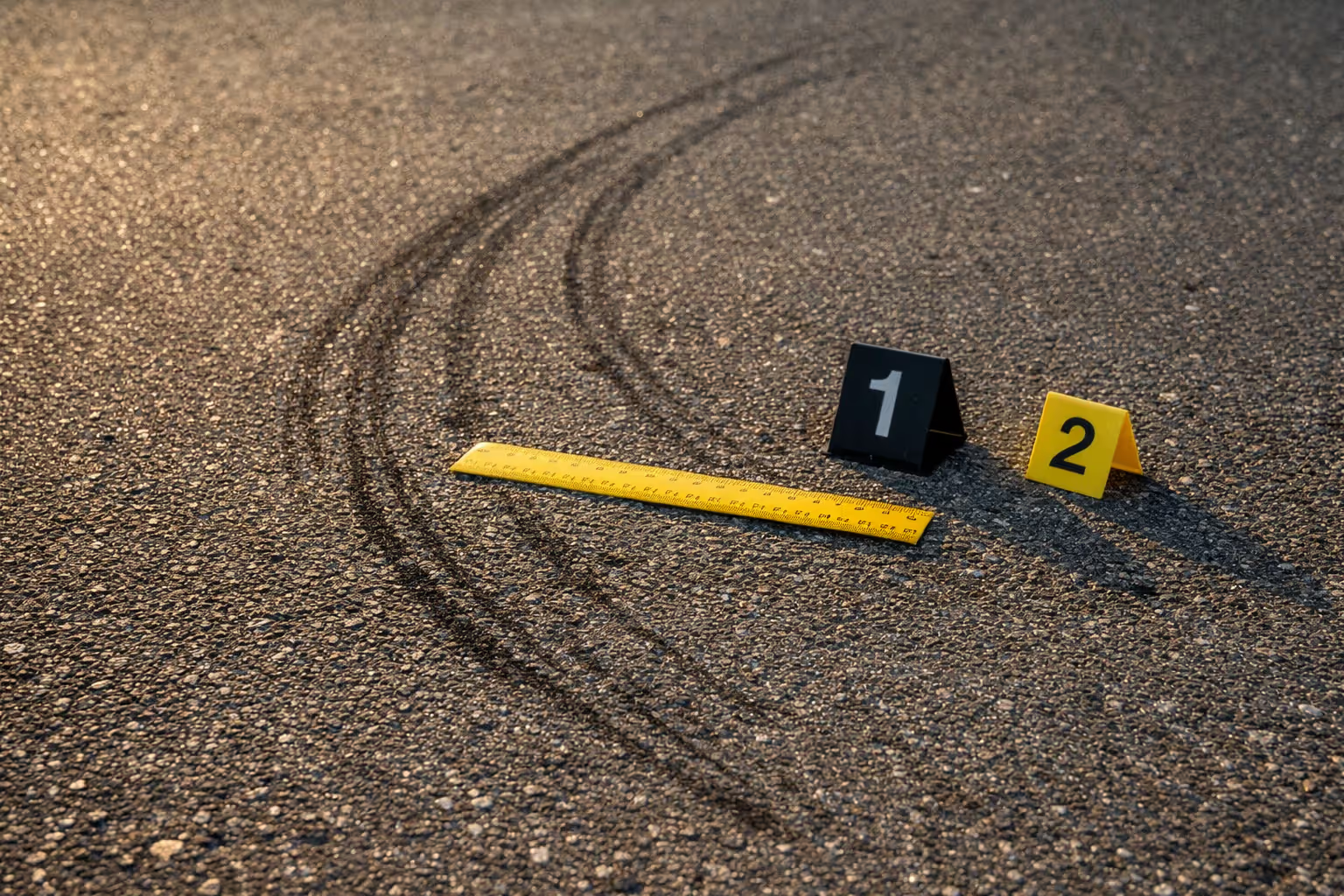
Every credible reconstruction starts where rubber meets road. Experts document tire marks, gouge patterns, fluid deposits, scattered debris, and where vehicles came to rest—all through photographs, precise measurements, and detailed diagrams. Cars typically leave bold skid marks spanning dozens of feet. Motorcycles? Their evidence can be maddeningly subtle. A locked rear wheel might produce a faint trace visible only under raking sunlight, while front-wheel braking can vanish entirely on coarse asphalt.
The motorcycle itself becomes a witness. Scraped footpegs reveal lean angle at the moment of contact. Shattered turn signal housings indicate which lights were operating. Bent handlebars disclose impact forces and where the rider's hands were positioned. Reconstructionists catalog every scratch, every deformation, every broken component—because individually minor details combine into a comprehensive narrative.
Scene geometry carries enormous weight. Reconstructionists measure lane widths, elevation changes, curve banking, visibility distances, and any sight obstructions. They document weather, ambient light levels, and road surface characteristics. That sweeping curve might feel comfortable at 35 mph, but becomes a physics problem at 50 when you factor in actual radius measurements and available coefficient of friction. Raw measurements transform vague descriptions into hard data.
Author: Ryan Whitlock;
Source: spy-delhi.com
Speed and Trajectory Calculations
Pre-crash velocity determination sparks the most heated disputes. Reconstructionists employ multiple calculation approaches, each suited to different evidence types. Critical speed formulas analyze yaw marks—those curved skid patterns—to establish minimum velocity needed to create the observed radius. For motorcycles, this demands adjusted coefficients accounting for two-wheel dynamics and how rider weight distribution affects traction.
Energy-based methods examine crush deformation and post-impact sliding distances. When a motorcycle hits a vehicle or fixed barrier, deformation depth and pattern correlate mathematically to impact velocity. Similarly, how far a separated rider slides follows predictable physics based on initial speed, surface friction, and terrain slope.
Momentum conservation becomes indispensable when multiple vehicles collide. By examining where vehicles ended up and applying momentum principles backward, experts calculate pre-impact velocities for both the motorcycle and the other vehicle involved. This approach proves valuable when traditional evidence like skid marks simply doesn't exist.
Trajectory mapping traces the motorcycle's path through three-dimensional space. Gouge marks, debris trails, and fluid deposits create a roadmap of the collision sequence. Experts can often determine whether the rider was vertical, leaning into a corner, or already falling before impact—details that fundamentally reshape liability questions.
Digital Tools and Simulation Software
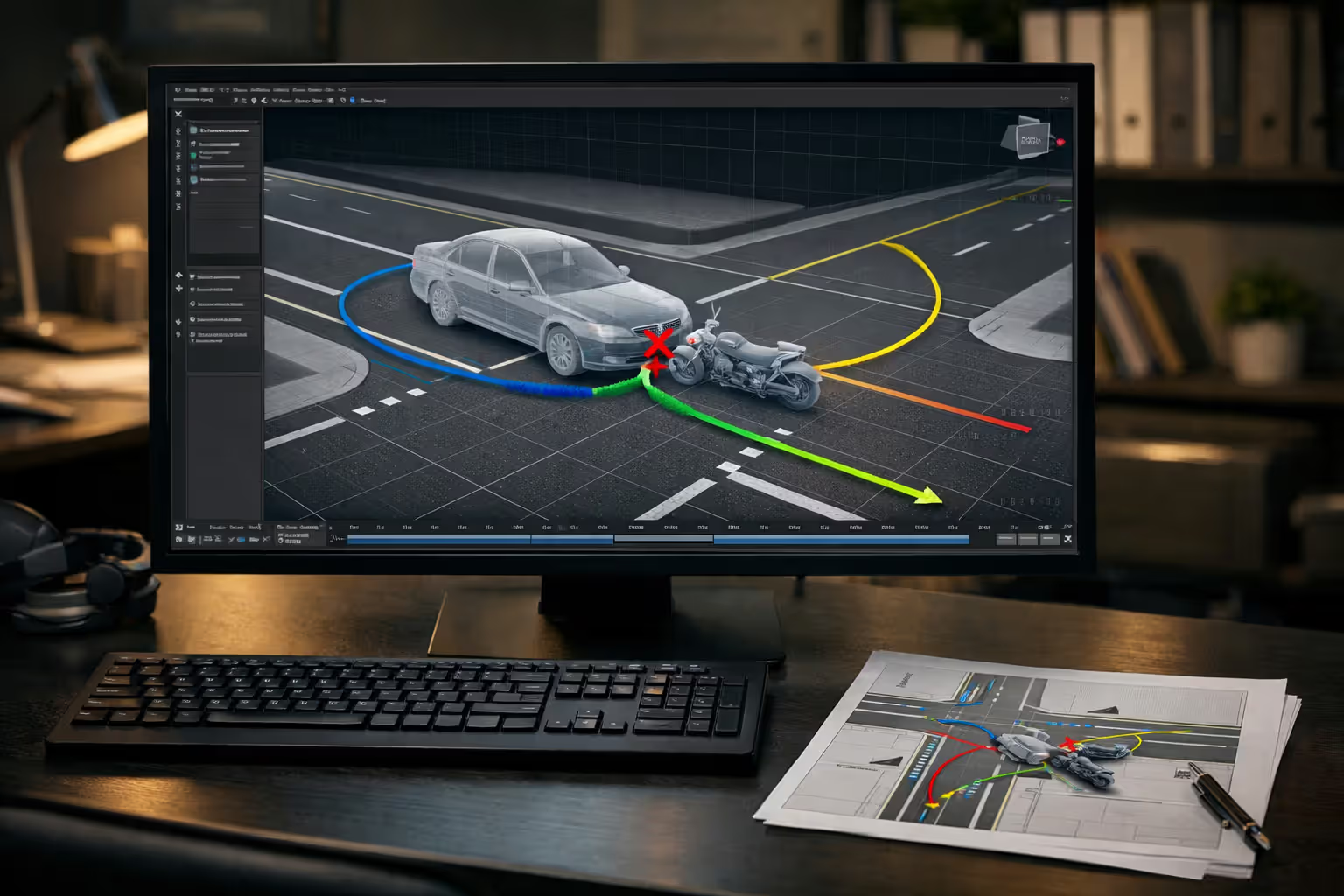
Contemporary reconstruction increasingly leverages specialized software modeling crash physics. Applications like PC-Crash, HVE (Human-Vehicle-Environment), and MADYMO allow experts to input scene measurements, vehicle specifications, and physical evidence, then run countless scenarios until finding parameter combinations matching observed results.
Three-dimensional laser scanning captures crash locations with millimeter precision, building digital models analyzable long after traffic has resumed. Drone-based photogrammetry creates overhead perspectives and terrain maps. These technologies preserve perishable evidence that would otherwise disappear to traffic flow, weather erosion, or road maintenance.
Author: Ryan Whitlock;
Source: spy-delhi.com
Event data recorders in cars striking motorcycles yield valuable information about that vehicle's speed, braking intensity, and steering inputs during the final seconds before collision. Motorcycles rarely carry EDRs, but GPS data from smartphones or motorcycle-specific tracking devices sometimes reveals speed history and route information.
Computer simulations complement rather than replace physical analysis. A simulation contradicting physical evidence signals either faulty inputs or misunderstood crash mechanics. When simulations align with tire marks, damage patterns, and eyewitness accounts, they become powerful visual tools for conveying complex technical conclusions.
Step-by-Step: How Reconstruction Experts Analyze a Motorcycle Accident
The reconstruction workflow typically progresses through distinct phases, though sequencing varies based on when experts get hired and what evidence survives.
Initial Scene Investigation (Hours to Days After Crash): When engaged immediately, experts photograph and measure before evidence vanishes. They document all physical traces, record environmental factors, and question first responders. Traffic patrol officers may have gathered basic data, but reconstruction demands more granular measurements and specialized observations.
Author: Ryan Whitlock;
Source: spy-delhi.com
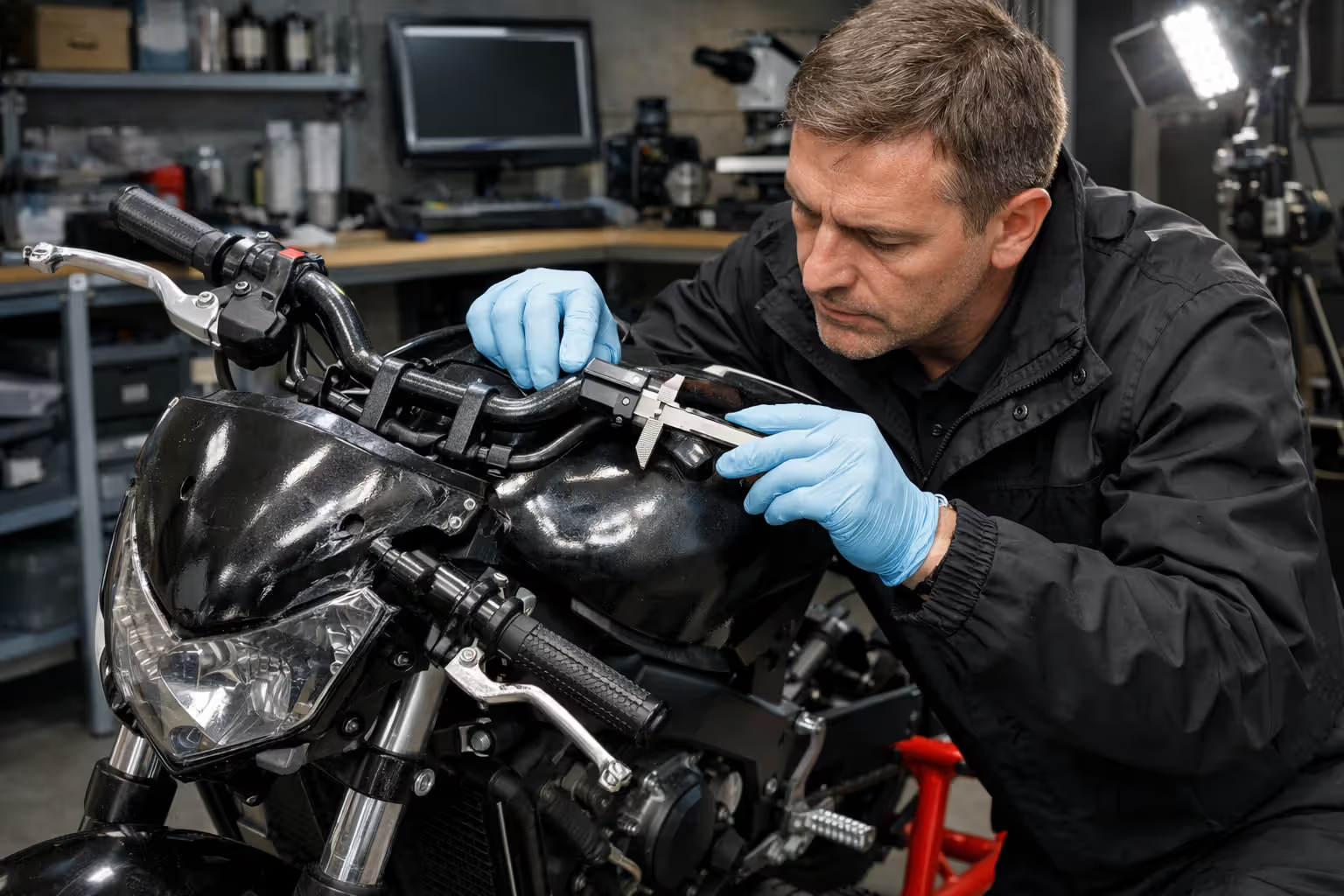
Vehicle and Equipment Examination (Days to Weeks): Experts inspect the motorcycle, helmet, protective clothing, and any involved vehicles. They photograph damage from every angle, measure crush depths, verify tire condition and inflation, and scrutinize mechanical components for pre-existing defects. That snapped brake lever could indicate pre-impact braking—or might have fractured during collision. Distinguishing between these possibilities requires meticulous metallurgical examination.
Data Analysis and Calculations (Weeks): Back at their office, experts apply physics and mathematics to collected data. They compute velocities, evaluate sight distances, calculate reaction intervals, and assess whether the rider could have avoided collision. This phase demands checking calculations multiple times and exploring alternative explanations.
Simulation and Modeling (Weeks): When circumstances warrant it, experts build computer simulations testing hypotheses and visualizing crash progression. They manipulate variables to identify which speed, position, and action combinations yield results matching physical evidence.
Report Preparation (Weeks to Months): Experts compile findings into formal reports documenting their approach, calculations, conclusions, and evidentiary foundation supporting each opinion. Well-constructed crash reconstruction report motorcycle accident guide documents should withstand peer scrutiny while remaining intelligible to lawyers and judges lacking engineering training.
Deposition and Trial Testimony (Months to Years): When cases advance to litigation, experts face deposition questioning and potentially courtroom testimony, explaining their conclusions and defending their methodology under cross-examination.
The complete process spans anywhere from several weeks for straightforward cases to beyond a year for tangled multi-party litigation involving severe injuries or deaths.
Understanding the Motorcycle Crash Reconstruction Report
Credible reconstruction reports follow logical architecture separating raw facts from analytical interpretation while clearly stating the foundation underlying each conclusion. Formats differ, but most reports incorporate these essential elements:
Introduction and Scope: Identifies the expert, their credentials, materials reviewed, and questions they addressed. This establishes the expert's qualifications and boundaries of their analysis.
Factual Background: Summarizes crash circumstances drawing from police documentation, witness accounts, medical files, and other source materials. This presents information without interpretation.
Physical Evidence: Documents scene characteristics, vehicle damage, tire impressions, debris distribution, and other tangible traces. Photographs, diagrams, and measurements populate this section. Strong reports include scaled diagrams displaying all critical dimensions.
Analysis and Calculations: Presents the technical work—velocity computations, sight distance evaluations, perception-reaction time assessments, and any simulations conducted. This section must show the actual work, not merely assert conclusions. Formulas, underlying assumptions, and data sources need sufficient transparency for peer experts to replicate the analysis.
Opinions and Conclusions: States what the expert believes occurred and the reasoning behind it. Each professional opinion should connect directly to evidence presented earlier. Language like "based on my analysis, I conclude that" clearly distinguishes expert interpretation from factual observations.
Appendices: Attach expert's curriculum vitae, reference materials, calculation spreadsheets, simulation outputs, and supporting documentation.
Warning signs suggesting questionable or biased reports include: absence of scene investigation, exclusive reliance on police reports, missing calculation details, unsupported conclusions, or failure to address alternative scenarios. Courts typically require expert opinions rest on adequate facts, employ reliable methodology, and apply that methodology reliably to the specific circumstances.
Federal Rules of Evidence (Rule 702) and the Daubert standard govern expert testimony admissibility. Judges function as gatekeepers, blocking opinions lacking scientific foundation. Reconstruction experts unable to articulate their methodology or acknowledge its limitations won't survive Daubert challenges.
Common Challenges Unique to Motorcycle Accident Reconstruction
Rider Separation: Car occupants stay with their vehicle. Motorcyclists get ejected. This separation creates dual evidence trails—the bike's trajectory and the rider's path—each demanding independent analysis. Pinpointing when separation happened relative to initial impact proves crucial for understanding pre-crash dynamics.
Minimal Vehicle Damage: Motorcycles get totaled in crashes that barely scratch a car's paint. A bike might suffer $15,000 in damage from an impact leaving only minor scuffs on an SUV's front bumper. This damage asymmetry creates misleading impressions that the crash was gentle, when actually the forces involved were sufficient to cause life-altering injuries.
Helmet and Gear Factors: Whether riders wore helmets, and what type, affects injury severity but shouldn't influence liability determinations. Yet bias infiltrates evaluations. Some adjusters or jury members assume unhelmeted riders were reckless—even in states lacking helmet mandates. Reconstruction experts must concentrate on crash causation, not injury mitigation—though helmet damage patterns can provide valuable impact data.
Lack of Electronic Evidence: Most motorcycles lack the electronic data recorders standard in contemporary automobiles. There's no black box capturing speed, throttle input, or brake application. Experts must depend entirely on physical evidence and calculations, introducing greater uncertainty than car crashes where EDR data exists.
Anti-Motorcycle Bias: Research demonstrates drivers frequently report not seeing motorcycles even when visibility was unobstructed. This "looked but failed to see" phenomenon stems from cognitive filtering and inattentional blindness. Reconstructionists must carefully distinguish whether drivers genuinely couldn't see the motorcycle or simply weren't scanning for smaller vehicles—a distinction dramatically affecting liability determinations.

Author: Ryan Whitlock;
Source: spy-delhi.com
Weather and Road Conditions: Motorcycles react far more sensitively to wet pavement, loose gravel, oil films, or debris than four-wheeled vehicles. A sand patch a car wouldn't notice can make a motorcycle lose traction instantly. Experts document these conditions and incorporate them when analyzing rider decisions and available grip.
When to Hire a Motorcycle Accident Reconstruction Expert
Not every collision warrants reconstruction. Low-speed parking lot contact with obvious fault and superficial injuries probably won't justify the expense. But certain situations demand expert analysis:
Disputed Liability: When opposing parties contradict each other and police documentation remains inconclusive, reconstruction establishes actual events. This becomes critical in left-turn collisions where the car operator claims the motorcycle exceeded speed limits or materialized suddenly.
Catastrophic Injuries or Fatalities: When claim values surpass half a million dollars or someone died, insurance carriers and defendants will retain their own specialists. You'll need equally qualified professionals countering their analyses.
Complex Crash Dynamics: Multi-vehicle pileups, crashes potentially involving mechanical breakdowns, or incidents where event sequencing remains murky benefit from expert analysis untangling the complications.
Criminal Charges: When riders face vehicular homicide accusations, reckless driving citations, or similar criminal charges, reconstruction evidence can demonstrate innocence or establish mitigating circumstances.
Timing? Engage specialists immediately. Physical evidence evaporates rapidly—tire marks weather away, debris gets cleared, vehicles undergo repairs. Ideal engagement happens within days of collision, though experts can still contribute valuable analysis months or years later using photographs, preserved measurements, and retained evidence.
What about costs? Reconstruction specialists typically bill $200-$500 hourly, with total expenses ranging from $5,000 for simple cases to $50,000+ for complicated litigation involving extensive scene investigation, testing, and computer modeling. Most operate on hourly billing rather than contingency arrangements, though some consider hybrid fee structures for plaintiffs with compelling cases.
Which credentials matter? The Accreditation Commission for Traffic Accident Reconstruction (ACTAR) offers the profession's most respected certification. Seek experts with mechanical engineering or physics educational backgrounds, specific motorcycle reconstruction training, and courtroom testimony experience. Be cautious with retired police officers whose only training involved basic crash investigation—that's fundamentally different from reconstruction engineering.
Comparison of Motorcycle Accident Reconstruction Methods
| Approach | Precision Range | Investment | Duration | Optimal Applications |
| Physical Evidence Analysis | High (±5-10%) | $5,000-$15,000 | 2-4 weeks | Velocity determination, impact analysis, establishing collision sequence |
| Computer Simulation | Moderate to High (±10-15%) | $10,000-$30,000 | 4-8 weeks | Complicated multi-vehicle crashes, visualizing crash physics, evaluating alternative scenarios |
| Witness Statement Analysis | Low to Moderate (±20-40%) | $3,000-$8,000 | 1-2 weeks | Supporting physical evidence, establishing pre-crash conduct, identifying previously unknown evidence |
Physical evidence forms the foundation of defensible reconstruction. Computer simulations add substantial value when properly calibrated against physical findings. Witness statements provide context but shouldn't trump objective data—human perception and memory prove notoriously unreliable, particularly during high-stress incidents unfolding within seconds.
Expert Perspective on Motorcycle Reconstruction Complexity
Motorcycle crash reconstruction requires understanding dynamics that simply don't exist in four-wheeled vehicles. A car is inherently stable—take your hands off the wheel and it continues straight. A motorcycle falls over. Every aspect of motorcycle operation involves the rider actively managing an unstable system, which means rider input and skill level become integral to the analysis in ways that don't apply to automobile crashes
— Dr. William Neale
This fundamental difference explains why motorcycle-specific expertise matters. The physics of countersteering, gyroscopic stability, traction circles for two-wheeled vehicles, and the effects of rider weight transfer during braking and cornering all require specialized knowledge beyond general crash reconstruction training.
Frequently Asked Questions About Motorcycle Accident Reconstruction
Conclusion
Motorcycle accident reconstruction transforms chaotic collision scenes into comprehensible narratives anchored in physics and tangible evidence. For riders confronting unjust blame, families demanding answers after fatal crashes, or attorneys constructing litigation strategies, expert reconstruction delivers the technical foundation that eyewitness testimony and police documentation cannot provide.
The discipline demands specialized understanding of motorcycle physics, rigorous application of scientific principles, and ability to communicate sophisticated technical conclusions to non-technical audiences. Not every collision requires reconstruction, but when liability gets contested, injuries prove severe, or criminal accusations arise, investment in qualified expertise frequently proves decisive.
Select your expert carefully, engage them promptly, and verify they possess specific motorcycle reconstruction credentials. The gap between general accident reconstructionists and motorcycle specialists can determine whether critical evidence gets recognized and properly interpreted. In matters where thousands or millions of dollars hang in the balance—or where justice for a fallen rider remains at stake—that gap matters profoundly.
Related Stories
Read more
Read more


The content on this website is provided for general informational and educational purposes only. It is intended to offer insights and guidance on motorcycle accident insurance claims, settlement processes, liability issues, coverage limits, medical compensation, and related insurance matters, and should not be considered legal or financial advice.
All information, articles, and materials presented on this website are for general informational purposes only. Insurance policies, liability standards, settlement practices, and state regulations may vary by jurisdiction and insurer. The outcome of a motorcycle accident claim depends on the specific facts of the accident, available evidence, policy language, and applicable law.
This website is not responsible for any errors or omissions in the content, or for actions taken based on the information provided. Users are strongly encouraged to consult with a qualified attorney or licensed insurance professional regarding their specific motorcycle accident claim before making decisions about settlements, negotiations, or coverage disputes.