
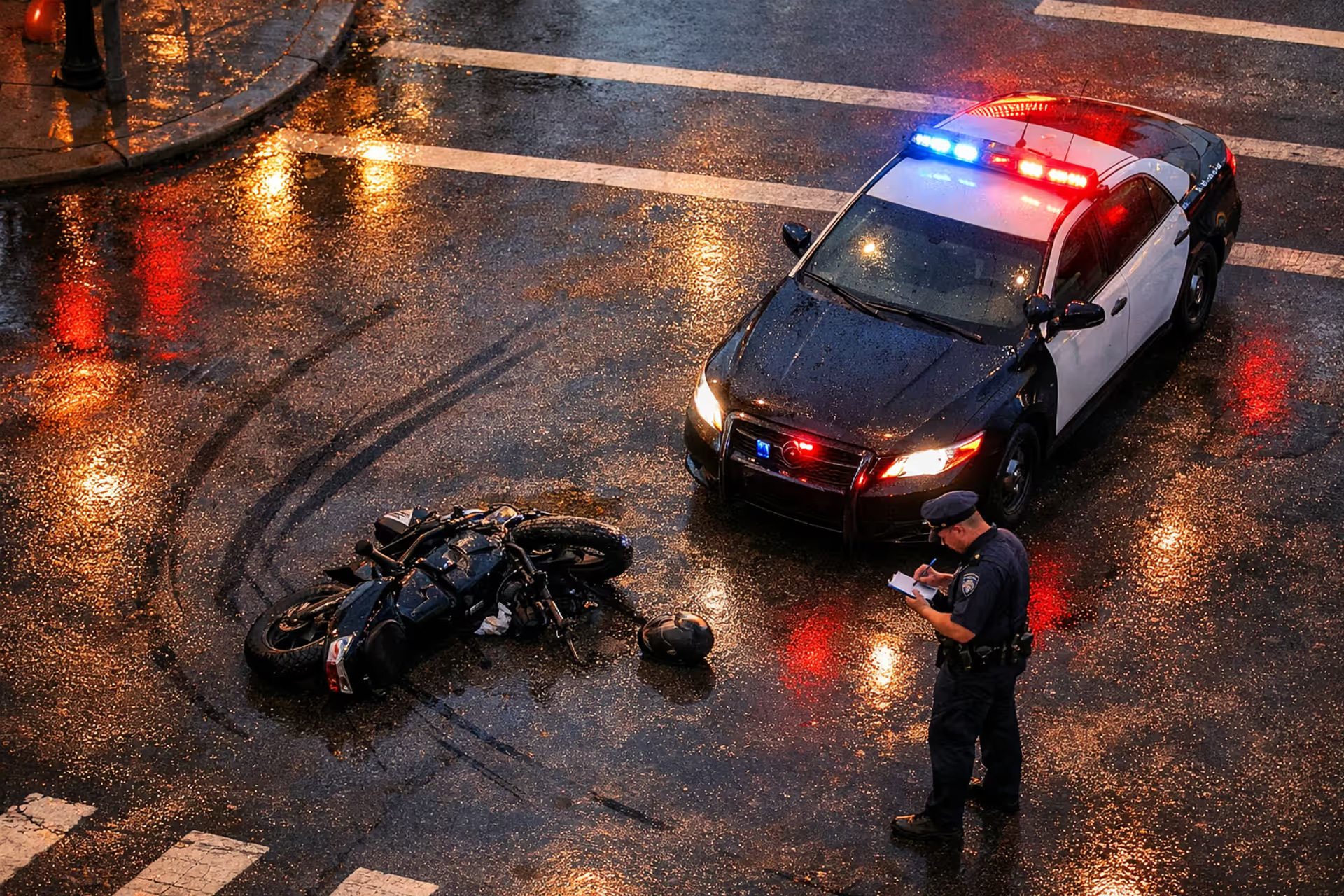
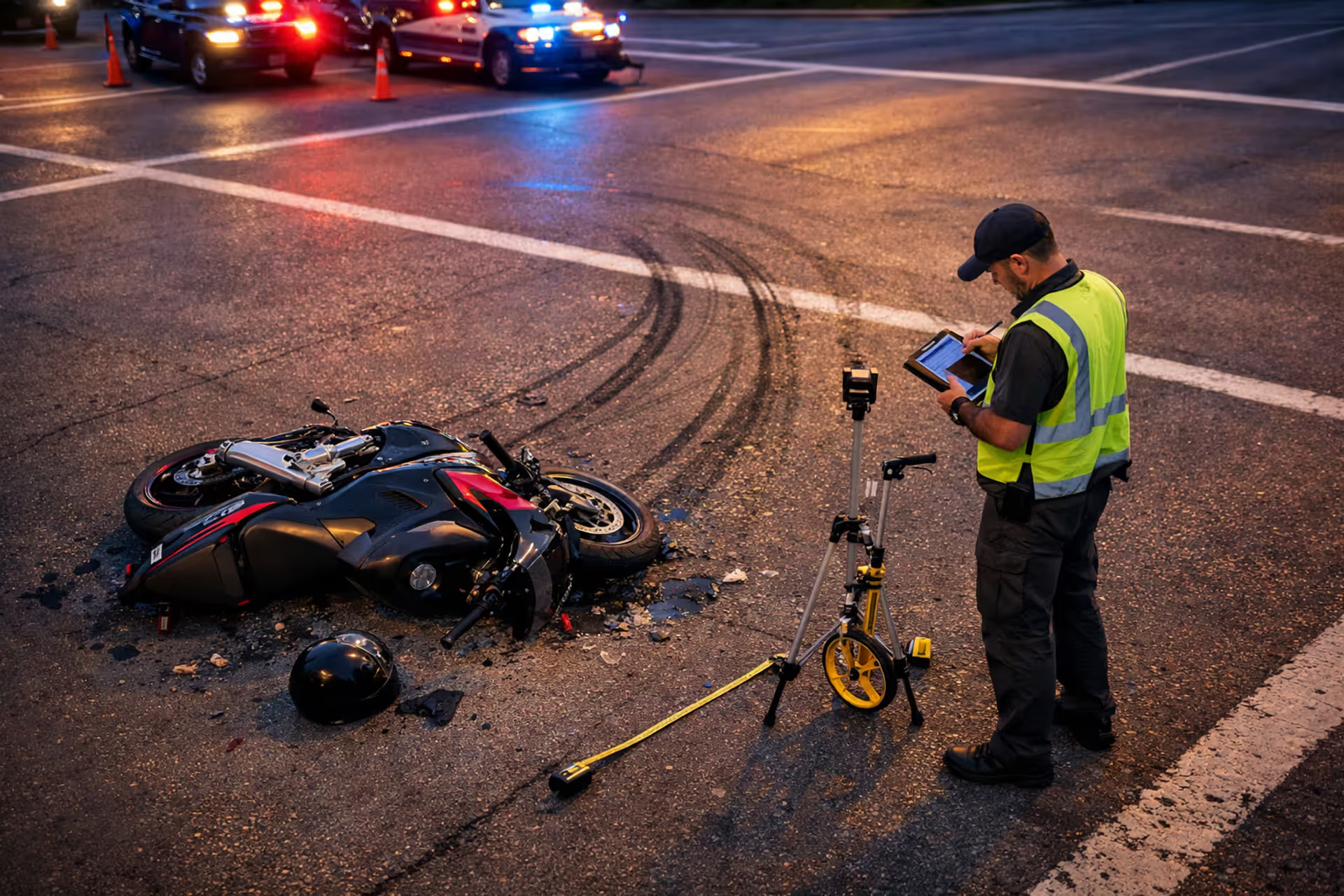
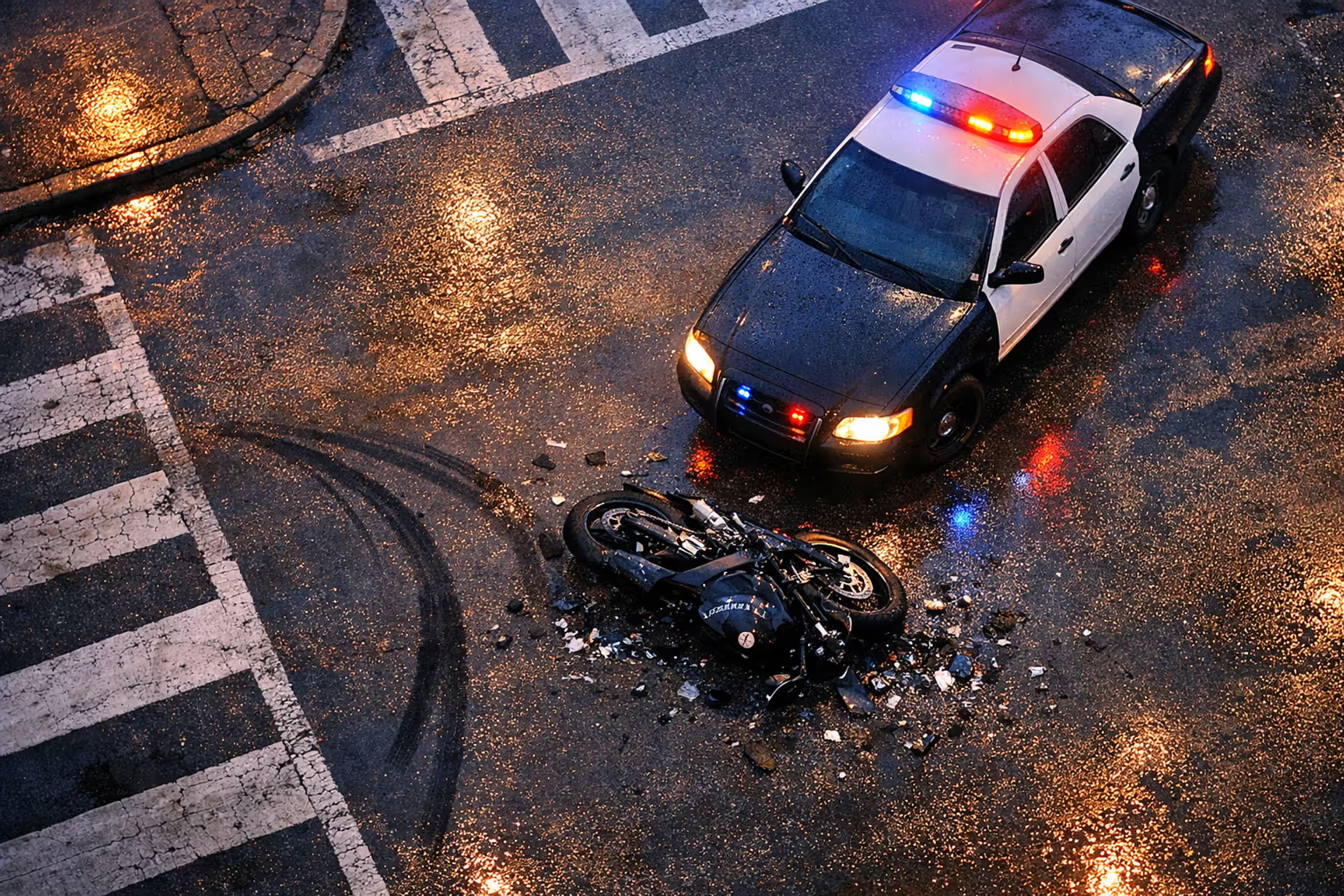
Police officer writing an accident report at an intersection with a fallen motorcycle and police car with flashing lights on wet asphalt at dusk
How to Get a Motorcycle Accident Police Report for Your Claim

A police report transforms your word against theirs into documented evidence. For motorcyclists, this distinction matters more than for any other road user—because bias starts before the ink dries.
When a car driver tells an insurance adjuster "the motorcycle came out of nowhere," that narrative sticks unless something more authoritative contradicts it. A police report doesn't just record what happened. It creates a reference point that adjusters, attorneys, and judges treat as semi-official truth, even when it's incomplete or wrong.
This guide walks through obtaining your report, understanding what's actually in it, fixing errors, and building a claim strong enough to overcome the assumptions working against you.
Why Police Reports Matter More in Motorcycle Accident Cases
Insurance companies approach motorcycle claims differently. Internal training materials at major carriers flag motorcycle accidents for heightened scrutiny. Adjusters receive coaching on "common rider behaviors" that suggest contributory negligence—speeding, lane splitting, aggressive maneuvering. Without a police report anchoring the facts, these assumptions fill the vacuum.
The bias isn't always malicious. It's statistical. Motorcyclists represent 14% of traffic fatalities while making up just 3% of registered vehicles. Insurers build risk profiles around these numbers, and those profiles influence how adjusters interpret ambiguous collisions.
A police report disrupts this pattern by providing:
Author: Olivia Bennett;
Source: spy-delhi.com
Third-party documentation created at the scene. An officer's contemporaneous observations carry more weight than statements made days later, after memories fade and incentives to shade the truth increase.
Standardized data fields that limit narrative manipulation. When an officer checks a box indicating the car driver violated right-of-way, that's harder to dispute than a verbal claim.
Evidence preservation that might otherwise disappear. Skid marks fade. Debris gets swept away. Witnesses leave. The report captures these details while they still exist.
Counterweight to anti-rider stereotypes. If the officer notes that you wore full protective gear, held a valid motorcycle endorsement, and showed no signs of impairment, those facts undercut the "reckless rider" narrative before it starts.
The report won't guarantee a favorable outcome. Officers make mistakes, miss details, and sometimes bring their own biases. But starting without one means fighting uphill against assumptions you can't see and claims you can't effectively rebut.
What Information Actually Appears in a Motorcycle Crash Police Report
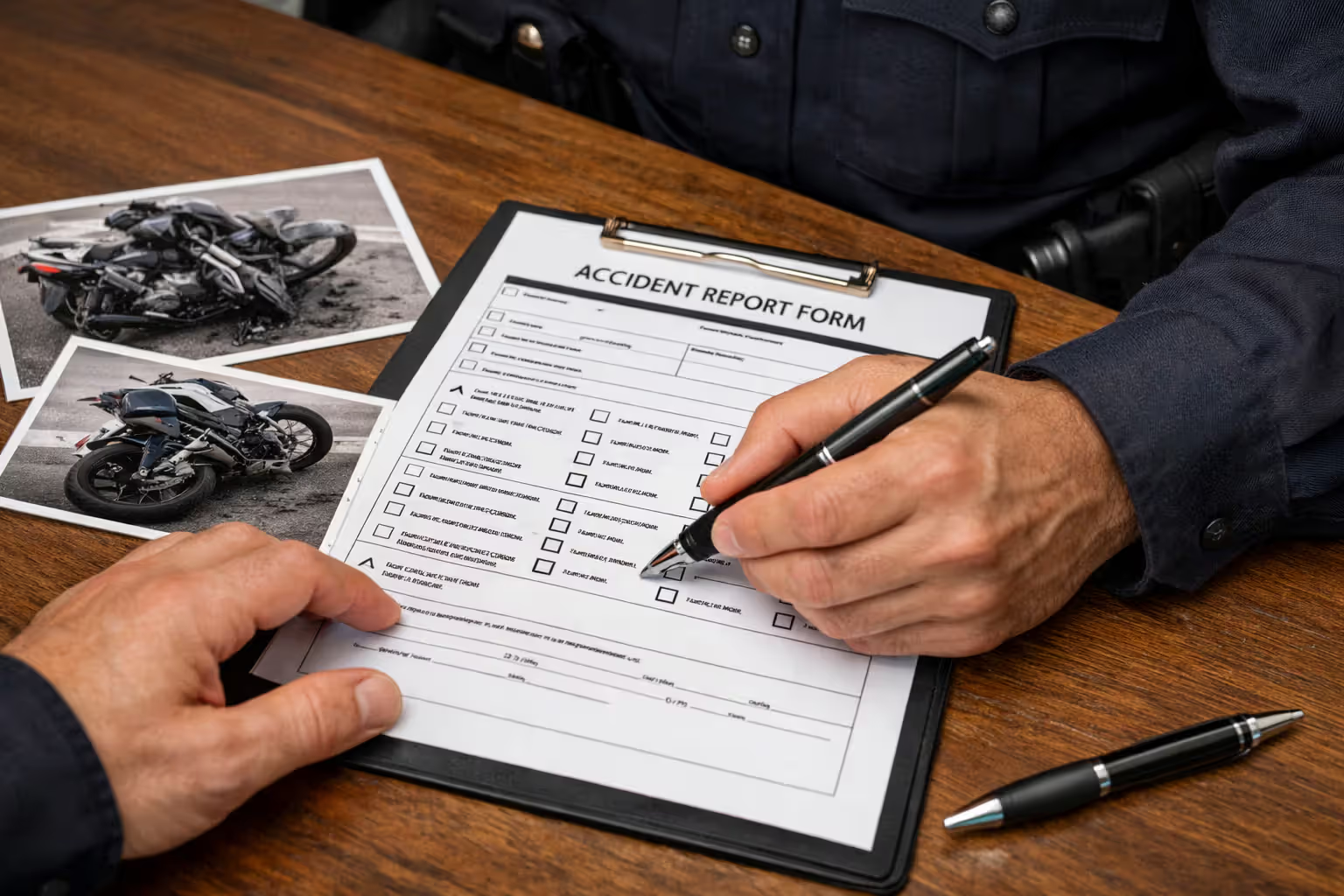
Reports follow standardized formats, but content varies by department and officer diligence. Most contain these core sections:
Header information: Date, time, location (often with GPS coordinates), weather conditions, road surface, lighting, traffic control devices present.
Party details: Names, contact information, driver's license numbers, insurance carriers and policy numbers for all involved parties. For motorcyclists, this includes your motorcycle endorsement status and bike registration.
Vehicle descriptions: Make, model, year, VIN, license plate, visible damage. Officers typically note safety equipment—whether you wore a helmet, if the bike had working lights, condition of tires.
Narrative section: The officer's account of how the crash occurred, based on physical evidence, party statements, and witness interviews. This is where fault indicators often appear, though many departments train officers to describe rather than conclude.
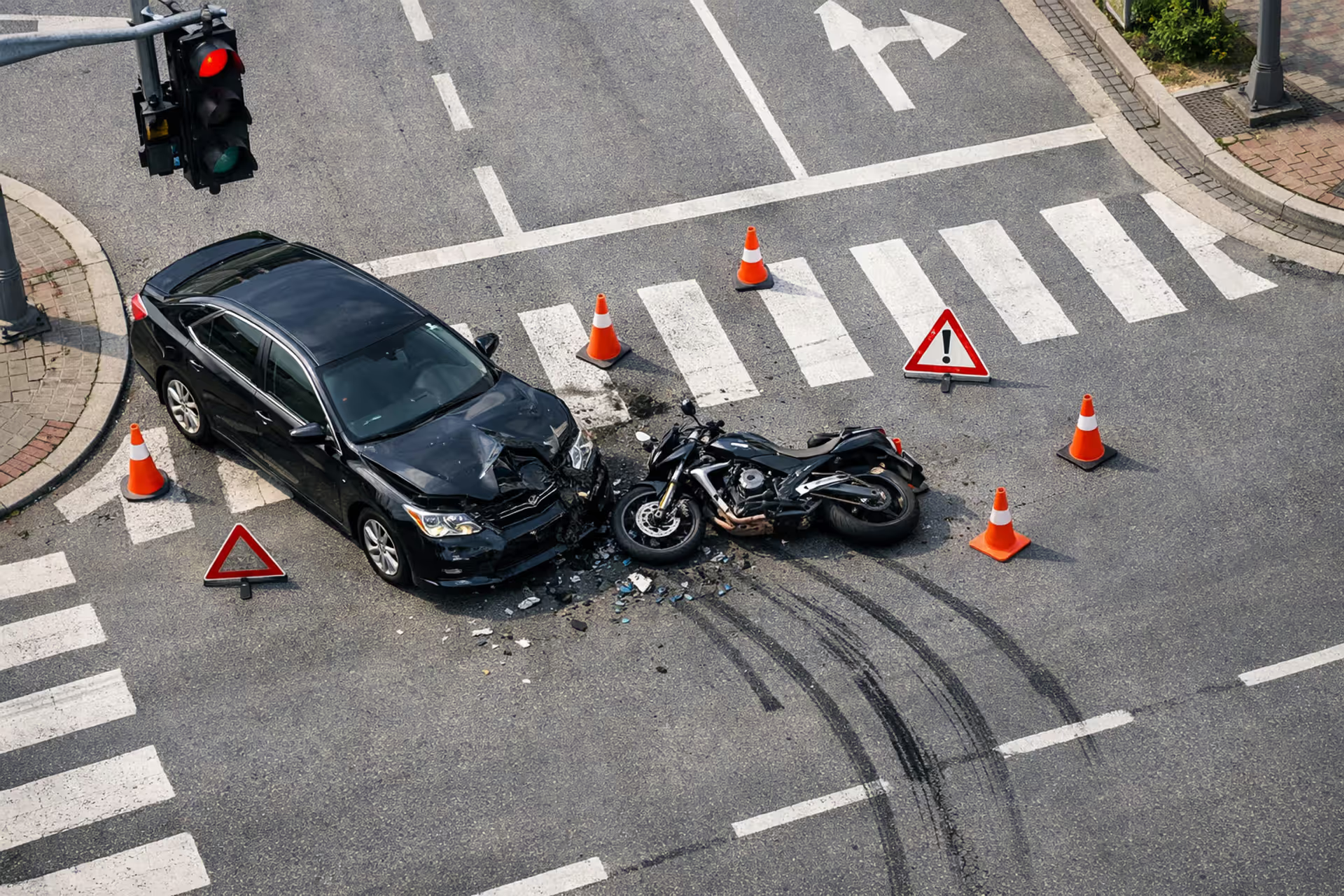
Diagram: Overhead sketch showing vehicle positions before impact, point of impact, final resting positions, skid marks, debris fields, lane configurations.
Contributing factors: Coded fields for elements like "failure to yield," "following too closely," "improper lane change," "speed too fast for conditions." These codes feed into state crash databases and carry significant weight with insurers.
Citations issued: If the officer ticketed anyone, the report lists the violation. A citation creates a presumption of fault in most civil proceedings, though it's not conclusive.
Witness statements: Names, contact information, and summaries of what witnesses reported seeing. Detailed witness accounts are gold—adjusters know these people have no financial stake in the outcome.
Injury information: Whether parties reported injuries, whether EMS transported anyone, visible signs of injury the officer observed.
Officer Observations vs. Factual Data: Understanding the Difference
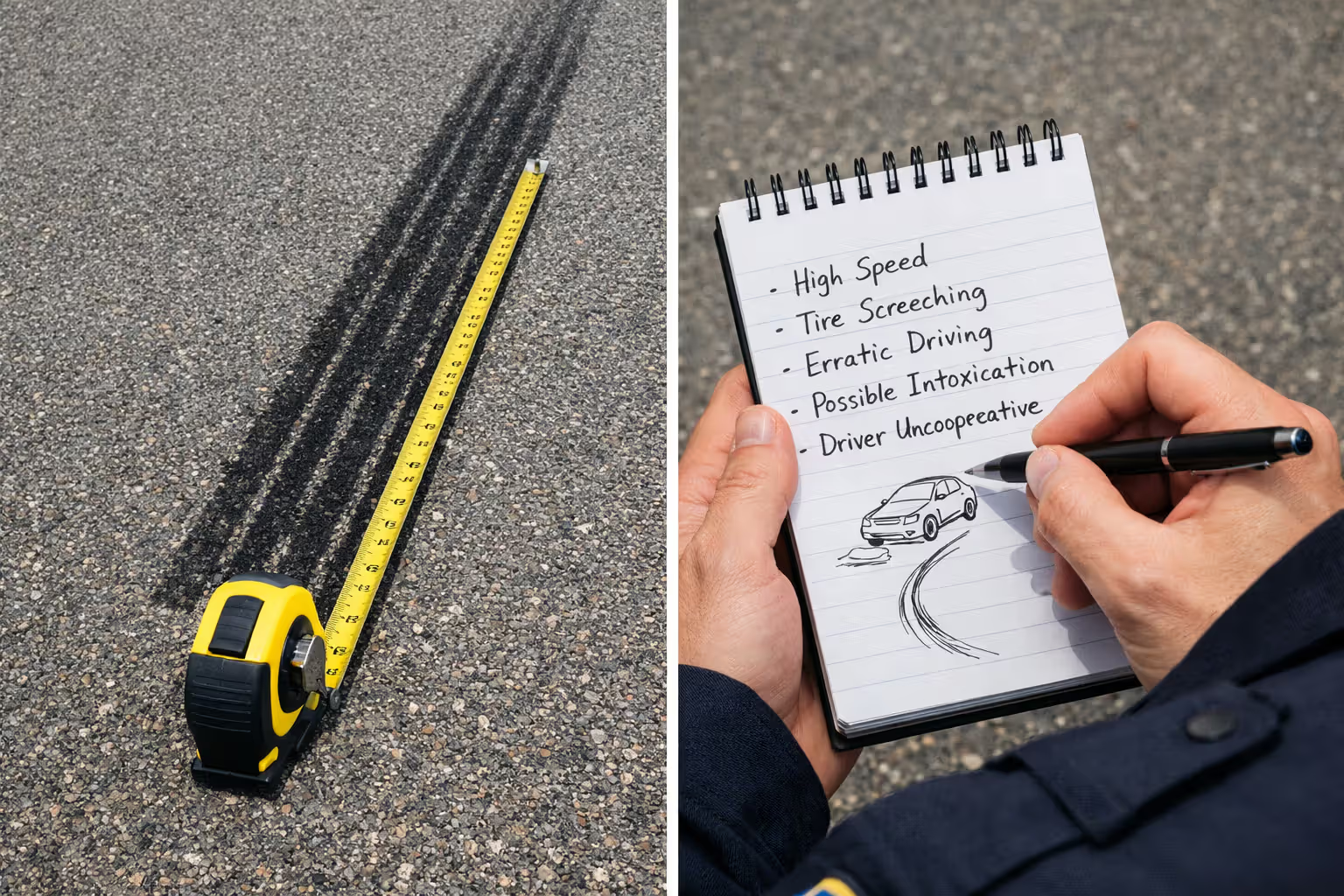
Not all report content carries equal evidentiary weight. An officer documenting a 47-foot skid mark records an objective fact. An officer writing "the motorcycle was traveling at a high rate of speed" offers an opinion based on limited information.
Adjusters and attorneys distinguish between these categories. Factual data—measurements, photographs, damage patterns, citation violations—resists reinterpretation. Opinion sections—"Driver A appeared distracted" or "Rider B seemed unfamiliar with the motorcycle"—remain subject to challenge.
When reviewing your report, mark which statements fall into which category. If you need to contest the report later, you'll challenge opinions while accepting facts. If you're building your claim, you'll emphasize facts that support your version while contextualizing unfavorable opinions.
Pay particular attention to passive voice in narratives. "The motorcycle struck the vehicle's passenger side" implies rider fault. "The vehicle turned left into the motorcycle's path" suggests driver fault. Same collision, different framing. Officers sometimes use passive constructions to avoid assigning blame, but those word choices influence how adjusters interpret the report.
Author: Olivia Bennett;
Source: spy-delhi.com
Step-by-Step: How to Request Your Accident Report in Different States
Timing matters. Most departments don't release reports immediately—officers need time to complete investigations, input data, and route documents through review processes.
Standard timeline: 5-14 business days for routine crashes. Complex investigations involving serious injuries or fatalities can take 30 days or longer. Some jurisdictions provide preliminary reports within 48 hours, then issue final versions later.
Who can request: Involved parties (drivers, riders, passengers), legal representatives, insurance companies with proper authorization, and sometimes family members if the involved party is incapacitated. You'll need to prove your connection to the crash.
Request methods vary by jurisdiction:
Online portals: Many large departments now offer web-based systems. You enter the crash date, location, and your information, pay by credit card, and receive a PDF within minutes to days. This is fastest when available.
In-person requests: Visit the records division of the law enforcement agency that responded. Bring government-issued ID, the crash date and location, and payment (often cash or check only—call ahead about payment methods). Some departments provide reports while you wait; others mail them.
Mail requests: Write to the agency's records division including crash details, your contact information, a copy of your ID, and payment. Processing takes 2-4 weeks typically.
Third-party services: Commercial report providers charge premium fees ($25-75) to retrieve reports on your behalf. They're faster than mail but more expensive than direct requests.
What you'll need:
- Government-issued photo ID
- Crash report number if you have it (usually on the card the officer gave you at the scene)
- Exact crash date and location
- Names of involved parties
- Payment for fees (typically $6-25 depending on the state)
Expedited options: Some agencies offer rush processing for additional fees. If you're facing a tight insurance deadline or statute of limitations issue, ask about expedited service when you request.
If the report isn't ready: Don't wait passively. Call the records division weekly for status updates. If you're approaching an insurance claim deadline, get written confirmation that the report is still in progress—this documentation can extend your filing window.
5 Critical Mistakes That Weaken Your Police Report Before It's Even Written
The report's usefulness depends partly on what happens in the minutes after impact. These errors compromise documentation before the officer finishes typing:
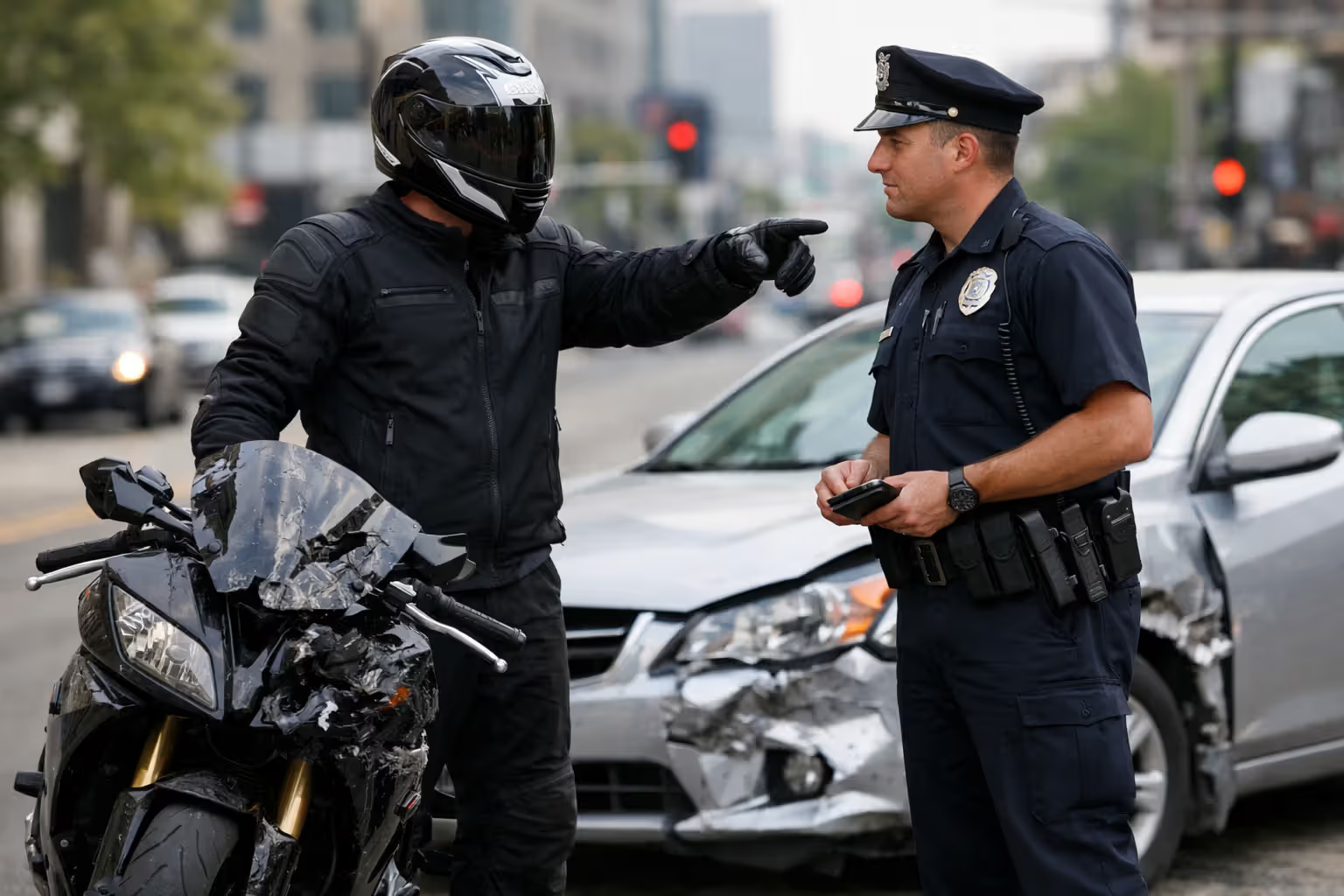
Leaving the scene too quickly: Even if you feel fine, departing before police arrive means no official report gets filed. Without a report, you're left with an informal exchange of information that either party can later dispute. If the other driver seemed cooperative at the scene but claims something different to their insurer later, you have no authoritative counter-narrative.
Not requesting an officer response: In minor crashes, police sometimes don't respond unless someone is injured or vehicles block traffic. If the other party suggests "we don't need to involve police," decline that suggestion. Call the non-emergency line and request an officer. If dispatch says they won't send anyone, ask for that decision to be noted in the call log. Some states let you file reports at the station after the fact, but these lack scene observations.
Failing to document the responding officer's information: Get the officer's name, badge number, and report number before leaving. This seems obvious, but adrenaline makes people forget basics. Without this information, requesting your report later becomes needlessly complicated.
Giving incomplete or vague statements: When the officer asks what happened, provide specific details. Not "they hit me" but "I was traveling north on Main Street at approximately 35 mph when the blue sedan turned left from the southbound lane directly into my path. I applied brakes and swerved right but couldn't avoid impact." Specificity gets recorded. Vagueness gets paraphrased, often inaccurately.
Not mentioning injuries at the scene: Adrenaline masks pain. You might feel fine immediately after impact, then discover injuries hours later. If you tell the officer "I'm not injured" and that gets recorded, insurers will question injury claims you file later. Instead say "I don't think I'm injured but I plan to get checked out" or "I'm feeling some pain but I'm not sure how serious it is." This preserves your ability to claim injuries that manifest after the scene.
Author: Olivia Bennett;
Source: spy-delhi.com
How Insurance Adjusters Use Police Reports to Deny or Reduce Motorcycle Claims
Adjusters read reports differently than you do. They're scanning for liability indicators that justify reducing payouts or denying claims entirely.
Red flags adjusters prioritize:
Citations issued to you: A ticket for following too closely or improper lane change creates a presumption of fault. Even if you plan to contest the ticket in traffic court, the adjuster will use it to argue contributory negligence immediately.
Passive fault language: Phrases like "the motorcycle failed to maintain control" or "the rider was unable to stop in time" suggest rider error, even if external factors caused those outcomes.
Missing safety equipment: If the report notes you weren't wearing a helmet in a state where helmets are required, adjusters will argue you contributed to your own injuries. Even in states without helmet laws, adjusters sometimes claim helmet absence worsened injuries, reducing claim value.
Witness statements favoring the other party: If two witnesses say the car had the right of way, overcoming that consensus becomes difficult regardless of what you claim.
Contributing factors coded against you: Those standardized checkboxes for "speed too fast for conditions" or "inattention" feed directly into liability determination algorithms insurers use.
Gaps in the narrative: If the officer's account omits key details—like the car driver texting or the sun blinding them—adjusters assume those factors didn't exist. What's not in the report might as well not have happened.
How fault determination language impacts settlements:
Reports that explicitly assign fault ("Driver A violated Vehicle Code 21801 by failing to yield right of way") give adjusters clear direction. The at-fault party's insurer knows they're starting from a weak position and often settles more readily.
Reports that describe without concluding ("Driver A turned left while Rider B was proceeding straight") leave fault ambiguous. Adjusters for both sides claim the other party bears responsibility. These disputes drag out settlements and often require litigation to resolve.
Challenging inaccurate reports:
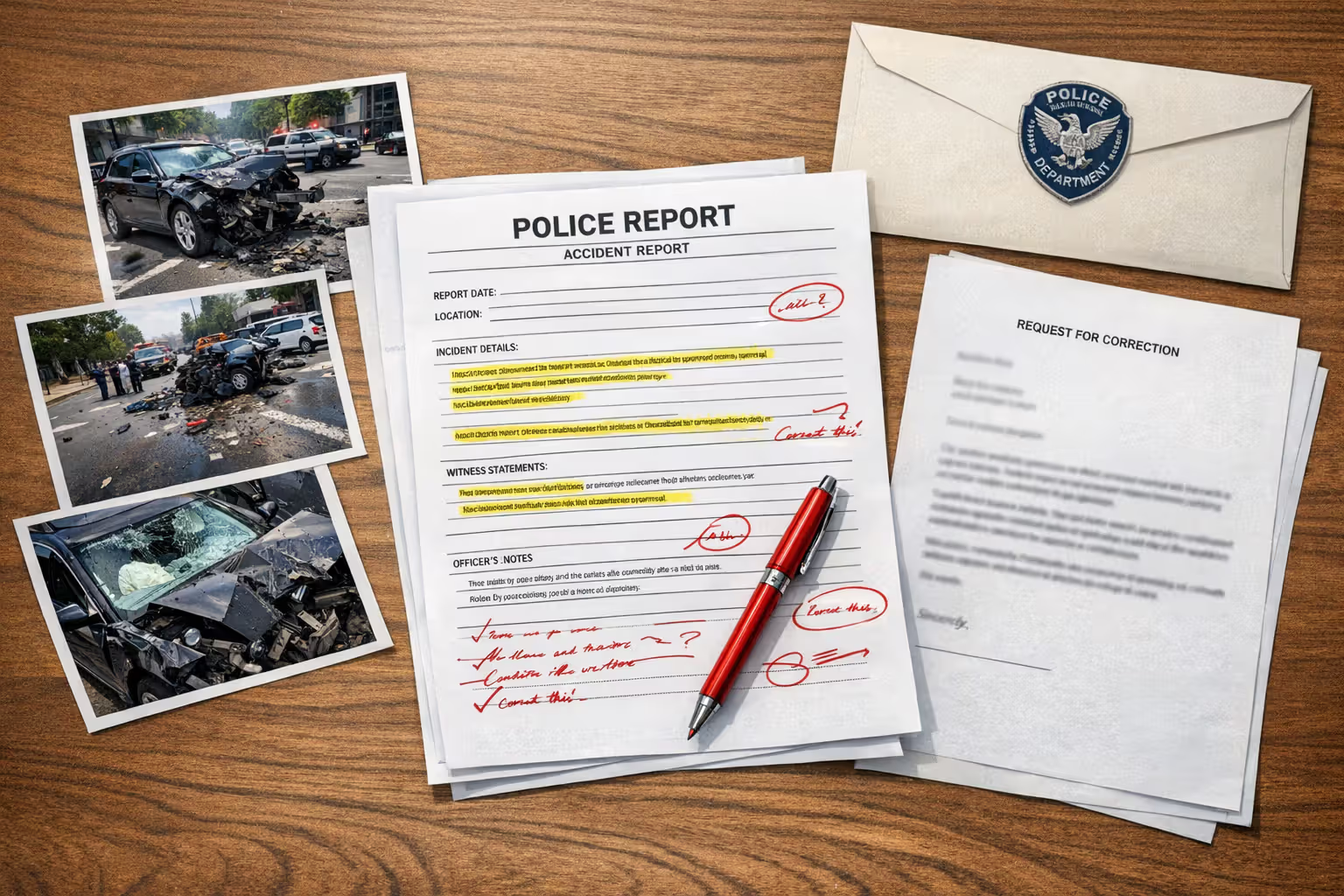
If the report contains errors that hurt your claim, document them immediately. Photograph the scene if you can return safely. Gather witness statements the officer didn't include. Obtain surveillance footage from nearby businesses. Build a counter-narrative with evidence as strong as what's in the report.
Then contact the police department about amending the report. Most agencies allow corrections for factual errors but resist changing officer opinions or conclusions. Your supporting evidence improves the chances they'll make meaningful changes.
When Police Reports Contain Errors: Your Rights and Correction Process
Officers are human. They mishear statements, misinterpret physical evidence, transpose numbers, and sometimes just get facts wrong. Common inaccuracies include:
- Incorrect vehicle positions or travel directions
- Misidentified traffic control devices (claiming a stop sign exists where there's only a yield sign)
- Transposed statements (attributing Driver A's account to Driver B)
- Wrong weather or lighting conditions
- Inaccurate descriptions of injuries
- Missing witness information
- Errors in vehicle descriptions or license plates
Two paths exist for addressing errors:
Amendment: Changes the original report by correcting factual mistakes. Most departments limit amendments to objective errors—wrong dates, misspelled names, incorrect addresses, transposed numbers. They won't amend officer conclusions or opinions.
Supplemental report: Adds new information without changing the original. If you discover evidence the officer didn't have—security camera footage, additional witness statements, photographs showing conditions the officer described incorrectly—you can request a supplemental report incorporating this material.
The correction process typically involves:
- Written request: Submit a letter to the police department's records division explaining specifically what's wrong and why. Attach supporting documentation—photos, witness statements, repair estimates, anything that proves the error.
- Supporting evidence: The stronger your proof, the more likely the department will make changes. A witness statement contradicting the officer's version might prompt review. Your unsupported claim probably won't.
- Review period: The department routes your request to the original officer and their supervisor. This takes 2-6 weeks typically. The officer may contact you for clarification.
- Decision: The department either amends the report, issues a supplemental report, or denies your request. If denied, you receive written explanation.
- Appeal: Some jurisdictions allow appeals to a higher authority within the department. This rarely succeeds but costs nothing to attempt.
State-specific limitations:
Some states impose deadlines—you might have only 30-60 days from receiving the report to request corrections. Others allow challenges any time before the statute of limitations expires on related claims. Check your state's policies immediately upon receiving a report with errors.
Practical reality: Police departments resist changing reports, especially on liability conclusions. Officers don't want their judgment questioned, and supervisors don't want to open the department to claims of bias or incompetence. Even with strong evidence, expect pushback.
If you can't get the report changed, focus on building independent evidence that contradicts it. Adjusters and attorneys understand reports aren't infallible. Strong contradictory evidence can overcome report deficiencies, but you need to develop that evidence quickly before it disappears.
Author: Olivia Bennett;
Source: spy-delhi.com
Building Your Claim Beyond the Police Report: Supporting Documentation Checklist
The police report starts your claim but shouldn't end it. Comprehensive documentation multiplies your leverage in negotiations.
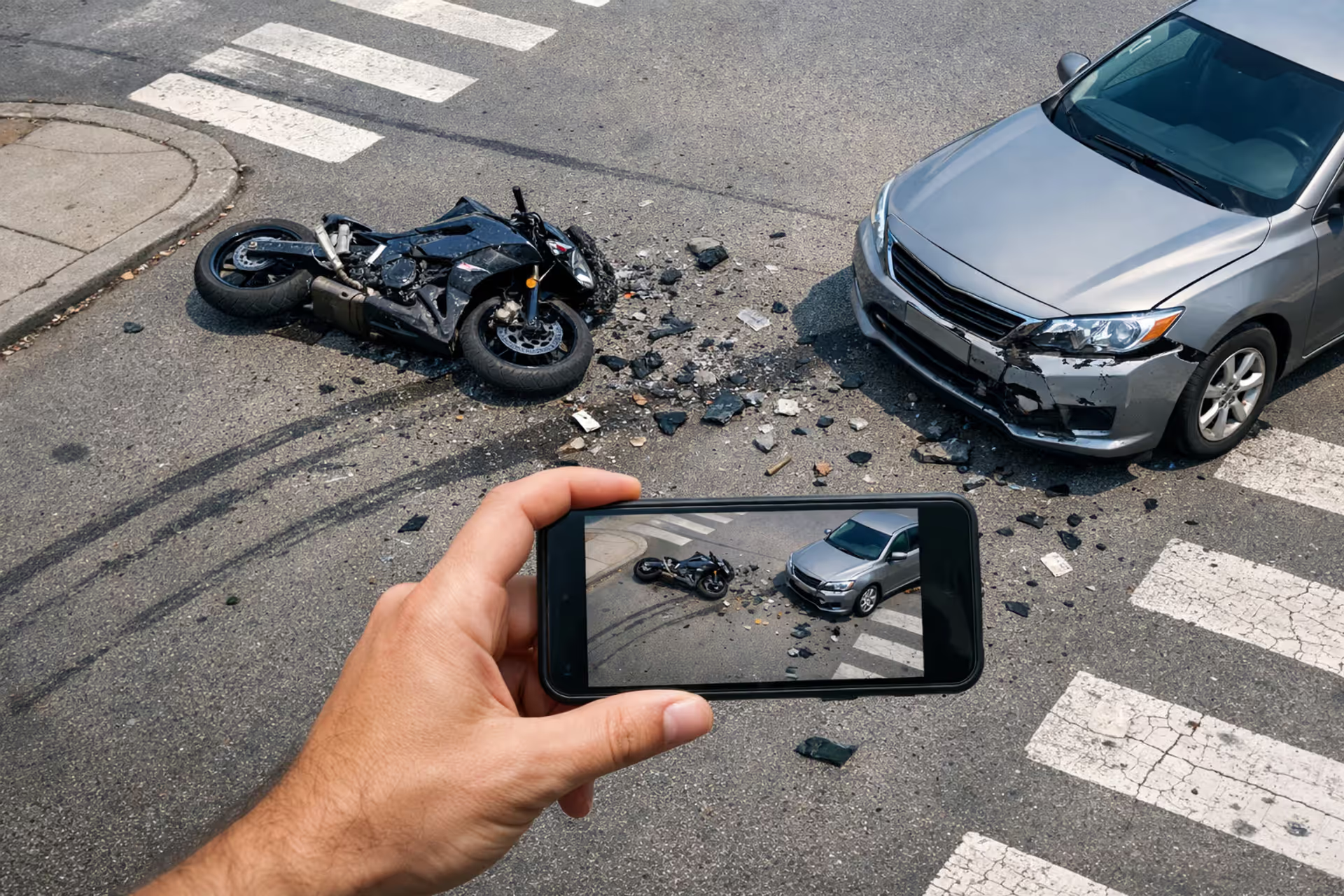
Scene photographs: Take dozens of photos from multiple angles showing vehicle damage, skid marks, debris, traffic controls, sight line obstructions, road defects, weather conditions. If you're too injured to photograph immediately, return as soon as possible—ideally within 24 hours before conditions change.
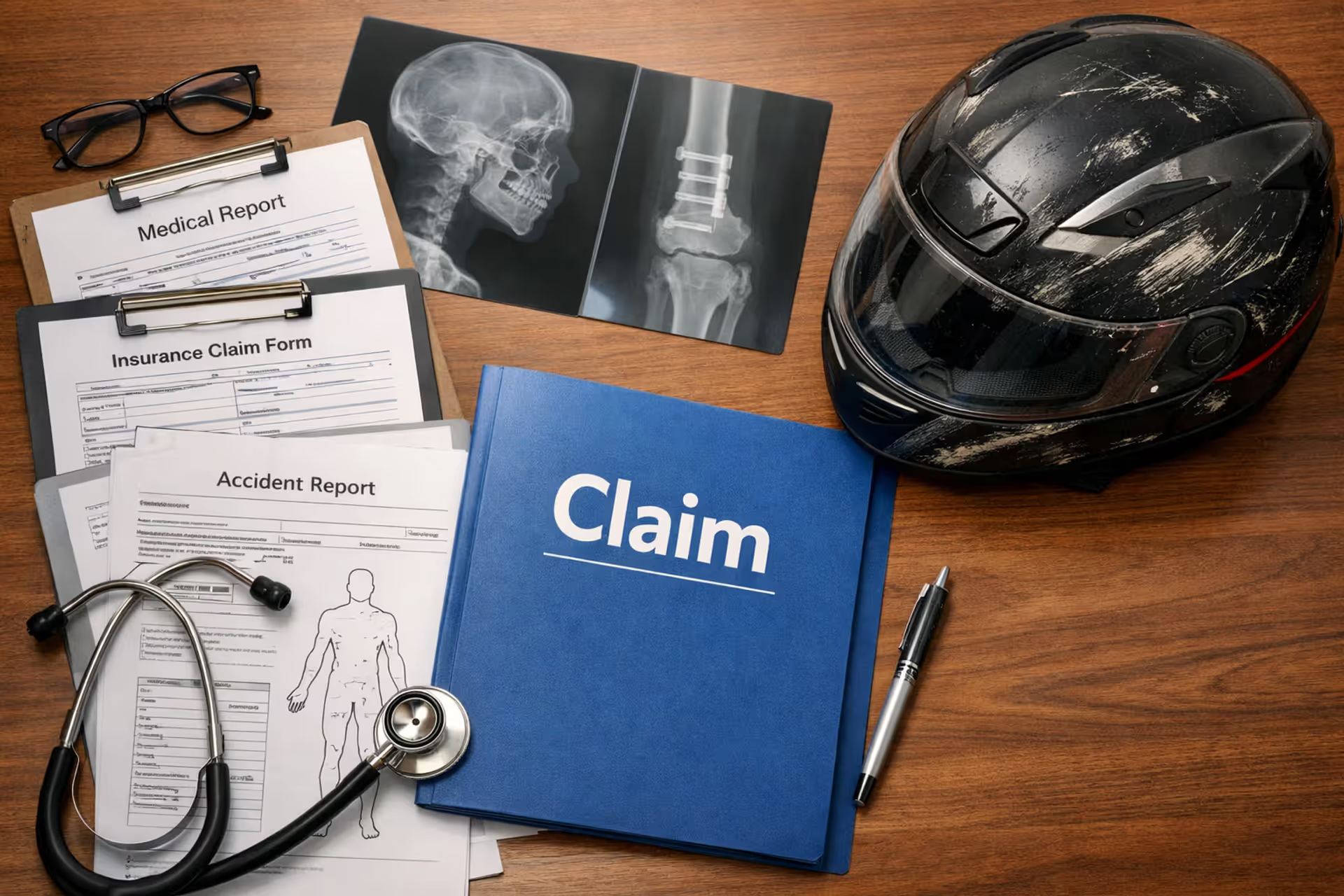
Medical records: Document every medical interaction from the emergency room visit through final discharge. Include ambulance reports, ER notes, diagnostic imaging, specialist consultations, physical therapy records, prescription records. These prove injury severity and tie injuries directly to the crash.
Witness contact information: The police report lists witnesses, but get their information yourself too. Officers sometimes omit witnesses or record incomplete contact details. Having direct access lets you or your attorney interview them more thoroughly later.
Video evidence: Helmet cameras, dashcams, and nearby security cameras capture what officers miss. Request footage from businesses, traffic cameras, and residential security systems near the crash site. Most systems overwrite footage within days or weeks, so request immediately.
Motorcycle damage documentation: Get written repair estimates from certified motorcycle mechanics. Photograph damage before repairs begin. If the bike is totaled, document its pre-crash condition with service records, modification receipts, and recent photos showing its value.
Gear damage: Photograph your helmet, jacket, gloves, boots—any protective equipment damaged in the crash. This proves impact severity and demonstrates you took reasonable safety precautions.
Lost wage documentation: If injuries prevent you from working, get written statements from your employer confirming missed time and lost income. Include pay stubs and tax returns proving your normal earnings.
Personal injury journal: Document daily pain levels, activity limitations, medical appointments, and how injuries affect your life. This creates a contemporaneous record supporting pain and suffering claims.
Expert analysis: In complex cases, accident reconstruction experts can analyze physical evidence and create reports explaining how the crash occurred. These experts testify credibly in court when cases go to trial.
Each piece of evidence serves a specific purpose. Photos prove visible damage. Medical records prove injuries. Witness statements corroborate your version. Video footage provides objective documentation. Together, they create a claim package that's difficult to dismiss or lowball.
Start gathering evidence immediately after the crash. Memories fade, witnesses become unreachable, physical evidence disappears, and video footage gets overwritten. What you collect in the first 72 hours often determines whether your claim succeeds or fails.
State-by-State Police Report Request Comparison
| State | Processing Time | Cost | Online Availability | Amendment Policy |
| California | 10-14 days | $10-15 | Yes (most agencies) | Factual errors only; 60-day window |
| Texas | 7-10 days | $6-8 | Yes (major cities) | Corrections allowed with supporting evidence |
| Florida | 5-7 days | $10 | Yes (statewide system) | Supplemental reports accepted; amendments rare |
| New York | 10-15 days | $15 | Limited (NYC only) | Strict limitations; mostly denies changes |
| Pennsylvania | 7-14 days | $18 | No (in-person or mail) | Allows corrections within 30 days |
| Ohio | 5-10 days | $7 | Yes (major departments) | Officer discretion; supervisor review required |
| Georgia | 7-10 days | $5 | Yes (statewide portal) | Factual corrections accepted; no liability changes |
| North Carolina | 10-14 days | $12 | Limited availability | 30-day window for documented errors |
Processing times and costs current as of 2024; verify with local agencies as policies change
Expert Perspective
Police reports carry tremendous weight in settlement negotiations, but they're not bulletproof.I've seen adjusters offer 40% more when the report clearly assigns fault to the other driver, and I've seen them deny claims entirely when reports contain even minor language suggesting rider error. The report sets the negotiation baseline. If it's favorable, you're negotiating up from a strong position. If it's unfavorable or ambiguous, you're fighting uphill to prove why the adjuster should ignore their own documentation. That's why I tell clients to treat the scene like a courtroom—everything you say and do becomes part of a permanent record that will either help or hurt you months later when you're trying to settle
— Marcus Chen
Frequently Asked Questions
Conclusion
A police report doesn't guarantee a favorable outcome, but lacking one almost guarantees an uphill fight. For motorcyclists facing built-in bias and skepticism, official documentation provides the foundation for credible claims.
The key is understanding what reports contain, how to get them quickly, and how to supplement them with evidence that tells your complete story. Reports capture a snapshot—often incomplete, sometimes inaccurate, but always influential. Your job is ensuring that snapshot works for you rather than against you.
Start by making smart decisions at the scene. Request police response even for seemingly minor crashes. Give detailed statements. Document everything you can. Get the officer's information before leaving.
Follow up persistently on report availability. Review it carefully for errors. Challenge inaccuracies while evidence still exists to support corrections. Build comprehensive documentation that reinforces favorable report elements and contradicts unfavorable ones.
Treat the police report as the beginning of your claim documentation, not the end. Strong claims rest on multiple evidence sources that corroborate each other and paint a clear picture of what happened and why the other party bears responsibility.
The weeks after a motorcycle crash determine whether you'll recover fair compensation or fight for months against an insurer armed with documentation that undermines your claim. Taking control of the police report process—and the broader evidence-gathering effort—shifts the balance in your favor.
Related Stories
Read more
Read more

The content on this website is provided for general informational and educational purposes only. It is intended to offer insights and guidance on motorcycle accident insurance claims, settlement processes, liability issues, coverage limits, medical compensation, and related insurance matters, and should not be considered legal or financial advice.
All information, articles, and materials presented on this website are for general informational purposes only. Insurance policies, liability standards, settlement practices, and state regulations may vary by jurisdiction and insurer. The outcome of a motorcycle accident claim depends on the specific facts of the accident, available evidence, policy language, and applicable law.
This website is not responsible for any errors or omissions in the content, or for actions taken based on the information provided. Users are strongly encouraged to consult with a qualified attorney or licensed insurance professional regarding their specific motorcycle accident claim before making decisions about settlements, negotiations, or coverage disputes.