
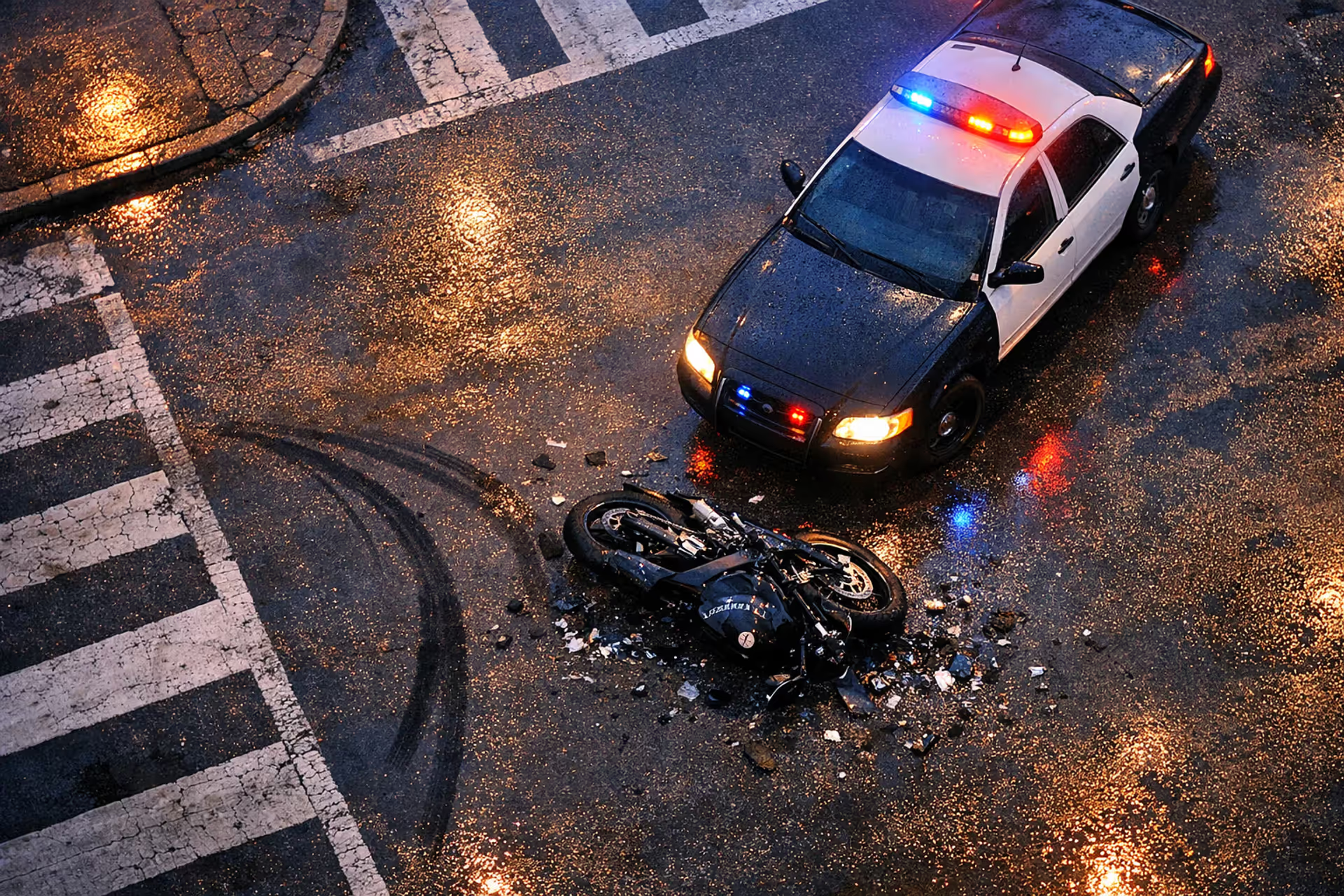
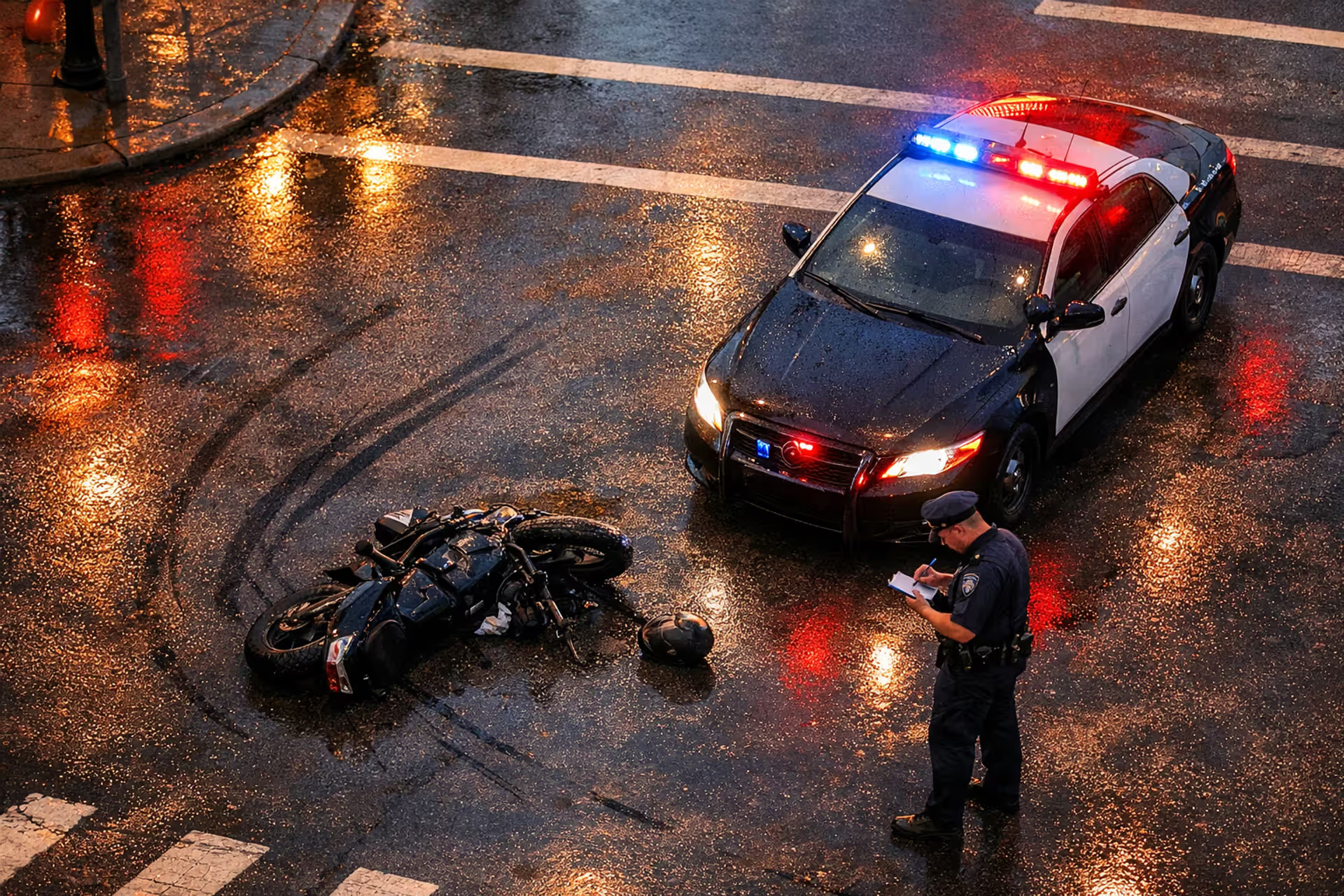
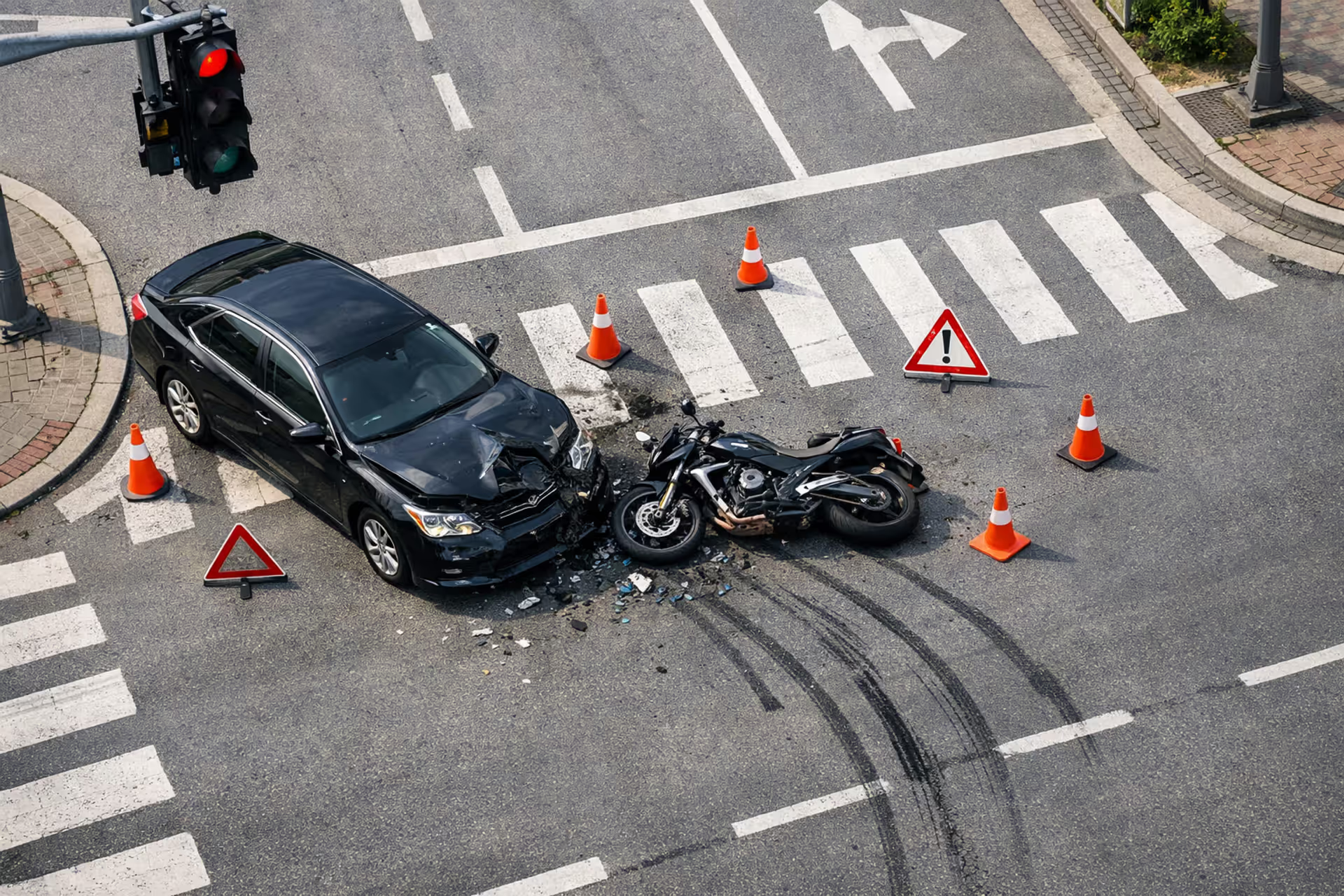
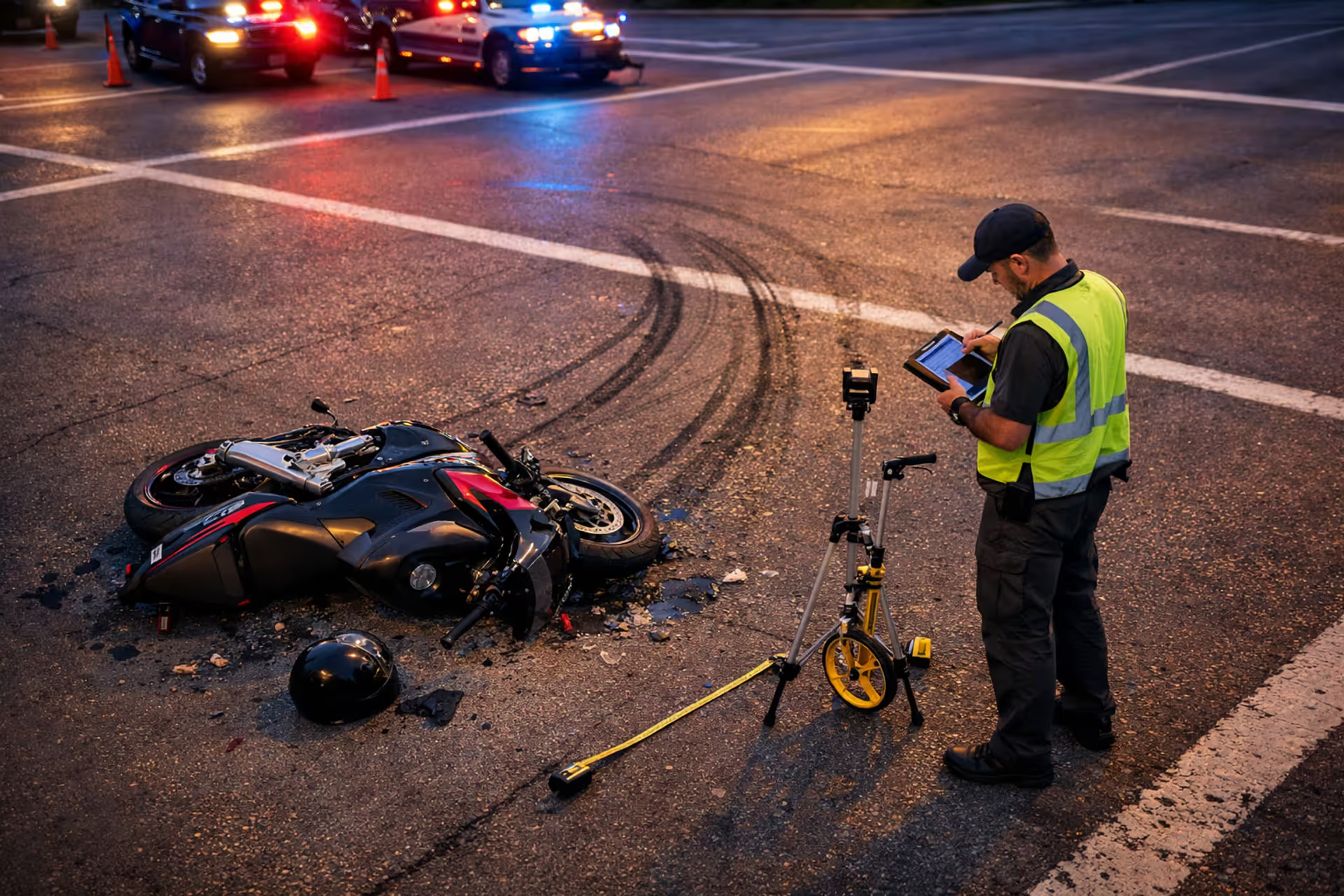
Motorcycle accident scene at urban intersection with damaged motorcycle on wet asphalt, debris scattered, skid marks visible, and police car with flashing lights nearby
How to Collect Evidence After a Motorcycle Accident for Your Claim

Here's the harsh reality: what you capture with your phone camera in those first chaotic minutes after a crash will matter more than anything you say to an insurance adjuster three months later. Most riders who walk away from accidents—thankful they're alive—miss the critical window when evidence still exists in its purest form.
Strong motorcycle accident evidence converts disputed claims into documented facts with dollar values attached. Insurance companies depend on motorcyclists showing up empty-handed and unprepared, which makes lowballing settlements remarkably easy for them. This guide walks through exactly what documentation you'll need, when to collect it (often within minutes, not days), and how to preserve materials that prove your case deserves full compensation rather than pennies on the dollar.
Why Evidence Matters More in Motorcycle Accident Claims
Motorcyclists face a credibility problem before they even file their first claim. Research shows that car drivers fail to notice motorcycles in roughly 60% of multi-vehicle collisions, yet adjusters routinely suggest that riders must have been speeding or "came out of nowhere."
Strong documentation becomes your defense against these built-in prejudices. Insurance adjusters reviewing motorcycle claims automatically calculate smaller payouts. Without proof that the SUV driver was texting, or that unmarked road construction debris forced you into oncoming traffic, or that your three herniated discs came directly from the rear-end impact rather than "pre-existing degenerative conditions," you're stuck arguing against assumptions you can't overcome with words alone.
Building an accident proof motorcycle claim complete guide strategy means anticipating the insurance company playbook. Their investigators will scroll through your Instagram looking for photos of you standing upright or smiling. They'll re-interview witnesses after memories have faded and details have blurred. They'll challenge every medical bill, questioning whether that emergency surgery was truly necessary or if that traffic light was actually red.
Comprehensive documentation eliminates the guesswork from your case. Photos showing 47 feet of tire marks establish braking patterns and approximate speeds. Witness statements recorded on your phone thirty seconds after impact contradict the creative stories the other driver tells their insurance company two weeks later. Medical records from the emergency room through your final physical therapy session create an unbroken timeline connecting the collision to your current injuries. Each documented detail removes another argument adjusters might use to slash your compensation.
Author: Caleb Thornton;
Source: spy-delhi.com
The stakes climb even higher for motorcycle accidents because injuries typically cause catastrophic damage. What gives a minivan passenger whiplash can put a rider in ICU for three weeks. When your medical bills hit $200,000, insurance companies unleash their full investigative arsenal. They'll hire accident reconstruction experts, subpoena fifteen years of your medical history, and scrutinize every pixel of your claim searching for contradictions or weaknesses.
At-the-Scene Evidence: What to Collect Immediately After the Crash
Crash scenes disappear fast. Tire marks fade from asphalt in under an hour during hot weather. Debris gets swept to the shoulder by passing traffic. Witnesses drive off to make dinner appointments. Lighting conditions shift as the sun moves. Anyone who can physically move should start documenting before the scene transforms.
Photographic and Video Documentation
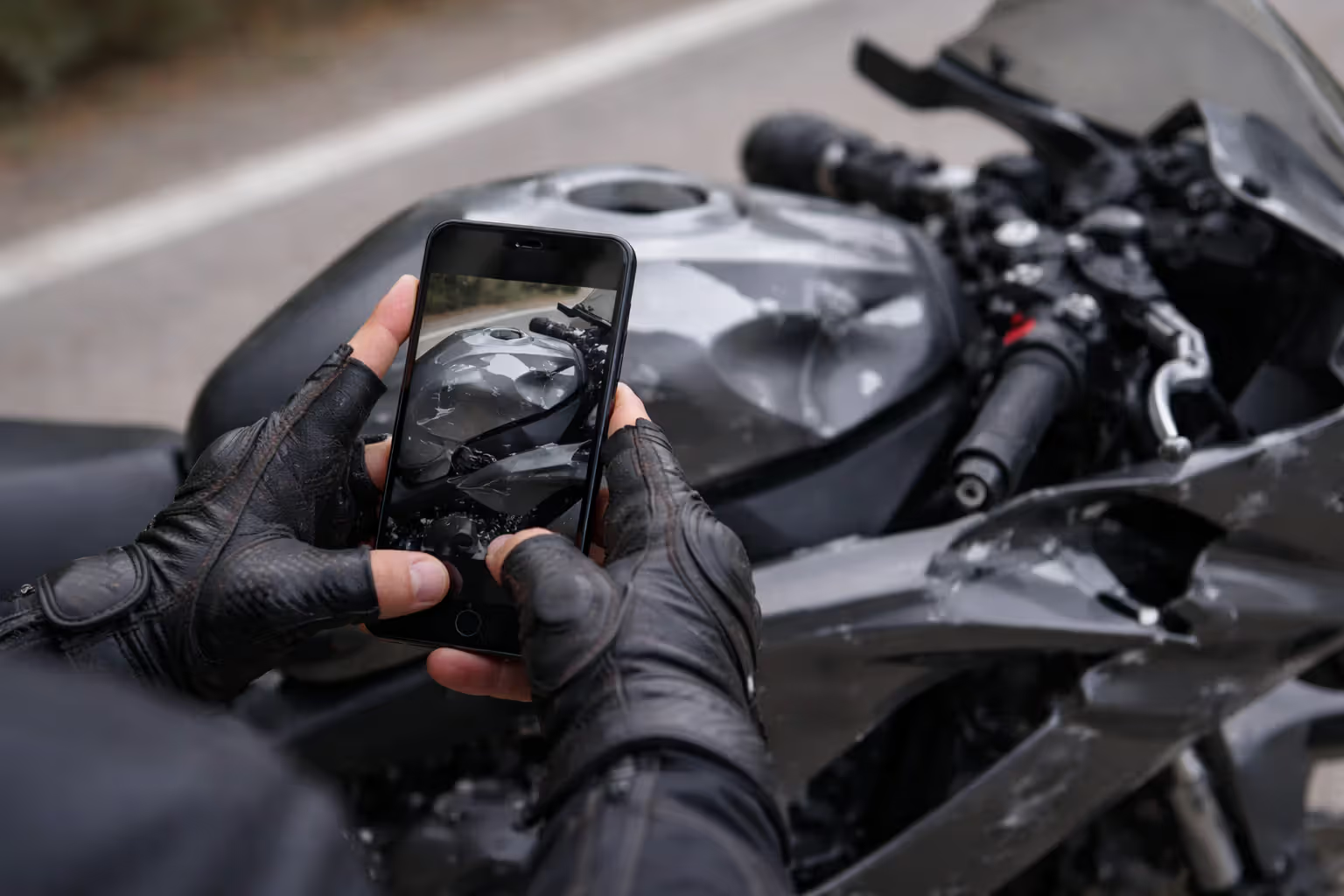
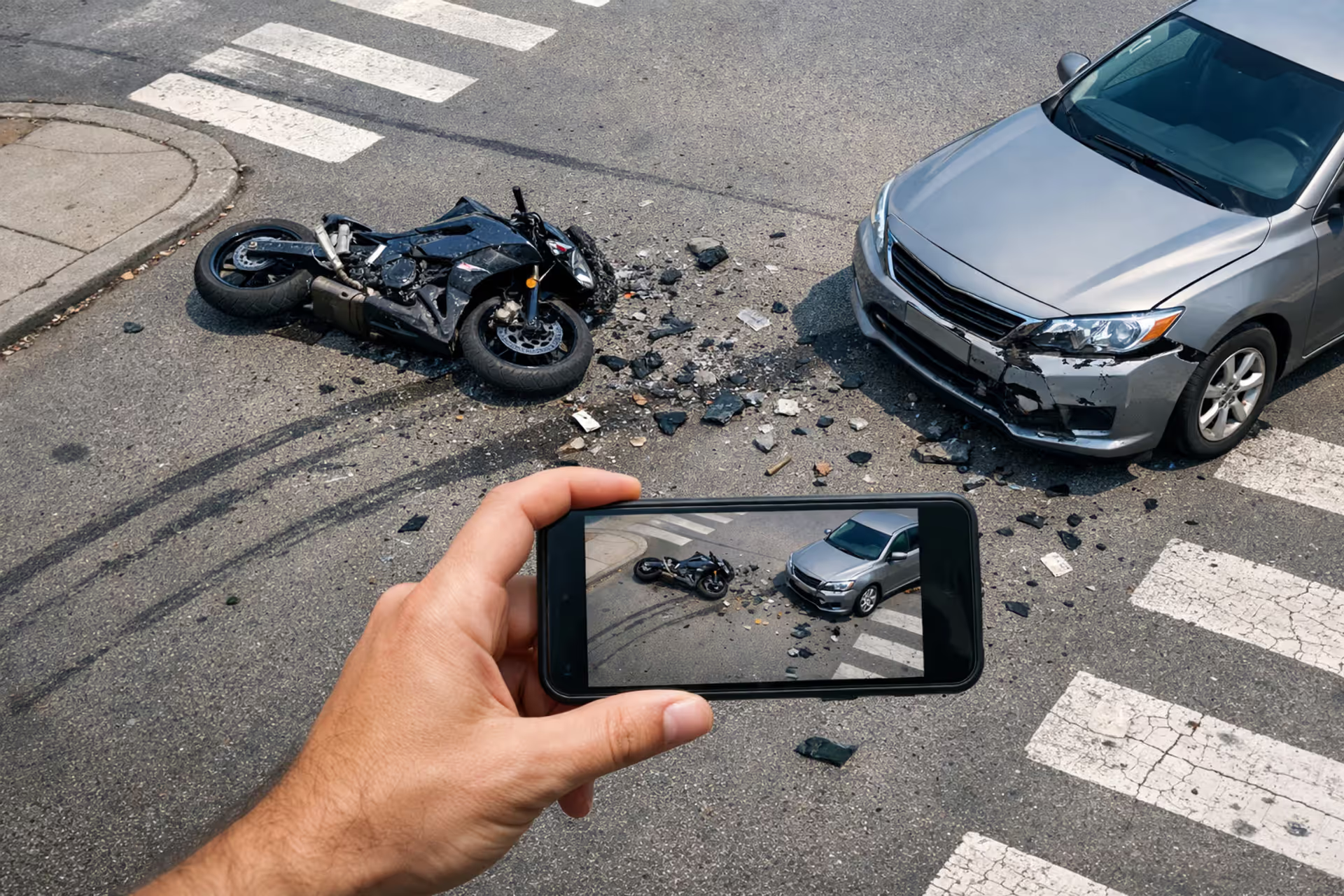
Your smartphone becomes your most powerful tool for motorcycle crash evidence collection. Don't just snap three photos of your damaged bike and call it done. You need comprehensive coverage including:
- Every vehicle involved, photographed from all four corners with license plates clearly visible
- Wide establishing shots capturing the entire intersection or road segment, including all traffic signals, stop signs, and lane markings
- Skid marks, pavement gouges, and the full spread of debris—glass, plastic, metal fragments
- Road hazards that contributed to the crash: potholes, gravel patches, oil slicks, construction zones without proper signage
- Weather and environmental factors: wet pavement, sun glare angles, shadows that indicate the time
- All traffic control devices positioned relative to where the impact happened, plus any sight-distance obstructions like overgrown bushes or parked trucks
- Your visible injuries before medical staff cleans you up—cuts, scrapes, bruises, swelling, blood
- Every piece of damaged protective gear, especially your helmet showing impact cracks, torn jacket fabric, destroyed gloves and boots with pavement abrasions
Start with wide shots showing how everything relates spatially, then zoom in for detailed close-ups of specific damage points. Recording video? Narrate what you're seeing: "I'm standing at the intersection of Main and 5th where that Honda Civic ran the red light and T-boned me. You can see the tire marks starting about 40 feet back from where my bike ended up in that drainage ditch."
One rider won his entire case because a single photograph showed a "No Turn on Red" sign the other driver swore didn't exist at that corner. Another prevailed when his helmet camera captured the sedan drifting across two lanes without activating turn signals. These specifics vanish forever if you wait to document them.
Witness Information and Statements
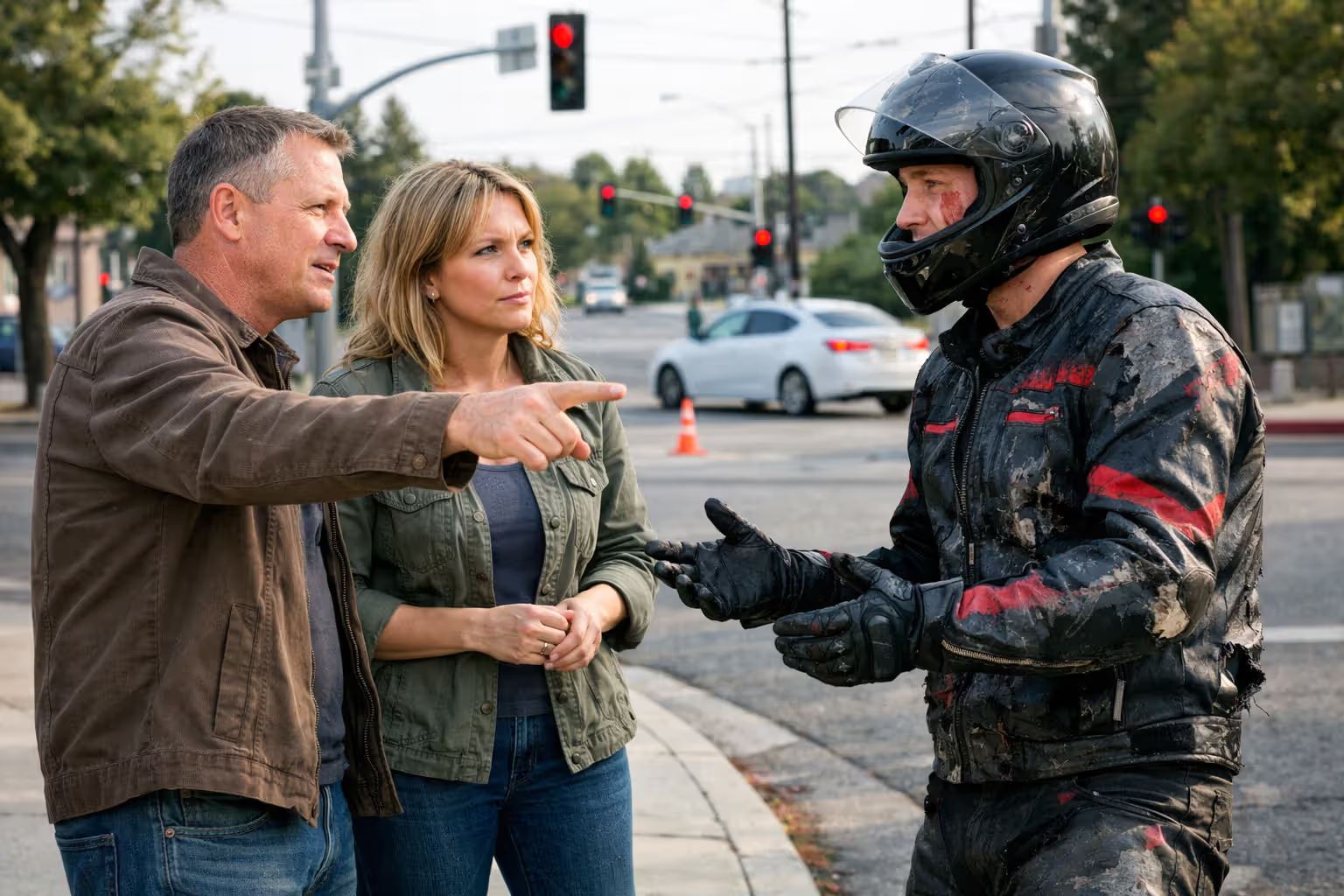
Human memory degrades shockingly fast. People move across the country. Phone numbers change. Email addresses get abandoned. Lock down witness details before anyone leaves:
- Full legal name with correct spelling, plus their primary phone number (ask for a backup number too)
- Home address, not just email that might bounce in six months
- Their description of what they saw, recorded in their own words—use your phone's voice memo app after asking permission
- Exactly where they were positioned when the crash occurred, not where they ended up afterward
- Whether they actually witnessed the moment of impact or only saw the aftermath
Don't just talk to people who volunteer to help. Knock on doors of nearby houses. Walk into businesses that might have security cameras pointed at the street. Talk to other drivers who pulled over. A witness five cars back might have watched the other driver staring down at their phone for the entire block before the intersection.
Get witness accounts documented within minutes if possible. Memory proves unreliable in ways most people don't realize, and when attorneys formally interview witnesses six months later, crucial specifics have dissolved. A single documented sentence—"The pickup definitely blew through that stop sign without even slowing down"—can justify significant settlement increases when you preserve it immediately.
Author: Caleb Thornton;
Source: spy-delhi.com
Physical Evidence from the Accident Site
Some evidence types can't be photographed effectively. Physically collect:
- Fragments of glass, plastic trim, or metal components (especially pieces that might indicate mechanical failures)
- The other driver's complete insurance card information—photograph both sides
- Owner contact details when the registered owner differs from whoever was driving
- Names and badge numbers for every officer who responds
- Names and direct phone numbers for tow truck operators hauling vehicles away
When road infrastructure contributed—an unmarked pothole, missing warning signs, abandoned construction equipment—document these hazards thoroughly. Claims against municipalities require proving the dangerous condition existed and that government authorities either knew about it or should have known. Include a measuring tape or recognizable object in photos to show scale.
One critical detail: record exact times for everything. Modern phones automatically timestamp photos, but manually note when specific things happened. Defense attorneys love constructing alternative timelines to redistribute fault.
Medical Records and Injury Documentation Requirements
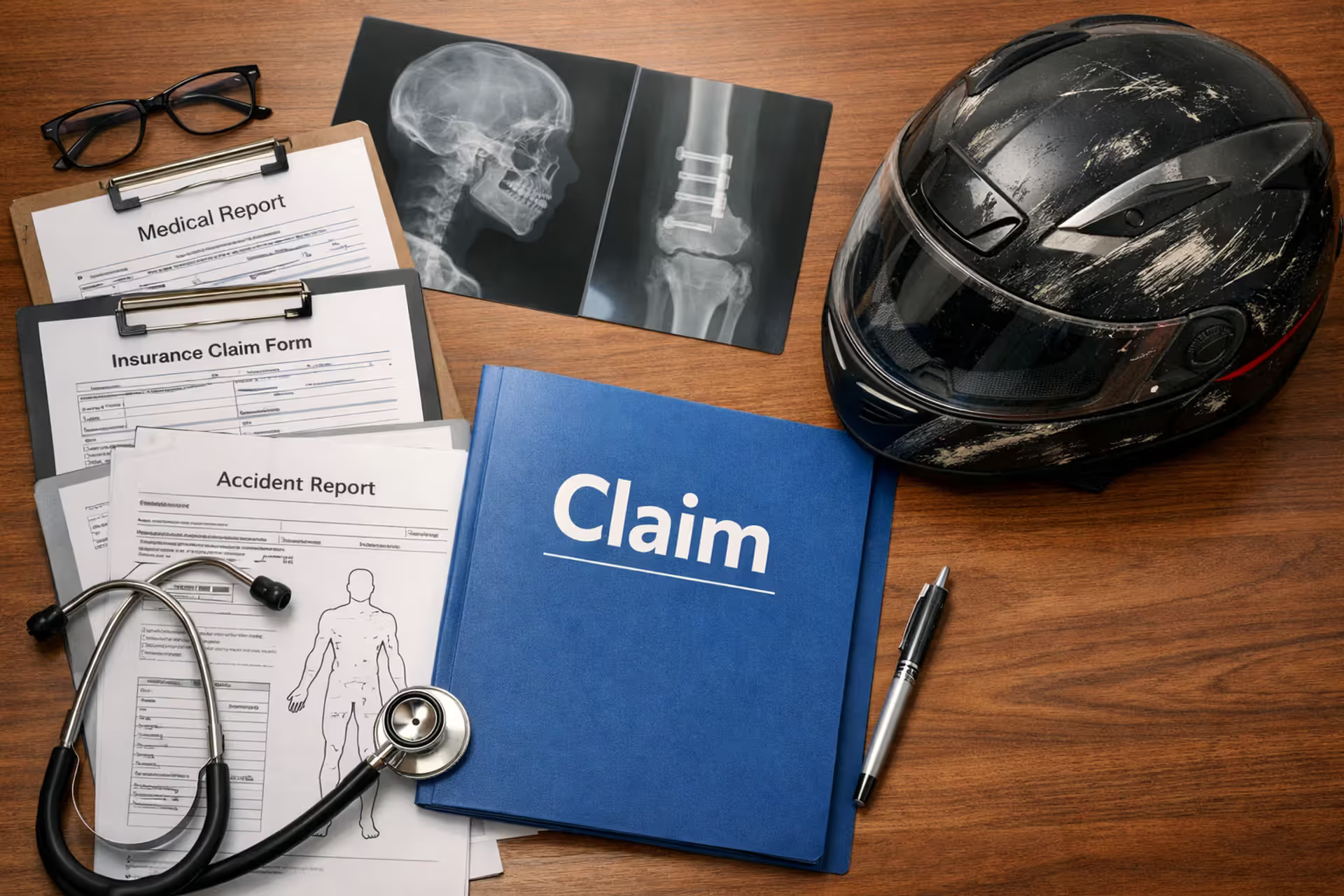
Emergency room records establish your initial injury baseline, but that's just the beginning. The evidence needed for a motorcycle accident claim guide includes your complete healing journey from Day 1 through final discharge.
Get professional medical evaluation immediately after any collision, regardless of how you feel right now. Adrenaline masks pain incredibly effectively, and certain serious injuries—internal bleeding, traumatic brain injuries, spinal cord damage—show no symptoms initially, sometimes for hours or even days. Insurance companies exploit any treatment gaps, arguing your injuries must not have been serious or didn't come from the accident.
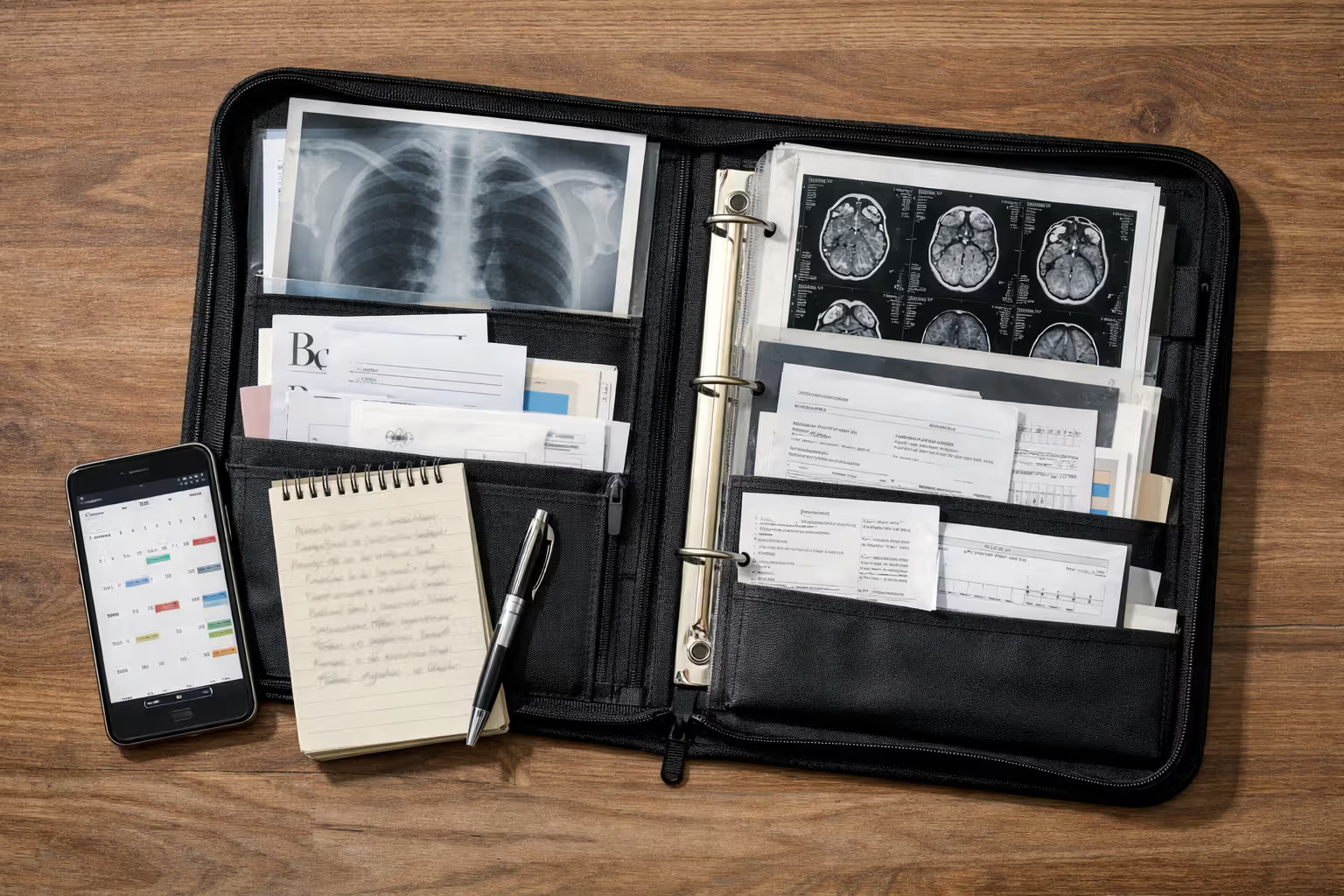
Your complete medical evidence includes:
- Emergency department records plus ambulance transport documentation
- All diagnostic imaging: X-rays, MRIs, CT scans
- Surgical reports with complete anesthesia records
- Physical therapy session notes showing both progress and setbacks
- Complete medication records documenting your pain management
- Specialist reports from orthopedic surgeons, neurologists, psychologists treating accident-related trauma
- Every single billing statement and explanation of benefits from every provider who treated you
Start an injury journal on the day of the collision. Record pain levels on a 1-10 scale, mobility restrictions, sleep problems, and how injuries limit your daily activities. Make entries every couple of days: "Can't lift my left arm past shoulder height. Needed my wife's help getting dressed this morning. Called out sick from work for the fourth day in a row." These real-time records demonstrate ongoing impact far more convincingly than trying to reconstruct your experience months later during a deposition.
Photograph injury progression throughout recovery. Bruising that looks minor initially often spreads dramatically during week two. Road rash requiring skin grafts needs documentation at every stage. Use consistent lighting and include a visible date reference in each image.
Author: Caleb Thornton;
Source: spy-delhi.com
Follow every medical recommendation completely. When your doctor refers you for physical therapy, attend every scheduled appointment. When they write prescriptions, fill them promptly and take them as directed. Insurance investigators comb through medical charts hunting for gaps—missed appointments, unfilled prescriptions, declined treatments—then claim these gaps prove your injuries weren't actually serious.
One common mistake: downplaying symptoms to healthcare providers because you're tough or don't want to seem like you're complaining. Medical records reflect what you report during exams. When documentation says "patient reports mild discomfort," expect insurance companies to reference that exact language when minimizing your claim, regardless of how much pain you're actually experiencing.
Police Reports, Traffic Citations, and Official Documentation
Official police reports provide third-party verification of basic collision facts. Even when responding officers didn't personally witness the impact, their reports establish fundamentals: parties involved, precise location, weather conditions, and witness accounts gathered at the scene.
Request your police report copy during the first week after your collision. Most jurisdictions now offer online portals through police department websites. This documentation forms a cornerstone of your evidence needed motorcycle accident claim guide foundation.
Review the report carefully for errors. Officers sometimes misidentify the at-fault party, diagram the collision wrong, or mix up vehicle identification details. When you spot mistakes, most departments accept correction requests, though the original document remains part of the official file. Submit written error notifications with supporting proof of correct information.
Traffic citations carry serious weight. When the other driver gets ticketed for running a red light, making an improper lane change, or following too closely, that citation provides powerful proof. It shows an officer at the scene determined they violated traffic laws. While citations don't automatically establish civil liability in court, they shift the burden substantially in your favor.
What if the other driver doesn't get a ticket? Your claim isn't dead. Officers frequently skip issuing citations in accidents where fault seems unclear or both parties tell conflicting stories. You can still establish liability through other evidence—eyewitness testimony, traffic camera recordings, professional accident reconstruction, or physical proof.
Some collisions generate no police reports whatsoever. When crashes seem minor and nobody calls 911, official documentation may not exist. In these situations, your personal evidence collection becomes absolutely critical. File accident reports with your state's DMV when legally required—most states mandate reporting crashes exceeding certain damage thresholds (often $1,000 or $2,500).
Request any supplemental investigation reports filed later. When investigators revisit crash scenes, conduct follow-up witness interviews, or complete additional analysis, those supplemental reports enhance your evidence package. Ask investigating officers whether traffic monitoring cameras or nearby business security systems might have captured relevant footage.
Vehicle Damage Evidence and Mechanical Inspection Records
Your wrecked motorcycle tells a detailed story. Impact locations, damage severity, and destruction patterns help accident reconstructionists calculate speeds, determine impact angles, and establish the sequence of events.
Document motorcycle damage thoroughly before authorizing any repairs. Your motorcycle accident evidence checklist guide requires:
- Photos of all damage from multiple angles and distances
- Detailed close-ups showing specific impact points, scratch patterns, and frame deformation
- Current odometer reading and VIN (vehicle identification number)
- Tire condition including remaining tread depth
- Brake component wear and fluid levels
- Any pre-existing damage (photograph separately to avoid confusion later)
Get multiple repair estimates from certified motorcycle mechanics. Insurance companies routinely provide artificially low initial damage assessments, hoping you'll accept quick settlements before you know better. Independent professional estimates give you negotiation leverage when disputing their valuations.
Never authorize repairs until your attorney approves. Once the motorcycle gets fixed, you've destroyed critical evidence. Certain cases require expert examination of damaged bikes to establish mechanical failures, defective parts, or impact severity. When insurance companies total your motorcycle, find out where it'll be stored and how long you can access it before salvage auction.
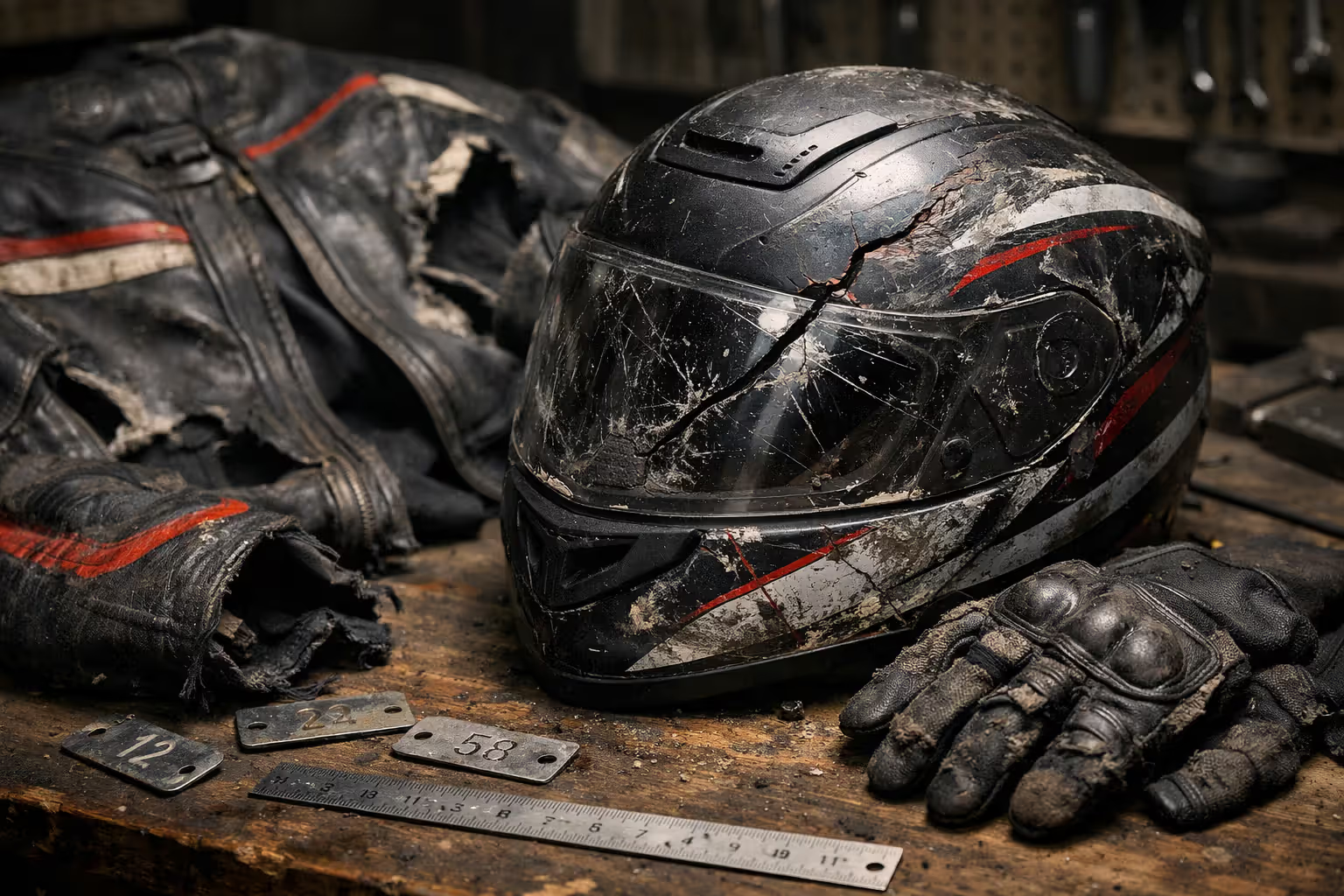
Keep all damaged safety equipment—helmet, protective jacket, gloves, boots. Cracked helmet shells demonstrate impact forces. Torn protective gear shows pavement slide distances and angles. One motorcyclist won his case based on a helmet showing a specific impact pattern that completely contradicted the other driver's story about how the collision happened.
Author: Caleb Thornton;
Source: spy-delhi.com
When mechanical failures potentially contributed—brake system malfunctions, tire blowouts, steering failures—arrange certified mechanic inspection before anyone touches the motorcycle. Photograph failed components in their original positions. Maintaining proper chain of custody proves materials weren't tampered with or altered.
Keep complete maintenance records proving your motorcycle received proper care. Insurance companies love alleging poor maintenance caused crashes. Regular service records, tire replacement receipts, or brake maintenance documentation refutes these allegations effectively.
Common Evidence Collection Mistakes That Weaken Your Claim
Even motorcyclists who understand evidence importance make critical mistakes that undermine their cases.
Waiting to document. Delaying even 24 hours before photographing injuries or vehicle damage gives insurance companies ammunition. They'll claim damage worsened during that delay, injuries developed from unrelated causes, or you're exaggerating severity. Document everything immediately, then continue regular documentation throughout your entire recovery.
Posting on social media. That photo of you standing upright at your kid's graduation four months post-crash? Insurance companies will present it as proof you're faking disability claims. Adjusters and defense lawyers systematically monitor claimants' social media. They screenshot posts, location check-ins, and photos, then present them stripped of context. One smile in one photograph becomes "evidence" contradicting your claimed suffering. Set all social media accounts to maximum privacy and post absolutely nothing about the collision, your injuries, your claim status, or your daily activities throughout the entire claims process.
Incomplete witness information. Recording just a first name with a phone number proves inadequate. Witnesses relocate, change cell numbers, or develop reluctance to get involved as time passes. Gather maximum identifying details at the scene when they're willing to cooperate fully.
Refusing medical treatment. Some motorcyclists decline ambulance transportation or skip emergency department evaluation, worried about costs or believing they can tough it out. Insurance companies interpret these decisions as proof you weren't seriously injured. Even when you feel relatively okay, get professional medical screening. Certain injuries remain completely asymptomatic initially, and that ER visit creates crucial initial documentation linking your injuries directly to the collision.
Throwing away damaged gear. Your helmet absorbed tremendous forces that otherwise would have caused catastrophic skull fractures. Your armored jacket prevented severe road rash. These items represent evidence of injury severity and impact forces. Never discard them, and never let tow truck operators dispose of them with your motorcycle.
Giving recorded insurance statements. The other driver's insurance company will call within days, projecting sympathy and helpfulness. They'll ask you to describe the collision while they're recording your complete statement. Every word becomes potential ammunition against you. Politely decline all recorded statements and direct them to your attorney. Even statements to your own insurance carrier require caution—provide only basic facts without speculating about fault or injury severity.
Taking initial settlement offers. Insurance companies know most people lack understanding of actual claim values. They extend quick settlement offers—sometimes within the first week—hoping you'll accept before understanding your complete injury extent or total losses. Once you sign a release, reopening claims becomes impossible. Never settle until you've finished medical treatment and calculated your complete damages.
Failing to preserve digital evidence. Text messages, email exchanges, GPS location data, and cell phone records can prove your location and activities. When the other driver was texting at impact, their phone records establish it definitively. When they claim they were somewhere else entirely, GPS tracking data proves otherwise. This evidence often disappears through automatic deletion. Demand immediate preservation of all electronic evidence.
How Long You Have to Gather Evidence (State-by-State Considerations)
Evidence collection starts immediately after collisions, but you're working against limited timeframes for filing claims. Statutes of limitations vary dramatically between jurisdictions—most personal injury claims face two to four-year deadlines, though some states impose one-year limits.
These statutory deadlines carry absolute force. Missing your statute of limitations by a single day renders your case worthless, regardless of how much evidence you've collected.
Different defendants face different deadlines too. Claims against government entities (when poor municipal road maintenance caused your crash) often require formal notice within 30 to 180 days—dramatically shorter than standard personal injury periods. Product liability, medical malpractice, or wrongful death claims may operate under separate limitation periods.
Evidence preservation creates additional time pressure. Security camera systems typically overwrite footage within 30 to 90-day cycles. Businesses have no obligation preserving footage absent formal preservation demands, typically sent by attorneys. Traffic monitoring camera footage disappears even faster.
Physical evidence at crash locations changes within hours. Road crews, weather, and traffic eliminate tire marks and debris fields. Photos captured weeks later can't document what you need for proving your case.
Spoliation—the destruction of evidence—can devastate your case completely. Repairing your motorcycle before the insurance company inspects it lets them argue you destroyed critical evidence. Discarding damaged equipment or deleting photographs allows them to claim you're hiding unfavorable information. Courts impose serious sanctions, including complete case dismissal, when parties intentionally destroy evidence.
Your motorcycle accident evidence checklist guide should include immediate preservation steps:
- Send preservation demand letters to businesses operating security cameras within 48 hours
- Request traffic monitoring footage from city transportation departments immediately
- Instruct your insurance carrier not to dispose of your motorcycle
- Back up all photos, videos, and digital evidence to multiple secure locations
- Create comprehensive master evidence files with duplicate copies of all materials
Certain evidence categories grow more valuable over time. Medical records accumulate as treatment continues. Wage loss documentation expands when you miss extended work periods. But foundational evidence—scene documentation, witness accounts, initial medical records—requires immediate collection before it vanishes forever.
Don't wait to consult an attorney. Most personal injury lawyers offer free initial consultations and can advise on evidence preservation even when you're not ready to file formal claims. They'll send preservation letters, request official reports, and ensure you're gathering appropriate documentation.
Timeline for Gathering Motorcycle Crash Evidence
| When to Act | Evidence to Collect | Priority Rating | Storage Requirements |
| Right now (still at the crash site) | Photograph everything—all vehicles, road conditions, your visible injuries; write down complete witness contact details; get other driver's info; note responding officer's name and badge number | YOUR TOP PRIORITY | Save permanently—make backup copies to cloud storage and external drives immediately |
| Within the next 24 hours | Send preservation letters to businesses with cameras; get the police report; photograph how your injuries look now; make a list of all damaged property | EXTREMELY URGENT | Save permanently—keep updating your evidence folders as you go |
| Before 72 hours pass | See a doctor if you haven't already; talk with an attorney; notify your insurance company; start keeping a daily injury journal describing your pain and limitations | URGENT | Medical records: keep forever; journal: maintain until your case completely closes |
| During your first week | Track down traffic camera footage; follow up with witnesses you spoke to; collect repair quotes from motorcycle shops; photograph injuries again; request copies of your medical charts | HIGH PRIORITY | Save permanently—add everything to your master evidence file |
| Throughout your first month | Keep all medical appointments; collect every healthcare bill and record; update your injury journal every few days; gather proof of lost wages; compile your motorcycle maintenance history | IMPORTANT | Keep until your state's statute of limitations expires, then maintain for 2-3 additional years after your case fully resolves |
| From now until case resolution | Record every doctor visit; photograph ongoing injury changes; save all billing statements; don't post anything on social media; update your attorney regularly | IMPORTANT | Keep all documentation until your case fully resolves and all potential appeal periods expire completely |
What a Personal Injury Attorney Says About Evidence
The biggest mistake I see with motorcycle crash victims? They assume the obvious truth will win the day.They think because the other motorist clearly ran a red light or merged right into their lane, everyone will just accept their version as fact. Without documentation backing up your story, it becomes a credibility contest, and motorcyclists almost always lose those battles. I've watched legitimate half-million-dollar cases settle for $50,000 because riders didn't photograph the scene or waited three days before seeing a doctor. Evidence isn't just helpful—it's literally everything. The riders who document obsessively from minute one after impact? Those are the ones who walk away with fair compensation packages
— Marcus Chen
Frequently Asked Questions
Building Your Case One Document at a Time
Collecting motorcycle accident evidence isn't a single task you complete at the crash scene and forget about. It's an ongoing process extending through your complete medical treatment, vehicle repair or replacement, and claim negotiation. Each piece of documentation strengthens your case incrementally, while each gap provides insurance companies leverage for slashing settlement amounts.
Start with the fundamentals: comprehensive scene photography, complete witness contact information, and immediate professional medical evaluation. Build systematically from that foundation with thorough medical documentation, professional repair assessments, and official government reports. Avoid the common errors that weaken claims—social media activity, treatment delays, and accepting premature settlement offers.
The evidence you gather during those first hours and days immediately following your collision determines whether you'll receive compensation adequately covering your medical expenses, lost income, and pain and suffering—or whether you'll struggle with inadequate settlements while insurance companies profit from your incomplete documentation. Treat evidence collection with the same seriousness as your physical recovery, because your financial recovery depends entirely on the quality of proof you can produce.
When insurance companies recognize you've compiled thorough documentation, negotiation dynamics shift dramatically in your favor. They can't dismiss your claim as exaggerated or unprovable. They can't argue the collision was minor when photographs show your destroyed helmet and demolished protective gear. They can't claim you weren't seriously injured when medical records document months of intensive treatment with specialists. Strong evidence doesn't simply support your claim—it forces fair settlement offers because insurers know taking your case to trial would expose them to even larger verdicts.
Every photograph, every witness account, every medical record represents a piece of your financial future after this collision. Collect them carefully, preserve them thoroughly, and deploy them strategically through experienced legal counsel. Your case outcome depends entirely on the quality and completeness of evidence you assemble during these critical timeframes.
Related Stories
Read more
Read more

The content on this website is provided for general informational and educational purposes only. It is intended to offer insights and guidance on motorcycle accident insurance claims, settlement processes, liability issues, coverage limits, medical compensation, and related insurance matters, and should not be considered legal or financial advice.
All information, articles, and materials presented on this website are for general informational purposes only. Insurance policies, liability standards, settlement practices, and state regulations may vary by jurisdiction and insurer. The outcome of a motorcycle accident claim depends on the specific facts of the accident, available evidence, policy language, and applicable law.
This website is not responsible for any errors or omissions in the content, or for actions taken based on the information provided. Users are strongly encouraged to consult with a qualified attorney or licensed insurance professional regarding their specific motorcycle accident claim before making decisions about settlements, negotiations, or coverage disputes.