
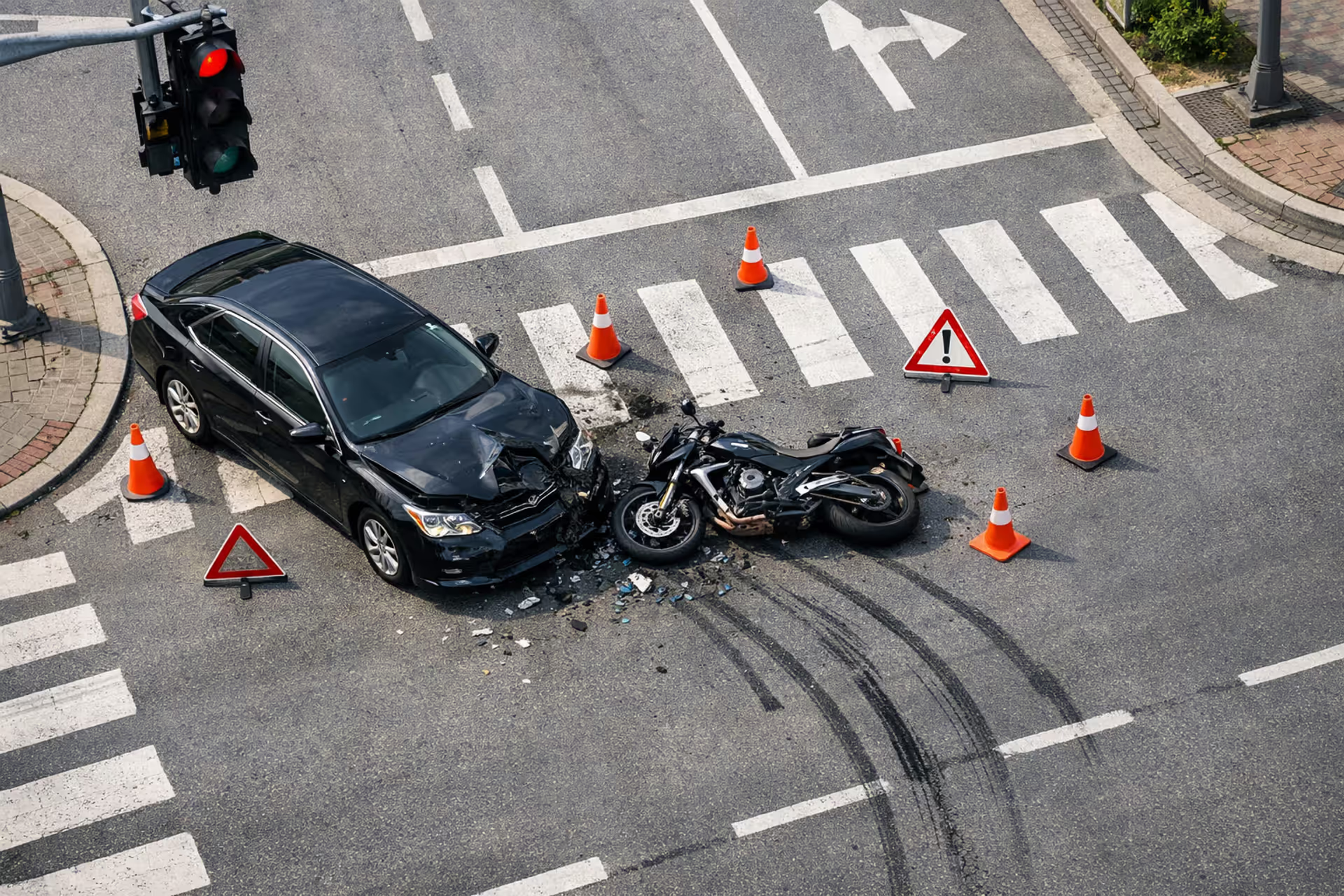
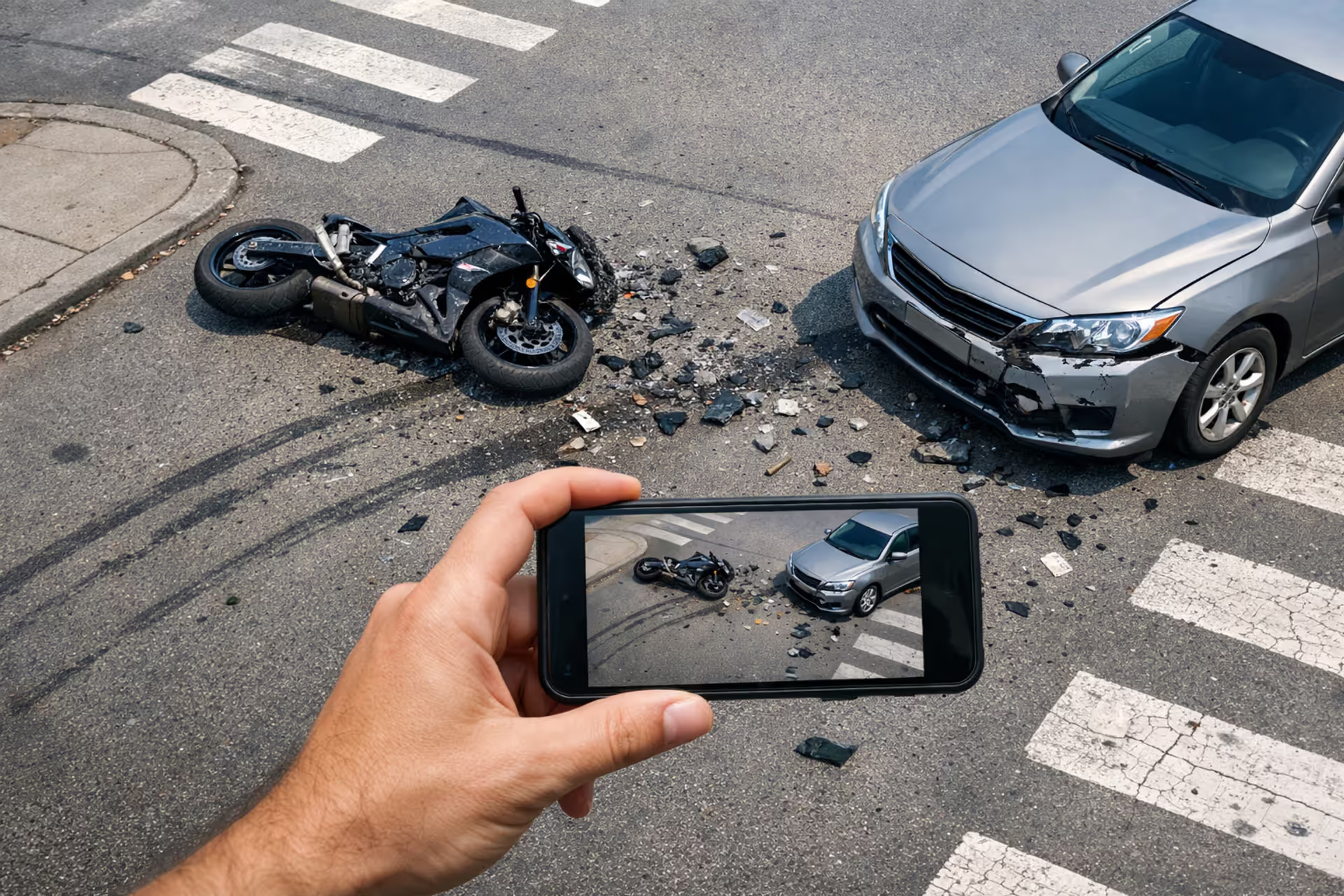
Aerial view of an urban intersection with a motorcycle and car stopped after a collision, skid marks on asphalt, traffic cones and warning signs nearby
How Motorcycle Accident Liability Is Determined by State

Establishing responsibility after a motorcycle crash requires analyzing evidence, traffic regulations, and legal doctrines that differ substantially from one state to another. Motorcycle collisions present unique challenges compared to standard automobile accidents—questions about rider visibility, traffic priority, and motorcycle handling frequently become central disputes in fault determination.
The liability assessment process starts immediately when the accident occurs and extends through insurance company reviews, possible court proceedings, and compensation discussions. Knowing how responsibility gets assigned can determine whether you receive complete compensation, partial recovery, or find yourself liable for damages to others.
Legal Standards That Define Fault in Motorcycle Crashes
Negligence as the Foundation of Liability Claims
Most motorcycle accident liability disputes depend on proving negligence. Successful claims require demonstrating four components: the responsible party had an obligation to exercise reasonable care, they failed to meet that obligation, their failure directly resulted in the collision, and quantifiable harm occurred.
Every motorist traveling on shared roadways must drive responsibly and comply with traffic regulations—this creates the duty of care. When someone proceeds through a red traffic signal, they violate this obligation. Should that person collide with a motorcyclist lawfully crossing the intersection, the causal connection becomes evident. The rider's hospital expenses, income losses, and motorcycle repairs represent compensable damages.
The motorcycle accident negligence rules guide applies these principles throughout the United States, though enforcement and interpretation differ. A motorist reading text messages while stopped at a light, then driving forward without checking surroundings, demonstrates negligent conduct. Similarly, a rider traveling 25 mph over the posted limit through congested traffic might share responsibility even when another vehicle created the initial danger.
Traffic violations can establish negligence per se—when someone breaks a safety statute and causes the exact type of harm that law was designed to prevent. An illegal left-hand turn that results in striking a motorcycle means the traffic infraction itself proves the duty breach. The injured motorcyclist doesn't bear the burden of showing unreasonable behavior—the statutory violation accomplishes that automatically.
Comparative vs. Contributory Negligence by State
The motorcycle accident fault rules guide varies dramatically based on whether your jurisdiction applies comparative or contributory negligence standards. This legal distinction controls whether any compensation remains available when you share even minimal responsibility.
| Negligence System | Impact on Damage Recovery | State Examples | Fault Tolerance |
| Pure Contributory | Even 1% responsibility eliminates recovery | Alabama, Maryland, North Carolina, Virginia, D.C. | Zero tolerance for any fault |
| Pure Comparative | Award decreases proportionally to fault | California, Florida, New York, Arizona | Recovery possible at any fault level |
| Modified Comparative (50% threshold) | Recovery barred at 50% or greater fault | Colorado, Georgia, Idaho, Kansas | Maximum 49% fault allowed |
| Modified Comparative (51% threshold) | Recovery barred at 51% or greater fault | Connecticut, Illinois, New Jersey, Oregon | Maximum 50% fault allowed |
Consider a Virginia accident where the jury assigns you 8% responsibility for not activating your turn signal before another driver turned across your path—you receive zero compensation. That identical scenario in California reduces your $100,000 judgment to $92,000—substantial recovery remains possible.
Modified comparative systems create cliff-edge effects at specific thresholds. When insurance adjusters can successfully argue you reached 50% or 51% fault (depending on jurisdiction), they eliminate their payment obligation entirely. This reality triggers fierce battles over fault allocation in ambiguous cases, with both sides fighting whether the motorcyclist bears 47% or 53% responsibility.
Certain jurisdictions apply varying standards depending on claim type. Understanding your specific state's framework becomes essential before accepting settlement proposals or providing accident statements.
Common Scenarios and Who Bears Responsibility
Left-turn collisions account for the majority of fatal motorcycle accidents. A driver crosses in front of an approaching motorcycle's path, later insisting they never saw the bike approaching. Determining liability motorcycle crash guide standards usually place fault with the turning motorist, who must yield to through traffic. Yet when the motorcyclist was traveling at excessive speed or operating without functioning headlights during twilight hours, shared responsibility becomes probable.
Lane splitting—navigating between traffic lanes when vehicles are stopped or moving slowly—creates jurisdiction-dependent liability questions. California law specifically allows this practice when executed safely. A motorist who changes lanes without signaling and strikes a properly lane-splitting rider typically carries primary fault. In jurisdictions that prohibit or haven't addressed lane splitting legally, motorcyclists may receive substantial fault assignments regardless of the other party's conduct.
Rear-impact collisions generally favor motorcyclists, since following traffic must maintain adequate spacing. Exceptions do exist. When a rider's brake light has failed and they stop abruptly on a highway, the trailing driver might successfully establish comparative negligence. Should the motorcyclist merge aggressively and brake immediately, responsibility may transfer partially or completely to the rider.
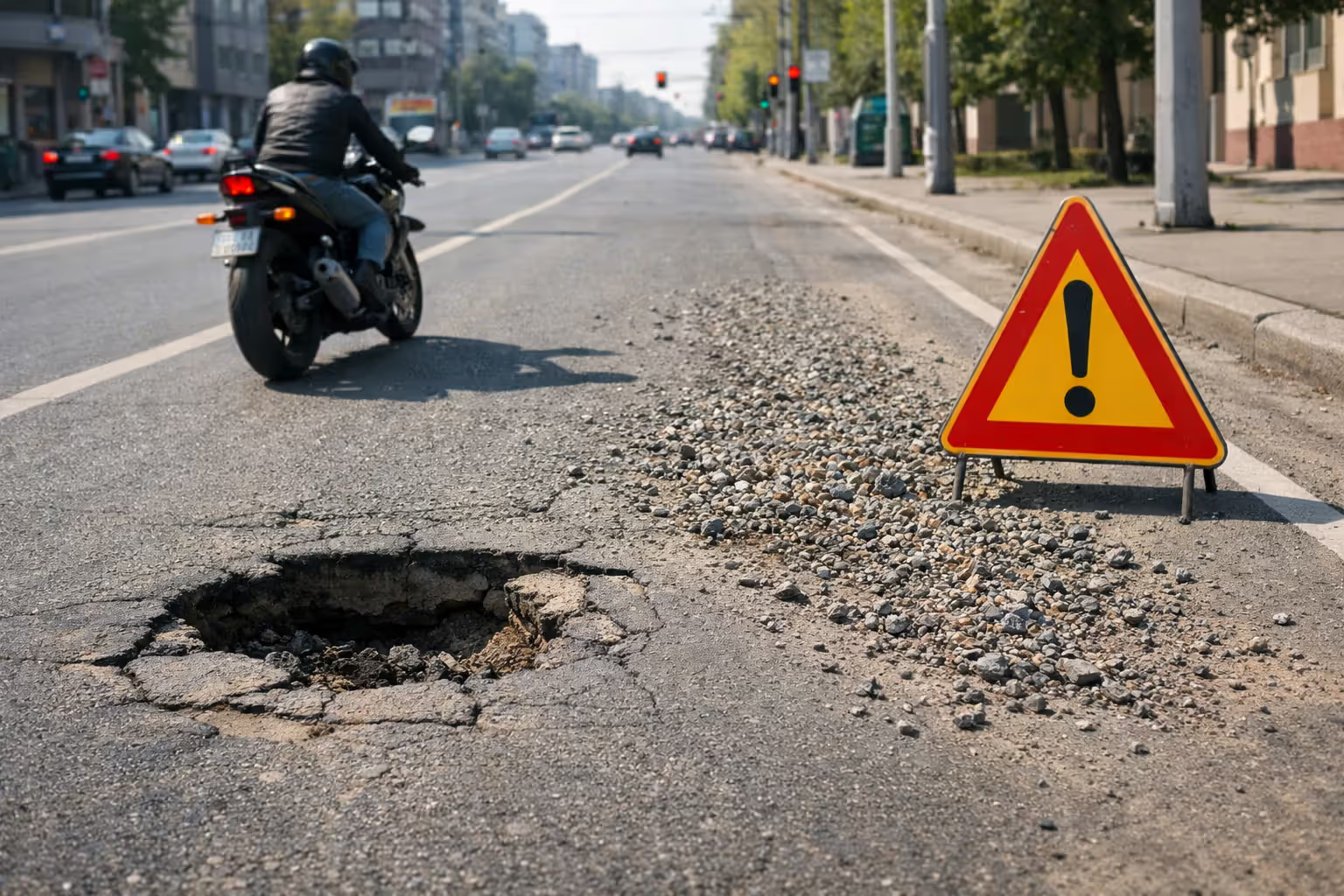
Road hazard crashes complicate fault analysis significantly. Riders who crash after encountering potholes, loose gravel, or roadway debris may pursue claims against governmental agencies responsible for road upkeep. These claims face stringent notification deadlines and governmental immunity defenses. When another vehicle created the debris—such as trucks with improperly secured loads—that driver assumes liability. When the hazard was clearly visible from adequate distance, the rider may be deemed entirely responsible for not avoiding obvious dangers.
Defective motorcycle components introduce product liability considerations. A tire failure caused by manufacturing errors makes the tire producer liable, even when the rider lost control and crossed into opposing traffic. Brake malfunction resulting from flawed design transfers fault from the rider to the manufacturer. These cases demand expert analysis connecting the defect to the collision and establishing the product's unreasonably dangerous nature.
Author: Caleb Thornton;
Source: spy-delhi.com
Evidence Required to Prove Fault After a Motorcycle Accident
Police Reports and Accident Reconstruction
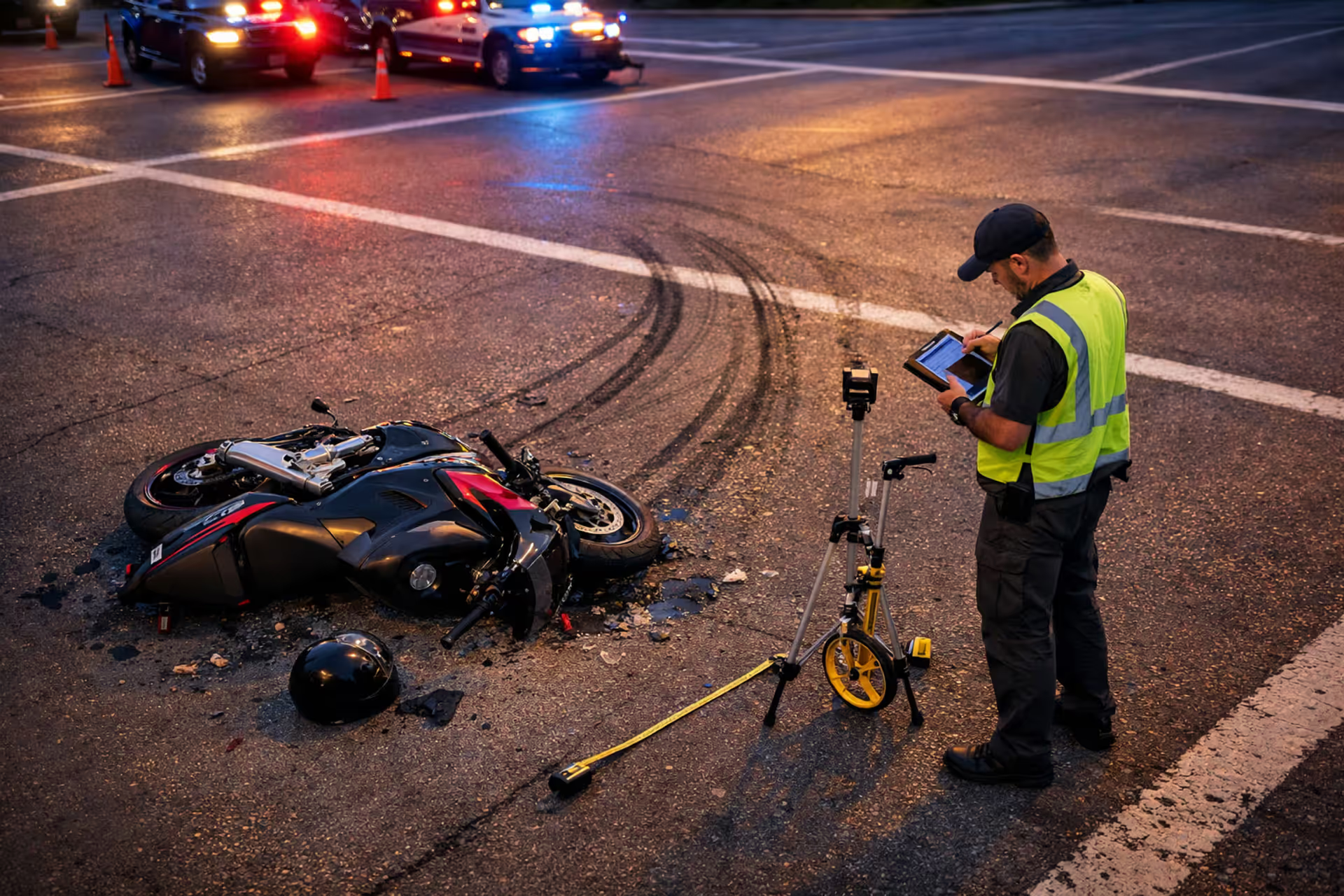
The official police report establishes the baseline for most liability evaluations. Responding officers document crash scenes, record vehicle positions, collect participant statements, and frequently include their fault assessment. Though not legally binding on insurers or courts, a police report citing the opposing driver for traffic violations substantially bolsters your position.
Accident reconstruction becomes critical when responsibility is contested or crash mechanics remain unclear. Specialists examine skid patterns, debris distribution, vehicle damage, and roadway geometry to calculate speeds, impact angles, and vehicle trajectories. These professionals can demonstrate whether the motorcyclist had adequate reaction time or prove the driver should have detected the approaching bike from calculable distances.
Reconstruction specialists apply physics and engineering to refute common defensive arguments. When drivers claim the motorcycle "appeared from nowhere," experts calculate sight lines and reaction intervals to establish inattention. If the defense asserts excessive speed, tire evidence and impact characteristics reveal actual velocities.
Video recordings from commercial properties, municipal traffic systems, or dashboard recorders deliver objective evidence that resolves conflicting accounts. A single recording showing traffic signal status or establishing which vehicle violated lane boundaries can settle a disputed case immediately.
Witness Statements and Video Footage
Neutral observers—individuals unconnected to either party—provide particularly valuable testimony. A bystander who observed the driver manipulating their phone before executing a left turn, or who watched the motorcyclist operating properly, supplies credible corroboration for your version of events.
Memory deterioration happens quickly among witnesses. Statements collected days or weeks after collisions become less dependable and simpler for opposing counsel to undermine. Prompt documentation of witness observations preserves specifics that might otherwise disappear or become confused.
Growing numbers of motorcyclists now employ helmet-mounted or bike-installed cameras. This first-person footage captures the moments preceding impact, recording the other party's actions and the rider's evasive maneuvers. Insurance adjusters find clear video evidence difficult to dismiss, though they may still contest injury severity.
Documentation quality represents the single most decisive factor in motorcycle liability claims. Cases featuring thorough photographic evidence, multiple independent witness accounts, and immediate medical documentation settle for considerably higher amounts than cases where riders delayed treatment for days or neglected scene photography. Insurance adjusters recognize which cases they can challenge and which ones present overwhelming proof
— James Patterson
Medical Records and Damage Documentation
Seeking medical attention immediately establishes a documented connection between the collision and your injuries. Waiting even several days before seeing a doctor provides insurance companies ammunition to argue your injuries lack severity or weren't accident-related.
Medical documentation should capture every injury, including those seeming minor initially. Soft tissue damage that feels manageable immediately after the crash can progress into chronic problems. When the initial emergency department visit omits mention of shoulder discomfort, arguing later for shoulder surgery becomes significantly harder.
Photographs of motorcycle damage demonstrate impact severity and collision dynamics. Damage location and extent support your description of how the accident unfolded. A destroyed front wheel corroborates your account that the vehicle turned into your path. Left-side damage confirms the vehicle merged into your lane rather than you drifting into theirs.
Repair estimates and invoices establish collision force. Minor vehicle damage combined with severe injury claims raises skepticism. Significant structural damage to both vehicles supports serious injury assertions.

Author: Caleb Thornton;
Source: spy-delhi.com
Mistakes Riders Make That Weaken Their Liability Claims
Expressing apologies or acknowledging fault at accident scenes seems natural but significantly undermines your case. Phrases like "I'm sorry" or "I didn't see you" get documented in official reports and witness recollections as fault admissions. The immediate post-crash period involves shock and stress that impairs judgment. Limit yourself to factual descriptions of what occurred without characterizing responsibility.
Social media activity creates permanent documentation that insurers examine thoroughly. A Facebook update about your weekend motorcycle trip three days after claiming total disability destroys credibility. Photographs depicting you at social gatherings or performing physical activities contradict disability assertions. Insurance investigators routinely monitor social media seeking evidence to diminish claim values. The motorcycle accident fault determination guide should emphasize a fundamental principle: avoid posting anything about the collision, your condition, or your activities until complete case resolution.
Postponing medical evaluation for days or weeks following the accident implies injuries lack seriousness. Insurance representatives argue that genuinely injured people would obtain immediate care. Even when you initially feel acceptable, stress hormones can hide pain temporarily. Obtain medical examination within twenty-four hours, even solely to create baseline medical documentation. You can decline treatment recommendations, but you cannot retroactively create documentation.
Inadequate accident scene documentation costs riders thousands in reduced settlements. Neglecting to photograph vehicle locations, tire marks, traffic control devices, surface conditions, and visibility obstructions gives insurance companies latitude to dispute your description. Capture numerous photographs from varied perspectives. Document everything that seems relevant and even seemingly irrelevant details—unnecessary photos can always be deleted later, but recreating the scene days afterward becomes impossible.
Failing to promptly notify your insurance carrier violates most policy requirements and can trigger claim denials. Even without plans to file through your own coverage, your policy probably mandates immediate accident notification. Waiting weeks to report the collision gives your insurer justification to deny coverage should the other driver pursue claims against you.
Providing recorded statements to the opposing driver's insurance company without legal consultation allows trained adjusters to extract statements harming your case. Their questions are strategically designed to elicit responses minimizing injury severity, accepting partial responsibility, or creating contradictions. You have no obligation to provide statements to the other driver's insurer, and doing so before consulting an attorney rarely benefits your case.
How Insurance Companies Evaluate Motorcycle Accident Liability
Insurance adjusters launch investigations immediately upon receiving accident notifications. They analyze police reports, contact all involved parties and witnesses, assess vehicle damage, and examine the rider's history for previous collisions or moving violations. Their objective involves determining whether their policyholder bears liability and, when applicable, minimizing payment amounts.
Common adjuster strategies include requesting recorded statements before you've obtained legal counsel, seeking medical authorization forms granting access to your complete medical history (extending beyond accident-related treatment), and presenting early lowball settlement proposals before you understand your full injury extent.
Settlement valuations incorporate medical costs, wage losses, property damage, and non-economic damages. However, adjusters apply reductions based on any comparative responsibility they can argue, questions about treatment medical necessity, and care interruptions. They reference internal databases of comparable claims to establish settlement parameters.
Contested liability circumstances trigger comprehensive investigations. When both parties assert the other caused the collision, insurers scrutinize every available evidence piece to determine payment obligations, appropriate amounts, and whether they can recover expenses from the opposing driver's insurer through subrogation. These situations frequently require attorney involvement for fair resolution.
Motorcycle accident liability assessments by insurance companies often demonstrate inherent rider bias. Research indicates adjusters and juries commonly presume motorcyclists engage in excessive risk-taking or operate recklessly. Countering this prejudice demands compelling evidence and frequently aggressive legal advocacy.

Author: Caleb Thornton;
Source: spy-delhi.com
When Multiple Parties Share Liability in a Motorcycle Crash
Shared liability situations arise when multiple entities contribute to causing collisions. An intoxicated driver runs a red signal and strikes you, but the intersection has a malfunctioning signal due to municipal maintenance failures. Both the driver and the municipality may bear responsibility. In joint and several liability jurisdictions, you can pursue complete damages from either party regardless of their fault proportion. Other states require each party to pay only their proportional share.
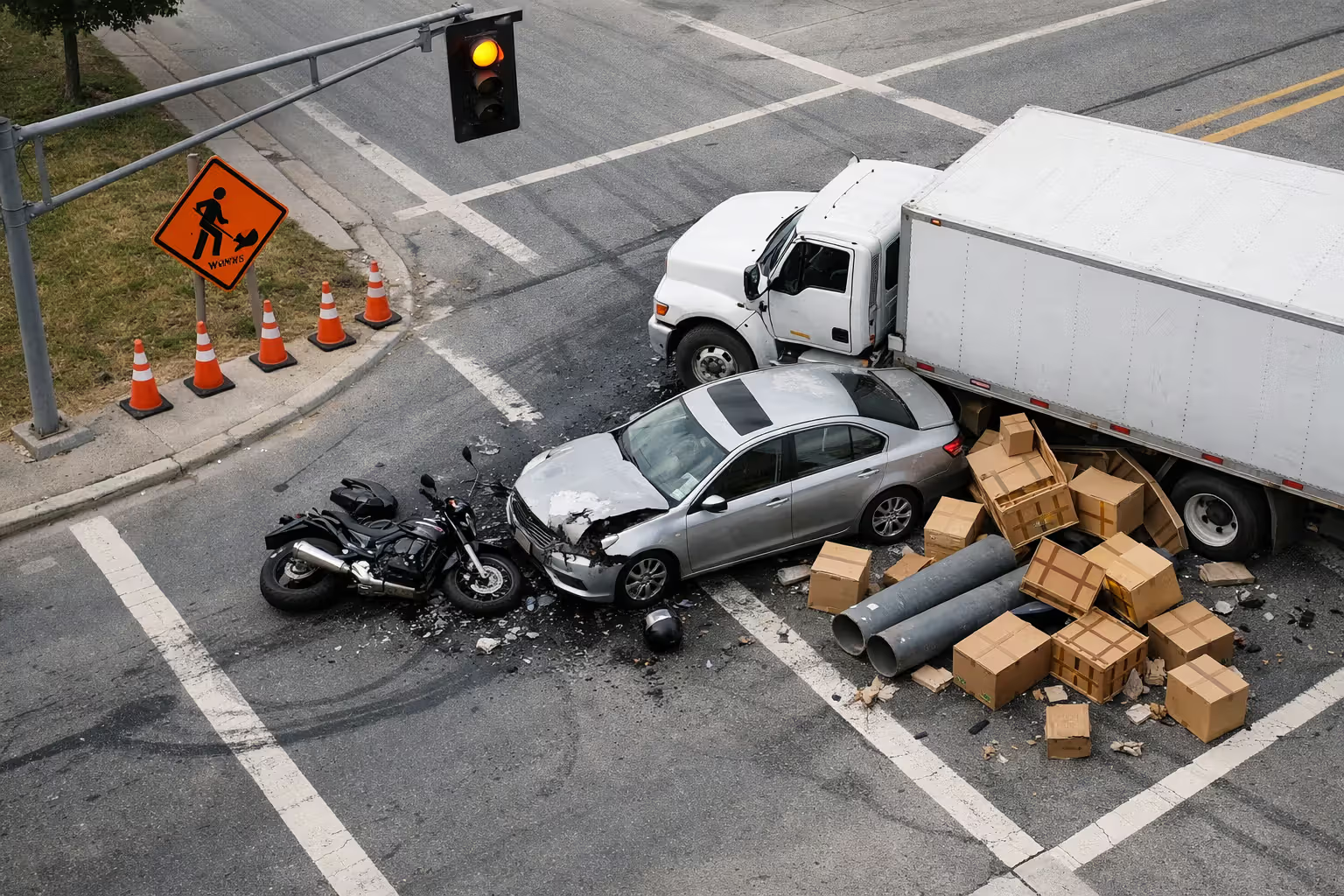
Third-party liability extends beyond directly involved drivers. When commercial truck cargo becomes dislodged and falls into your path, both the driver and the trucking company may face liability. If an establishment over-served an obviously intoxicated customer who subsequently caused your accident, dram shop liability laws may impose partial responsibility on the establishment. When vehicle manufacturer design flaws contributed to your injuries, product liability claims proceed alongside negligence claims against the other driver.
Claims against governmental entities emerge when road defects, absent signage, obscured traffic signals, or hazardous road engineering contribute to accidents. These claims confront substantial procedural obstacles. Most jurisdictions require administrative claim filing within 30 to 180 days—considerably shorter than standard personal injury limitation periods. Sovereign immunity principles restrict government liability in numerous circumstances. Success demands proving the government knew or reasonably should have known about the hazardous condition and neglected correction.
Product liability matters arise when motorcycle or vehicle defects cause or exacerbate accidents. Tire failures, brake malfunctions, fuel system ignition, and helmet defects can all support manufacturer liability claims. These matters proceed under strict liability frameworks—you need not prove manufacturer negligence, only that the product contained design or manufacturing defects that caused your injuries. Engineering and industry expert analysis becomes indispensable.
Determining liability motorcycle crash guide principles grow exponentially more complicated with multiple potentially responsible parties. Each defendant's insurer conducts independent investigations attempting to transfer blame to other parties. Coordination among multiple defendants to minimize collective exposure occurs frequently. These cases often require litigation for achieving fair compensation.
Author: Caleb Thornton;
Source: spy-delhi.com
Frequently Asked Questions About Motorcycle Accident Liability
Understanding Your Path Forward
Motorcycle accident liability determination requires navigating intricate legal frameworks, assembling persuasive evidence, and responding to insurance company strategies designed to reduce payouts. The distinction between pure comparative and contributory negligence jurisdictions can mean the difference between substantial compensation and complete claim denial.
Success demands immediate action: thoroughly documenting the scene, obtaining prompt medical evaluation, preserving all evidence, and avoiding common pitfalls like social media activity or providing statements to opposing insurers. When multiple parties share responsibility or governmental entities are involved, complexity multiplies substantially.
The consequences in motorcycle accident cases exceed typical automobile accident claims. Riders experience more catastrophic injuries, encounter greater prejudice from adjusters and juries, and face more contested liability determinations. Building a compelling case from the beginning—with comprehensive documentation, professional analysis, and strategic legal guidance—provides your optimal opportunity for fair compensation for injuries that frequently impact the remainder of your life.
Related Stories
Read more
Read more



The content on this website is provided for general informational and educational purposes only. It is intended to offer insights and guidance on motorcycle accident insurance claims, settlement processes, liability issues, coverage limits, medical compensation, and related insurance matters, and should not be considered legal or financial advice.
All information, articles, and materials presented on this website are for general informational purposes only. Insurance policies, liability standards, settlement practices, and state regulations may vary by jurisdiction and insurer. The outcome of a motorcycle accident claim depends on the specific facts of the accident, available evidence, policy language, and applicable law.
This website is not responsible for any errors or omissions in the content, or for actions taken based on the information provided. Users are strongly encouraged to consult with a qualified attorney or licensed insurance professional regarding their specific motorcycle accident claim before making decisions about settlements, negotiations, or coverage disputes.