
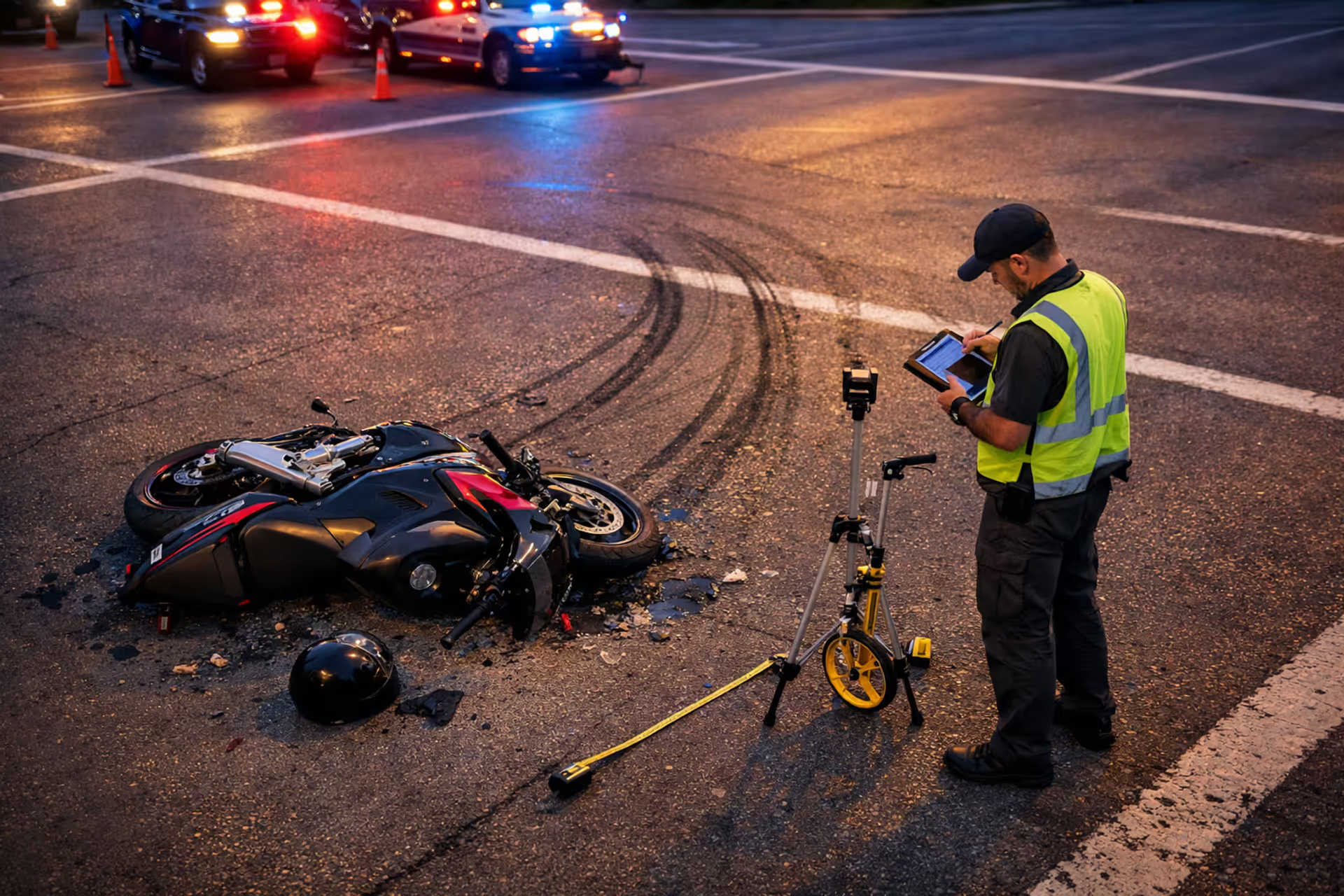
Expert witness investigator examining motorcycle crash scene at intersection with skid marks and overturned sport motorcycle
How to Hire a Motorcycle Accident Expert Witness for Your Case

Here's the reality: most motorcycle crash cases fall apart without someone who can explain what actually happened. Judges? They've never experienced a tank-slapper at 60 mph. Jurors? They think motorcycles are death traps driven by reckless riders. Your police report probably says the rider "lost control"—which tells you exactly nothing about why.
That's where expert witnesses earn their fees. They take tire marks, crush damage, and injury patterns and build a story that makes sense to people who've never thrown a leg over a bike. More importantly, they destroy the insurance company's favorite theory: that your client was just another squid who whispered it and crashed.
The physics of motorcycle crashes don't work like car accidents. A rider gets ejected differently. Braking distances change based on lean angle. Road hazards that a car rolls over can high-side a bike in a heartbeat. Standard accident investigators miss these nuances constantly, which means insurance adjusters low-ball settlements based on bad assumptions.
What Makes a Qualified Motorcycle Accident Expert Witness
You need more than an engineering degree and a professional-looking website. Federal courts use Daubert standards to kick out experts whose methods wouldn't pass peer review. State courts often apply Frye tests. Either way, if your expert can't defend their methodology under cross-examination, you've just paid $15,000 for someone to torpedo your case.
Start with credentials. ACTAR certification matters for reconstruction work—it's the one credential defense attorneys struggle to attack. For biomechanics, you're looking at someone with a PhD in biomedical engineering or an MD with biomechanics fellowship training. Mechanical experts should carry ASE Master certifications, but here's what most attorneys miss: they also need factory training from the actual manufacturer. A Honda CBR crash requires someone who understands that specific fuel injection system, not just "motorcycles in general."
The five-year experience threshold isn't arbitrary. Courts have excluded experts who analyze ten crashes per year when the opposing expert handles fifty. Volume matters because it demonstrates pattern recognition—someone who's reconstructed 200 motorcycle collisions spots evidence that generalists overlook.
Here's a credential most lawyers ignore: does your expert actually ride? I've watched juries completely check out when an expert admits they've never operated a motorcycle. How can you explain countersteering if you've never felt it? The best experts not only ride—they race, instruct, or wrench on their own bikes. That practical knowledge translates into testimony that resonates.
Publication history reveals whether other experts respect their work. Check Google Scholar for peer-reviewed articles. Teaching positions at universities add credibility. Defense counsel will absolutely run your expert's testimony history, looking for cases where judges excluded their opinions. One Daubert exclusion? Maybe the judge had a bad day. Three exclusions? You've hired a professional witness who cuts corners.
Author: Olivia Bennett;
Source: spy-delhi.com
Types of Expert Witnesses Used in Motorcycle Accident Claims
Complex cases need multiple specialists. You wouldn't hire a cardiologist to fix a broken leg, right? Same principle applies here.
Accident Reconstruction Specialists
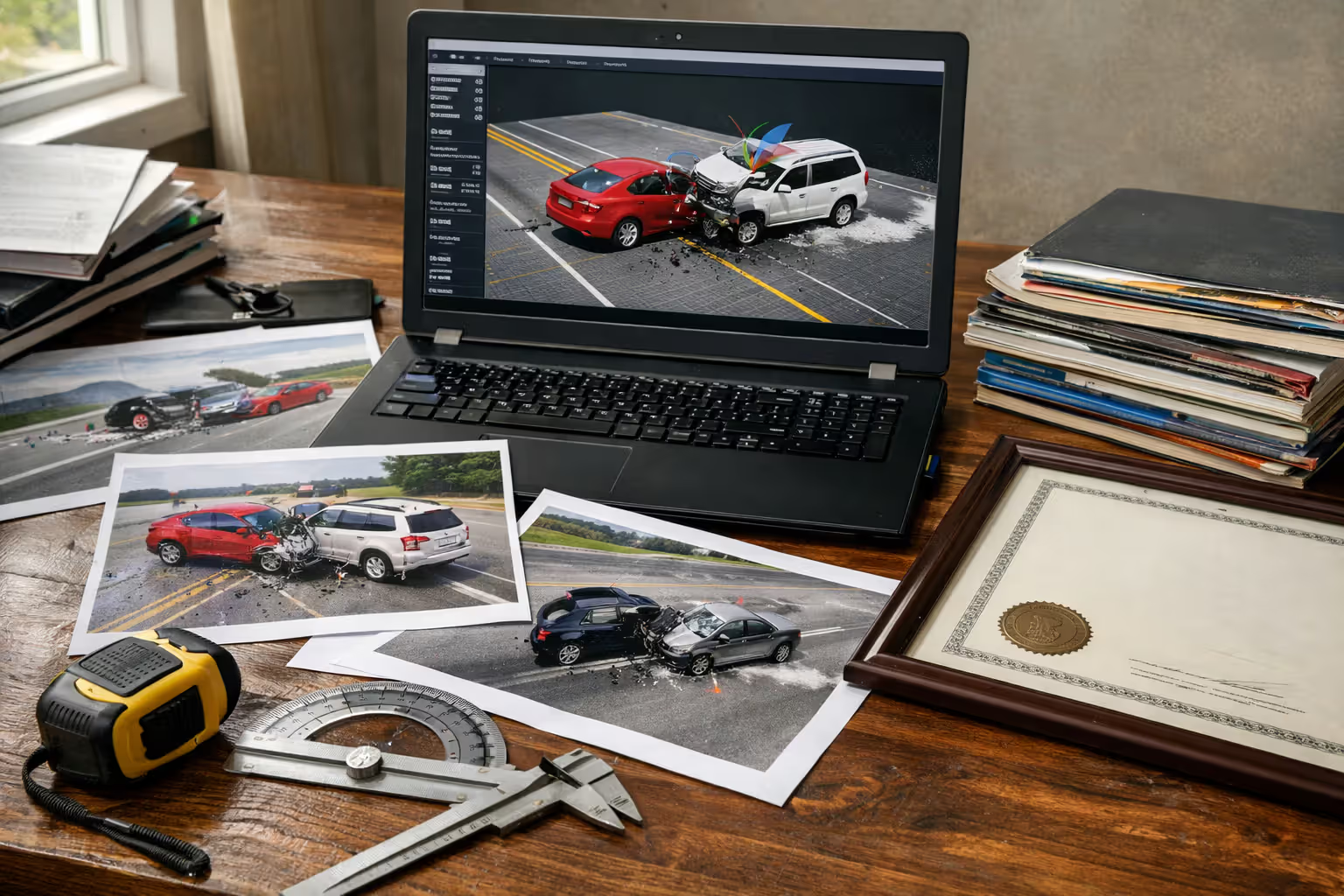
These folks reverse-engineer crashes using math, physics, and old-fashioned detective work. They calculate pre-impact speeds from crush damage and yaw marks. They determine sight distances and perception-reaction times. Most importantly, they build computer animations showing exactly how a left-turning Camry violated your client's right-of-way.
Reconstruction experts shine when liability gets disputed. Insurance companies love claiming motorcyclists were speeding—until momentum calculations prove the bike was traveling 38 mph in a 45 zone. They argue riders should've stopped sooner—until stopping distance analysis shows even a car couldn't have avoided impact. Good reconstructionists don't just explain what happened. They destroy alternative theories with math that defense experts can't refute.
Biomechanical and Injury Experts
Ever notice how insurance adjusters question whether a 30-mph crash could really cause a herniated disc? Biomechanical engineers prove it by calculating the g-forces transmitted through the rider's spine during impact. They analyze helmet damage to show how much worse the brain injury would've been without proper gear. They examine road rash patterns to confirm the rider was wearing appropriate protective clothing.
These experts become crucial when insurers claim pre-existing conditions. A 45-year-old rider with mild degenerative disc disease before the crash now has severe spinal injuries. Defense medical exams blame age, not the accident. Your biomechanical expert demonstrates that the crash forces exceeded the threshold for causing acute trauma, independent of pre-existing degeneration.
Motorcycle Mechanics and Engineering Experts
Brake failure caused more crashes than most people realize. Throttles stick. Tires delaminate. Suspension components fracture. You need someone who can tear down that wrecked bike, identify the failed part, and explain whether it failed because of poor maintenance or defective design.
Product liability cases demand experts with manufacturer-specific knowledge. That 2019 Ducati with the sticky throttle? Your expert better know that Ducati issued a technical service bulletin about that exact problem on that model year. Without that insider knowledge, you're just guessing. Defense counsel will bring their own expert who knows the service bulletins cold—you need someone who can match that familiarity.
Roadway Design and Safety Experts
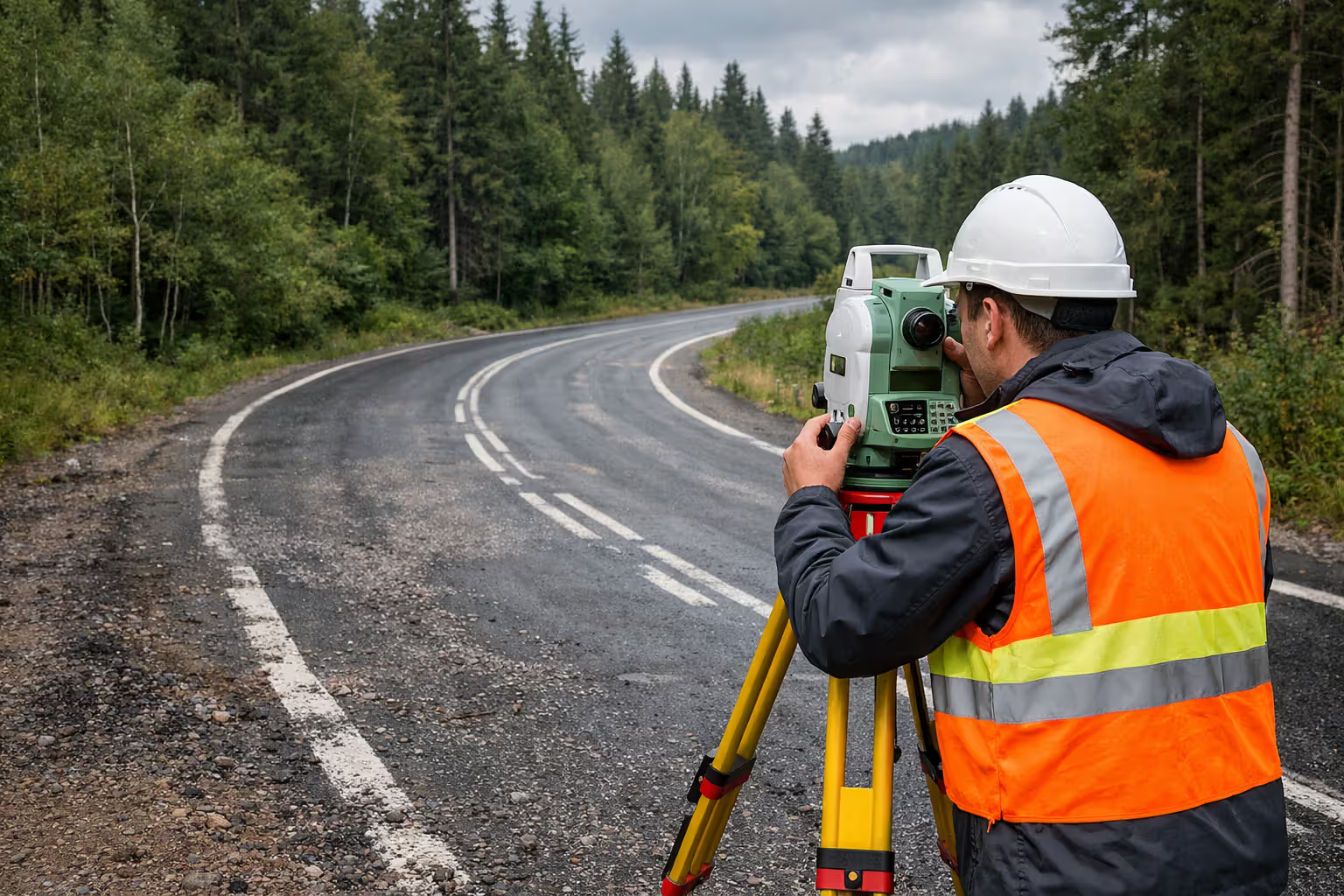
Municipalities hide behind governmental immunity, but you can pierce that defense when roadway conditions violate design standards. Your civil engineer measures sight distance obstructions, evaluates curve banking, and analyzes drainage systems. That gravel patch in the apex of the curve? Shouldn't be there under federal highway design guidelines. The faded lane markings? State DOT standards require retroreflectivity above minimum thresholds.
These experts also establish notice. They pull maintenance records showing the city knew about that pothole for six months before your client hit it. They find previous accident reports at the same location. They demonstrate that the hazard was foreseeable and preventable—which defeats governmental immunity defenses.
Author: Olivia Bennett;
Source: spy-delhi.com
How Expert Testimony Impacts Motorcycle Accident Case Outcomes
Let's talk money. Cases with solid expert testimony settle for $127,000 more on average than cases relying only on police reports and medical records. That's not speculation—that's data from the National Motorcycle Injury Law Group's case analysis spanning 18 years.
Why such a dramatic difference? Insurance adjusters aren't stupid. They know which cases will crater at trial and which ones look bulletproof. When your demand package includes a 40-page reconstruction report with 3D animations showing their insured violated right-of-way, they reassess their reserves fast. When your biomechanical expert explains why the injuries match the crash forces perfectly, suddenly that med-pay-only offer jumps to policy limits plus excess.
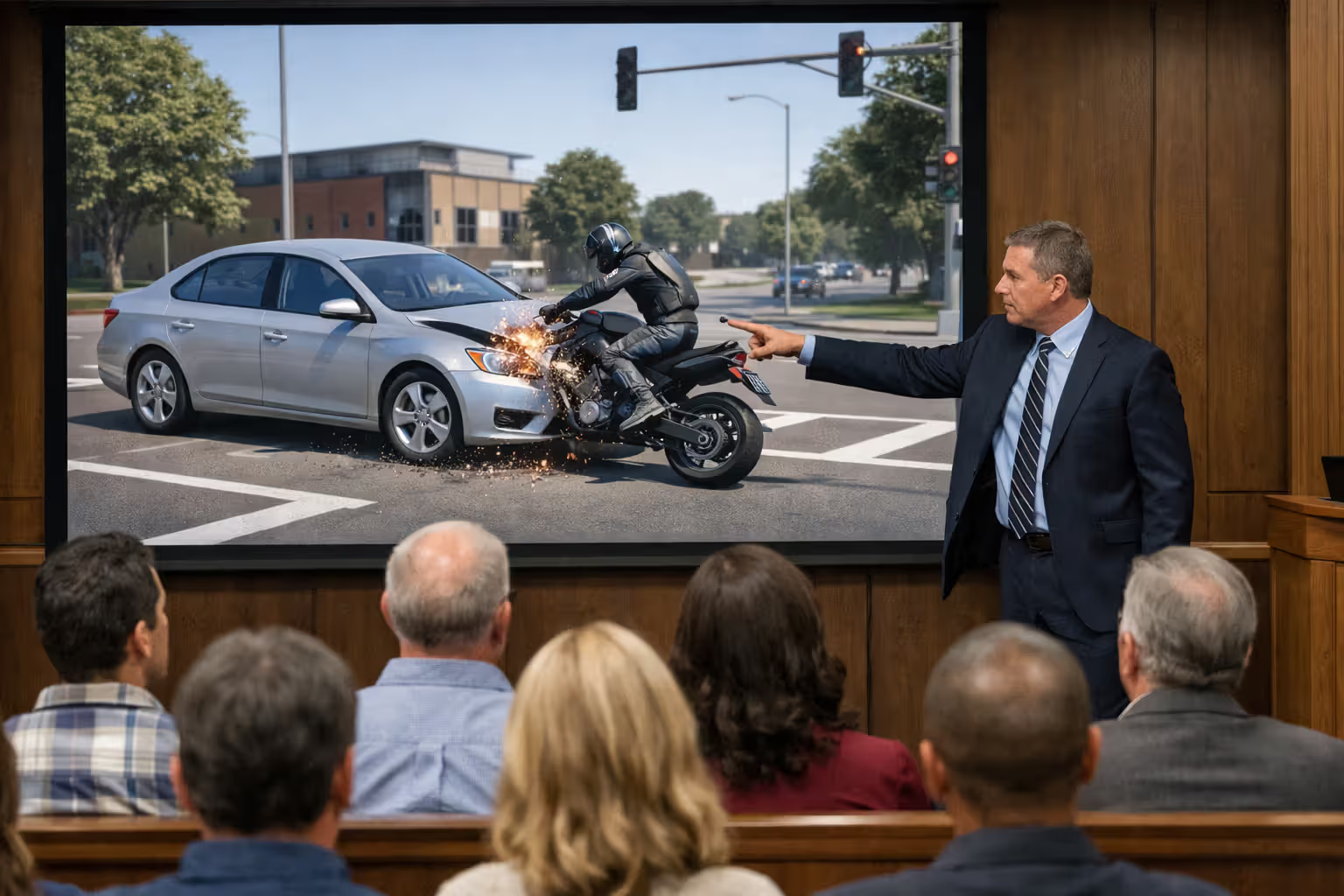
Juries trust experts who talk like normal humans, not textbooks. The reconstruction guy who says "picture a bowling ball rolling off a table—that's basically what happened to the rider during ejection" connects better than someone droning about "parabolic trajectories and gravitational acceleration vectors." Defense attorneys know this, which is why they attack expert credibility relentlessly during cross-examination.
I've watched cases transform after we retained the right expert. We had one where the insurer offered $50,000 pre-suit. After our reconstruction expert destroyed their speed claims and proved their driver had three full seconds to react, they settled for $290,000 two weeks before trial. Same facts, same injuries—just better proof
— Michael Rodriguez
The timing matters too. Experts retained early preserve evidence that disappears quickly. Tire marks fade after the first rain. Witnesses forget details. That wrecked bike gets crushed at the salvage yard. Late-retained experts work with incomplete evidence, which creates holes defense counsel exploits. "Why didn't you inspect the actual motorcycle, Doctor?" That question destroys credibility fast.
The Expert Report Process: What to Expect
Experts don't work on your timeline—they work on theirs. Rush them and you'll get sloppy work that collapses under cross-examination. Plan for 60-90 days minimum, though complicated cases stretch to six months.
Week one involves the expert reviewing everything you send. Police reports, medical records, photos, witness statements, deposition transcripts if you've got them. They'll come back with requests for additional materials you didn't know existed. "I need the weather data from NOAA for that day." "Get me the maintenance records for that stretch of roadway." "Where's the bike's service history?"
Weeks 2-4 cover field work. Reconstruction experts visit the crash site multiple times—same time of day, similar weather conditions, measuring everything with GPS-accurate total stations. Mechanical experts inspect the wrecked motorcycle, often disassembling critical components in their lab. Biomechanical experts consult with treating physicians and review CT scans frame-by-frame. This phase can't be rushed without sacrificing thoroughness.
Weeks 5-10 involve actual analysis and report writing. Reconstruction experts run computer simulations using HVE or PC-Crash software. Biomechanical engineers build finite element models of the crash sequence. Good experts draft reports anticipating every defense argument, then systematically dismantle each one with data. These aren't two-page letters—expect 30-60 pages with appendices, calculations, and reference citations.
| Expert Type | Key Report Elements | Typical Timeframe | Primary Use in Case |
| Accident Reconstruction | Pre-impact speeds from crush and momentum analysis, 3D scene diagrams, sight obstruction studies, HVE crash simulations, driver reaction time analysis | 8-12 weeks | Proving who had right-of-way, destroying speed claims, showing the crash was unavoidable for the rider |
| Biomechanical | G-force calculations at impact, injury mechanism explanations, helmet damage assessment, medical literature review proving causation | 6-9 weeks | Linking injuries directly to crash forces, defeating pre-existing condition arguments, proving protective gear effectiveness |
| Mechanical Engineering | Teardown inspection photos, failure mode analysis with metallurgy testing if needed, maintenance record evaluation, comparison to manufacturer specs | 7-11 weeks | Product defect claims, proving mechanical failure caused the crash, showing improper repairs contributed |
Depositions happen after the report's finalized. Defense counsel gets 4-8 hours to grill your expert, looking for inconsistencies, methodology flaws, or admissions that help their case. Prepare your expert thoroughly—review every calculation, every assumption, every source cited. Defense lawyers specialize in finding the one page where your expert made a transposition error in a table that doesn't affect the ultimate conclusion but makes them look careless.
Trial prep starts weeks before the actual testimony. Your expert needs to practice explaining complex concepts to people who barely passed high school physics. They rehearse using demonstrative aids—blown-up photos, physical models, animated simulations. They learn to pause after answers, maintaining composure when defense counsel gets aggressive or condescending.
Author: Olivia Bennett;
Source: spy-delhi.com
Common Mistakes When Hiring a Motorcycle Accident Expert
Attorneys screw this up more often than you'd think. Biggest mistake? Shopping for the cheapest expert. That $200/hour guy who's never been ACTAR certified and whose CV lists "15 years of law enforcement experience" will get destroyed on cross. Courts have excluded these types repeatedly under Daubert challenges. You saved $5,000 on expert fees and lost a $300,000 case.
Nobody verifies credentials anymore, apparently. Call ACTAR directly and confirm the certification number. Check if that PhD came from a diploma mill. Verify professional licenses through state boards. Defense counsel will do this homework—better you discover the problems first. I've seen opposing counsel walk into court with printouts showing the plaintiff's expert falsely claimed university affiliations he never held. Case over, sanctions filed.
Late retention kills cases dead. You can't hire an expert three weeks before trial and expect quality work. They'll rush the analysis, miss critical evidence, and produce a report that reads like it was drafted on a napkin. Worse, judges get cranky about late expert designations and may exclude the testimony entirely under discovery rules.
Here's one that surprises people: hiring the wrong type of expert for the issue. Client crashed after hitting gravel in a curve? You don't need a biomechanical engineer—you need a roadway design expert and maybe a reconstruction specialist. But attorneys panic and hire every expert they can find, burning through the client's money without addressing the actual disputed facts.
Communication breakdowns waste everyone's time. Your expert needs complete file access, not piecemeal document production. They need to know immediately when opposing experts produce reports. They need witness contact info to conduct independent interviews. Attorneys who treat experts like mushrooms—keep them in the dark and feed them garbage—get exactly the work product that approach deserves.

Author: Olivia Bennett;
Source: spy-delhi.com
Budget problems surface mid-case when attorneys don't discuss full fee structures upfront. The report costs $8,000, sure. But deposition prep runs another $2,500. The deposition itself hits $3,500. Now the case isn't settling and trial testimony will cost $5,000 per day for three days. Nobody budgeted for $22,500 total, so now there's a fight over fees while trial approaches.
Cost Factors and Fee Structures for Motorcycle Expert Witnesses
Expert fees hurt, but they're not optional in serious cases. Trying to save money on expertise usually costs multiples of that amount in reduced settlement value.
Hourly rates run $200-$600 depending on geography and credentials. That Manhattan biomechanical engineer with 30 years of experience and publications in every major journal? You're paying $550/hour. The recently-certified reconstruction specialist in rural Oklahoma? Maybe $225/hour. Both might be qualified, but courtroom presence and credential strength vary dramatically.
Report preparation often gets billed as a flat fee—typically $3,000-$15,000. Simple rear-end collision with straightforward injuries? Lower end. Multi-vehicle crash with product liability issues requiring laboratory testing? Upper end and beyond. Some experts bundle initial consultation and preliminary analysis into the report fee, others bill separately for each phase.
Depositions run $2,000-$5,000 for a half-day session, including prep time. Experts charge portal-to-portal when travel's involved, so that deposition in another city costs more than one at the expert's local office. Defense counsel knows this and sometimes schedules depositions in inconvenient locations deliberately, running up your costs.
Trial testimony commands premium rates—expect 1.5x to 2x the normal hourly rate. A $400/hour expert becomes $600-$800/hour for trial days. Why? They're blocking out time, turning away other work, and dealing with the stress of live testimony. Multi-day trials add up fast, especially when court delays mean your expert sits in the hallway for six hours waiting to testify.
| Expert Type | Hourly Rate Range | Report Fee | Deposition Fee | Trial Testimony Fee |
| Accident Reconstruction | $250-$500/hour | $5,000-$12,000 | $2,000-$4,000 (half-day) | $3,000-$6,000/day |
| Biomechanical Engineer | $300-$600/hour | $6,000-$15,000 | $2,500-$5,000 (half-day) | $4,000-$8,000/day |
| Motorcycle Mechanic | $200-$400/hour | $3,000-$8,000 | $1,500-$3,000 (half-day) | $2,500-$5,000/day |
| Roadway Design Engineer | $275-$500/hour | $4,000-$10,000 | $2,000-$4,000 (half-day) | $3,000-$6,000/day |
Travel expenses get billed at cost—airfare, hotels, meals, rental cars. Site inspections in distant locations easily hit $2,000-$5,000 in travel costs alone. That Florida crash scene when your expert lives in Seattle? Budget accordingly.
Retainers secure expert time and cover initial work—usually $5,000-$10,000 upfront, credited against hourly fees. This protects experts from non-payment and proves you're serious. Experts with strong reputations can demand higher retainers because they turn away other work to take your case.
Cancellation fees bite when you settle the day before a scheduled deposition or trial. Experts who blocked three days for your trial and declined other engagements expect compensation when you settle during jury selection. Most charge 50-100% of anticipated fees for last-minute cancellations.
Contingency arrangements exist but raise red flags. Some experts work on contingency for plaintiffs' firms, taking a percentage of recovery. Defense attorneys attack this relentlessly during cross: "So you make more money if my client loses, correct?" Most respected experts refuse contingency work specifically to avoid this credibility hit.
FAQ: Motorcycle Accident Expert Witnesses
Conclusion
Motorcycle crash litigation without qualified experts is like riding without gear—you might survive, but why take that risk? The technical complexities of two-wheeled vehicle dynamics, combined with persistent anti-motorcycle bias among jurors, create obstacles that solid legal arguments alone can't overcome.
The right experts translate skid marks and crush damage into narratives that resonate with decision-makers who've never thrown a leg over a bike. They counter insurance company fiction with physics, mathematics, and biomechanics that withstand cross-examination. More importantly, they signal to defense counsel that you're serious—which transforms settlement negotiations immediately.
Yes, expert fees hurt. But cases with credible expert support settle for an average of $127,000 more than cases relying on police reports and medical records alone. Even accounting for expert costs, you're significantly ahead. And in cases that go to trial, expert testimony often determines whether juries award actual damages or just throw money at the problem because they feel bad for your client.
Start early. Verify credentials independently. Budget realistically for the full litigation timeline, not just report preparation. Communicate clearly about expectations and deadlines. Treat your experts as team members, not vendors you hired to rubber-stamp your theory.
Done right, expert witnesses transform marginal cases into strong ones and strong cases into home runs. Done wrong, they waste money and create credibility problems that sink otherwise solid claims. The difference usually comes down to attorney diligence during the selection and retention process—which means the responsibility for expert quality ultimately falls on you.
Related Stories
Read more

Read more


The content on this website is provided for general informational and educational purposes only. It is intended to offer insights and guidance on motorcycle accident insurance claims, settlement processes, liability issues, coverage limits, medical compensation, and related insurance matters, and should not be considered legal or financial advice.
All information, articles, and materials presented on this website are for general informational purposes only. Insurance policies, liability standards, settlement practices, and state regulations may vary by jurisdiction and insurer. The outcome of a motorcycle accident claim depends on the specific facts of the accident, available evidence, policy language, and applicable law.
This website is not responsible for any errors or omissions in the content, or for actions taken based on the information provided. Users are strongly encouraged to consult with a qualified attorney or licensed insurance professional regarding their specific motorcycle accident claim before making decisions about settlements, negotiations, or coverage disputes.