
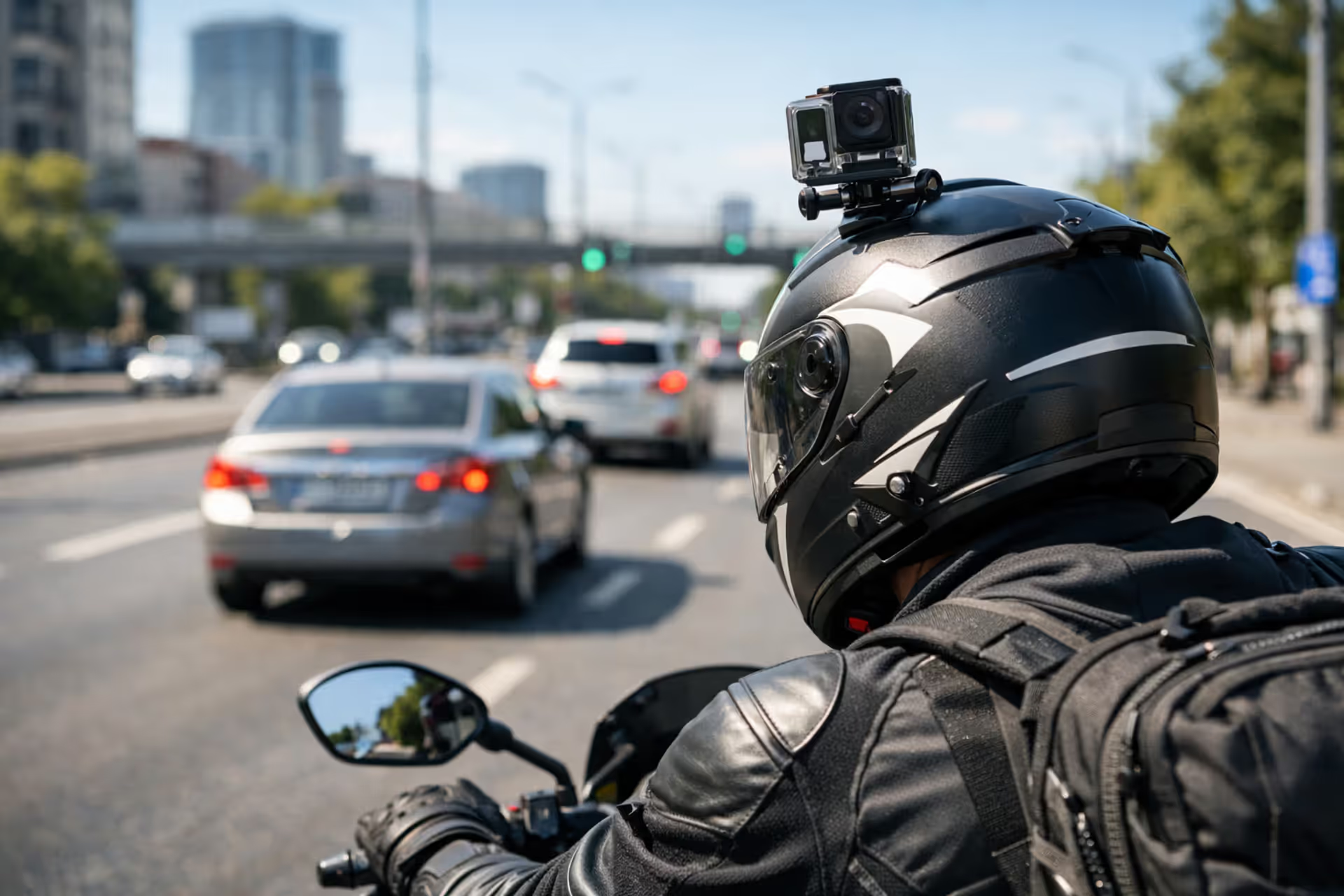
Motorcyclist wearing full gear riding on a city road with an action camera mounted on the helmet, cars visible ahead on the street
How to Use Motorcycle Accident Dashcam Evidence for Your Injury Claim

When you're riding and someone pulls out in front of you, everything happens in seconds. Afterward, that driver will swear they checked their mirrors. They'll tell police you were going too fast. Without proof, it becomes your word against theirs—and guess who adjusters usually believe?
A camera mounted to your helmet or bike captures what actually happened. Not what someone remembers. Not what they wish had happened. Just the facts: who had the right of way, what the traffic signals showed, whether someone was texting instead of watching the road.
Riders with video evidence get better settlements, faster resolutions, and fewer bogus accusations. But only if you know which cameras work best, how to preserve the footage properly, and when to share it with insurance companies versus keeping it for your attorney.
Why Video Evidence Changes Motorcycle Accident Claims
Here's the problem: people assume motorcyclists take risks. Even when you're following every traffic law, adjusters question whether you were weaving between cars or going 20 over the limit. That bias shows up in studies—when claims lack objective evidence, decision-makers blame riders roughly 60% more often than car drivers in similar situations.
This isn't fair, but it's reality. The credibility gap means legitimate claims get lowballed or rejected entirely. You end up accepting $12,000 when your injuries justify $35,000, simply because the adjuster thinks you "probably" contributed to the crash.
Video flips that script. Watch an adjuster's face change when they see footage of a minivan drifting into your lane while the driver reaches for something in the backseat. Suddenly there's no debate about fault percentages or whether you had time to react.
Video evidence can increase settlement values by 40-60% because it removes the credibility bias motorcyclists typically face in accident claims. Adjusters know that footage plays powerfully to juries, so they're motivated to settle fairly rather than risk trial
— Marcus Chen
The California Highway Patrol tracked claims over three years and found something interesting: cases with video documentation settled 34% faster than average. The difference in payout amounts? Even more dramatic—40-60% higher in most categories.
Beyond the money, video captures details you'll forget within hours. Exactly where that pickup truck was when their light turned red. Whether the sedan's brake lights ever came on. The Camry that nearly clipped you five seconds before the actual collision—a detail that might reveal the other driver was already driving recklessly.
Cameras also stop fraud cold. There's a whole category of scammers who target motorcyclists, figuring you'll be too injured to argue and your insurance limits are lower than a car's. When someone deliberately causes a crash then claims you rear-ended them, your helmet cam shows the truth.
Types of Video Evidence Accepted in Motorcycle Accident Cases
Insurance companies and courts will consider multiple video sources. Each type has strengths and weaknesses worth understanding before you buy equipment or start requesting footage after a crash.
Helmet Cameras and Body-Mounted Devices
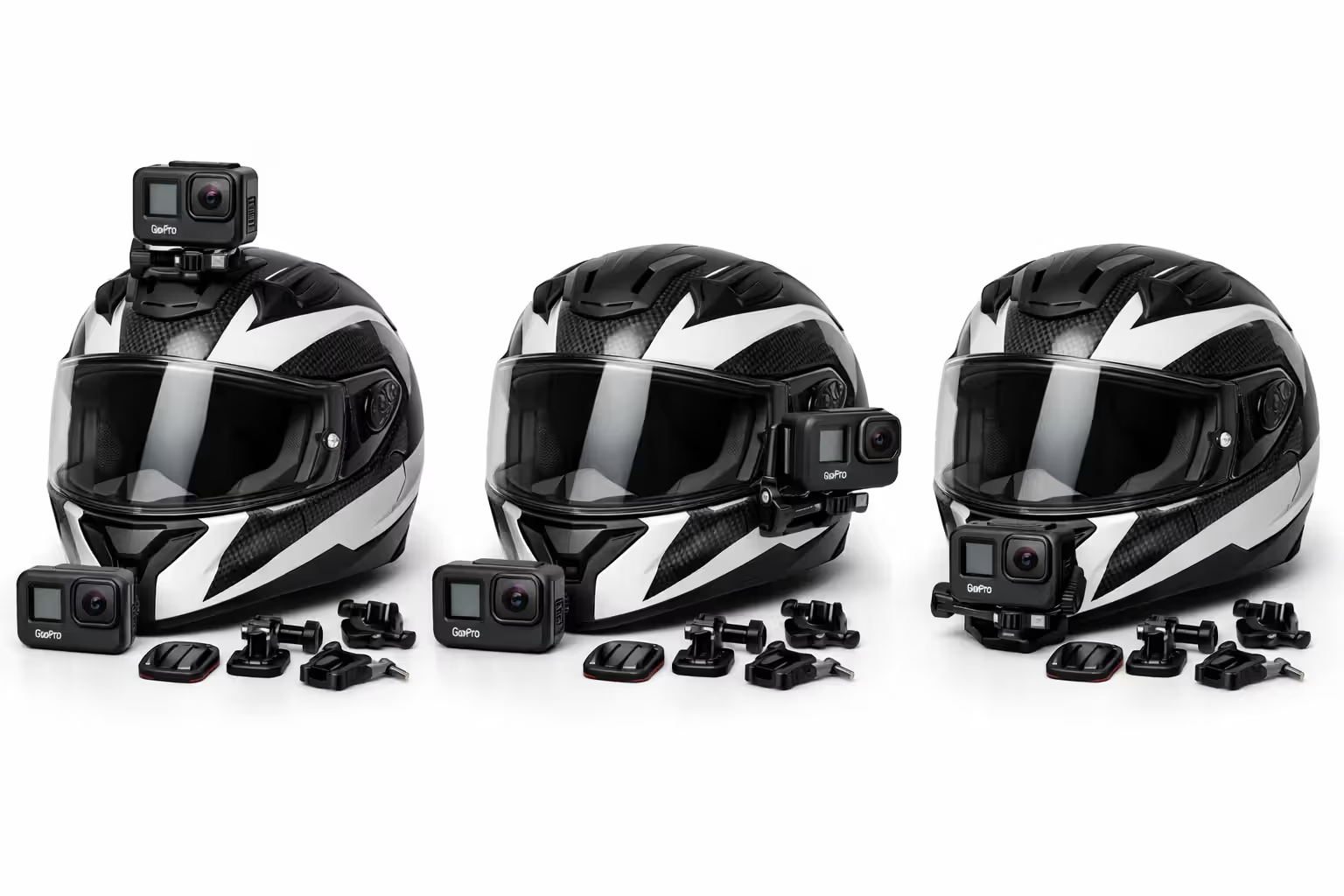
GoPros and similar action cameras strap to your helmet, showing exactly what you were looking at during the crash. That first-person perspective proves valuable when someone claims you "should have seen" their car—your video shows the box truck blocking your view.
Where you mount the camera matters legally and practically. Top mounts give the widest view but might technically void your helmet's DOT certification (enforcement varies by state and is rarely prosecuted, but it's worth knowing). Side mounts solve the certification question but narrow what's captured. Chin mounts record your speedometer and hand position, documenting your actual speed and proving you were braking, but they're exposed if you hit something head-on.
Author: Olivia Bennett;
Source: spy-delhi.com
Most helmet cams run 90-120 minutes per charge. They use loop recording—when the memory card fills up, the camera overwrites the oldest footage. You need to ensure your model saves the most recent files when power cuts off suddenly, which happens in crashes.
Audio recording complicates things legally. Twelve states require everyone being recorded to consent—California, Connecticut, Florida, Illinois, Maryland, Massachusetts, Michigan, Montana, Nevada, New Hampshire, Pennsylvania, and Washington. Technically, that means getting permission from nearby drivers, which obviously isn't practical. Some riders disable audio entirely. Others record anyway, figuring ambient crash sounds (not conversations) fall under different rules. Talk to a local attorney about your state's specifics.
Motorcycle-Mounted Dashcams
Cameras bolted to your handlebars or fairing stay rock-solid regardless of where you turn your head. They wire into your bike's electrical system, so battery life isn't an issue. Most riders run front and rear cameras simultaneously—crucial when someone rear-ends you at a stoplight then claims you backed into them.
That fixed perspective makes accident reconstruction easier. Engineers can measure distances, calculate speeds, and determine vehicle positions more accurately than with a moving helmet cam. You also get continuous documentation of your lane position throughout the ride.
Vibration is the enemy. Motorcycles shake harder than cars, causing motion blur if your mount isn't engineered properly. Cheap camera systems rattle loose or produce unusable footage. Weather sealing matters too—a camera that dies in rain is worthless when you need it most. Spend the extra money on quality mounting hardware with rubber dampening.
Third-Party Footage (Traffic cameras, witness phones, nearby businesses)
Your camera might not be the only one that caught the crash. Intersection traffic cameras, red-light enforcement systems, and highway monitors could have recorded it. But here's the catch: most agencies delete that footage within 24-72 hours unless someone formally requests preservation.
Your attorney should fire off preservation letters immediately—to the city traffic department, state DOT, and any other agency that might have cameras near the crash site. Wait even three days and the evidence vanishes forever.
Look around the crash scene. That 7-Eleven on the corner? Gas station across the street? They probably have security cameras covering the road. Businesses keep footage for varying periods—some a week, others a month. Ask the manager if their cameras caught anything and get contact information for their corporate office. Your attorney can follow up with formal requests.
Bystanders increasingly whip out phones to record accidents. If someone was filming, politely ask them to preserve the video and provide their contact details. Don't demand they hand over their phone—that makes people defensive. Just get their name and number so your attorney can reach out later.
Third-party footage carries extra weight because it's neutral. The gas station's camera doesn't care who's at fault. But many businesses resist releasing footage without subpoenas, adding time and legal fees to your case.
| Feature | Motorcycle-Mounted Dashcam | Helmet Camera |
| Field of view | Stays locked on the road ahead and behind, usually 120-140° per camera | Captures wherever you're looking, anywhere from 120-170° depending on the model |
| Rider perspective captured | Documents bike position and sometimes your controls, but not what you're watching | Records exactly where you looked, including shoulder checks and blind spot verification |
| Durability in crash | Usually protected by fairings or tucked mounting spots, stays attached to the bike | Can rip off during impact, vulnerable if your helmet hits something |
| Battery life | Runs continuously off your bike's battery | Needs charging after 90-120 minutes typically |
| Legal considerations | Simpler—no helmet certification concerns | May affect DOT or Snell ratings depending on mounting method |
| Cost range | Decent dual-camera systems run $150-$400 | Quality action cameras with proper mounts cost $200-$500 |
| Best use case | Daily commuters, touring riders who want set-it-and-forget-it documentation | Sport riders, off-road use, situations where capturing your head movements matters |
What Makes Dashcam Footage Legally Admissible
Not every video makes it into court or insurance negotiations. Your footage needs to meet authentication standards, otherwise it's just a file on a memory card.
Chain of custody begins the second you stop recording. You'll need to prove the video hasn't been altered between the crash and when you present it as evidence. That means documenting who touched the memory card, when copies were made, and where those copies are stored.
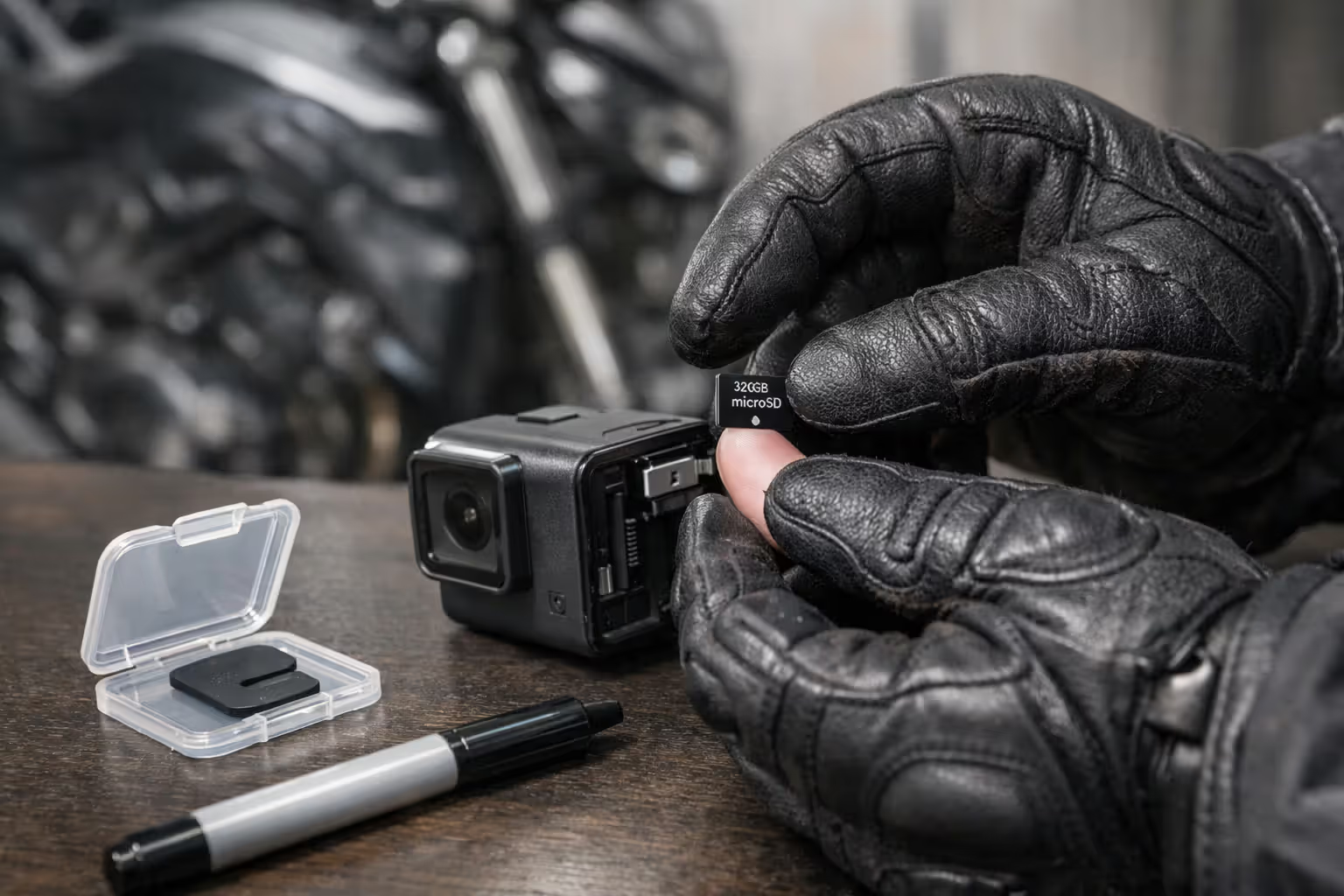
Pull the memory card out as soon as possible after the crash. Don't play the video on your camera—you might accidentally delete something or drain the battery. Stick the card in a protective case and write the date, time, and location directly on the case. If police arrive, mention you've got video. They may take possession of the card as part of their investigation.
Author: Olivia Bennett;
Source: spy-delhi.com
Timestamps need to be accurate. A video showing the crash at 2:15 PM when the police report says 3:45 PM raises questions about whether it's even the right incident. Set your camera's clock correctly before every ride. GPS-enabled models that embed location and speed data provide additional verification that's hard to dispute.
Never edit the footage. Courts and adjusters want the complete recording—everything from several minutes before the crash through the aftermath. Trimmed clips suggest you're hiding something inconvenient. Even cutting out "boring parts" to save file size triggers suspicion. Hand over the full, untouched file and let lawyers extract the relevant portions.
You'll typically need to testify that you recorded the video, it accurately shows what happened, and nobody altered it. In disputed cases, the other side might hire digital forensics experts to examine metadata and verify authenticity.
Footage gets excluded if it violates privacy laws, was obtained illegally, or if technical problems make it unreliable. Extremely grainy video that doesn't clearly show anything useful might be deemed "more prejudicial than probative"—legal speak for "the jury will be influenced by seeing a crash even though they can't actually see what happened." Cameras with malfunctioning speed displays or wrong timestamps can undermine your entire case by making you look dishonest.
How to Preserve and Document Your Motorcycle Crash Video
What you do in the first 30 minutes after a crash determines whether your video remains useful evidence or becomes corrupted, lost, or legally worthless.
If you're conscious and able to move, turn the camera off. Loop recording will keep running, eventually overwriting the crash footage with video of you sitting on the curb talking to paramedics. Pull the memory card out and secure it separately from the camera, which might be damaged, confiscated, or lost in the chaos.
Snap photos of where the camera was mounted before anyone moves your bike. Document any damage to the camera itself. This establishes the angle and field of view, helping experts analyze what the camera could and couldn't possibly have seen.
Author: Olivia Bennett;
Source: spy-delhi.com
Resist the urge to watch the footage at the scene. Your phone battery might die. You might accidentally hit delete while swiping through files. Wait until you're somewhere safe with proper backup equipment ready to go.
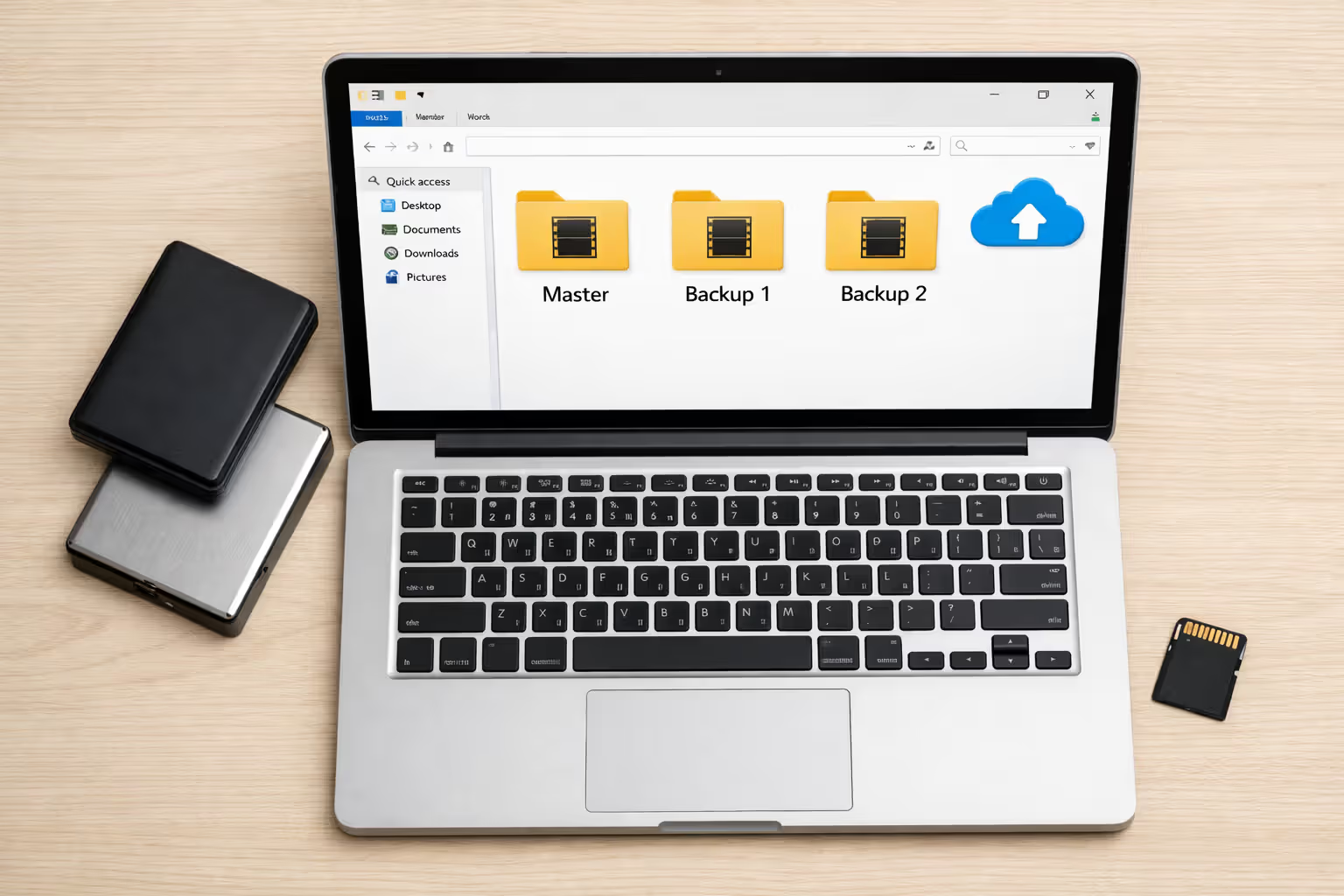
Make at least three copies immediately. One goes to cloud storage—Google Drive, Dropbox, whatever you use. Two more copies go to separate physical drives. Keep one copy completely pristine as your "master" file that never gets opened or modified. Only work with the duplicate copies for review or sharing.
Don't post anything on social media. That YouTube video might get you 50,000 views and a bunch of "that driver's an idiot!" comments, but it also becomes evidence the defense uses against you. Comments you make about your injuries, how you're feeling, or what you think happened can contradict your legal claims later. Insurance companies actively search social media for this stuff. Once it's online, it's discoverable in court even if you delete it the next day.
Before handing video to the other driver's insurance company, talk to an attorney. Seriously—this matters. Adjusters will interpret ambiguous moments in whatever way minimizes their payout. Once you've sent them the file, you can't take it back.
Write down everything you remember while it's fresh. What happened in the five minutes before you started recording that ride? Any relevant details the camera didn't capture? Your immediate thoughts after the crash? This narrative supplements the video and explains gaps in coverage.
Decide strategically when to share footage with police. If the video clearly shows the other driver blowing through a red light, giving it to police strengthens the accident report that insurers will rely on. If there's any ambiguity—like you were changing lanes 10 seconds before getting hit—consult an attorney first. Once something's in a police report, you can't undo it.
How Insurance Companies Evaluate Motorcycle Dashcam Evidence
Adjusters watch your video with different eyes than you do. They're looking for reasons to reduce their payout, not confirmation that you're right.
Speed and lane position get scrutinized frame-by-frame in the seconds before impact. Even if the other driver caused the crash, evidence you were going 15 over or riding the lane line triggers comparative negligence arguments. In modified comparative negligence states, being found 51% at fault means you get nothing. At 40% fault, your $50,000 claim becomes $30,000.
Your reaction time matters. Did you brake immediately when the hazard appeared? Swerve? Or was there a delay suggesting distraction? Footage showing instant defensive action strengthens claims that the crash was unavoidable. A one-second delay before you reacted gives adjusters ammunition to argue you weren't paying attention.

Author: Olivia Bennett;
Source: spy-delhi.com
Turn signals, brake lights, and traffic control devices get analyzed obsessively. If your video shows the other driver running a solid red light, that's straightforward liability. If the light was yellow and there's debate about whether they entered the intersection legally, expect lengthy negotiations over fault percentages.
Clear video evidence accelerates settlements dramatically. Cases that typically drag out for 8-12 months can wrap up in 4-6 weeks when footage eliminates any serious dispute. However, if the video shows shared fault, it might actually prolong negotiations as both sides argue percentages.
Settlement amounts jump significantly with strong video proof. Consider a typical rear-end collision: based on police reports and witness statements, it might settle for $15,000. Add dashcam footage clearly showing the other driver texting right before plowing into you? That same case settles for $35,000-$50,000, because the video eliminates the insurer's ability to muddy the waters and demonstrates negligence that would play powerfully to a jury.
Adjusters also evaluate what your video doesn't show. If your helmet camera starts recording five seconds before impact, they'll question whether you were riding aggressively beforehand. Gaps in footage raise suspicions about selective editing. Continuous recording from the start of your ride carries more weight than clips that conveniently begin right when the other driver messed up.
Common Mistakes That Weaken Your Video Evidence
Riders regularly sabotage their own evidence through mistakes that seem harmless at the time.
Editing or trimming footage is the biggest problem. You might think you're being helpful by cutting a 20-minute file down to the "important 30 seconds," but attorneys and adjusters immediately question what you removed. Even deleting blank footage from after the crash creates suspicion you're hiding something. Always provide complete, unedited files—let lawyers decide what's relevant.
Social media posts destroy cases with depressing regularity. That Facebook video titled "CRAZY DRIVER ALMOST KILLED ME!!!" might get sympathy from friends, but it gives the defense ammunition. Offhand comments you make—about your injuries, the crash, how you're recovering—can contradict sworn statements later. Defense attorneys monitor social media specifically hunting for this content. Deleting posts after the fact doesn't help; once it's online, it's discoverable in litigation.
Delayed preservation lets evidence disappear. If you don't pull the memory card before your next ride, loop recording overwrites the crash footage with video of your trip to the grocery store. Waiting days to back files up risks corruption or accidental deletion. Handle preservation within hours, not days or weeks.
Missing context before and after impact weakens your narrative. Footage starting one second before collision doesn't show your speed, lane position, or the other vehicle's actions leading to the crash. Configure your camera to save at least 30-60 seconds before and after triggered events. Continuous recording is even better if you've got the storage capacity.
Poor camera positioning creates blind spots that hurt your case. A helmet cam angled too high misses ground-level vehicles. A dashcam pointed too low doesn't catch traffic signals. Test your setup before you need it. Record a practice ride and review whether it captures license plates, traffic signals, and the full roadway width. Adjust the angle until you're getting usable footage.
Equipment failure at the worst moment happens when you don't maintain your gear. Dead batteries, full memory cards, and loose mounts mean no footage when crashes occur. Check your camera before every ride—verify it's recording, check available storage, ensure the mount is tight. Format memory cards weekly. Replace batteries annually even if they seem fine.
Sharing footage prematurely with the wrong parties creates problems you can't fix. Once you email video to the other driver's insurer, you've lost control of how they interpret and use it. Before you send evidence to anyone beyond your own attorney and insurance company, get legal advice about timing and strategy.
Frequently Asked Questions About Motorcycle Accident Video Evidence
Protecting Your Rights After a Motorcycle Crash
Dashcams and helmet cameras have fundamentally changed how riders prove fault and secure fair compensation after crashes. Video documentation eliminates the credibility biases that have historically worked against motorcyclists in insurance negotiations and courtrooms. When footage clearly captures another driver's negligence, settlements happen faster and for substantially higher amounts than cases relying solely on testimony.
Success requires preparation before you need it. Install quality equipment, maintain it properly, and understand your state's recording laws before you ride. When a crash happens, prioritize evidence preservation: secure memory cards immediately, create multiple backups, and consult an attorney before handing footage to insurance companies.
Video evidence isn't just about proving the other driver was wrong—it's about controlling how your story gets told. Without it, you're asking adjusters and juries to trust your word against someone else's. With it, you're showing them exactly what happened, removing doubt and speculation from the equation.
Riders who invest in camera systems and learn proper evidence handling give themselves the best shot at fair treatment after accidents. In a system where motorcyclists already face uphill battles, dashcam footage levels the playing field and ensures your version of events gets heard clearly and accurately.
Related Stories
Read more
Read more

The content on this website is provided for general informational and educational purposes only. It is intended to offer insights and guidance on motorcycle accident insurance claims, settlement processes, liability issues, coverage limits, medical compensation, and related insurance matters, and should not be considered legal or financial advice.
All information, articles, and materials presented on this website are for general informational purposes only. Insurance policies, liability standards, settlement practices, and state regulations may vary by jurisdiction and insurer. The outcome of a motorcycle accident claim depends on the specific facts of the accident, available evidence, policy language, and applicable law.
This website is not responsible for any errors or omissions in the content, or for actions taken based on the information provided. Users are strongly encouraged to consult with a qualified attorney or licensed insurance professional regarding their specific motorcycle accident claim before making decisions about settlements, negotiations, or coverage disputes.