
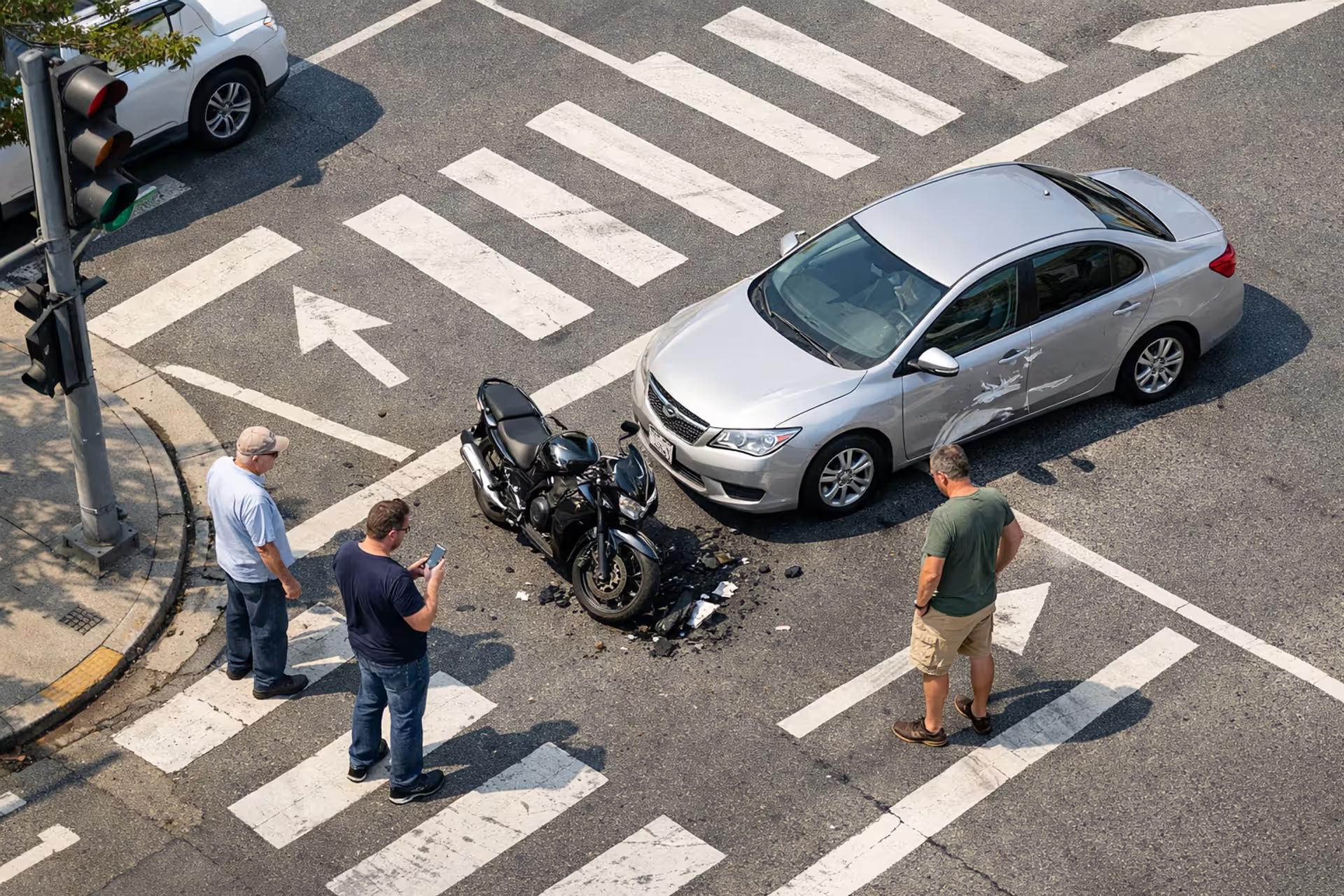
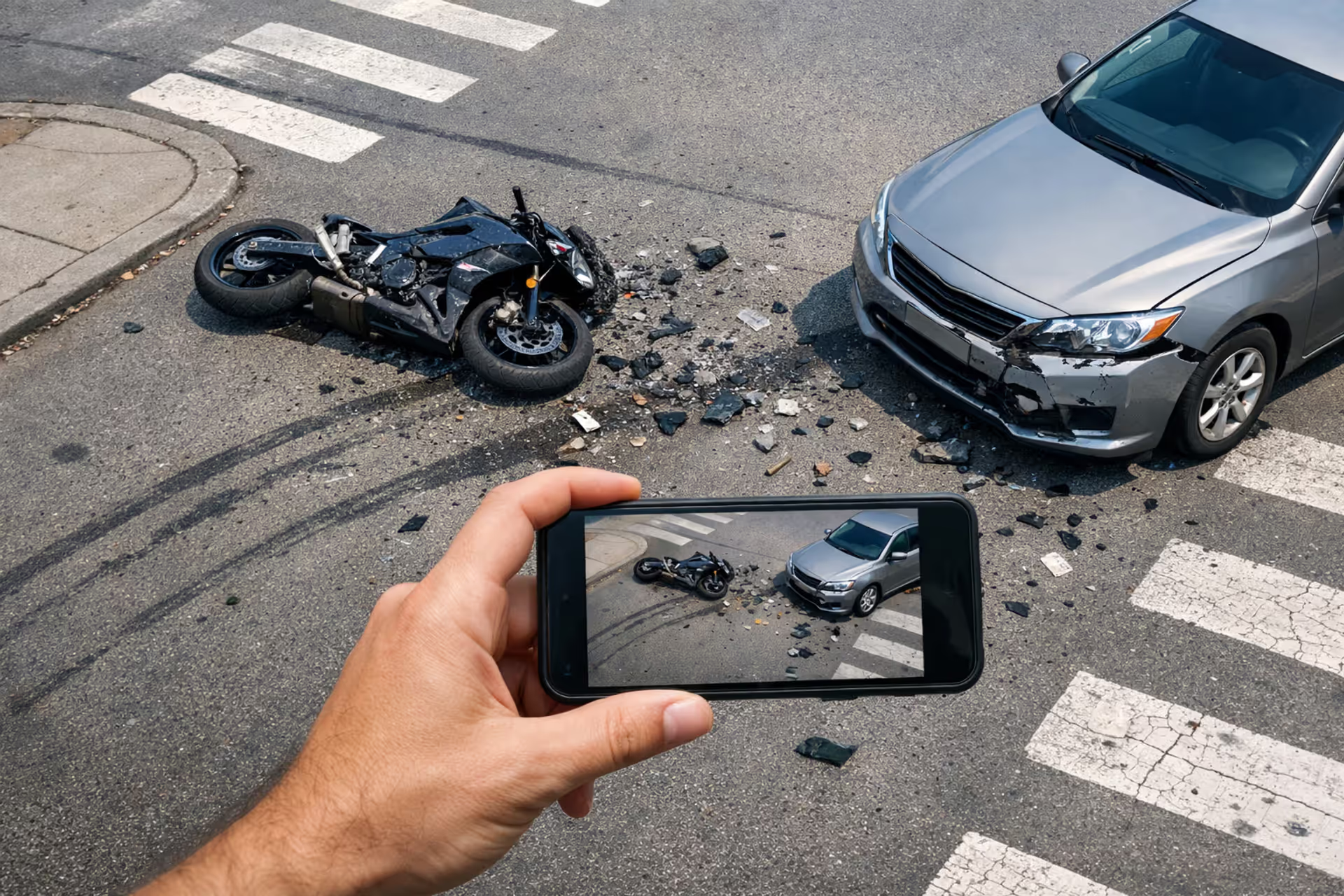
Motorcycle accident scene at urban intersection with bystander witnesses and damaged vehicles
How to Collect Motorcycle Accident Witness Statements for Your Claim

When a car driver claims you "came out of nowhere" after they turned left directly into your path, witness statements can be the difference between a denied claim and full compensation. Motorcyclists face unique credibility challenges after crashes—drivers often don't see riders, and insurance adjusters know this perception problem works against you from day one.
Witness testimony transforms your word against theirs into documented third-party verification. But not all statements carry equal weight, and mistakes in collection can render even the best witness useless to your case.
Why Witness Statements Matter in Motorcycle Accident Claims
Insurance adjusters approach motorcycle claims with built-in skepticism. Studies show drivers fail to see motorcycles in 40% of multi-vehicle crashes, yet these same drivers rarely admit fault. They genuinely believe the rider appeared suddenly, rode recklessly, or was speeding—even when physical evidence proves otherwise.
This creates a credibility gap. Without independent verification, adjusters default to 50/50 liability splits or deny claims outright. Your injuries might be severe, your bike totaled, but if the other driver insists you were at fault, you're stuck in he-said-she-said territory.
Witness statements break this deadlock. A neutral third party who saw the driver texting, running a red light, or failing to signal carries more weight than both parties combined. Adjusters can dismiss your account as biased, but they can't easily dismiss a bystander with no stake in the outcome.
The bias problem cuts both ways. Some witnesses assume motorcyclists are reckless by default. Others have ridden themselves and may over-sympathize with you. Understanding these dynamics helps you identify which witnesses will actually strengthen your claim versus which might introduce doubt.
Timing matters more than most people realize. A witness who gives a statement 20 minutes after the crash—while details are fresh and emotions raw—provides far more credible testimony than the same person recalling events three weeks later after memory has faded and details have blurred together.
Author: Hannah Pierce;
Source: spy-delhi.com
What Makes a Strong Witness Statement After a Motorcycle Crash
Information Every Statement Should Include
Effective statements answer six questions: who, what, when, where, how, and what happened next. The witness should identify themselves with full name, phone number, email, and physical address. Many people hesitate to share all contact details, but insurance companies won't accept anonymous statements.
The location description needs specificity beyond "Main Street." Which direction were vehicles traveling? What lane was each vehicle in? Was there a traffic signal, stop sign, or yield sign? Where was the witness positioned relative to the crash?
Sequence matters enormously. Did the witness see the moments before impact, the collision itself, or only the aftermath? A statement like "I saw the car hit the motorcycle" has minimal value. But "I watched the silver Honda drift into the right lane while the driver looked down at something in her lap, then she struck the motorcycle that was already occupying that lane" provides actionable detail.
Weather and lighting conditions should be noted. Visibility factors help reconstruct what each party could reasonably have seen. A witness confirming clear conditions and good visibility undermines a driver's claim that they couldn't see the motorcycle.
The witness should describe vehicle speeds in relatable terms if they can't estimate exact numbers. "The motorcycle was keeping pace with traffic" or "the car was going much faster than other vehicles" gives adjusters context without requiring precision that witnesses rarely possess.
Physical observations after impact matter too. Did the motorcyclist get up immediately? Was the car driver on their phone when the witness approached? These details corroborate or contradict later claims about injury severity and distraction.
Red Flags That Weaken Witness Credibility
Statements filled with assumptions rather than observations fall apart under scrutiny. "The motorcycle must have been speeding" is worthless. "I saw the motorcycle traveling noticeably faster than surrounding traffic" has value. Witnesses should describe what they saw, heard, and smelled—not what they think happened.
Vague timeframes raise suspicion. "A few minutes before the crash" could mean two minutes or ten. "I was stopped at the red light on Oak Street when I heard screeching tires, looked up, and saw the collision happen" establishes a clear timeline.
Overly polished statements that sound rehearsed or coached trigger red flags for adjusters. Natural speech patterns include minor inconsistencies and conversational language. When a witness statement reads like legal testimony, adjusters assume someone has influenced or edited their account.
Witnesses who only saw the aftermath but describe the collision itself destroy their own credibility. If they arrived after impact, the statement should clearly say so and describe only what they observed post-crash: vehicle positions, debris patterns, statements made by parties involved.
Contradictions within a single statement are fatal. If a witness says visibility was poor but also claims to have clearly seen the driver texting, adjusters will discard the entire statement. Internal consistency matters more than length.
Step-by-Step: Collecting Witness Evidence at the Accident Scene
Your first priority is medical attention and safety. But if you're conscious and able, identifying witnesses happens in the first ten minutes or not at all. Bystanders leave. Memories immediately begin degrading. Witnesses who stick around often do so because they saw something significant.
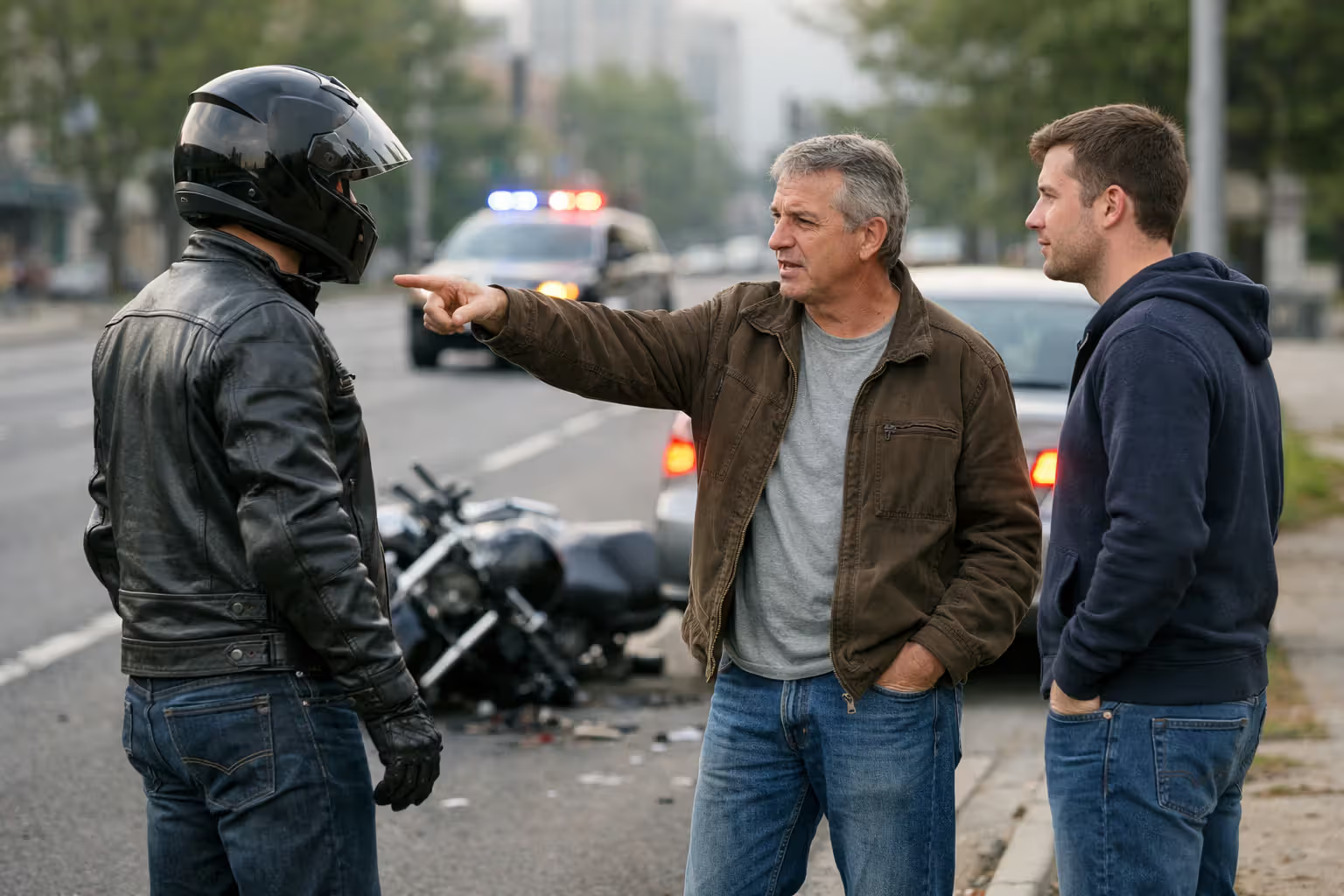
Start by asking anyone nearby: "Did you see what happened?" This simple question identifies who actually witnessed the collision versus who arrived afterward. Don't waste time on people who only heard the crash or saw the aftermath.
Get contact information before discussing details. People become less willing to share information once they realize they might be drawn into insurance claims or legal proceedings. Lead with: "Would you be willing to share what you saw with my insurance company? I need your contact information." Most people agree before they've thought through the implications.
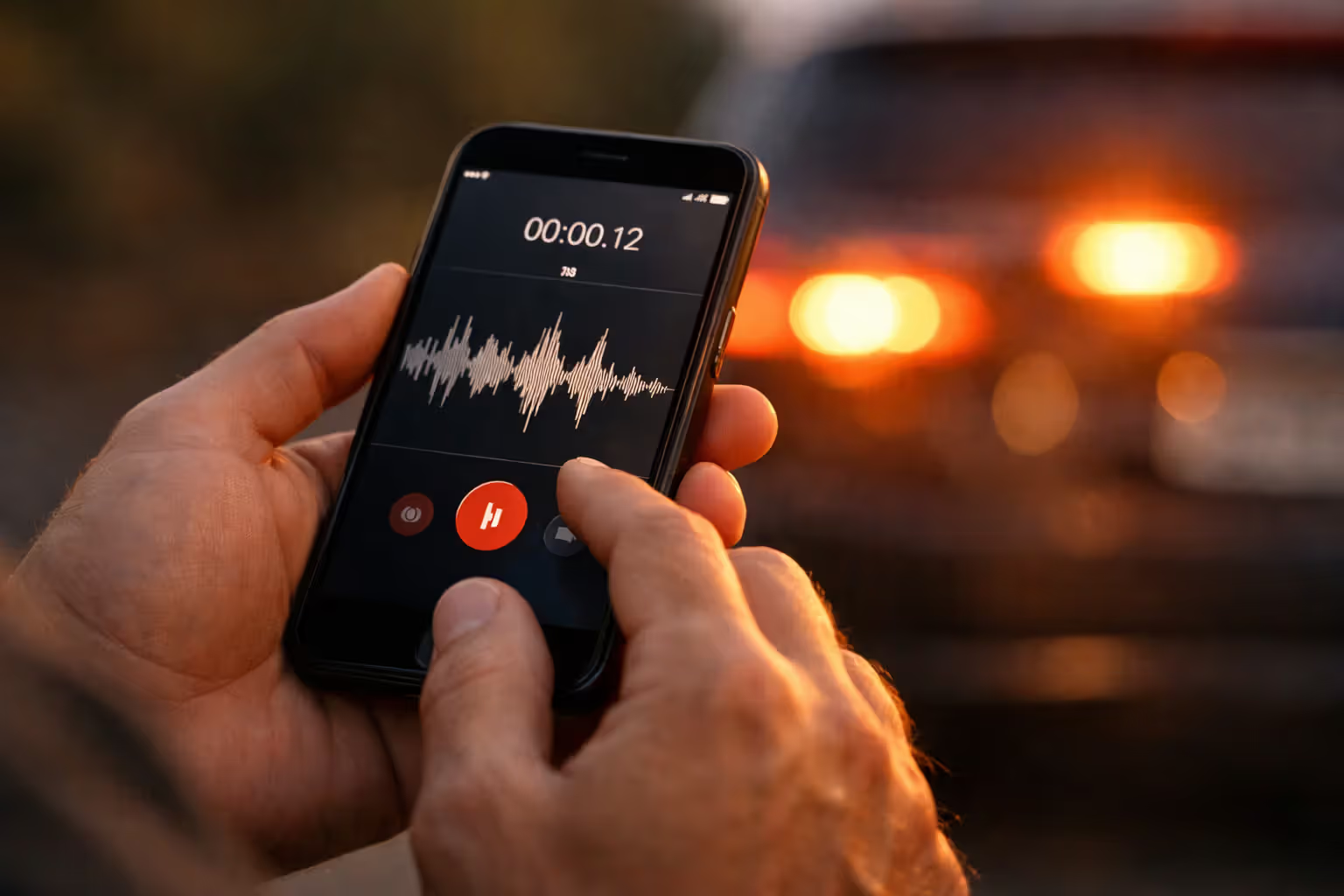
Record the witness's account immediately if possible. Your phone's voice recorder works perfectly. Begin by stating the date, time, location, and witness's name (with their permission to record). Then ask: "Can you describe what you saw?" Let them talk without interruption. Follow-up questions should be open-ended: "What did you notice about the car's position?" rather than "The car was in my lane, right?"
Understand recording consent laws in your state. Twelve states require all-party consent for audio recordings: California, Connecticut, Florida, Illinois, Maryland, Massachusetts, Michigan, Montana, Nevada, New Hampshire, Pennsylvania, and Washington. In these states, you must inform the witness you're recording and get their verbal agreement. The remaining 38 states allow one-party consent—you can record without notifying the other person, though it's still courteous and practical to ask.
If recording isn't possible, write down their statement immediately. Use their words, not your interpretation. Put quotation marks around direct quotes. Note the time you took the statement. Have the witness review what you've written if possible, though most won't want to linger that long.
Photograph or screenshot their contact information. Don't rely on hastily scribbled phone numbers you might misread later. If they're willing, take a photo of their driver's license (which proves identity and address). Many people refuse this, which is their right, but it's worth asking.
Ask if they captured any photos or video. Many witnesses start filming after a crash. Get them to text or email those files to you immediately while they're still willing. Once they leave, follow-up becomes exponentially harder.
Never suggest what the witness should have seen. Questions like "You saw the car run the red light, didn't you?" contaminate testimony and give adjusters grounds to dismiss the statement entirely. Stick to: "What did you observe about the traffic signals?"
Avoid discussing fault, injuries, or insurance while collecting witness information. Keep the interaction focused on what happened. Detailed conversations about your medical condition or who's to blame can influence how witnesses frame their statements.
Author: Hannah Pierce;
Source: spy-delhi.com
How to Document and Preserve Witness Information for Insurance Companies
Insurance companies accept witness statements in multiple formats, but written statements carry the most weight. A formal written statement should include the witness's full contact information at the top, followed by a narrative description of what they observed, concluded with their signature and the date.
Many witnesses won't take time to write formal statements. In these cases, your recorded conversation or written notes become the official statement. Type up the recording verbatim, noting it's a transcription of a conversation recorded on date at time. Include any relevant voice inflections or emphasis: "The car was REALLY moving fast" captures something "The car was moving fast" doesn't.
Organize statements chronologically as you collect them. Create a folder (physical or digital) labeled with the crash date and location. Each witness gets a separate document clearly labeled with their name and the date you obtained their statement. This organization prevents confusion when you're dealing with multiple witnesses.
Include context documentation with each statement: photos showing where the witness was positioned relative to the crash, weather reports from that day and time, diagrams of the intersection or roadway. This supporting material helps adjusters understand what the witness could and couldn't have seen.
Verify contact information within 24 hours. Send a brief text or email thanking the witness and confirming their phone number and email work. This serves two purposes: it confirms accuracy and establishes a communication thread in case adjusters need follow-up.
Don't edit witness statements to "improve" them. If a witness said something that seems unhelpful or confusing, leave it in. Adjusters compare original statements to later testimony. Any evidence of alteration destroys credibility for all your evidence, not just that witness.
Submit witness information to your insurance company within 48 hours of the crash. Even if you haven't completed your own claim paperwork, send witness statements separately with a note: "Witness statements from date motorcycle collision, formal claim to follow." This timestamps the evidence while memories are fresh.
Keep multiple copies. Your original files should be backed up digitally and physically. Insurance companies lose paperwork. Adjusters change. Having immediate access to clean copies prevents delays and demonstrates your organizational credibility.
Follow up with witnesses weekly for the first month. A brief text—"No action needed, just want to confirm your contact info hasn't changed in case the insurance company needs to reach you"—keeps the relationship warm and prevents the witness from feeling ambushed if an adjuster calls months later.

Author: Hannah Pierce;
Source: spy-delhi.com
Common Mistakes That Invalidate Motorcycle Accident Witness Testimony
Leading questions are the fastest way to destroy a witness's credibility. "You saw the car swerve into my lane, right?" tells the witness what you want them to say. Even if they agree, adjusters will spot the coached testimony. The question should be: "What did you observe about the car's position and movement?"
Waiting days or weeks to collect statements is nearly as damaging. Memory degrades immediately. After 72 hours, witnesses begin unconsciously filling gaps with assumptions or details from news coverage. A statement taken two weeks after the crash has minimal value compared to one taken at the scene.
Incomplete contact information renders witnesses useless. A first name and phone number aren't enough. Insurance companies need full legal names and physical addresses to verify identity and assess credibility. Without complete information, adjusters simply discard the statement.
Coaching witnesses—telling them what they should say or how to phrase observations—backfires spectacularly. Adjusters interview witnesses independently. When the witness's phone conversation with the adjuster contradicts their written statement's phrasing or emphasis, both become worthless.
Contamination happens when witnesses talk to each other before giving statements. Two people who saw the accident from different angles should provide independent accounts. If they discuss what happened first, their statements begin echoing each other, and adjusters can't determine what each person actually saw versus what they heard from the other witness.
Allowing family members or friends to act as witnesses when they arrived after the crash is worse than having no witness. These statements are easily disproven and make you look deceptive. Only people who directly observed the collision or its immediate lead-up qualify as witnesses.
Presenting witnesses who clearly favor you without acknowledging the relationship undermines your credibility. If your witness is your riding buddy who was traveling with you, disclose that relationship upfront. Adjusters will discover it anyway, and transparency preserves credibility.
Failing to preserve the original statement format causes problems. If a witness gave a voice recording, don't just submit a typed summary. Provide both the audio file and transcription. The original format proves authenticity and captures tone and emphasis that text can't convey.
When and How Insurance Adjusters Verify Witness Statements
In 25 years of handling motorcycle accident cases, I've seen witness statements increase settlement values by 40-60% on average when the statements clearly establish the other party's fault. A single credible witness who saw the collision can be worth more than a dozen expert reports, because insurance companies know that witness will be compelling to a jury if the case goes to trial. The challenge is that most motorcyclists don't know how to properly collect and preserve witness testimony, and by the time they hire an attorney, those witnesses are long gone or their memories have faded to the point of uselessness
— Michael Torres
Adjusters don't automatically accept witness statements at face value. Every statement undergoes verification, typically beginning 3-7 days after submission. The adjuster will attempt to contact the witness directly by phone, usually without advance notice. This prevents you from coaching the witness before the call.
The verification call serves multiple purposes. First, the adjuster confirms the witness is real and provided the contact information voluntarily. Second, they assess whether the witness sounds credible and consistent. Third, they probe for details not included in the written statement.
Adjusters ask open-ended questions designed to reveal inconsistencies: "Tell me what you remember about the accident" rather than "Did you see the car run the red light?" If the witness's verbal account contradicts or significantly expands on their written statement, red flags go up.
Timing questions are standard. "What were you doing right before the accident? Where exactly were you standing? How long after the collision did you give your statement?" These questions establish whether the witness had a clear view and whether their memory was fresh when they first reported what they saw.
Adjusters look for signs of bias or relationship to you. "How do you know the motorcyclist? Have you spoken with them since the accident? Has anyone discussed with you what you should say?" Honest answers preserve credibility even if there is a relationship—it's the concealment that destroys trust.
Inconsistencies that raise red flags include: changes in the described weather or lighting, different vehicle positions or movements, altered timelines, or new details that weren't mentioned initially. Minor variations are normal and even expected, but major contradictions suggest the witness is unreliable or has been influenced.
The adjuster will compare witness statements against physical evidence, police reports, and other witnesses. If your witness claims the car ran a red light but traffic camera footage shows otherwise, that witness becomes worse than useless—they make your entire claim look fabricated.
Some adjusters conduct in-person interviews for high-value claims. They'll ask the witness to walk them through the accident location, describe sight lines, and explain what they could see from their position. This field verification catches witnesses who exaggerate their vantage point.
Witness Type Credibility Comparison for Insurance Claims
| Witness Type | Credibility Weight | Why Insurers Value It | Potential Weaknesses |
| Neutral bystander | Highest | No relationship to either party; no financial interest in outcome | May have poor vantage point; limited attention to pre-crash factors |
| Other driver | High | Direct participant with clear view; legal obligation to provide accurate information | Potential bias to minimize their own role; may have been distracted |
| Passenger in other vehicle | Moderate-High | Close proximity to events; can describe driver's actions before crash | Loyalty to driver may bias account; may not have been watching road |
| Passenger in your vehicle | Moderate | Can describe your actions and condition; close view of collision | Clear bias toward you; credibility heavily scrutinized; insurers often discount entirely |
| Expert witness (reconstruction) | Very High | Professional analysis of physical evidence; no bias toward either party | Expensive; typically only used in disputed claims or litigation; requires physical evidence |
| Traffic camera/surveillance | Highest | Objective record; no bias; captures events exactly as they occurred | May not show critical details; angle may miss key factors; not available at all locations |
Frequently Asked Questions About Motorcycle Accident Witness Evidence
Do I need a witness statement if the police report supports my version?
Police reports help, but they're not conclusive evidence of fault for insurance purposes. Officers arrive after the crash and base reports on what parties tell them, visible damage, and their professional judgment. Many police reports don't assign fault at all, just document the scene. Witness statements provide independent verification that strengthens your position even when the police report favors you. Insurance adjusters conduct separate investigations and may reach different conclusions than the responding officer. Multiple forms of supporting evidence—police report plus witness statements plus physical evidence—create the strongest claim.
Can I use dashcam or bystander video footage instead of written statements?
Video evidence is extremely powerful, often more valuable than written statements. Footage captures vehicle positions, speeds, traffic signals, and the collision itself without memory degradation or bias. However, video has limitations: it may not show the full context, might miss critical details outside the frame, or could have poor quality in certain lighting conditions. The ideal approach combines video with witness statements. The witness can authenticate the video, explain what happened outside the frame, and describe factors the camera couldn't capture like sounds, smells, or the driver's attention state. Video plus witness testimony is stronger than either alone.
What if the witness doesn't want to get involved or provide contact information?
You can't force cooperation, and pressuring reluctant witnesses backfires. Some people fear being dragged into legal proceedings or simply don't want the hassle. If someone declines to provide information, accept it gracefully. However, you can address common concerns: explain that providing a statement usually just means a brief phone call with an insurance adjuster, most witnesses never have to testify in court, and their help could prevent an innocent person from being wrongly blamed. If they're still unwilling, ask if they'd at least allow you to note their first name and what they observed for your own records. Sometimes this minimal commitment opens the door to fuller cooperation later.
How long after the accident can I still collect witness statements?
Practically speaking, you have about 72 hours before witness value drops significantly. Memory degrades rapidly, and after three days, witnesses begin unconsciously filling gaps with assumptions. After a week, statements become substantially less credible to adjusters. After a month, they're nearly worthless unless the witness took detailed notes immediately after the crash. The exception is expert witnesses like accident reconstructionists, who analyze physical evidence rather than relying on memory. For lay witnesses, collect statements immediately at the scene when possible, within 24 hours ideally, and no later than 48-72 hours. If you're hospitalized and can't collect statements yourself, have a family member or friend do it on your behalf.
What happens when witness statements contradict each other?
Contradictory statements don't automatically sink your claim, but they complicate it. Adjusters weigh each witness's credibility, vantage point, and potential biases to determine which account is more reliable. Two witnesses on opposite street corners might legitimately see different things—one observes the car's failure to signal while the other has a better view of the motorcycle's speed. These aren't true contradictions, just different perspectives. Real contradictions—one witness says the light was red, another says it was green—force adjusters to dig deeper into physical evidence, traffic signal timing, and witness credibility factors. The witness with the clearer view, more detailed account, and no apparent bias typically prevails. If contradictions can't be resolved, adjusters may disregard both statements and rely on other evidence.
Will insurance companies contact my witnesses directly?
Yes, absolutely. Adjusters routinely contact witnesses by phone without notifying you first. This is standard practice, not a sign of distrust. The adjuster wants to hear the witness's account without any opportunity for you to influence their testimony. Prepare your witnesses for this by mentioning during initial contact: "The insurance company will probably call you in the next week or two to ask about what you saw. Just tell them the same thing you told me—exactly what you observed." Don't coach them on what to say or how to phrase things. Witnesses should simply recount their observations honestly. If a witness feels ambushed by an adjuster's call, they may become defensive or uncooperative, which hurts your claim. A simple heads-up prevents this problem.
Protecting Your Rights Through Proper Witness Documentation
Motorcycle accident claims hinge on credibility, and witness statements provide the independent verification that transforms disputed claims into clear-cut cases. The difference between a denied claim and full compensation often comes down to a single bystander who saw what really happened.
Collect witness information immediately—within minutes if possible, hours at most. Ask open-ended questions that let witnesses describe what they saw in their own words. Record everything: contact details, statements, photos of their position, and any evidence they captured. Submit this information to your insurance company within 48 hours while memories are fresh and details are accurate.
Avoid the common mistakes that invalidate testimony: leading questions, delayed collection, coaching witnesses, or presenting people who didn't actually see the crash. Insurance adjusters verify every statement independently, and inconsistencies or signs of manipulation destroy your credibility.
Strong witness evidence doesn't just support your claim—it changes how adjusters approach your entire case. Instead of starting from a position of skepticism, they must contend with independent verification that you're telling the truth. That shift in perspective affects every aspect of your settlement, from liability determination to damage valuation.
The moments after a crash are chaotic and overwhelming, but those same moments offer your best opportunity to gather evidence that will matter for months to come. Witnesses leave, memories fade, and opportunities disappear. What you do in the first hour after impact shapes whether your claim succeeds or fails.
Related Stories
Read more
Read more

The content on this website is provided for general informational and educational purposes only. It is intended to offer insights and guidance on motorcycle accident insurance claims, settlement processes, liability issues, coverage limits, medical compensation, and related insurance matters, and should not be considered legal or financial advice.
All information, articles, and materials presented on this website are for general informational purposes only. Insurance policies, liability standards, settlement practices, and state regulations may vary by jurisdiction and insurer. The outcome of a motorcycle accident claim depends on the specific facts of the accident, available evidence, policy language, and applicable law.
This website is not responsible for any errors or omissions in the content, or for actions taken based on the information provided. Users are strongly encouraged to consult with a qualified attorney or licensed insurance professional regarding their specific motorcycle accident claim before making decisions about settlements, negotiations, or coverage disputes.