

Motorcycle rider in leather gear sitting in wheelchair at lawyer office desk reviewing structured settlement financial documents and payment schedules
Motorcycle Accident Structured Settlement Guide for Injured Riders

Content
So you've settled your motorcycle injury case—congratulations, you fought hard for this. But here's where things get tricky. The insurance company isn't just handing you a giant check (though they might). Instead, they're probably offering something called a structured settlement. Should you take monthly payments stretched over twenty years, or grab everything now?
This isn't a decision you can undo next week if you change your mind. Once you sign, you're locked in. And considering what you've been through—the surgeries, the rehab, maybe the fact you can't work like before—getting this wrong could wreck your financial future.
Here's what makes this so important: motorcycle crashes don't usually result in fender-bender injuries. We're talking about damage that follows you for life. Your settlement needs to cover medical bills you haven't even received yet, income you'll never earn again, and a completely different lifestyle than the one you had before someone turned left without looking.
What Makes Motorcycle Accident Settlements Different from Car Crash Claims
Car drivers sit inside a metal cage designed to absorb crash forces. You? You've got leather, a helmet, and hope.
When things go wrong, the pavement doesn't care about your gear. Riders hit the ground at full force, resulting in injuries that would make a typical car accident victim's whiplash look like a paper cut. Traumatic brain damage. Spinal injuries that leave you paralyzed. Limbs crushed beyond recognition. Road rash so severe you need multiple skin grafts and leave the hospital looking like a patchwork quilt.
These catastrophic injuries come with medical bills that dwarf normal accident costs. While someone in a car crash might settle for $20,000 to $35,000, serious motorcycle cases routinely hit $250,000. Many exceed seven figures. Why? Because you're not just healing—you're rebuilding your entire life.
Take recovery time. A car accident victim with soft tissue damage heals in six to eight weeks. Compare that to a rider with a shattered femur: you're looking at four separate surgeries spread across two years, eighteen months of physical therapy, and you still might walk with a permanent limp. That's eighteen months you're not working. Eighteen months of bills piling up. Eighteen months of wondering if you'll ever feel normal again.
Then there's the liability nightmare. Insurance adjusters have this annoying habit of blaming motorcyclists automatically. "He was speeding." "She was weaving through traffic." "Motorcycles are dangerous—what did they expect?" Even when you did everything right, defense attorneys will exploit jury bias against riders. This prejudice pushes more cases toward settlement negotiations where structured payments become part of the discussion.

Author: Olivia Bennett;
Source: spy-delhi.com
Future medical expenses create the biggest valuation headache. Let's say you're thirty-five and the crash left you paralyzed from the waist down. You've got forty-five years ahead of you—forty-five years of wheelchair replacements, bathroom modifications, pressure sore treatments, and round-the-clock care. How do you put a price tag on that? Actuaries, life care planners, and economists spend weeks calculating these projections, which makes structured settlements appealing because they guarantee money's there when you need it.
How Structured Settlements Work After a Motorcycle Accident
Think of a structured settlement like a pension created just for you. The defendant's insurance company doesn't mail you checks every month for the next thirty years—they'd hate that. Instead, they buy an annuity from a life insurance company. That annuity becomes a money-printing machine programmed to send you payments on your agreed schedule.
This happens through something called a "qualified assignment." Fancy legal term, but it just means the insurance company transfers their obligation to pay you over to the annuity issuer. Why do they bother? It gets the liability off their books immediately, and they don't have to worry about you for the next three decades.
Once that assignment's complete, the annuity company becomes responsible for your payments. They've got skin in the game now. State guaranty associations back these annuities, so if the insurance company somehow implodes, you're protected (though coverage limits vary by state—usually capped at $250,000 to $500,000).
The Role of Annuities in Settlement Payouts
Settlement annuities aren't the ones you'd buy for retirement planning. These are specialized products designed exclusively for injury settlements. The annuity company takes your settlement money and invests it conservatively—mostly government bonds and high-grade corporate debt. Those investments generate returns that fund your payments plus their profit.
Here's the weird part: you don't actually own this annuity. The assignment company holds title. Sounds sketchy, but this ownership structure creates the tax benefits we'll discuss shortly. The downside? You can't borrow against it. Can't cash it out early without losing a massive chunk to factoring companies. Can't modify the terms without begging a judge for permission.
The annuity issuer's financial health matters more than most people realize. A shaky insurance company offering higher payments might sound great until they go bankrupt fifteen years into your thirty-year settlement. Suddenly your $2 million settlement becomes a $300,000 state guaranty claim. Always verify the issuer carries at least an A+ rating from A.M. Best. Your lawyer should treat this as non-negotiable during settlement talks.
Tax Advantages of Structured Payments
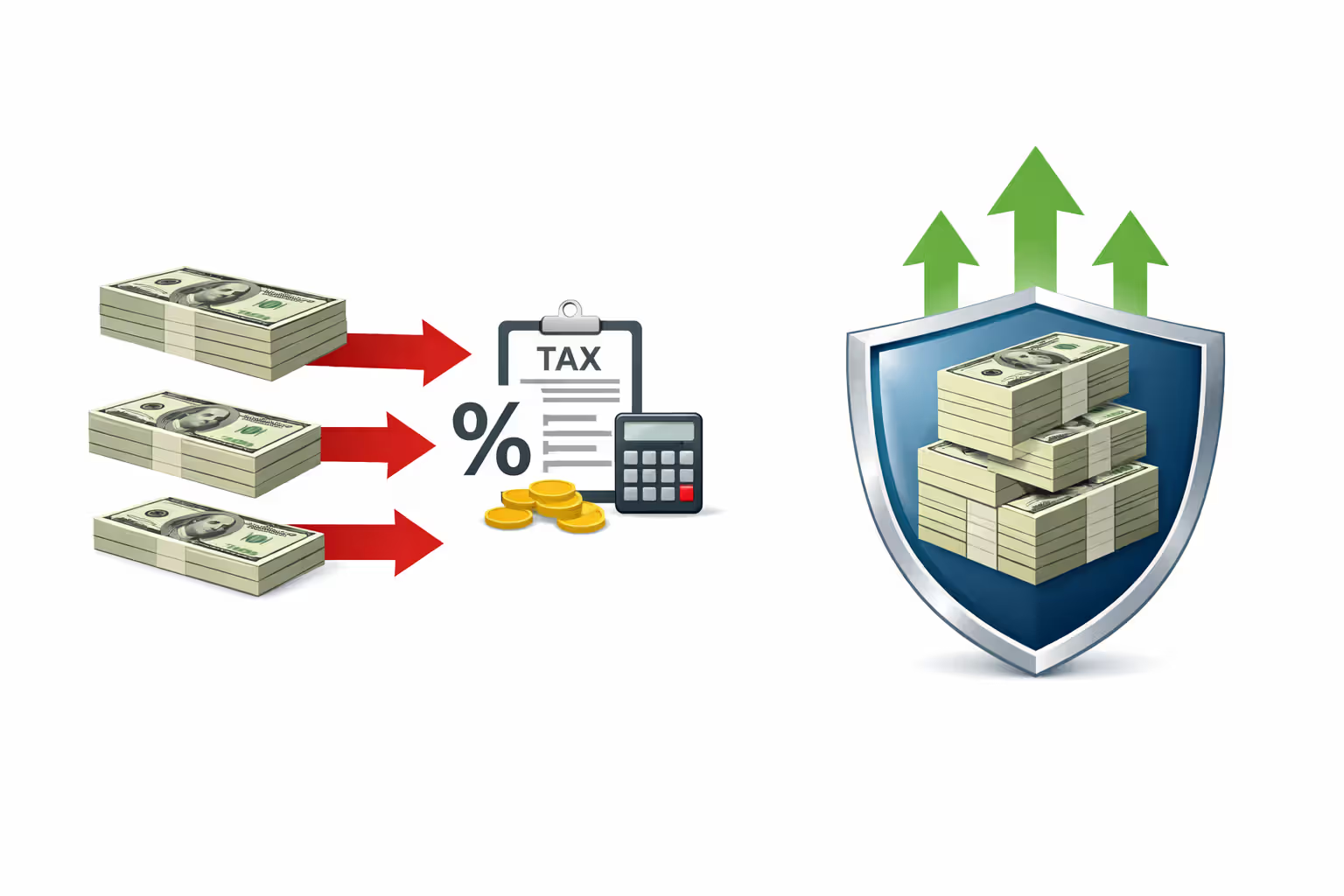
Section 104(a)(2) of the tax code says personal injury settlements don't count as taxable income. That's true whether you take everything today or spread payments across decades. But structured settlements include a bonus: the investment growth inside that annuity also stays tax-free forever.
Picture this: You settle for $600,000. Take it all now, invest it yourself, and every dividend, interest payment, and capital gain gets taxed. The IRS takes their cut annually. But in a structured settlement generating equivalent returns? Tax-free. All of it. Over twenty-five years, that difference could mean saving $200,000 or more in taxes.
Author: Olivia Bennett;
Source: spy-delhi.com
The benefit multiplies if you're in a high tax bracket. Say you're a software engineer who recovered enough to return to work, earning $150,000 annually. You're paying 35% federal tax plus state income tax on any investment returns from a lump sum. A structured settlement eliminates that tax drag completely, letting compound interest work its magic without the IRS siphoning off a third every year.
Lump Sum vs. Structured Settlement: Which Option Protects Your Recovery Better
Let's cut through the noise: both payment methods can work. The question is which one matches your situation, your personality, and your ability to manage money without screwing it up.
Take everything upfront and you've got total control. Pay off medical debt tomorrow. Buy adaptive equipment next week. Modify your house for wheelchair access next month. Invest in starting a business you can actually run with your new limitations. Financial savvy people working with competent advisors sometimes outperform structured settlement returns—sometimes.
But here's the uncomfortable truth: research shows personal injury recipients who grab lump sums often burn through everything within five years. Not because they're stupid, but because suddenly having $800,000 makes you everyone's favorite relative. Your brother needs a loan. Your cousin has an "investment opportunity." A financial advisor you just met promises to double your money. Five years later, you're broke and still facing decades of medical expenses.
Structured settlements remove that temptation because you simply can't access money you don't have yet. Payments arrive predictably, making budgeting straightforward. You know exactly how much hits your account each month, which helps when medication costs $3,000 monthly for the rest of your life. Creditors generally can't touch these payments either, protecting you from lawsuits or bankruptcy disasters.
The catch? Zero flexibility. Your daughter needs emergency surgery—too bad, you can't touch next year's payments. A once-in-a-lifetime investment appears—sorry, your money's locked up. The only escape is selling future payments to factoring companies who'll give you fifty cents on the dollar if you're lucky. That $100,000 you're owed over five years? They'll offer maybe $55,000 today. Painful.
| What You're Comparing | Taking Everything Now | Getting Paid Over Time |
| When money arrives | Complete settlement immediately available | Scheduled payments spread across years or decades |
| Tax situation | Settlement itself tax-free; returns on invested money get taxed annually | Everything remains tax-free including growth |
| Preventing yourself from overspending | You're on your own—discipline required | Built-in protection since you can't access future money |
| Keeping up with inflation | Totally depends on how you invest | Cost-of-living increases available but reduce initial payments substantially |
| Changing your mind later | Spend, save, or invest however you want | Extremely rigid; courts rarely approve modifications |
| Income certainty | No guarantees; market crashes can destroy your nest egg | Payments guaranteed by annuity issuer regardless of markets |
| Protection from creditors and lawsuits | Limited; can be seized in judgments | Strong protections in most states |
| Impact on government benefits | Large sum often disqualifies you from Medicaid/SSI | Proper structuring might preserve eligibility through special needs trusts |
5 Factors That Determine Your Structured Settlement Terms
Negotiating your settlement involves way more than arguing over the total dollar amount. How you receive that money—the schedule, the duration, the specific structure—can make a $500,000 settlement feel like $800,000 or $300,000 depending on how it's designed.
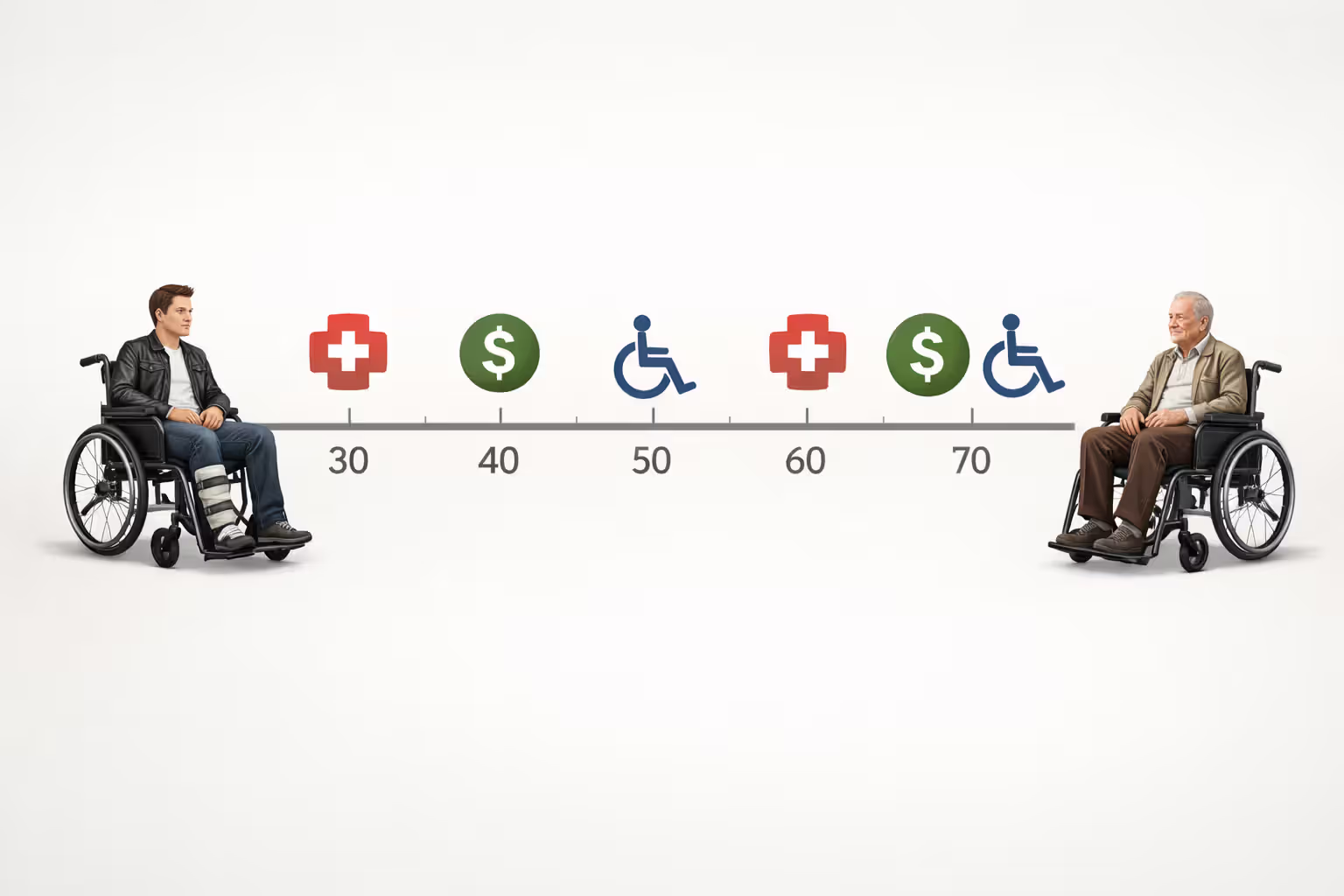
How badly you're hurt and whether you'll ever fully recover sets the foundation for everything else. Catastrophic permanent injuries—paralysis, traumatic brain damage, amputations—justify payment schedules extending across your entire life expectancy. Doctors say you'll need care for fifty years? Structure payments for fifty years. Less severe injuries that eventually heal might only need five to ten years of payments covering your recovery period.
Your current age dramatically affects both what insurers will pay and how long payments should last. A twenty-eight-year-old injured rider potentially faces fifty-plus years of ongoing medical needs and lost income. Annuity companies price lifetime payments based on actuarial life expectancy, spreading costs across those decades. That same injury to a fifty-eight-year-old results in higher annual payments since they're covering fewer years.
Medical care you'll definitely need down the road requires detailed predictions from treating physicians and life care planners. Will you need additional surgeries? How often do prosthetics need replacement? What prescriptions will you take indefinitely? Align your payment schedule with these projected expenses. If you need a $90,000 spinal surgery every five years, structure balloon payments timed to those procedures instead of equal monthly amounts that might fall short when surgery's scheduled.
Author: Olivia Bennett;
Source: spy-delhi.com
Income you've permanently lost involves calculating your pre-injury career earnings trajectory versus post-injury earning capacity. A carpenter who can't do physical labor anymore might transition to estimating or project management at 65% of previous pay. Your settlement should replace this lost earning differential through periodic payments mimicking paycheck timing and amounts you would've received in your original career.
Your state's specific legal requirements influence available options. Some states mandate structured settlements for minors or legally incapacitated adults. Others provide extra creditor protections for structured payments or restrict factoring companies aggressively. Your attorney needs deep knowledge of your jurisdiction's laws to maximize these protections during negotiations.
Common Mistakes Riders Make When Negotiating Settlement Payment Plans
Insurance adjusters negotiate injury settlements professionally—it's literally their job. You're doing this maybe once in your lifetime while still recovering from serious injuries. That experience gap leads to expensive mistakes if you're not careful.
Jumping on the first offer destroys settlement value faster than anything else. Initial offers typically come in at 30% to 50% of real claim value. Insurers expect negotiation and deliberately lowball knowing most people will counter. Riders desperate to close this chapter of their lives sometimes accept inadequate offers, then realize years later their settlement won't cover ongoing needs they didn't anticipate.
Guessing at future costs instead of calculating them properly leaves you dangerously underfunded when those bills arrive. Medical inflation runs significantly hotter than regular inflation—5% to 7% annually. That $60,000 surgery today costs $85,000 in a decade. Your settlement structure needs to account for medical cost increases through rising payment amounts or cost-of-living adjustments, not assume today's prices hold steady.
Completely ignoring inflation's erosion of purchasing power causes real hardship over time. A $3,500 monthly payment feels adequate now. But at 3% annual inflation, that payment buys half as much in twenty-four years. Cost-of-living adjustment riders increase payments annually based on consumer price index changes. The trade-off? These inflation riders slash initial payment amounts by 25% to 35%. You're betting on long-term protection versus more money now.
Accepting annuities from financially questionable insurance companies creates catastrophic risk. Some defendants push annuities from weak carriers offering higher payments to reduce their costs. If that carrier fails twenty years into your thirty-year settlement, state guaranty associations provide limited protection—often $250,000 or $500,000 total. Your million-dollar settlement just became a fraction of its value because you didn't verify the issuer's financial strength.
Overlooking how settlement allocations affect taxation can trigger surprise tax bills. Personal injury compensation is tax-free, but punitive damages aren't. Neither is interest on delayed payments. If your settlement agreement doesn't clearly allocate amounts between compensatory damages and taxable elements, the IRS might treat portions of your "tax-free" structured payments as taxable income. Poor legal drafting costs thousands in unnecessary taxes.
Forgetting to plan for your death leaves your family vulnerable. What happens if you die in year eight of a twenty-year structured settlement? Without guaranteed period provisions, payments might simply stop and your family gets nothing. Proper beneficiary designations and guaranteed payment periods ensure remaining payments flow to your spouse or kids rather than disappearing, but you must specifically negotiate these terms upfront.
How to Customize Your Motorcycle Settlement Annuity Schedule
Structured settlements aren't one-size-fits-all. You can design payment schedules matching your specific life circumstances, medical needs, and financial goals. Work with your attorney and a structured settlement consultant to model different scenarios.
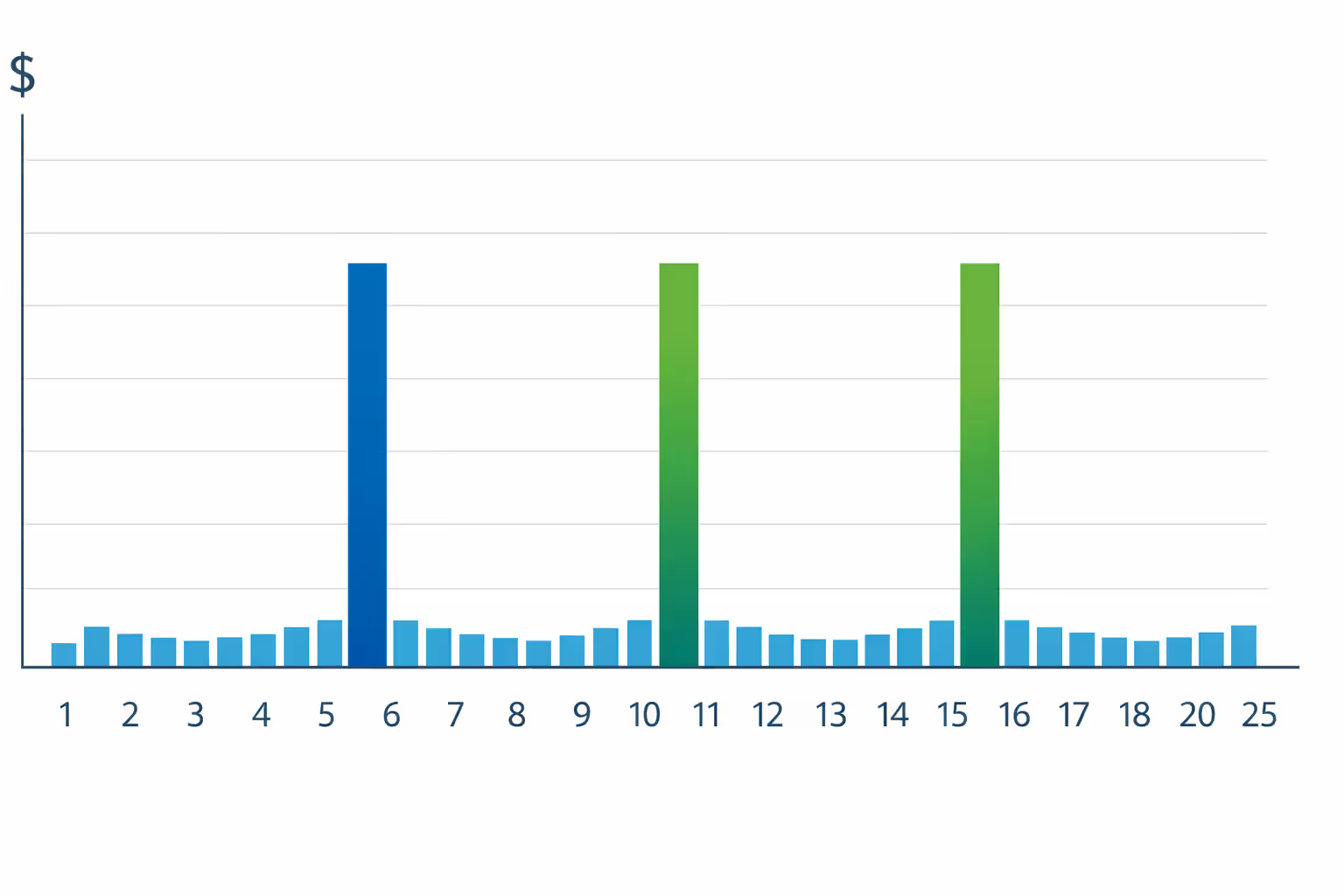
Front-loading structures pack higher payments into early years when medical expenses peak, then drop to lower maintenance payments afterward. A rider facing three major reconstructive surgeries within five years post-accident might structure balloon payments of $75,000 in years one, three, and five to cover those procedures, combined with $1,500 monthly for ongoing living expenses throughout.
Back-loading structures flip the script—modest payments initially that ramp up significantly later. This works when you can return to work short-term but expect declining capacity as you age. Someone with progressive traumatic brain injury might work part-time through their forties earning partial income, but need substantially higher structured payments in their sixties as cognitive decline accelerates and work becomes impossible.
Author: Olivia Bennett;
Source: spy-delhi.com
Mixing periodic lump sums with steady monthly payments creates both security and occasional flexibility. You might design $2,200 monthly for basic living costs plus $60,000 every five years for vehicle modifications, major home repairs, or anticipated medical procedures not covered by insurance. This hybrid balances guaranteed income with periodic access to larger amounts for predictable major expenses.
Adding cost-of-living escalators increases payments annually based on inflation measures, usually the Consumer Price Index. A 3% COLA means your $3,500 monthly payment becomes $3,605 next year, $3,713 the year after, and continues climbing. These adjustments preserve purchasing power across decades, but starting payments run 30% to 40% lower than fixed structures since the annuity company must fund those future increases.
Building in guaranteed payment periods ensures payments continue to beneficiaries if you die before the structure term ends. A twenty-year guaranteed period means your designated heirs receive remaining payments for the full twenty years even if you die in year six. Without this provision, payments could cease at your death, leaving your spouse and kids with nothing despite you having "won" a large settlement.
Delaying when payments start lets you defer initial payments months or years after settlement. If you're receiving disability benefits with strict asset limitations, you might defer structured payments until those benefits end. Or defer everything until retirement age, essentially creating a private pension that kicks in at sixty-five when you need it most.
When You Should Reject a Structured Settlement Offer
Structured settlements solve many problems, but they're not universal solutions. Certain situations strongly favor taking your money upfront despite the risks involved.
Urgent financial emergencies requiring immediate cash that can't wait for scheduled payments might force your hand. Facing foreclosure on your home? Medical debt already in collections threatening garnishment? Need wheelchair ramps and bathroom modifications right now to return home from the hospital? Waiting months or years for structured payments creates immediate hardship that might outweigh long-term benefits.
Genuine investment expertise and opportunities you can access might justify direct control over settlement funds. If you're a sophisticated investor with proven track records, or you work with a fee-only fiduciary financial advisor who's built successful portfolios for decades, you might legitimately outperform annuity returns. But be brutally honest about your skill level—most people dramatically overestimate their investing abilities and underestimate how emotions drive poor decisions.
Sketchy annuity companies proposed by defendants should end structured settlement discussions immediately. If the insurance company won't disclose the annuity issuer's identity until after you sign, walk away. If they're pushing a carrier rated below A by A.M. Best, refuse regardless of how attractive the payment schedule looks. Never compromise on annuity issuer quality—your financial security for decades depends on that company remaining solvent.
Young age combined with injuries that fully heal probably doesn't justify long-term structured settlements. A twenty-two-year-old who suffered a broken collarbone and will completely recover within six months doesn't need a twenty-year payment structure. The injury won't generate lifelong medical expenses or permanent disability. A lump sum covering medical bills, lost wages during recovery, and pain and suffering makes more practical sense.
Business ownership goals requiring capital investment might be better served taking control of funds immediately. If you owned a construction business before the accident and can't do physical work anymore, maybe your settlement funds starting a consulting business adapted to your new limitations. Structured settlements don't provide the capital needed for business investment, franchise purchases, or entrepreneurial ventures that could generate income exceeding annuity returns.
I push structured settlements hard when clients face permanent disabilities needing lifelong care, especially younger victims requiring guaranteed income across forty or fifty years. That said, I've represented clients with demonstrated financial discipline and immediate critical needs who benefited more from taking lump sums they invested intelligently with professional guidance. The key is brutal honesty about your money management history and spending habits. If you've carried credit card debt, made impulsive purchases, or lost money on bad investments before, a structured settlement removes that temptation and ensures your money actually lasts
— Robert Chen
Frequently Asked Questions About Motorcycle Accident Structured Settlements
The structured settlement decision ranks among the most consequential financial choices you'll face after your crash. Unlike investment decisions you can adjust quarterly or annually, this choice locks in a payment structure for decades. You can't go back next year and say "actually, I changed my mind."
Work with professionals who've handled dozens of these cases—your personal injury attorney collaborating with a structured settlement consultant and possibly a certified financial planner. Request detailed illustrations showing how various structures perform under different scenarios: high inflation, low inflation, better-than-expected medical outcomes, worse-than-expected complications. See the numbers in black and white before committing.
Be ruthlessly honest with yourself about financial discipline and money management sophistication. Track record matters here. If you've historically struggled with budgeting, made impulsive purchases, or lost money on questionable investments, those patterns don't magically disappear because you suddenly have a large settlement. A structured settlement removes temptation and ensures income remains available for future medical needs. Conversely, if you've demonstrated consistent financial responsibility and work with qualified fiduciary advisors, a lump sum might genuinely serve you better.
Consider hybrid approaches splitting money between both payment methods. Many settlements allocate a portion as an immediate lump sum addressing urgent needs, then structure the remainder for long-term security. This balanced approach delivers both flexibility and protection—the best of both worlds when designed properly.
Most importantly, resist pressure to settle quickly. Insurance companies sometimes push injured riders to finalize settlements before they fully understand their injuries' long-term trajectory. Fight this pressure. Wait until you reach maximum medical improvement and your doctors can accurately project future treatment requirements. A few extra months of negotiation can mean the difference between a settlement supporting your recovery and one leaving you financially exposed.
Your motorcycle accident settlement must compensate you not merely for past losses but for a lifetime of altered circumstances. Structure it intelligently to ensure the financial security you need moving forward.