

Damaged motorcycle lying on asphalt road after collision with a car, emergency lights reflecting on wet pavement
What to Expect During the Motorcycle Accident Settlement Process

Here's what makes this harder for riders: your injuries are probably worse than the typical bumper tap between SUVs. Your settlement will likely involve more money, more documentation, and more time. Plus, there's an uncomfortable truth about motorcycle claims—many adjusters start with the assumption that you did something wrong, that you were speeding or showing off, even when evidence says otherwise.
What you're facing isn't one big negotiation. It's seven distinct phases, each with its own objectives and pitfalls. Some take days. Others drag on for months. Knowing what comes next helps you spot delays that cross from "standard procedure" into "deliberate stalling."
How the Motorcycle Accident Settlement Process Works
Here's the basic sequence: someone causes a crash that injures you. You submit a claim to their insurance carrier (sometimes your own, depending on your state's rules and your policy details). You document everything—injuries, property damage, lost paychecks. You tell the insurance company what you want. They investigate, then usually counter with less. You negotiate back and forth until you either agree on a number or decide fighting in court makes more sense. Eventually money changes hands, medical providers get paid, and your case file gets archived.
Why does this look different than settling a car accident? Start with what happens to your body. Cars have crumple zones, airbags, seat belts. Motorcycles have none of that. When a sedan taps another sedan at 25 mph, people exchange insurance information and drive home. When a car hits a bike at that speed, the rider often leaves in an ambulance. Road rash that requires skin grafts. Fractured femurs needing surgical pins. Concussions that linger for months. These injuries take longer to treat, cost more to fix, and create bigger settlement values.
Then there's the bias problem. Many adjusters—not all, but enough that it's noticeable—view motorcyclists as risk-takers. They'll scrutinize your claim harder, questioning whether you wore proper gear, whether your speed contributed, whether modifications to your bike played a role. A car driver might get the benefit of doubt; you'll need airtight evidence.
Typical car crashes settle fast when injuries are minor—maybe 30 to 60 days from accident to check. Motorcycle claims? Plan on six months minimum if you suffered significant harm. Complex cases involving permanent disabilities or disputed fault can stretch past two years. Add multiple defendants (maybe the car driver shares blame with the city that didn't fix that pothole), and timelines extend further since you're coordinating separate negotiations.
The 7 Critical Steps in a Motorcycle Settlement
Think of these as checkpoints, not suggestions. Skip one or rush through it, and you'll undermine everything that follows.
Initial Claim Filing and Documentation
Usually within a week of your crash, you'll notify the relevant insurance company that you're making a claim. Could be the other driver's carrier. Could be yours if you live in a no-fault state or you're filing under your own collision coverage. This notification creates the official record and triggers their obligation to investigate.
Right now, while details are fresh, grab every piece of evidence you can. The police report matters most—it captures the officer's observations about skid marks, point of impact, witness accounts, and sometimes a preliminary opinion about who caused what. Take photos of everything: your bike's damage from multiple angles, debris patterns on the road, traffic signs or signals, weather conditions, your injuries before doctors bandage them up. If witnesses stopped to help, write down their names and phone numbers before they walk away.

Author: Olivia Bennett;
Source: spy-delhi.com
Insurance carriers will ask for a recorded statement early—sometimes within days. Be careful here. Your own insurance policy probably requires you to cooperate, meaning you'll need to give them a statement. But the other driver's insurance company? You're not obligated to provide detailed answers immediately, and doing so without talking to an attorney first can create problems. Adjusters know which questions elicit admissions that hurt your claim later. Something like "I looked down at my phone for just a second" becomes exhibit A in their argument that you're partially at fault.
Medical Treatment and Evidence Collection
Your treatment records will determine 70% of your settlement value. That's not an exaggeration. Everything you claim about injuries needs medical documentation backing it up.
Go to the emergency room or urgent care that same day, even if you're not sure how badly you're hurt. Adrenaline hides pain. Injuries like internal bleeding or concussions don't always show symptoms immediately. A gap between your accident and your first medical visit becomes ammunition for adjusters arguing you weren't really injured, or at least not seriously.
Then follow through on every appointment, every prescription, every physical therapy session your doctors recommend. Insurance investigators examine treatment records looking for gaps. Miss three PT appointments in a row? The adjuster will argue you must have recovered, otherwise you'd have kept going. Stop seeing your doctor for two months? They'll claim your injuries resolved. Even if the real reason is you couldn't afford copays or you got too busy at work, unexplained gaps damage your case.
Start a daily pain journal. Rate your pain each morning and evening. Note which activities you can't do anymore or can only do with difficulty. Describe sleep disruptions, mood changes, limitations. These notes become powerful evidence of suffering that doesn't show up on X-rays. Also photograph your injuries every few days—bruises changing colors, surgical scars healing, any assistive devices you're using like crutches or a wheelchair.
One complication: medical liens. Hospitals, surgeons, physical therapists—they may assert liens on your settlement, essentially reserving the right to be paid from whatever you recover. Track these carefully because they'll come out of your settlement check before you see a dime.
Demand Letter Submission
You can't accurately value your claim until your condition stabilizes. Doctors call this "maximum medical improvement"—the point where you've healed as much as you're going to heal, even if that means living with permanent limitations. Could be three months after the crash. Could be eighteen months. Depends on injury severity.
Once you reach that milestone, your attorney drafts a detailed demand letter presenting your case to the insurance company. This isn't a quick note. It's often 15-30 pages outlining exactly what happened, why their insured is liable, every medical treatment you received, all your economic losses, and how this accident changed your daily life. The demand ends with a specific dollar amount—typically higher than what you'd actually accept, building in negotiation room.
Expect to wait 30-45 days for a response after submitting the demand. Insurance companies don't rush these reviews. They're examining your medical records, checking your treatment was appropriate and necessary, evaluating their liability exposure, and determining how much authority the assigned adjuster has to settle.

Author: Olivia Bennett;
Source: spy-delhi.com
Insurance Company Investigation
The insurance carrier investigates throughout this process, but their work intensifies after receiving your demand. They're reviewing the police report, interviewing witnesses, examining photos of the accident scene, sometimes hiring engineers to reconstruct exactly how the collision happened.
For motorcycle claims, they scrutinize additional factors. Did you have a valid motorcycle license? Any recent traffic violations? Was your bike modified? Did those modifications contribute to the crash or your injuries? Were you wearing a helmet, riding jacket, gloves, boots? (Even in states without helmet laws, not wearing one affects settlement value.) They'll review your riding history looking for prior accidents or claims.
Their investigation's real purpose? Finding reasons to pay less or nothing at all. They're specifically looking for comparative negligence—evidence that you share blame for what happened. In most states, if you're found partially at fault, your settlement decreases by that percentage. Their investigation concludes you bear 40% responsibility for the crash? A $100,000 settlement becomes $60,000.
Also assume they're checking your social media. Adjusters scroll through Facebook, Instagram, TikTok, Twitter looking for posts contradicting your injury claims. That photo of you standing at your niece's wedding gets screenshot and included in their file as evidence you're exaggerating mobility problems—never mind that you took double your usual pain medication to attend and spent the next three days on the couch recovering. They deliberately misinterpret context.
Negotiation Phase
After evaluating your demand, the insurer typically responds with a counteroffer that's substantially lower. Maybe you demanded $250,000; they offer $75,000. This starts the back-and-forth dance.
Your attorney prepares a counter-counteroffer, usually including additional evidence or legal arguments explaining why their offer undervalues your claim. They might counter at $200,000. The insurer comes back at $110,000. Your side drops to $175,000. They raise to $135,000. This continues until you reach agreement or hit an impasse.

Author: Olivia Bennett;
Source: spy-delhi.com
Experienced attorneys understand the psychology and authority structures at play. Adjusters can approve settlements up to certain dollar thresholds independently—maybe $50,000 or $100,000 depending on the company. Larger settlements require supervisor approval or even claims committee review. Knowing these dynamics helps attorneys gauge which offers represent genuine positions versus opening salvos.
Good faith negotiations involve incremental movement from both sides. The gap closes with each round. Bad faith negotiations feature lowball offers that ignore clear evidence, artificial deadlines pressuring you to accept inadequate amounts, or adjusters who refuse to explain their valuation methodology.
Sometimes negotiations stall completely. The insurer won't budge past a certain number. The gap between positions stays too wide. That's when you decide: accept what's on the table, keep trying, or file a lawsuit.
Settlement Agreement or Litigation Decision
When both sides agree on a number, you'll sign a settlement agreement and release. This legal document specifies the payment amount and releases the at-fault party plus their insurance company from any future liability related to this accident. Read every word carefully. Once you sign, you cannot reopen the claim later—not if your injuries worsen, not if new medical complications develop, not if you discover the accident caused problems that didn't appear until later.
If negotiations collapse, your attorney files a lawsuit in civil court. This doesn't guarantee you're heading to trial. Most lawsuits settle before trial—often after discovery (the formal evidence exchange process) when both sides fully understand the strength of the opposition's case. But litigation adds significant time, typically extending your case by 12-24 months minimum. Trials can occur 2-4 years after filing.
The litigation decision involves trade-offs you need to understand clearly. Filing suit often produces higher settlement offers, especially once the insurance company faces depositions, expert witness costs, and the unpredictability of juries. But litigation also increases your attorney's costs (which come out of the settlement), delays when you'll receive money, and introduces uncertainty—you might win big at trial, or the jury might side with the defendant and you get nothing.
Final Payment and Case Closure
After signing the settlement agreement, most states require the insurance company to issue payment within 30 days. The check typically gets mailed to your attorney, who deposits it into their client trust account.
Then comes the disbursement process. Your attorney pays off outstanding medical liens and bills, deducts their contingency fee (usually 33-40% of the settlement), subtracts case costs like expert witness fees and filing fees, and sends you the balance. You should receive a detailed accounting showing exactly where every dollar went.
This final phase sometimes includes surprises. A medical provider might assert a lien you didn't know existed. The lien amounts might exceed what you were told to expect. Good attorneys negotiate these liens down, often securing 20-40% reductions to maximize what you take home. Once all liens are satisfied and funds distributed, your file closes permanently.
Motorcycle Accident Settlement Timeline: What to Expect at Each Stage
Timeline expectations vary wildly based on injury severity, how clearly the other driver was at fault, and whether the insurance company cooperates or drags its feet. Understanding realistic timeframes helps you budget financially and recognize when delays become unreasonable.
| Phase | How Long It Usually Takes | What You Need To Do | What Causes Delays |
| Filing Your Claim | 1-7 days | Notify insurance, share basic accident details, start gathering evidence | Waiting too long to report, missing information about the accident |
| Medical Care | 3 months to 2+ years | Show up for every appointment, do what doctors recommend, keep records of everything | Serious injuries, surgeries with long recovery times, ongoing physical therapy |
| Writing The Demand Letter | 2-4 weeks after reaching MMI | Let your attorney compile all medical records and calculate total damages | Medical offices slow to release final records, needing experts to project future costs |
| Insurer's Investigation | 30-60 days | Answer their questions, send additional documents they request | Arguments about who's at fault, difficulty locating witnesses, needing accident reconstruction specialists |
| Back-And-Forth Negotiations | 2-6 months | Evaluate their offers, respond with counterproposals, decide what's acceptable | Insurance company using bad faith tactics, ridiculously low offers, your adjuster gets reassigned mid-claim |
| Signing The Settlement | 1-2 weeks | Read the release carefully, sign it, help resolve any outstanding liens | Disputes over lien amounts, multiple defendants requiring coordinated agreements |
| Receiving Payment | 30-45 days | Deposit check, verify liens were paid, review final accounting | Processing delays on the insurer's end, extended lien negotiations |
Minor crashes with obvious liability and limited injuries sometimes wrap up in 3-6 months. Moderate cases involving significant injuries but not life-altering ones typically take 9-18 months. Severe cases with permanent disability, contested fault, or litigation routinely extend 2-3 years or longer.
Certain factors speed things up. Clear liability backed by strong evidence leaves adjusters little room to argue their driver wasn't at fault. Finishing medical treatment relatively quickly provides a complete picture of damages. Reasonable settlement demands falling within the insurer's expected valuation range encourage faster agreements. Having an experienced attorney signals you understand what your claim is worth and won't accept lowball offers.
Other factors predictably slow things down. Ongoing medical treatment prevents finalizing your claim because you don't yet know your ultimate recovery. Disputed liability requires extensive investigation or hiring expert witnesses. Multiple at-fault parties necessitate coordinating settlements or determining each one's percentage of responsibility. Lowball insurance offers that insult your intelligence force extended negotiations or ultimately filing suit.
Common Mistakes That Delay Your Motorcycle Settlement
Riders unintentionally sabotage their own claims through mistakes that seem harmless but create major problems later. Avoid these and you'll keep your claim moving forward while preserving its full value.
Giving recorded statements before talking to a lawyer. Adjusters receive training in asking questions that elicit damaging admissions. You might think you're being helpful and cooperative. But when you casually mention "I guess I didn't see the car until the last second," that becomes evidence supporting their argument that you weren't paying adequate attention. Politely tell the at-fault driver's insurance company you'll provide a statement after consulting with your attorney.
Accepting the first offer that shows up. Initial offers almost universally undervalue claims. It's standard practice. Insurance companies count on injured riders accepting quick money because they're drowning in medical bills and can't work. That first offer typically represents the absolute minimum the insurer hopes to pay, not remotely fair compensation. Treat it as an opening position, not a take-it-or-leave-it final offer.
Settling before your medical condition stabilizes. Nobody can predict recovery trajectories immediately after an accident. An injury that seems manageable might require surgery three months later. A condition that appears temporary might become permanent. Sign that release and accept the check prematurely, and you're stuck with compensation that doesn't cover your actual losses—no do-overs, no reopening the case.
Author: Olivia Bennett;
Source: spy-delhi.com
Spotty medical treatment with unexplained gaps. Stop going to physical therapy for three weeks and the insurer argues you must have recovered; otherwise you'd have continued treatment. If money problems prevented treatment, document that explanation. If work commitments interfered, explain that to your attorney. Unexplained gaps look like your injuries weren't serious enough to warrant continued care.
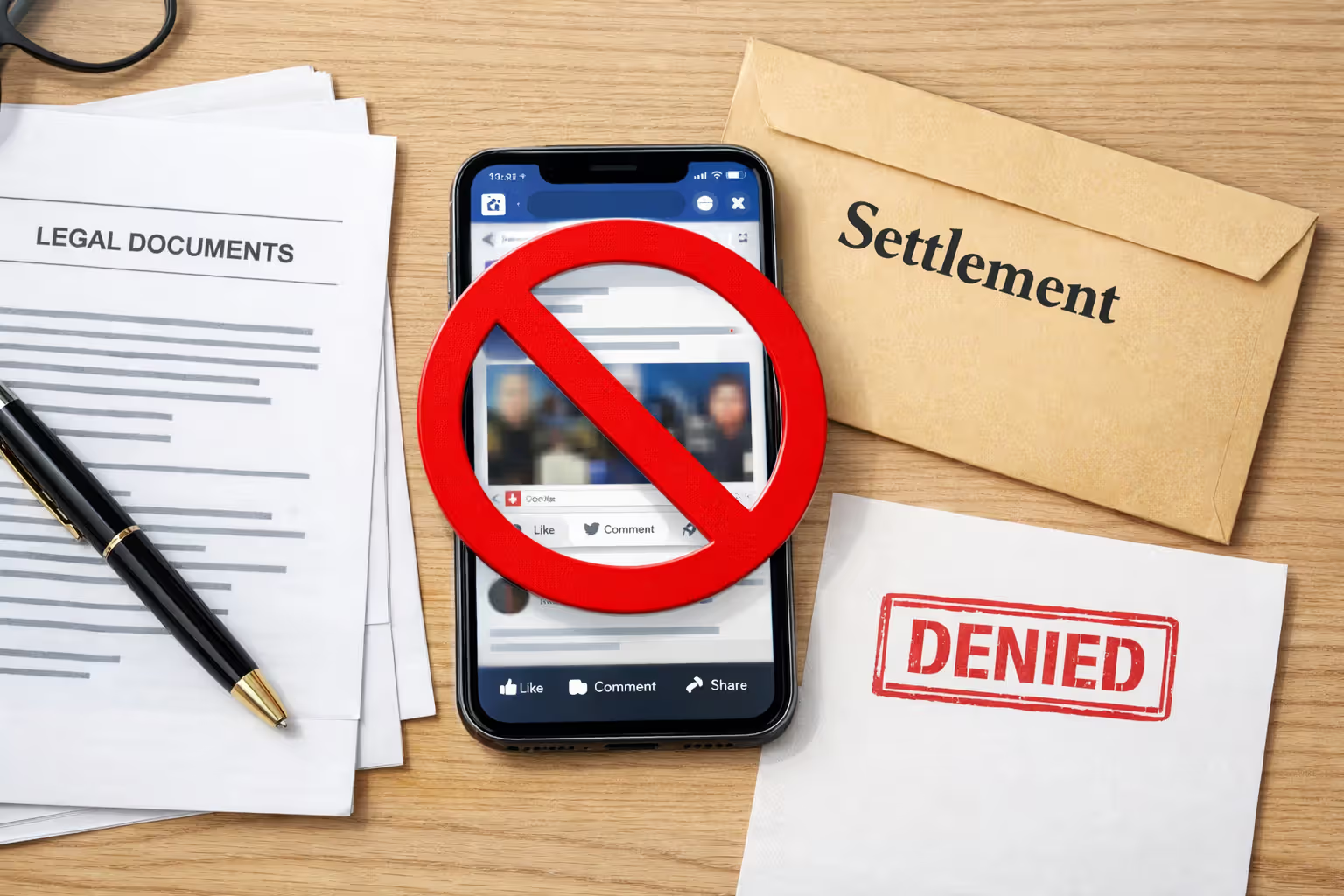
Posting your life on social media during the claims process. That photo of you smiling at your son's baseball game gets screenshot and filed as evidence contradicting your claims of debilitating pain. The adjuster doesn't care that you took prescription pain medication to attend, that you sat in the car most of the game, and that you spent the next two days on the couch paying for that outing. They strip away all context and present the image selectively. Set your profiles to private and stop posting about your accident, your injuries, or your activities.
Exaggerating injuries or limitations. Your credibility is everything. Overstate your limitations and surveillance footage shows otherwise? Now the adjuster distrusts everything you say. They might deny legitimate damages because they've concluded you're a liar. Be completely honest about your condition. Real injuries provide sufficient grounds for fair compensation—don't undermine your case with exaggeration.
Trying to handle serious injury claims without professional help. Minor claims with a couple thousand dollars at stake might not justify paying attorney fees. But significant injuries involving substantial medical bills, missed work, or permanent impairment? You need professional guidance. Studies consistently show that claimants with attorneys recover several times more on average than those going it alone—even after paying legal fees, you net more with representation.
When to Accept vs. Reject an Insurance Settlement Offer
Evaluating whether an offer is fair requires understanding what full compensation looks like and recognizing the pressure tactics insurers use to push inadequate settlements.
Accept an offer when it genuinely covers all your economic damages—every medical bill, all lost wages, property damage, out-of-pocket expenses—plus reasonable non-economic damages for pain, suffering, and life impact. Accept when you've reached MMI and understand your long-term prognosis, including any permanent limitations. Accept when continuing negotiations or filing suit is unlikely to produce meaningfully better results given your case's specific facts.
Reject offers that don't even cover your documented economic losses. Reject offers that arrive before you've finished treatment or before you understand whether you'll have permanent problems. Reject offers that completely ignore clear liability evidence or strong damages documentation. Reject offers accompanied by artificial pressure tactics like short deadlines or threats that the offer expires in 72 hours.
Watch for red flags signaling lowball offers. Round numbers that appear arbitrary rather than calculated from actual damages—like exactly $50,000 when your medical bills alone total $42,000. Offers made immediately after the crash before you've even completed initial treatment. Settlement amounts barely exceeding your medical bills while completely ignoring lost income, future treatment needs, and pain and suffering. Adjusters who refuse to explain their calculations or provide a breakdown of how they reached their number.
The biggest mistake I see riders make is settling within the first three months after their accident. They're overwhelmed by medical bills and lost income, so they grab the first offer. Six months later, they're still in pain, facing additional surgery, and they've signed away their rights for a fraction of what their claim was worth
— Michael Torres
Fair compensation accounts for all economic losses including future medical treatment you'll need and lost earning capacity if injuries prevent you from doing your job the same way. Non-economic damages typically range from 1.5 to 5 times your economic damages depending on how severe your injuries are, whether they're permanent, and how dramatically they've affected your quality of life. Your state matters too—some states cap non-economic damages at specific amounts, while others allow full recovery.
You need an attorney when injuries are severe or permanent, when the insurance company disputes who's at fault, when they deny your claim or offer clearly inadequate amounts, when multiple parties share liability, or when your own insurance company refuses to provide coverage you believe your policy includes.
How Settlement Amounts Are Calculated for Motorcycle Accidents
Understanding valuation methodology helps you assess whether offers are reasonable or insulting. Settlements combine two categories of damages, then reduce the total by any comparative negligence percentage.
Economic damages include every financial loss you can document: all past medical expenses related to the accident plus future treatment you'll need, wages you lost while unable to work, reduced earning capacity if injuries prevent you from returning to your previous job or reduce what you can earn going forward, property damage to your motorcycle and riding gear, and out-of-pocket costs like transportation to medical appointments, prescription copays, or home modifications needed for disabilities.
Calculate these meticulously. Future medical expenses require doctors to testify about anticipated treatment—maybe you'll need another surgery in five years or ongoing pain management indefinitely. Lost earning capacity involves vocational experts who assess how your injuries affect career prospects—maybe you're a carpenter who can't lift heavy materials anymore, forcing a career change to lower-paying work. These future projections significantly impact serious injury settlements.
Non-economic damages compensate losses you can't put receipts to: physical pain and suffering you've endured and will continue enduring, emotional distress and mental anguish, loss of life's enjoyment and inability to participate in activities you previously loved, disfigurement and visible scarring, and loss of consortium—the legal term for how injuries affected your marriage or relationship with your spouse.
Quantifying non-economic damages involves subjectivity. Insurers and attorneys commonly use multiplier methods—taking your economic damages and multiplying by a factor between 1.5 and 5 based on injury severity. Minor injuries with full recovery might warrant 1.5-2x multipliers. Catastrophic permanent injuries could justify 4-5x multipliers. Alternatively, per diem methods assign a daily dollar value to your suffering, then multiply by however many days you've dealt with pain—maybe $200 per day for 400 days equals $80,000 in pain and suffering.
Comparative negligence reduces your total settlement by your fault percentage. Say total damages equal $100,000 but evidence shows you were speeding and that contributed to the crash. If you're found 25% at fault, your recovery drops to $75,000. Some states follow modified comparative negligence rules that completely bar recovery if you're 50% at fault (or 51% in some states). Pure comparative negligence states allow recovery even if you're primarily at fault, though your percentage reduces the settlement—you could be 80% at fault and still recover 20% of damages.
State-specific rules dramatically affect valuations. Some states cap non-economic damages at $250,000, $500,000, or other arbitrary amounts. Others impose no caps at all. Minimum insurance requirements vary widely—states with low minimums might leave you undercompensated if the at-fault driver carries only basic coverage. That's when your own underinsured motorist coverage becomes critical.
Frequently Asked Questions About Motorcycle Accident Settlements
Understanding how motorcycle accident settlements actually work empowers you to navigate each phase strategically rather than just reacting to whatever the insurance company throws at you. The path from accident scene to final payment involves seven distinct phases, each with specific goals and potential pitfalls you can avoid with proper preparation. Knowing realistic timelines prevents panic when your settlement doesn't materialize within weeks. Recognizing common mistakes helps you avoid behaviors that torpedo claim value or unnecessarily extend the process.
This process will test your patience more than almost anything you've experienced. But rushing through phases to secure quick payment nearly always costs you tens of thousands of dollars in compensation you legitimately deserve. Document everything obsessively. Follow through completely on your medical treatment plans. Consult experienced legal counsel before making any binding decisions. Insurance companies employ entire teams of adjusters and attorneys protecting their financial interests—you deserve knowledgeable representation protecting yours.
Every case is unique, with specific facts that influence strategy and outcomes. This framework provides general guidance, but your particular circumstances might demand different approaches. When in doubt, seek professional legal advice before accepting offers or signing releases. Your future recovery and financial stability depend on securing compensation that genuinely covers your losses.
Related Stories

Read more

Read more




The content on this website is provided for general informational and educational purposes only. It is intended to offer insights and guidance on motorcycle accident insurance claims, settlement processes, liability issues, coverage limits, medical compensation, and related insurance matters, and should not be considered legal or financial advice.
All information, articles, and materials presented on this website are for general informational purposes only. Insurance policies, liability standards, settlement practices, and state regulations may vary by jurisdiction and insurer. The outcome of a motorcycle accident claim depends on the specific facts of the accident, available evidence, policy language, and applicable law.
This website is not responsible for any errors or omissions in the content, or for actions taken based on the information provided. Users are strongly encouraged to consult with a qualified attorney or licensed insurance professional regarding their specific motorcycle accident claim before making decisions about settlements, negotiations, or coverage disputes.